


Brown Wood Jewellery Chest
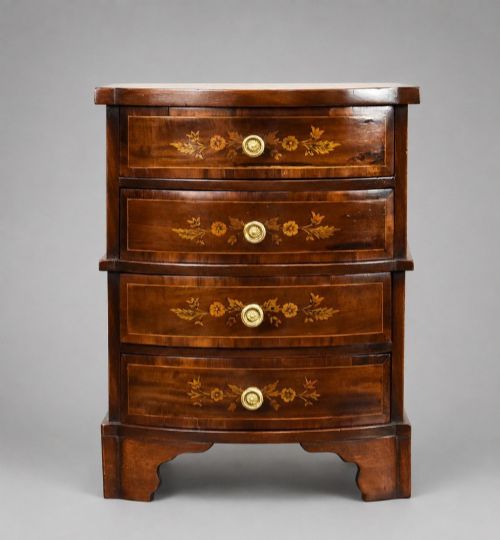
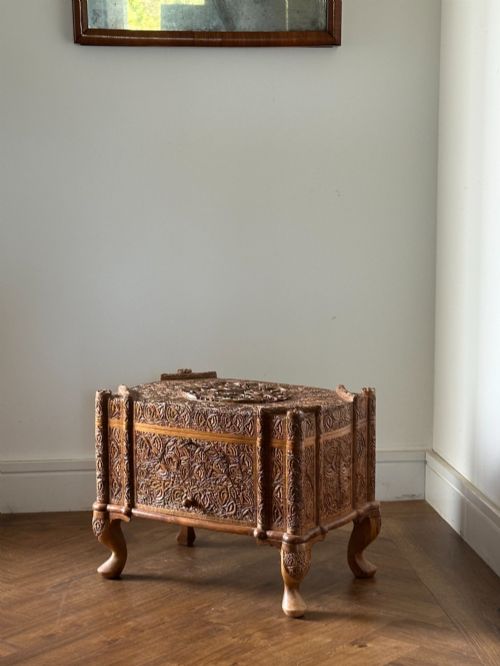
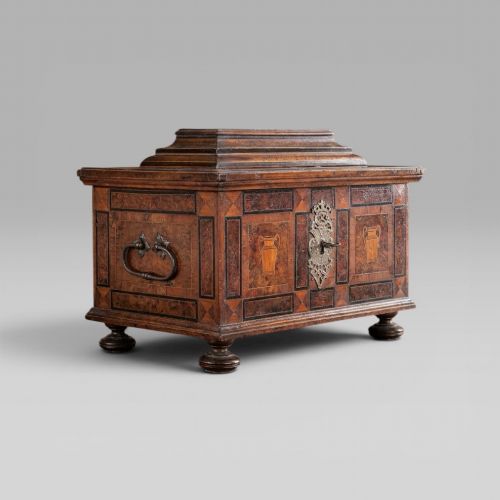
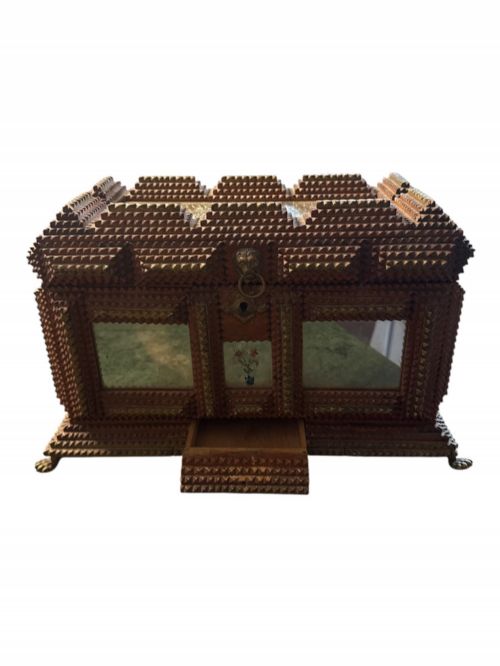
When you search for a brown wood jewellery chest, you encounter miniature chests of drawers, caskets and decorative boxes spanning multiple centuries.
Brown Wood Jewellery Chest
A brown wood jewellery chest encompasses a diverse group of small-scale storage pieces, including miniature chests of drawers, caskets, and desktop specimen cases designed for keepsakes. On this page, the most common forms you meet are mahogany and walnut miniature chests of drawers alongside inlaid wooden caskets.
The origins of these objects stretch from seventeenth-century continental and Welsh workshops through Georgian and Victorian periods up to the early twentieth century. Makers produced these small cabinets utilising various hardwoods, creating functional pieces that often served as apprentice pieces or desktop companions.
Regional variations appear frequently, ranging from Anglo-Indian and Burmese carved boxes to French, Italian Sorrento ware, and English Tunbridge Ware examples. Each style brings distinct decorative techniques and timber choices to the traditional box or miniature chest format.
Materials and construction methods
Cabinetmakers utilised a rich palette of timbers including mahogany, walnut, oak, rosewood, amboyna, and sandalwood, often enhanced with contrasting veneers and solid mouldings. Structural joinery was executed by hand, accommodating the seasonal movement of timber in small-scale carcases.
Surface decoration defined much of the craftsmanship, employing marquetry, parquetry, mother of pearl inlay, chip carving, and intricate Tunbridge Ware mosaic patterns. Metal elements such as brass handles, hinges, and bronze animal decorations provided functional and decorative accents.
Specialised techniques such as oyster veneering on laburnum and deep relief carving on sandalwood or eastern elm demonstrate the diverse regional competencies of makers across Europe and Asia.
Listings feature timbers including mahogany, walnut, rosewood, oak, laburnum, and sandalwood across periods from the seventeenth century to the early twentieth century.
Distinctions in quality and execution
Quality rests upon the precision of the cabinetmaker's joinery, the selection of figured timbers such as burr walnut or amboyna, and the crispness of any hand-carved or inlaid detail. Superior examples display meticulous attention to interior fittings, drawer linings, and the alignment of grain across opening surfaces.
The complexity and condition of decorative elements distinguish finer pieces, particularly in intricate marquetry, micro-mosaic Tunbridge Ware, or deeply carved sandalwood and boxwood. The integrity of the original polish and the preservation of delicate brass or bronze mounts further separate standard production from masterwork execution.
Edwards & Roberts
The Brown Wood Jewellery Chest Glossary
- Apprentice piece
- A small-scale item of furniture created by a craftsman to demonstrate skill and secure entry into a guild. These often take the form of miniature chests of drawers.
- Tunbridge Ware
- A type of decorative woodwork produced in Kent, featuring tiny mosaic tiles made from different coloured natural woods to form geometric or pictorial scenes.
- Marquetry
- The art and craft of applying pieces of veneer to a structure to form decorative patterns, pictures, or designs utilising varied wood grains and tones.
- Oyster veneering
- A method of cutting branches or small trunks transversely to produce circular or oval veneers resembling oyster shells, popular in seventeenth-century furniture.
- Sarcophagus
- A box or casket form featuring a sloping lid and shaped body, frequently utilised for nineteenth-century sandalwood and mahogany jewellery containers.
Brown Wood Jewellery Chest: Frequently Asked Questions
What are apprentice chests?
Apprentice chests are small-scale furniture pieces constructed by woodworkers to prove their proficiency to trade guilds before achieving master status. They replicate full-sized chests of drawers with identical joinery and proportions.
These pieces served functional purposes after their creation, often utilised on dressing tables or desks to store valuables, documents, or jewellery.
How do I identify Victorian pieces?
Victorian pieces often display specific timber choices like walnut, pitch pine, or rosewood, frequently combined with heavy mouldings, marquetry inlay, or brass hardware. The introduction of machine assistance alongside traditional hand joinery characterises the period.
Examining the secondary woods inside drawers and the style of construction helps separate these nineteenth-century examples from earlier Georgian or later Edwardian items.
Where were Tunbridge Ware boxes made?
Tunbridge Ware boxes originated in the spa town of Tunbridge Wells in Kent, England, during the nineteenth century. Artisans gained renown for creating meticulous mosaic decoration using native and imported timbers.
These items were sold as luxury souvenirs and trinket boxes to visitors frequenting the spa, showcasing complex geometric or pictorial tessellation.
How should I clean my wooden box?
Maintenance requires gentle dusting with a soft, dry cloth to remove surface particles without disturbing the polished finish or fragile veneers. Avoid using modern chemical sprays or excessive water on antique timbers.
Applying microcrystalline wax occasionally helps protect the wood and maintain the natural sheen of nineteenth-century or earlier surfaces.