
Brown Walnut Dressing Desk
A brown walnut dressing desk brings warmth and practical surface space to a bedroom, combining figured timber with fitted compartments for daily grooming.
Brown Walnut Dressing Desk
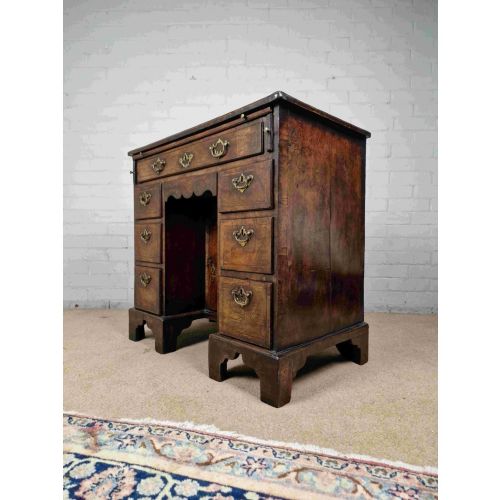
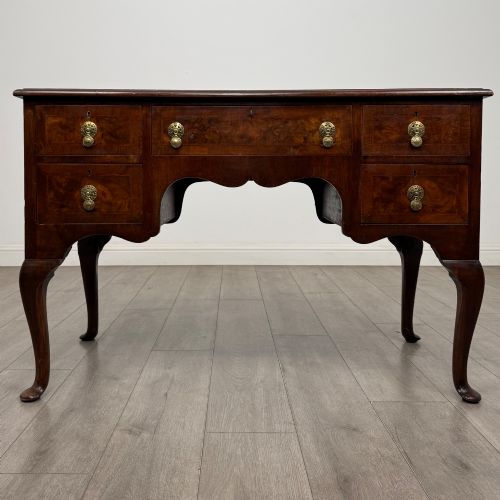
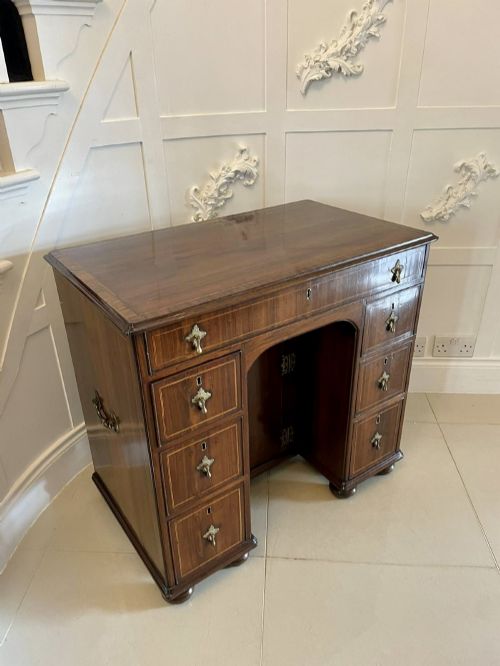
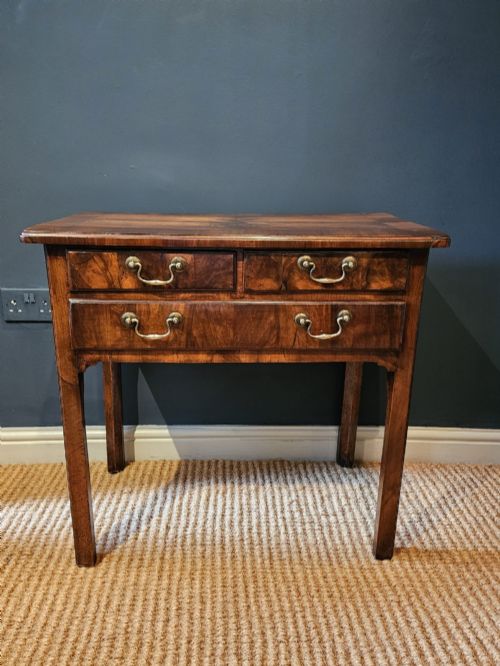
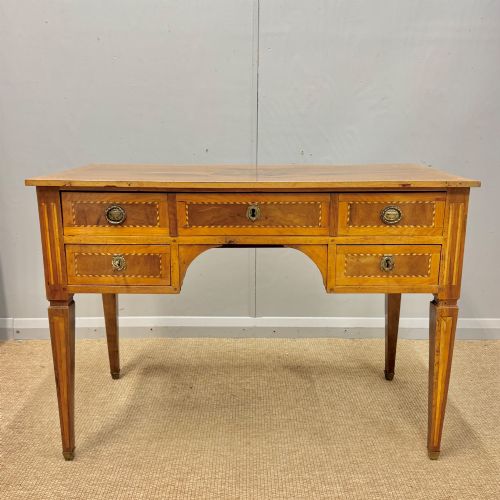
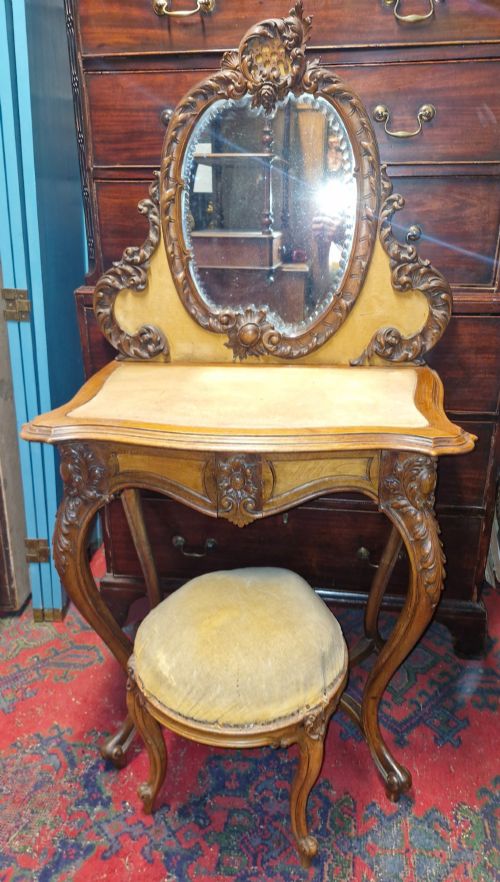
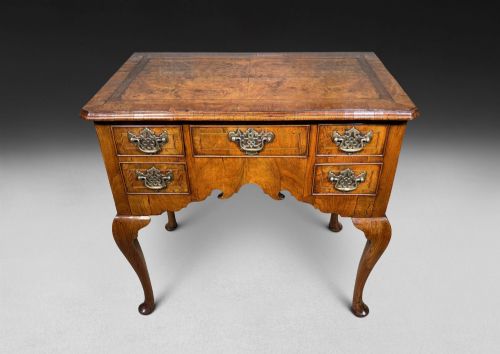
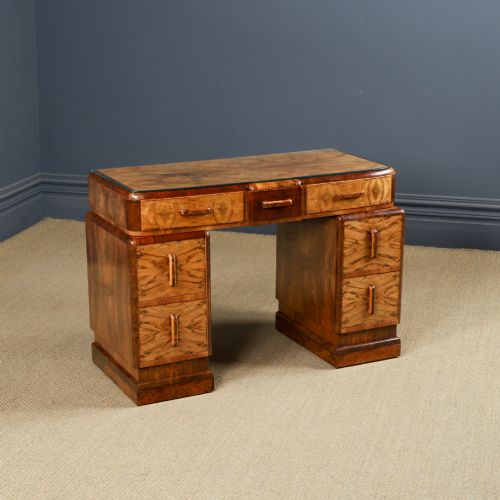
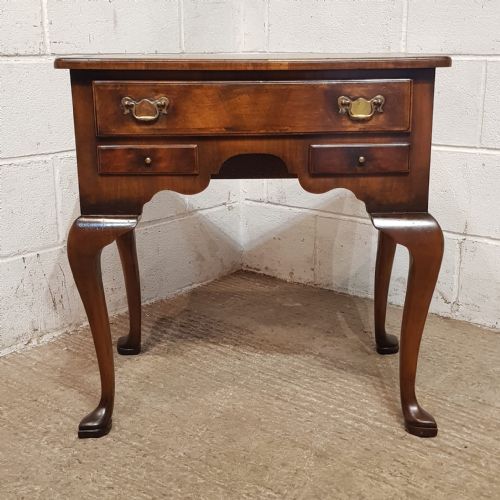
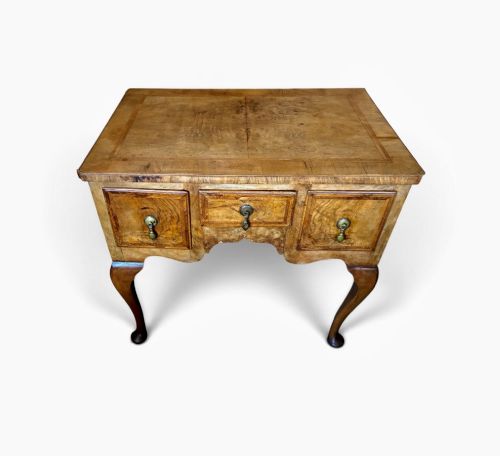
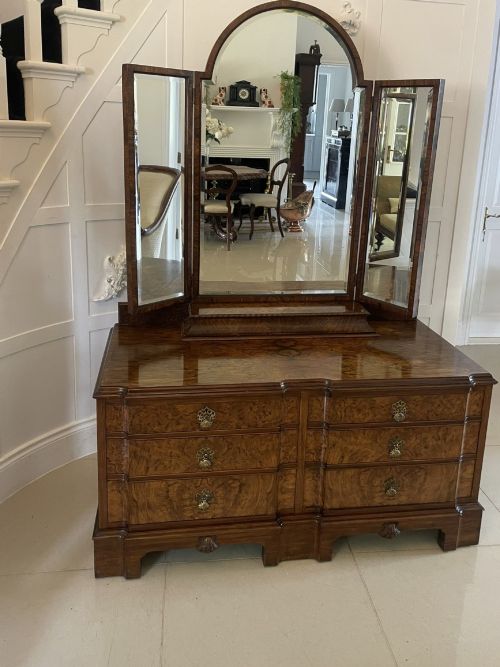
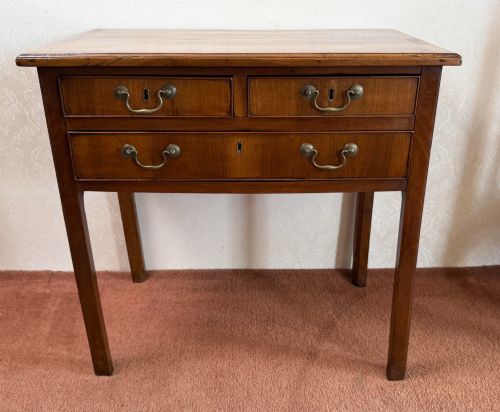
When you search for a brown walnut dressing desk, you encounter pieces spanning from the eighteenth century through to the Art Deco period of the 1930s. The selection includes lowboys, kneehole desks, and Victorian duchess dressing tables designed for personal use and letter writing.
The earlier examples lean towards Georgian, George II, and Queen Anne styles, often featuring compact proportions and lowboy forms. Later nineteenth and twentieth-century versions introduce pedestal designs, burr walnut finishes, and integrated mirrors.
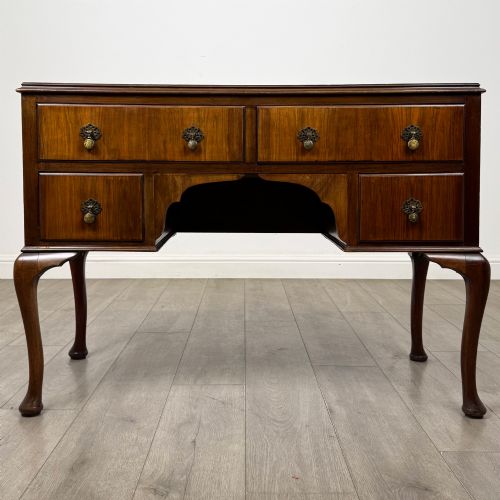
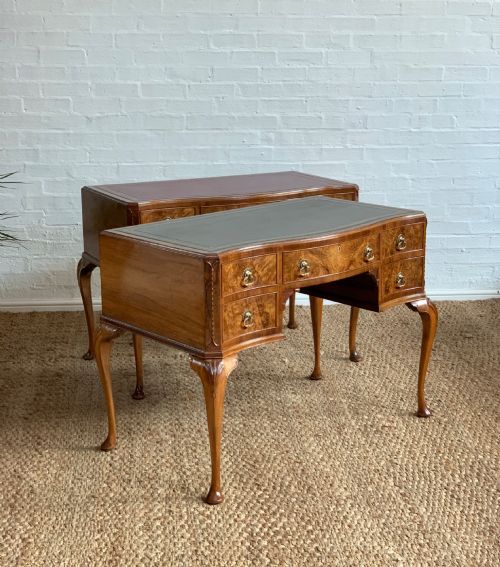
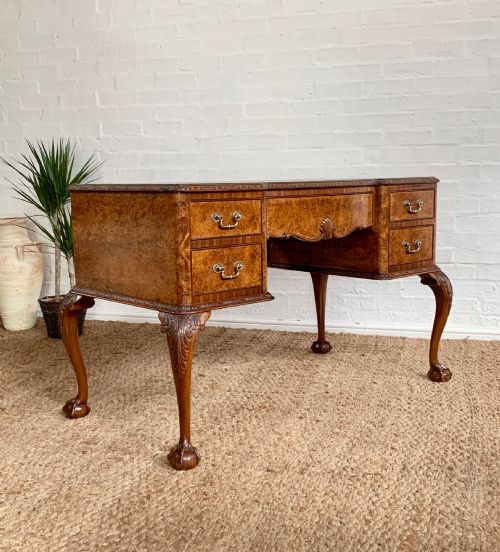
Most entries draw upon Queen Anne revival designs alongside 1920s and 1930s interpretations, providing sturdy timber surfaces supported by elegant cabriole legs or pedestals.
Materials and Construction
Craftsmen built these tables using solid walnut and figured burr walnut veneers over secondary timbers, often incorporating brass handles, hinges, and key escutcheons. Selected pieces integrate green tooled leather writing surfaces or inset glass panels.
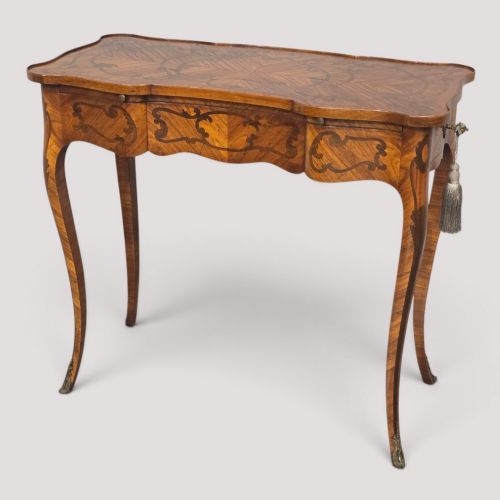
Marquetry inlay appears on select continental and English variations, while structural elements rely on traditional drawer joining and turning techniques appropriate to each period from the 1700s to the twentieth century.
The listings span from 18th-century Georgian lowboys to 1930s Art Deco pedestal desks.
Assessing the Craftsmanship
The standard of a brown walnut dressing desk rests on the selection and matching of the burr or figured walnut veneers across the top and drawer fronts. Grain patterns that flow seamlessly across surfaces indicate superior cabinet work.
Finer examples demonstrate crisp carving on cabriole legs, well-proportioned drawer configurations, and original brass hardware, distinguishing bespoke workshop pieces from simpler production items.
Wylie & Lochhead Glasgow·Maples of London
The Brown Walnut Dressing Desk Glossary
- Lowboy
- A small table with drawers, typically standing on four tall legs and dating from the eighteenth century. It served various functions including dressing and writing.
- Kneehole desk
- A compact desk featuring a central recess for the user's legs, flanked by columns of small drawers. This form provides substantial storage within a small footprint.
- Burr walnut
- Timber taken from a tree growth where the grain has grown in a deformed, swirling manner. It yields highly decorative veneer sheets used on prominent furniture surfaces.
- Marquetry
- Decorative inlay work using various woods and materials applied in patterns such as flowers and birds to furniture surfaces. It creates detailed pictorial designs on top panels.
- Cabriole leg
- A furniture leg that curves out and then in, resembling the shape of an animal's leg. This stylistic element defines many Queen Anne and Georgian pieces.
Brown Walnut Dressing Desk: Frequently Asked Questions
What is a lowboy used for?
A lowboy functioned historically as a small side table or a dressing table where individuals sat to groom or write letters. Its compact size allowed it to fit easily into smaller chambers and dressing rooms.
Today, these versatile tables serve equally well as hallway console tables or dressing desks in modern bedrooms.
How do I date a walnut desk?
Dating relies on observing construction methods, hardware styles, and the overall silhouette of the piece. Eighteenth-century examples display different joinery and leg profiles compared to 1930s Art Deco pedestal designs.
Reference materials and periods listed on each item help confirm the era of manufacture.
What is burr walnut?
Burr walnut comes from a specialised growth on a walnut tree that produces intricate, swirling grain patterns. Cabinet makers slice this wood into thin veneers to cover prominent exterior surfaces.
This technique highlights natural patterns that would not appear in straight-grained timber.
Can I use a dressing desk for writing?
Many dressing tables and lowboys function comfortably as writing desks due to their proportions and integrated drawer space. Some specifically incorporate leather writing surfaces and bureau fitments for correspondence.
Ensure the height of the knee recess accommodates comfortable seating before daily use.