


Curved Walnut Dressing Table
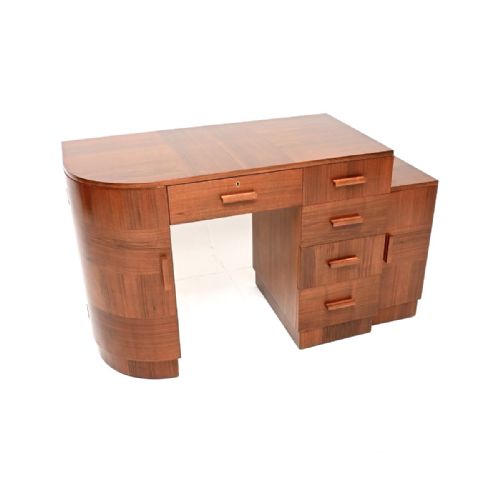
A curved walnut dressing table brings warmth and grain to a bedroom, and you will most frequently meet the streamlined geometric forms of the 1930s on this page.
Curved Walnut Dressing Table
A curved walnut dressing table brings together distinct periods and forms, ranging from the ornate revival styles of the Victorian era to the sleek lines of the twentieth century. When you search for a curved walnut dressing table, you encounter pieces designed primarily for personal grooming and domestic comfort.
The pieces listed on this page span several centuries, reaching back through the Victorian decades and into the eighteenth century with related forms like toilet mirrors. Yet the dominant aesthetic belongs to the 1920s and 1930s, where designers embraced sweeping curves and polished surfaces.
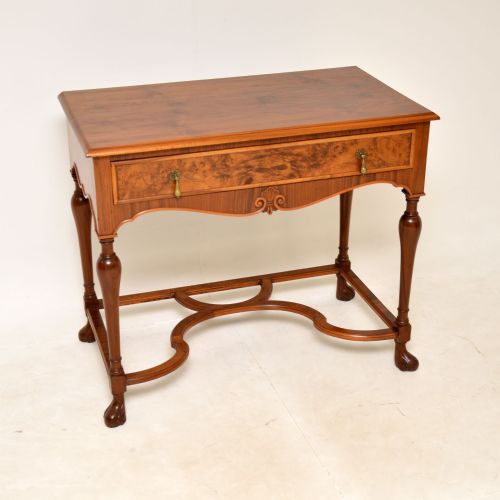
Alongside dedicated dressing tables, the selection includes related bedroom and boudoir furniture such as matching stools, desks, and console tables. These pieces share the defining characteristic of figured wood and rounded silhouettes, making them adaptable for use as writing desks or hallway consoles.
What varies in quality
The distinction between standard production and exceptional craftsmanship lies in the selection and matching of the veneer. Workshops that invested time in book-matching the grain across a curved front created a fluid visual harmony that lesser pieces lack.
Construction methods also dictate the longevity and refinement of the furniture, particularly in how smoothly drawers operate and how seamlessly the curved wooden sections meet. Pieces bearing the mark of known design houses display a superior handling of proportions and edge detailing.
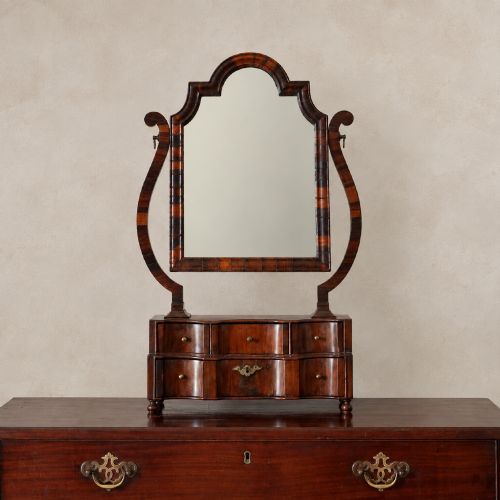
Several dressing tables come with tilting mirrors that have faithfully watched generations adjust their hats.
Maurice Adams·Harry and Lou Epstein
The Curved Walnut Dressing Table Glossary
- Burr walnut
- A prized timber harvested from the wart-like growths on walnut trees, yielding dense and highly decorative patterns of swirling grain. It is typically sliced into thin veneers for application onto furniture surfaces.
- Console table
- A table designed to stand flat against a wall, frequently supported by ornate legs or brackets. In bedroom settings, these tables often double as compact dressing surfaces.
- Toilet mirror
- A smaller tabletop mirror mounted on a pivoting frame, designed to sit upon a chest of drawers or a dedicated dressing table. Eighteenth-century examples often incorporate small drawers within the base block.
Curved Walnut Dressing Table: Frequently Asked Questions
What periods do these dressing tables come from?
The pieces span from the eighteenth century through Victorian revival periods up to the early twentieth century.
Twentieth-century examples from the 1920s and 1930s appear most frequently, showcasing the streamlined aesthetic of the interwar period.
How do I care for walnut veneer?
Keep the wood away from direct sunlight and excessive heat sources to prevent the veneer from drying or lifting.
Polish the surface gently with a soft cloth and traditional beeswax to maintain the natural lustre of the grain.
Are matching stools usually included?
Stools sometimes accompany the dressing tables as part of an original suite, designed with matching wood and upholstery.
Individual stools also appear independently on the page, sharing the same curved wooden forms and period styles.
Can these tables be used as desks?
Many of the dressing tables and console formats offer adequate surface depth and knee clearance for writing.
Designers of the Art Deco period frequently created multifunctional furniture suited to both boudoir and study use.