


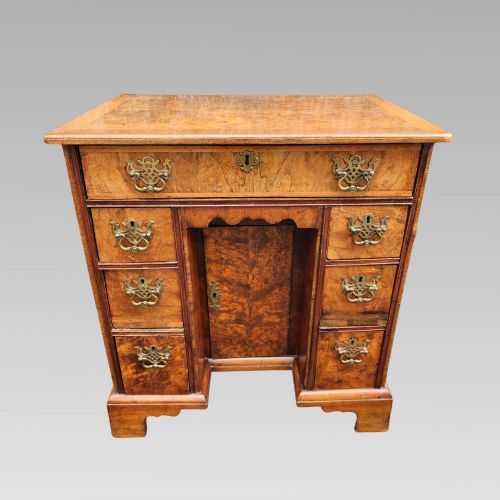


Edwardian Burr Walnut Vanity
These edwardian burr walnut vanity items offer rich timber grain and period charm, drawing collectors who appreciate historic craftsmanship.
Edwardian Burr Walnut Vanity
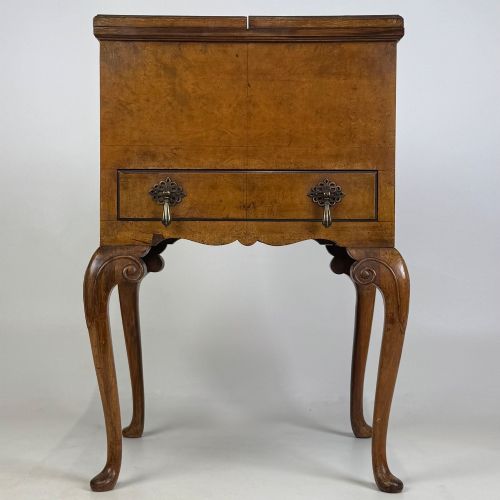
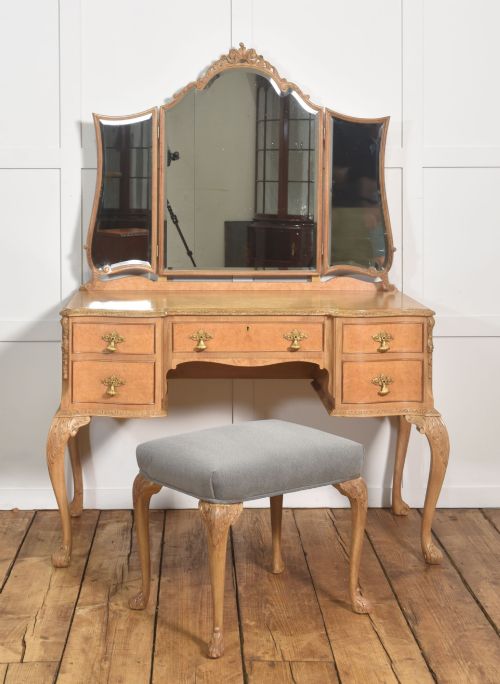
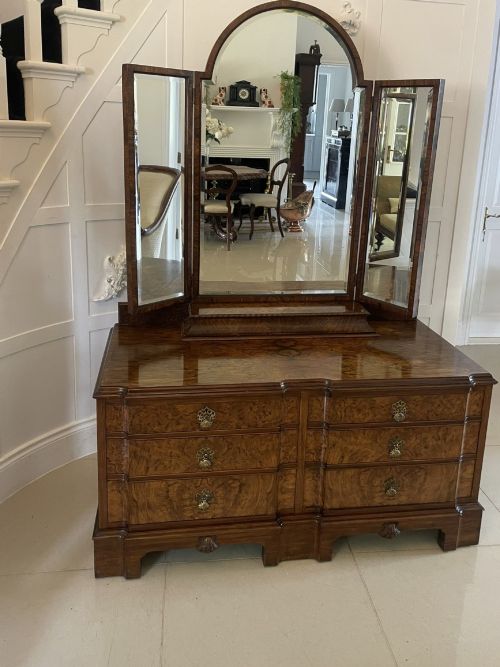
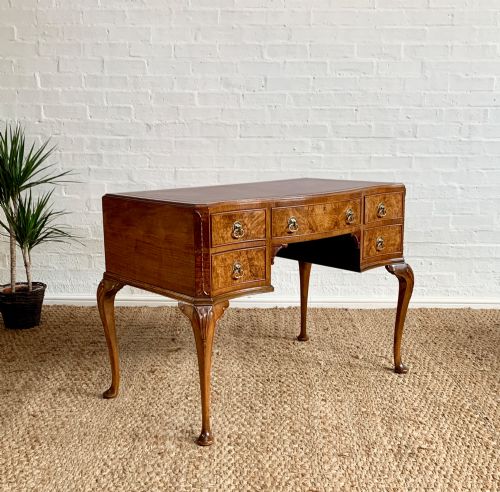
The most common forms you will encounter on this page include dressing tables equipped with mirrors, alongside writing desks and compact glove or jewellery boxes. These pieces demonstrate the enduring popularity of walnut timber across multiple decades of domestic furniture production.
Stylistic influences vary significantly across the listings, ranging from Queen Anne Revival curves to Art Deco geometries and Victorian mass. This stylistic breadth allows buyers to integrate these wooden pieces into various interior schemes.
Assessing Quality and Execution
The sophistication of the veneer matching and the depth of the French polished finish largely determine the visual success of a piece. Finer examples display continuous, balanced grain patterns across multiple drawers and tabletops.
The integration of secondary timbers and the original hardware, such as stamped brass handles or functioning locks, elevate a piece above standard domestic output. Structural stability in complex forms like kidney-shaped desks or triple-mirror dressing tables also marks superior workshop output.
Object forms range from large dressing tables with mirrors down to compact glove boxes and razor sets.
Wylie and Lochhead Glasgow·Maples of London·Maurice Adams·JH Browne of The Waldorf Hotel
The Edwardian Burr Walnut Vanity Glossary
- Burr walnut
- A veneer sliced from the distorted growth or burl of a walnut tree, prized for its intricate, swirling grain patterns. It provides a highly decorative surface for high-end furniture.
- Kneehole desk
- A writing table featuring a central recessed space for the legs, flanked by pedestals of small drawers. This form became popular during the eighteenth century and was revived later.
- French polishing
- A wood finishing technique that applies many thin coats of shellac using a pad to achieve a high gloss. This method deepens the natural colour of the walnut timber.
- Glove box
- A small, fitted wooden box designed to store accessories, often lined with silk or velvet. Victorian examples frequently incorporate brass mounts and secure locks.
Edwardian Burr Walnut Vanity: Frequently Asked Questions
How do I care for burr walnut surfaces?
Keep wooden pieces away from direct sunlight and radiators to prevent the timber and delicate veneers from drying out.
Dust regularly with a soft, dry cloth and avoid modern silicone polishes that can damage the traditional finish.
What periods do these vanity items span?
While associated with the Edwardian era, surviving examples on this page range from the mid-nineteenth century through the Art Deco period of the 1930s.
Maker preferences and revival styles shifted during these decades, altering the decorative details found on dressing tables and desks.
How were these walnut desks used historically?
Writing desks and dressing tables served as essential bedroom and parlour furniture for correspondence and personal grooming.
Smaller boxes stored delicate accessories like gloves, jewellery, or shaving sets safely away from dust.
Can I mix different revival styles together?
Queen Anne Revival curves and Art Deco geometric lines sit comfortably alongside simpler Victorian forms within a mixed interior.
The shared use of rich walnut timber helps unify disparate pieces from various decades.