


Brown Walnut Bedstead
A brown walnut bedstead brings rich timber warmth and striking period character straight into the bedroom.
Understanding the brown walnut bedstead
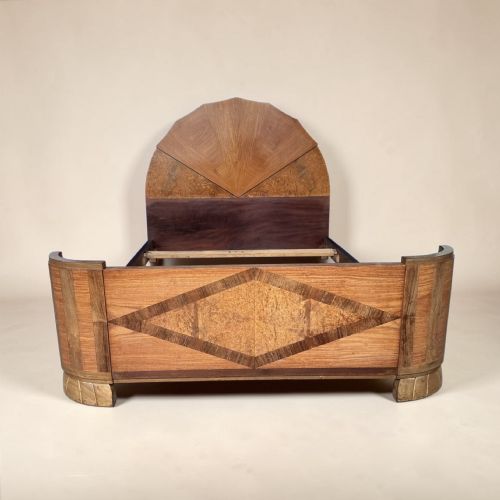
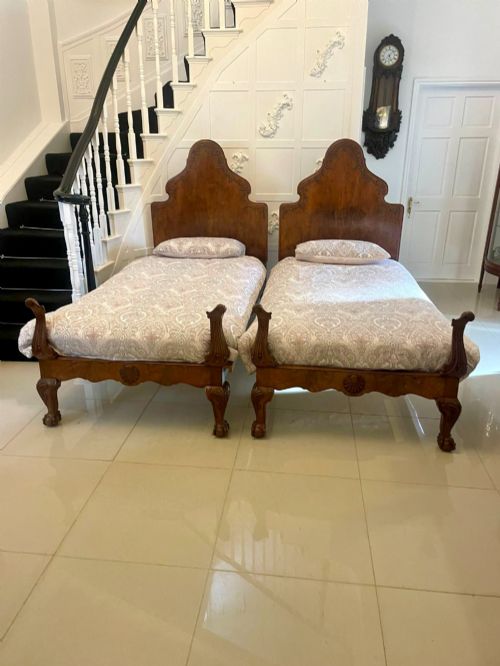
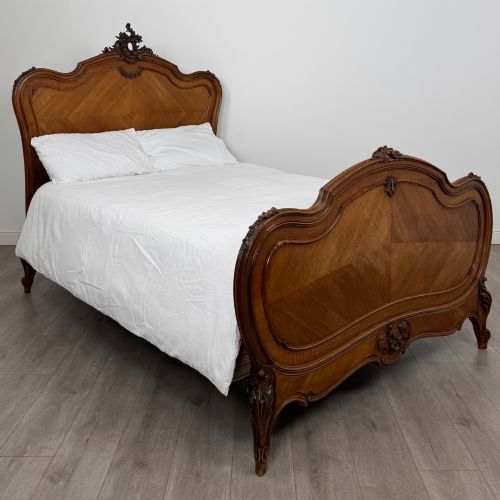
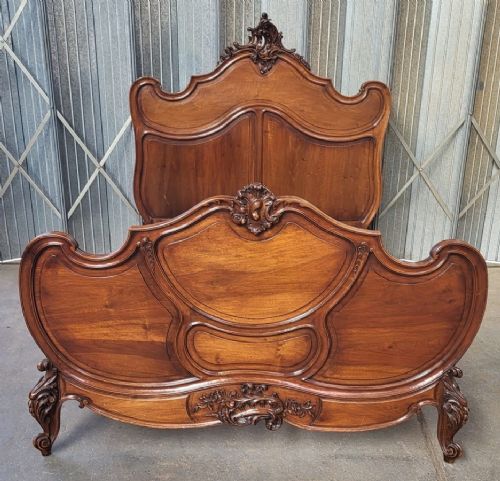
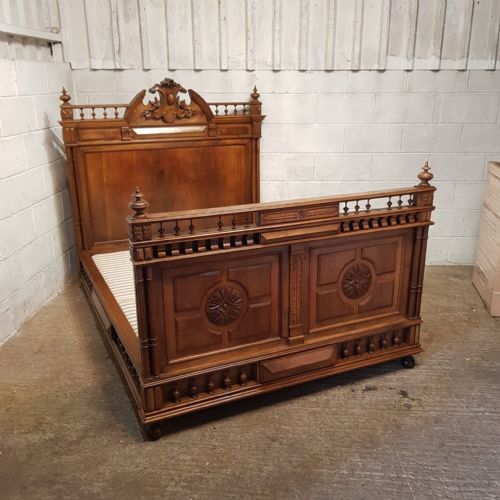
A brown walnut bedstead encompasses substantial timber frames ranging from late nineteenth-century French carved designs to geometric Art Deco double beds. These pieces showcase deep wood tones and varied forms, with French provincial styles and Queen Anne revival single beds appearing regularly.
Buyers searching for a brown walnut bedstead often encounter twentieth-century interpretations, particularly pieces dated around nineteen-thirty featuring figured or burr veneers. Alongside these, nineteenth-century and earlier continental examples offer heavier carved ornamentation and grand proportions.
The selection spans single, double, and kingsize formats, often incorporating contrasting materials like giltwood or metal elements. Whether selecting a fan-shaped Art Deco creation or a classic panelled frame, each object relies on the natural grain of walnut to anchor the bedroom scheme.
Materials and construction
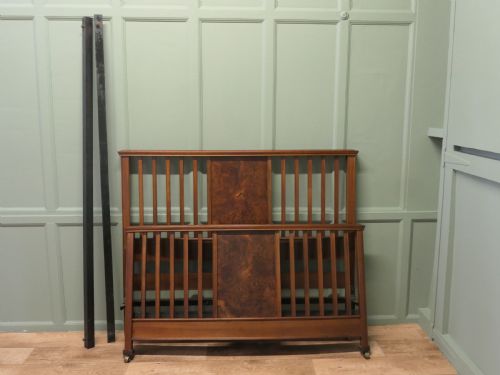
Construction relies upon solid walnut timbers and specialist walnut veneers applied to stable core woods. Cabinetmakers utilised burr walnut veneer to create dramatic, swirling patterns across headboards and footboards, particularly during the Art Deco period.
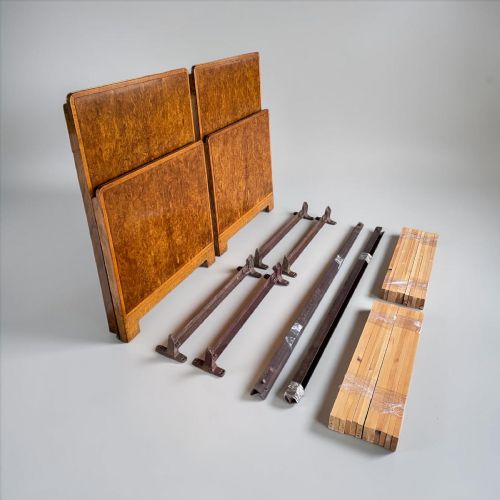
Structural integrity often depended on iron or brass internal fittings alongside traditional timber joinery. Artisans enhanced select pieces with hand-carving or giltwood highlights, marrying structural timber with decorative surface enrichment.
Retail Price Guide 2026
Typical UK retail prices for brown walnut bedstead, calculated from the Sellingantiques database of over a million retail prices indexed since 2003. This retail price guide relies exclusively on Sellingantiques data; no external sources or auction records are used, so the figures do not describe the wider market.
Art Deco designers loved walnut so much they engineered fan shapes specifically to show off the wood's wildest natural curls.
Assessing quality and finish
Quality rests in the choice of timber and the ambition of the veneer work rather than mere scale. Heavily figured surfaces and balanced burr patterns demonstrate superior selection by the cabinetmaker, whereas simpler builds rely on uniform grain.
The sophistication of the carving separates standard production from exceptional craftsmanship. Crisp detailing on French revival frames and harmonious proportions across headboard and footboard define the upper tier of these pieces.
The Brown Walnut Bedstead Glossary
- Burr walnut veneer
- A thin slice of timber taken from a tree growth or knot, displaying intricate swirling grain patterns. This decorative layer covers structural surfaces to create dramatic visual movement.
- Giltwood
- Timber that has been coated with gold leaf or gold paint. This technique accents carved details on continental frames.
- Queen Anne style
- A design movement characterised by pad feet, cabriole legs, and smooth walnut surfaces. It emerged in the eighteenth century and saw robust revival periods.
- Art Deco
- A design style from the early twentieth century defined by streamlined geometric shapes and fan motifs. Figured walnut featured prominently in these modern bedroom suites.
Frequently Asked Questions
How do I date a walnut bed?
Dating relies on examining the construction methods, hardware, and stylistic indicators present in the woodwork. Art Deco pieces from the nineteen-thirties display distinct geometric symmetry and figured veneers.
Earlier nineteenth-century or eighteenth-century examples exhibit hand-carved motifs and different assembly techniques. Comparing the core woods and veneer thickness helps confirm the era of manufacture.
Are these beds standard sizes?
Older bedsteads often deviate from modern mattress dimensions, particularly continental European pieces. French sizes and nineteenth-century builds may require custom mattresses for a proper fit.
Checking internal rail measurements before purchase ensures modern bases or slats will sit correctly within the antique frame.
How do I care for walnut veneer?
Walnut requires stable indoor humidity levels to prevent timber movement and veneer lifting. Direct sunlight can fade the rich brown tones over time, so placement away from windows is advised.
Routine dusting with a soft cloth keeps the polished surface secure without the need for heavy chemical polishes.
What is figured walnut?
Figured walnut describes timber possessing exceptional natural grain patterns, such as ripples, waves, or distinct colour variations. Sawyers select these specific logs for prominent display on headboards.
This aesthetic choice elevates plain timber surfaces into striking decorative centerpieces.