




Brown Salt Glazed Pitcher
A brown salt glazed pitcher brings robust stoneware utility and rich textured surfaces into daily domestic service.
Brown Salt Glazed Pitcher
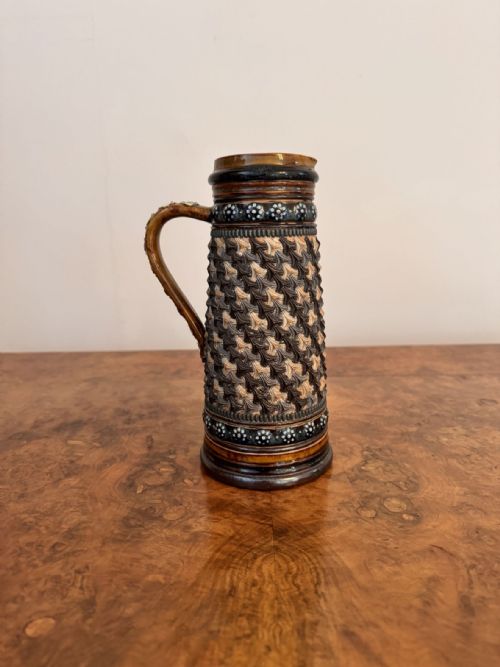
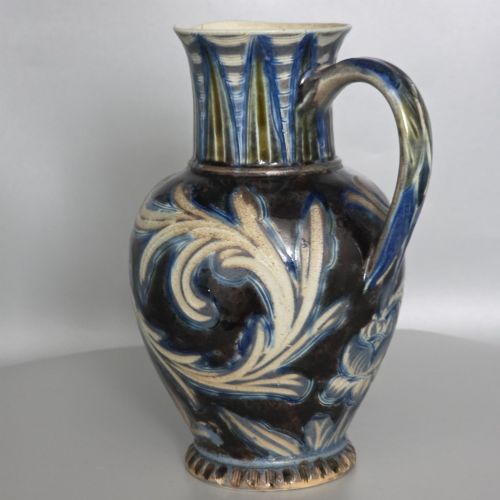
A brown salt glazed pitcher is a durable ceramic vessel shaped for pouring liquids, spanning periods from the Georgian era through to the Victorian age and into the early twentieth century. These pieces appear in forms such as jugs, ewers, tygs, and flagons, reflecting both utilitarian tavern use and decorative studio pottery.
The most common examples on this page date from the Victorian period, frequently associated with Doulton Lambeth manufacture. They include harvest jugs adorned with relief motifs, puzzle jugs, and art pottery designs that demonstrate the versatility of salt glaze stoneware.
How they were made
These vessels are shaped from dense clay and fired at high temperatures until the material vitrifies into impervious stoneware. Common salt is thrown into the kiln during the firing process, reacting with the silica in the clay body to produce a characteristic pitted, orange-peel texture across the surface.
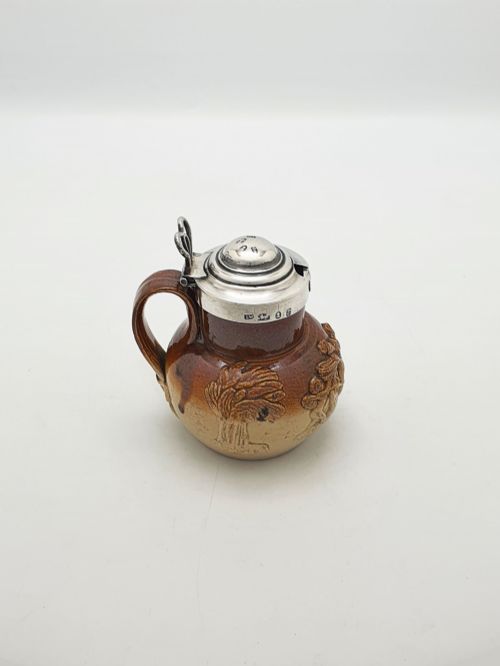
Many examples incorporate applied decorative elements such as sprigged figures, incised patterns, and metallic mounts in sterling silver or silver plate. Potters often utilised metal collars, hinged lids, and rims to reinforce the stoneware bodies or to elevate the status of the vessel.
Brown Salt Glazed Pitcher Retail Price Guide 2026
Typical asking prices for brown salt glazed pitcher among the pieces listed under this phrase on Sellingantiques today, from the lower quarter to the upper quarter. They describe what is for sale here now, not the wider market.
A sixteenth-century German merchant might have used a mask-decorated flagon, while a Victorian patron wrestled with the secret spouts of a puzzle jug.
What varies in quality
Quality in a brown salt glazed pitcher rests on the crispness of the moulded or incised decoration and the evenness of the salt glaze finish. Superior pieces display sharply defined motifs and balanced proportions that speak to the skill of the potter or the standing of the studio.
The integration of precious metal hardware, such as hallmarked sterling silver collars or hinged lids, distinguishes standard kitchenware from presentation pieces. Maker marks, artist ciphers, and stamped studio details further elevate the standing of individual vessels.
Doulton Lambeth·Emma Shute·Mortlake
The Brown Salt Glazed Pitcher Glossary
- Salt glaze
- A vitreous coating formed by throwing common salt into the kiln during high-temperature firing. This chemical reaction creates a distinctive textured surface resembling orange peel.
- Stoneware
- A heavy, dense ceramic fired at high heat until non-porous. It resists liquids without needing an internal liquid glaze.
- Tyg
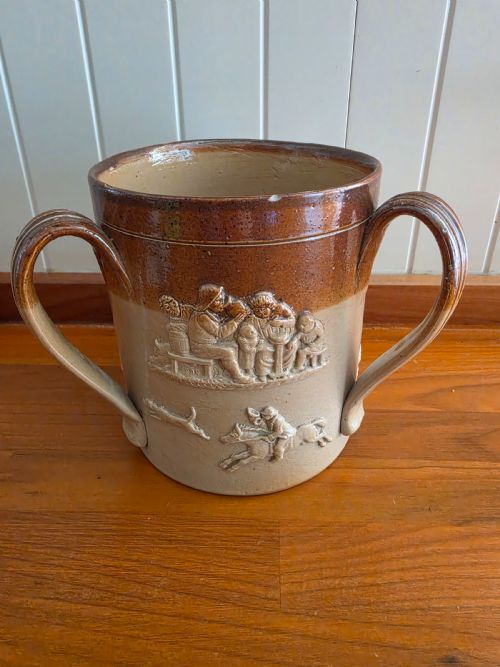
- A drinking vessel featuring three or more handles designed for communal passing around a table. These pieces frequently appear in early nineteenth-century stoneware.
- Puzzle jug
- A ceramic vessel with a perforated neck that prevents normal pouring, requiring the drinker to cover hidden holes to draw liquid through the spout. They were popular tavern pieces that tested the drinker's ingenuity.
- Sprigging
- The technique of applying moulded clay reliefs to the unfired body of a vessel before glazing and firing. This method creates the raised decorative hunting scenes seen on harvest jugs.
Brown Salt Glazed Pitcher: Frequently Asked Questions
How do I clean an antique stoneware pitcher?
Wash the vessel gently in warm water using a mild detergent and a soft cloth, avoiding harsh scouring pads that might scratch the salt glaze or damage any attached metal mounts.
Dry the piece thoroughly with a soft towel, paying particular attention to silver rims, collars, and hinged lids to prevent tarnishing or moisture retention.
Were these pitchers used for ale or water?
These robust stoneware vessels served primarily for holding and pouring ale, cider, and beer in homes and taverns due to the insulating properties of the heavy clay body.
Larger flagons and jugs also functioned for general liquid storage, while finer art pottery examples were made for display or tea service use.
How can I tell a Victorian salt glaze jug from an earlier one?
Georgian and early nineteenth-century examples often exhibit simpler, heavier profiles with utilitarian salt glaze finishes, whereas Victorian pieces frequently display intricate incised Art Nouveau patterns or elaborate relief scenes.
Factory stamps, artist ciphers, and hallmarks on attached silver collars provide definitive clues for dating pieces from the later nineteenth century onwards.
Can I still use these antique pitchers for serving drinks?
While the vitrified stoneware body remains entirely waterproof and functional, the presence of antique silver mounts, historic repairs, or delicate handles makes careful handling essential.
Many collectors prefer to exhibit these pieces as decorative objects or dry flower vases rather than risking damage during modern dining use.