




Doulton Lambeth Salt Glaze
These Doulton Lambeth salt glaze pieces bring tactile Victorian stoneware character to a room through salt-fired textures and artist-led studio designs.
Doulton Lambeth Salt Glaze
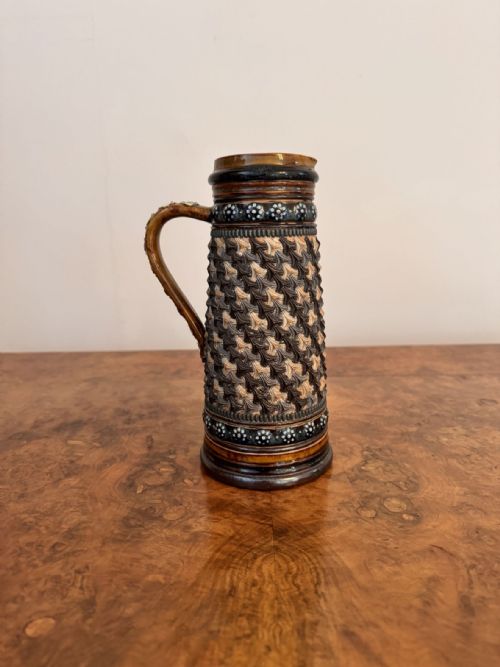
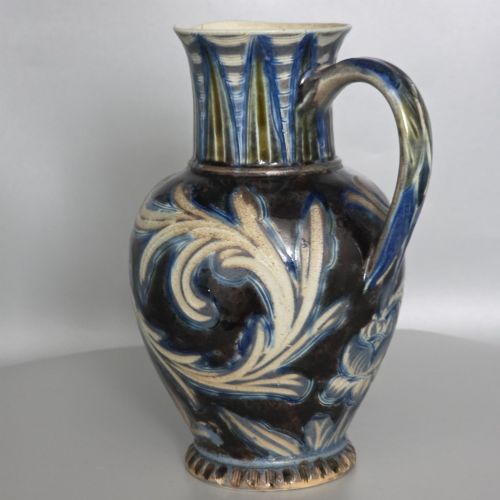
When you search for doulton lambeth salt glaze, you enter a field defined by salt-fired stoneware vessels produced during the Victorian era. The evidence shows these pieces span jugs, pitchers, vases, ewers, jardiniere planters, and tea sets originating from the late nineteenth century.
The most common forms you will encounter on this page are jugs and vases bearing the distinct aesthetic of Victorian arts and crafts and art nouveau movements. These items range from harvest jugs and puzzle jugs to decorative ewers and silver-mounted beakers.
Dated examples in the listings point toward production clusters in the eighteen-seventies, eighteen-eighties, and eighteen-nineties, alongside pieces attributed broadly to the nineteenth century and nineteen hundred.
Distinctions in Quality
Quality in these stoneware pieces rests on the crispness of the incised ornament and the success of the salt-glaze finish across the ceramic body. Pieces that demonstrate careful execution by notable studio hands stand apart from standard production items.
The integration of secondary materials, such as hallmarked sterling silver rims or fitted lids, influences the overall character of the piece. Preservation of the textured glaze surface without firing distortion marks the boundary of superior output.
Doulton Lambeth Salt Glaze Retail Price Guide 2026
Typical asking prices for doulton lambeth salt glaze among the pieces listed under this phrase on Sellingantiques today, from the lower quarter to the upper quarter. They describe what is for sale here now, not the wider market.
Listings demonstrate that salt-glazed stoneware from this London pottery frequently incorporates sterling silver rims and handles.
Emma Shute·Emily Stormer·Florence Barlow
The Doulton Lambeth Salt Glaze Glossary
- Salt Glaze
- A glossy, translucent glaze with a texture resembling orange peel, formed by throwing common salt into the kiln during high-temperature firing. This chemical reaction creates a durable finish unique to stoneware.
- Stoneware
- A heavy, vitrified ceramic made from clay fired at high temperatures until impervious to water. It forms the robust structural body for salt-glazed vessels.
- Ewer
- A large jug with a wide spout and flared base, historically used for pouring water. In this context, it often serves a purely decorative function.
- Jardiniere
- An ornamental ceramic pot or stand designed to hold growing plants or flowers. These items appear as substantial vessels in Victorian interiors.
- Puzzle Jug
- A traditional drinking vessel featuring a pierced neck and multiple spouts designed to challenge the drinker to imbibe without spilling. Surviving examples showcase clever ceramic engineering.
Doulton Lambeth Salt Glaze: Frequently Asked Questions
What is Doulton Lambeth salt glaze?
It is Victorian stoneware pottery produced in London using a salt-firing technique that yields a distinctive textured surface.
The listings show this category spans functional and decorative forms created during the late nineteenth century.
How do I date these pieces?
Dating relies on stamped factory marks, recorded artist signatures, and stylistic indicators such as arts and crafts or art nouveau motifs.
Most examples documented here cluster in the decades between eighteen-seventy and nineteen hundred.
Were these jugs used for daily dining?
Many vessels, including harvest jugs and water pitchers, were made for functional table use during the Victorian period.
Others, such as puzzle jugs and decorative ewers, served ornamental purposes or commemorated specific jubilees.
What metals are found on these ceramics?
Sterling silver rims, mounts, and lids appear frequently on top-tier jugs, beakers, and tea sets from this studio.
These silver additions were applied to protect vulnerable ceramic edges and elevate the status of the vessel.