

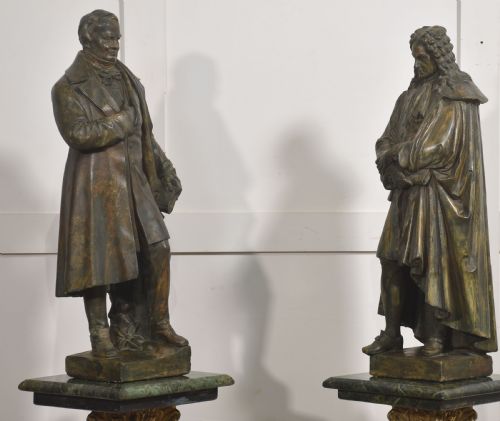

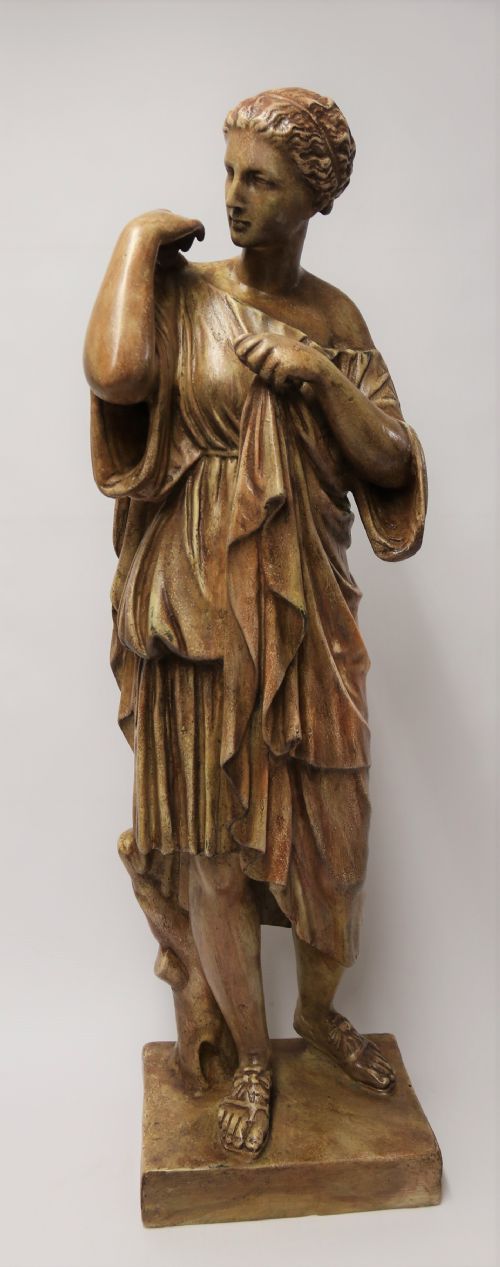


Brown Plaster Statue
A brown plaster statue brings character to a room through modelled form and patinated surface, offering accessible sculptural presence from the nineteenth and early twentieth centuries.
Brown Plaster Statue
A brown plaster statue captures sculptural subjects ranging from classical figures and literary heroines to Orientalist studies and portraits. These pieces reflect periods including the Victorian era, the Edwardian years, and the early decades of the twentieth century.
Most examples found here appear as patinated figures, bronzed plaster casts, or chalkware representations. Forms vary from full-length statues of Diana the Huntress and Samurai warriors to busts of musicians and classical ladies.
Originating from diverse workshops and makers, these statues range in scale from cabinet pieces to large decorative figures. Their subjects span Neoclassical, Orientalist, Expressionist, and Art Deco styles.
Materials and construction
These works rely on plaster, chalkware, and terracotta, often cast from moulds and finished by hand. Makers applied surface treatments including dark patination, bronze finishes, polychrome pigment, and occasional touches of gold leaf to simulate heavier metals or stone.
Listings feature works from the Victorian and Edwardian periods alongside 1920 and 1930 examples, utilising materials such as terracotta, chalkware, and gold leaf.
Assessing quality and execution
Quality in a brown plaster statue rests on the crispness of the casting and the sensitivity of the hand-finishing. Finer pieces retain sharp facial expressions, clean drapery folds, and detailed ornamentation without the blurring seen in worn secondary casts.
The sophistication of the surface patination or polychrome pigment distinguishes superior examples. Skilled application of bronze finishes and pigment creates depth and realism, whereas coarser pieces show flat or uniform coloration.
Dopmeier·Rodolphe Soiron·Octave Galliard-Sansonetti
The Brown Plaster Statue Glossary
- Plaster
- A building and casting material composed of gypsum, used to create detailed sculptural figures when mixed with water and poured into moulds.
- Chalkware
- A moulded material made from plaster or gypsum, typically painted to imitate more expensive earthenware or bronze items.
- Patinated
- A treated surface finish designed to simulate the natural ageing of metal, bronze, or wood through applied dark pigments and varnishes.
- Grand Tour
- A cultural journey undertaken by nineteenth-century travellers who purchased small-scale classical sculptures and architectural souvenirs abroad.
Brown Plaster Statue: Frequently Asked Questions
What is chalkware?
Chalkware is a moulded material composed primarily of plaster or gypsum that is painted to resemble bronze, terracotta, or carved stone. These decorative figures were widely produced during the nineteenth and early twentieth centuries as an affordable alternative to metal sculpture.
The surface finish on chalkware often includes hand-applied pigments or patination. Care must be taken with these pieces to protect the delicate painted layer from moisture and harsh cleaning methods.
How do I clean a plaster statue?
Dusting a plaster statue requires a soft, dry brush or a clean microfiber cloth to remove surface particles without disturbing the patination. Avoid using water, liquid cleaners, or abrasive agents, which can dissolve the plaster or strip away applied pigments and gold leaf.
Displaying these statues away from areas of high humidity and direct sunlight helps preserve the integrity of the material and its surface finish. Gentle handling is essential due to the fragile nature of cast plaster.
What is bronzed plaster?
Bronzed plaster is a technique where a plaster cast receives a specialised surface coating or metallic paint to mimic the appearance of cast bronze. This method offered the visual weight and dark metallic sheen of bronze at a fraction of the weight and cost.
Over time, these finishes develop their own distinct character. Examining the base or areas of minor wear often reveals the white plaster beneath the dark metallic surface layer.
Are these pieces original nineteenth-century works?
The pieces listed originate from specific historical periods including the Victorian era, the Edwardian period, and the early twentieth century. Each statue bears stylistic and material characteristics consistent with its attributed date of manufacture.
Documentation, maker marks, and traditional casting techniques help identify the age of an object. Examining the condition of the surface patination provides further insight into the history of the piece.