


Orientalist Table Sculpture
Orientalist table sculpture brings the dramatic narratives of distant cultures right into the room.
Orientalist Table Sculpture
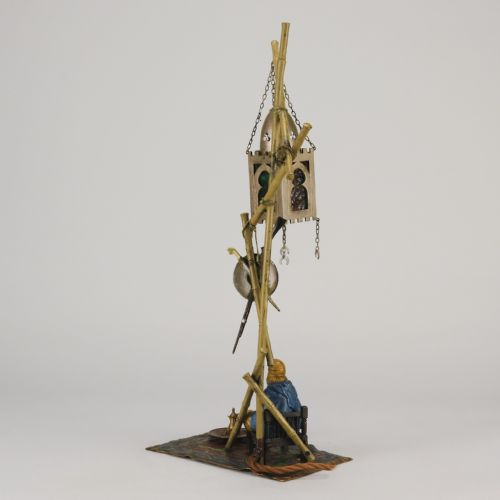
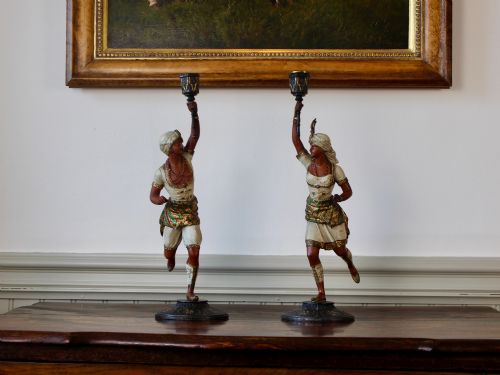
Orientalist table sculpture encompasses figures, lamps, and candlesticks produced primarily around the late nineteenth and early twentieth centuries. These works draw heavily upon themes of Orientalism, Japonisme, and Assyrian Revival, capturing figures and scenes that captivated European makers of the era.
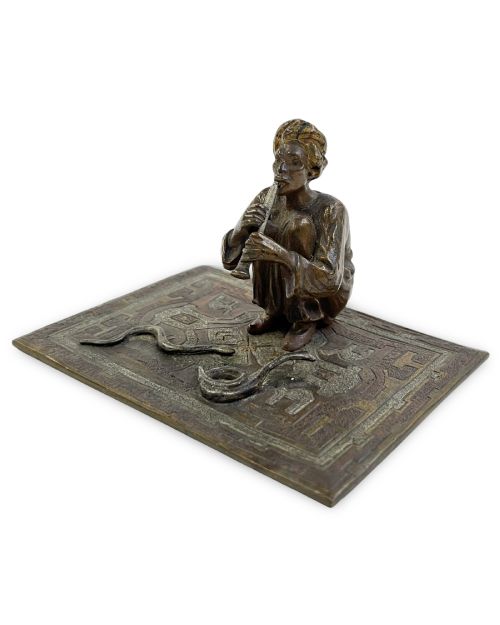
Collectors frequently encounter cold-painted bronze figures and lamps from this span, alongside spelter, porcelain, and plaster creations. Forms range from seated figures and snake charmers to elaborate lamps and figural candlesticks.
The aesthetic bridges decorative utility and dramatic narrative, appearing in styles from the nineteenth century through Art Deco. Pieces often serve double duty as functional lighting or perfume lamps while retaining their sculptural presence.
How they were made
Makers utilised cold-painted bronze, spelter, and porcelain as primary mediums, often applying hand-applied paint directly onto the metal surface. This cold-painting technique required steady brushwork to bring out the intricate details of robes, furnishings, and facial expressions.
Alabaster and glass also appear among the listed works, sometimes combined with metal casting to create illuminated table lamps and veilleuses. Ceramic pieces benefited from detailed moulding and enamelling, as seen in porcelain figures and perfume lamps.
Object types range from practical table lamps and candlesticks to standalone statues, figurines, and veilleuses.
What varies in quality
The fineness of the casting and the preservation of the delicate cold-painted surface distinguish superior examples from ordinary ones. Bronze pieces generally exhibit sharper detail and greater durability than their spelter counterparts.
Artistry in the modelling of the figures, from the expression of a dancer to the posture of a seated scholar, dictates the aesthetic success of the piece. Attribution to known makers adds another layer of distinction to the craftsmanship.
Franz Bergman·Franz Xaver Bergman·Argilor·Bruno Zach·Carl Thieme Dresden
The Orientalist Table Sculpture Glossary
- Cold-Painted Bronze
- Bronze sculpture decorated with cold-applied paints that are not kiln-fired. This technique demands careful maintenance to preserve the original pigment.
- Spelter
- A zinc alloy frequently used as a less costly alternative to bronze for figural castings. It is often painted to simulate heavier metals.
- Veilleuse
- A small ceramic or porcelain night light and food warmer popular in France. They often double as decorative perfume lamps.
- Japonisme
- The influence of Japanese art and aesthetics on Western works, particularly prominent in late nineteenth-century design.
- Assyrian Revival
- An architectural and decorative style inspired by ancient Assyrian art. It manifests in figures depicting ancient kings and queens.
Orientalist Table Sculpture: Frequently Asked Questions
How do I care for cold-painted bronze?
Cold-painted bronze requires gentle dusting with a soft, dry cloth. Avoid using water, chemical cleaners, or polishes, as these will damage the delicate paint layers.
Keep pieces away from direct sunlight and high humidity to preserve the original colours and finish.
What is a perfume lamp?
A perfume lamp is a functional sculptural object designed to diffuse scent into a room while providing soft illumination. They typically feature a hollow body with openings for heat and fragrance to escape.
Many French Art Deco examples take the form of figures, such as elephant tamers, combining lighting with decorative ceramics.
How do I distinguish bronze from spelter?
Bronze is heavier, denser, and generally exhibits sharper casting details than spelter. Spelter is a softer zinc alloy that often shows a lighter weight and can feel cooler or more brittle.
Examining the underside or areas of wear can reveal the underlying greyish metal of spelter beneath the painted finish.