
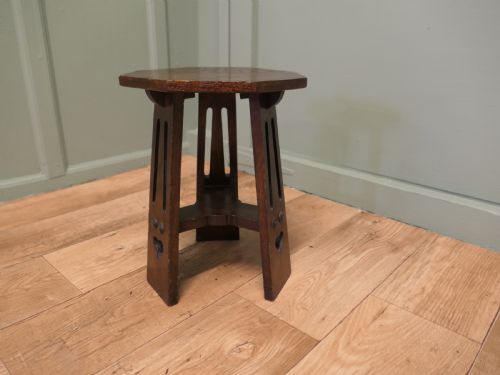
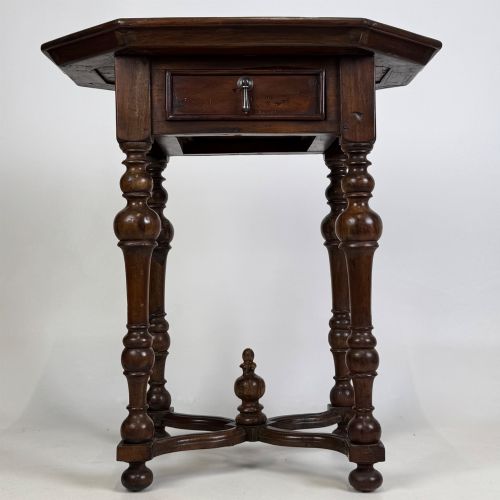
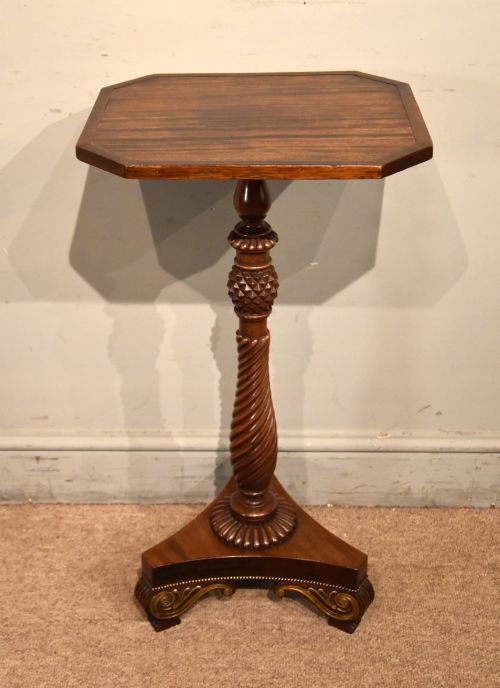
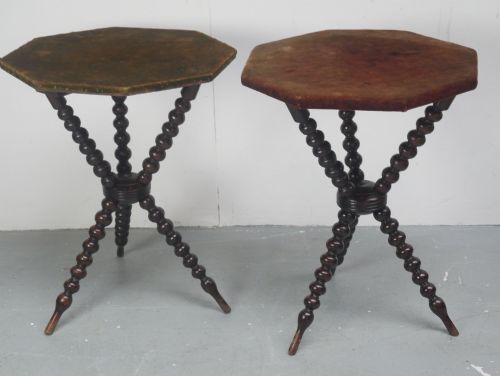
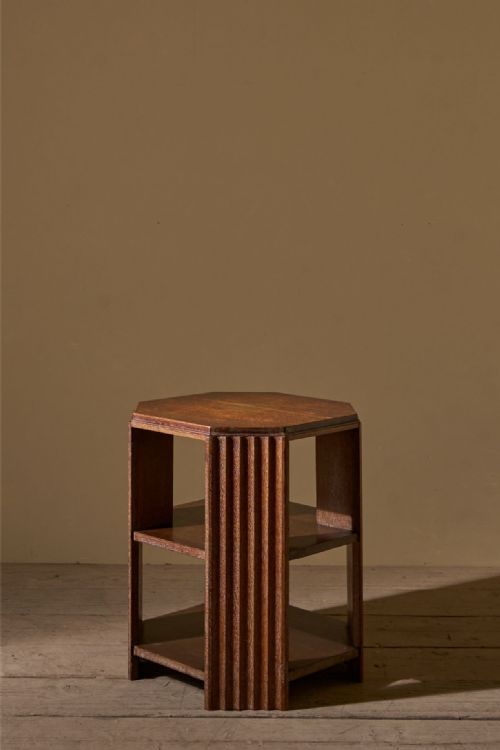
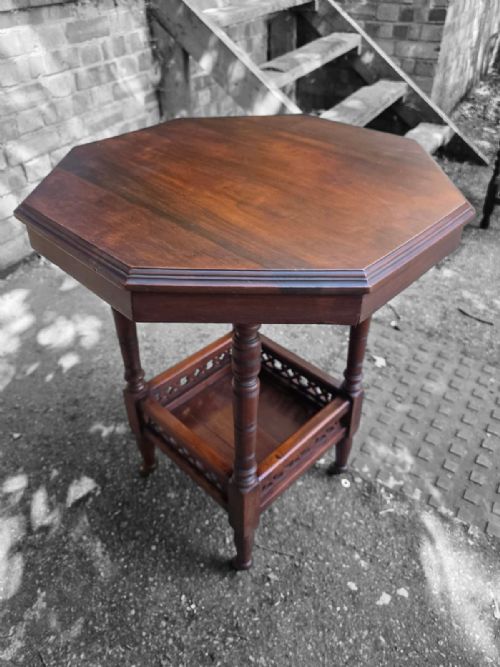
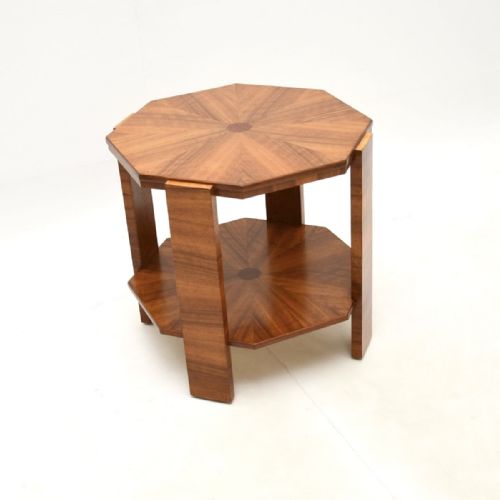
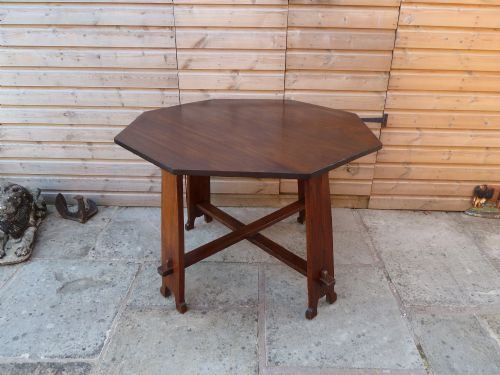
Brown Octagonal Side Table
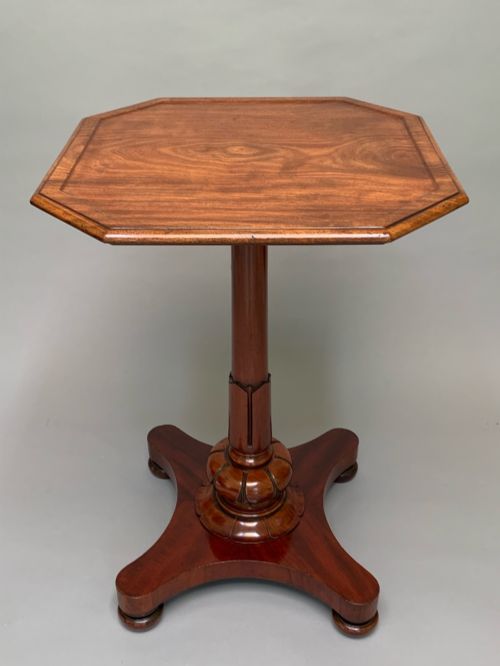
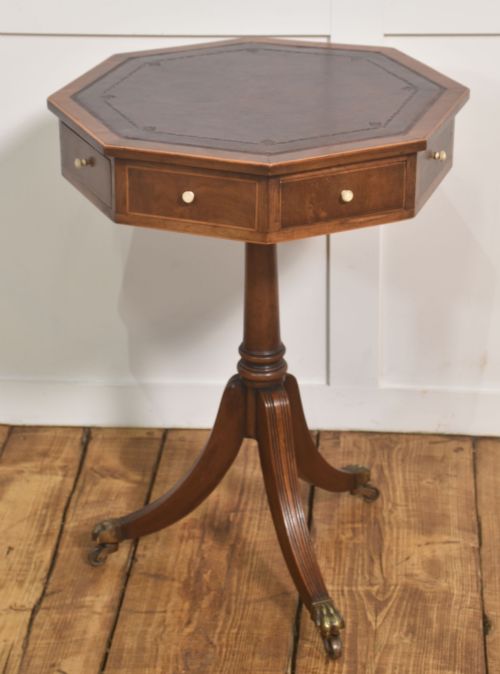
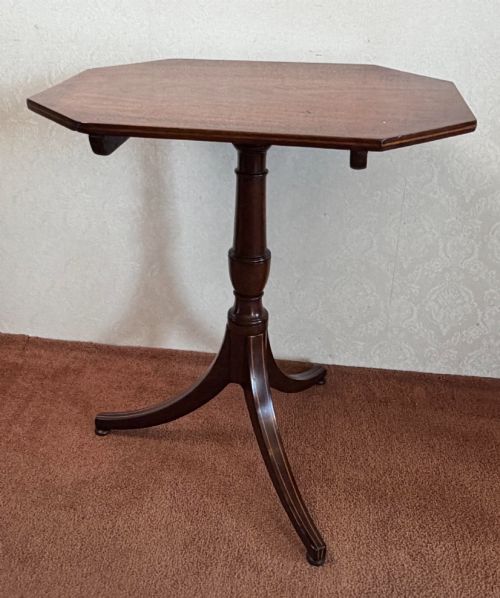
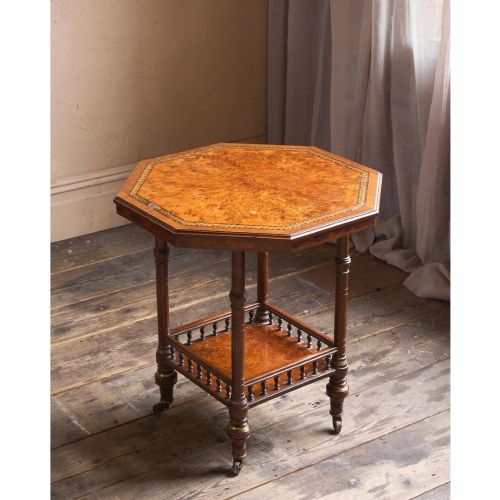
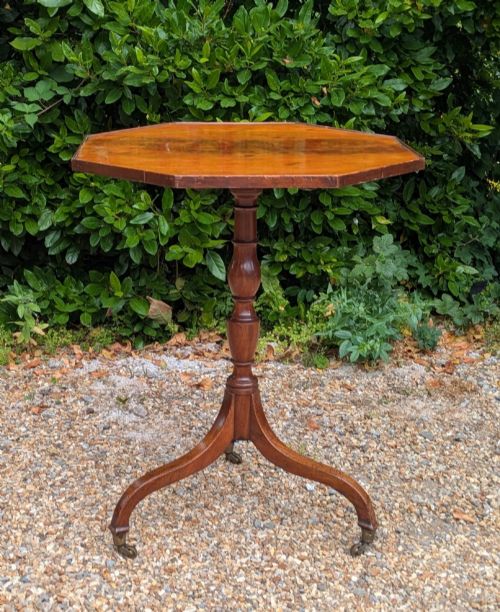
A brown octagonal side table brings compact geometry and rich timber grain to a room, serving as a versatile surface for lamps or books.
Brown Octagonal Side Table
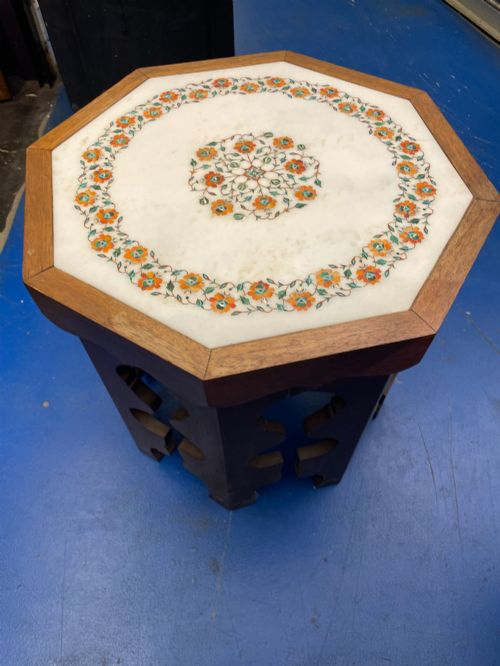
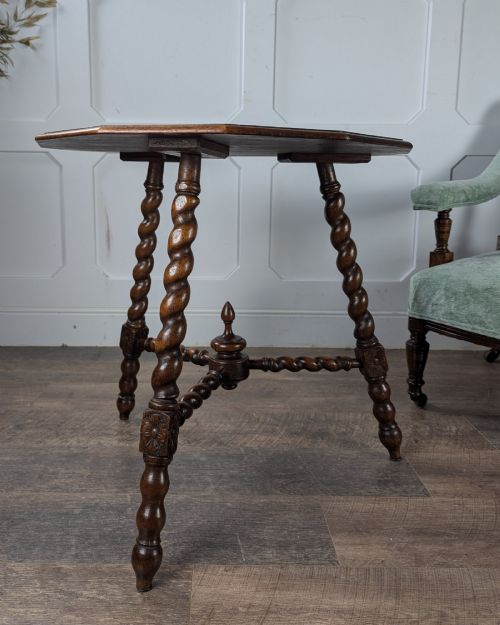
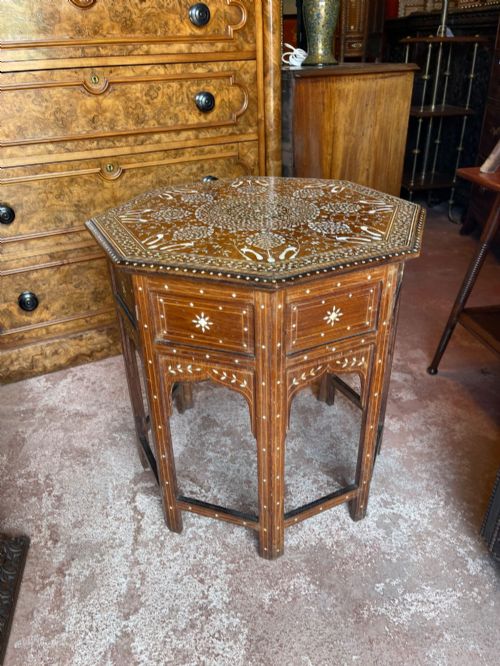
A brown octagonal side table appears in forms ranging from Victorian parlour pieces to Arts and Crafts plant stands, united by their eight-sided tops. These pieces span the nineteenth and twentieth centuries, taking shape as occasional tables, centre tables, and folding Damascus or Hoshiarpur designs.
The materials reflect the periods of their construction, with mahogany, walnut, oak, and exotic hardwoods dominating the selection. Makers from Victorian workshops to Art Deco studios utilised these timbers to create functional surfaces for domestic spaces.
Materials and construction methods
Cabinetmakers constructed these tables using solid timbers and decorative veneers over secondary woods, often employing turnery for legs and pedestals. Traditional joinery such as mortise and tenon secures the frames, while tilt-top actions and folding mechanisms provide clever mechanical utility.
Surface ornamentation ranges from intricate boxwood inlay and marquetry to mother-of-pearl work and deep hand-carving. Polishing with wax or shellac brings out the natural colour and grain of woods like rosewood, satinwood, and pollard oak.
Some tables fold completely flat like a wooden jigsaw puzzle, ready to hide behind a sofa when floor space runs short.
Quality and craftsmanship factors
The distinction between standard production and exceptional work lies in the choice of timber and the precision of the decorative inlay. Tables featuring dense hardwoods, complex parquetry, or hand-carved panels demonstrate a higher level of artisan skill.
Structural integrity and the retention of original surfaces dictate the desirability of a piece. Finer examples maintain crisp carving details, intact inlay without losses, and stable bases that show minimal past alteration.
Gillows·Ralph Turnbull·Liberty and Co
The Brown Octagonal Side Table Glossary
- Octagonal
- Having eight sides and eight angles. This geometric plan creates a distinctive top that softens the corners of a room.
- Marquetry
- The art of applying pieces of veneer to a structure to form decorative patterns. Craftsmen use varied wood colours to create pictorial or geometric designs on the tabletop.
- Parquetry
- A geometric mosaic of wood pieces used for decorative floors and tabletops. This technique creates repeating patterns using contrasting timber tones.
- Tilttop
- A table top hinged to tilt vertically when not in use. This mechanism allowed tables to be stored flat against a wall in smaller rooms.
- Hoshiarpur
- A city in India known for intricate woodwork involving carved teak and brass or bone inlay. These tables arrived during the late nineteenth and early twentieth centuries.
Brown Octagonal Side Table: Frequently Asked Questions
Where did people use these tables?
These tables served primarily as occasional surfaces in Victorian and Edwardian reception rooms, holding lamps, decorative plants, or writing materials.
Their compact proportions allowed them to fit easily beside armchairs or into corners where larger furniture would not go.
How do I date an octagonal table?
Dating relies on timber choice, construction methods, and decorative styles associated with specific periods like the Victorian era or Art Deco.
Heavier carved oak often points towards Arts and Crafts production, while exotic inlaid hardwoods frequently indicate Victorian or Anglo-Indian origins.
Are folding tables sturdy?
Folding Damascus and Hoshiarpur tables rely on interlocking wooden sections that assemble without metal hinges or screws.
When properly aligned, these clever collapsible structures provide a surprisingly stable surface for everyday domestic use.
How should I care for the wood surface?
Maintenance requires occasional application of a quality beeswax to nourish the timber and protect the polished finish from drying out.
Avoid placing these tables in direct sunlight or near heat sources to prevent the wood from warping or the veneer from lifting.