



Dragon Carved Coffee Table
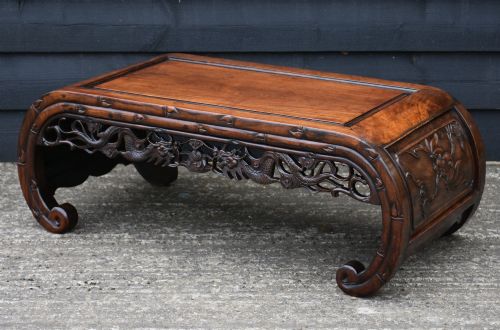
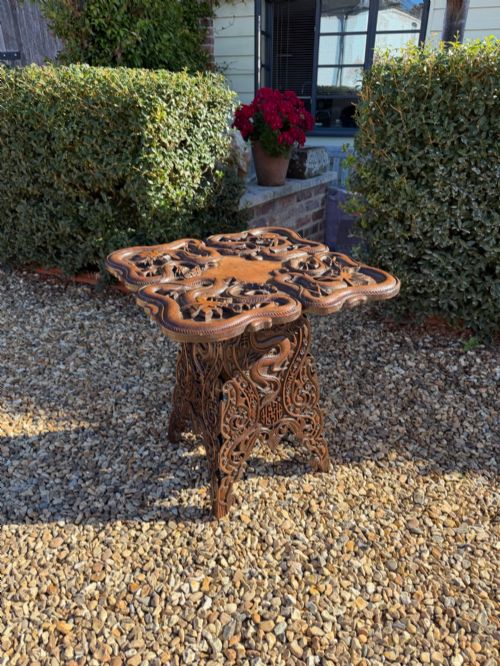
A dragon carved coffee table brings intense symbolic relief and rich timber grain straight to the centre of a room.
Dragon Carved Coffee Table
A dragon carved coffee table unites low functional surfaces with elaborate hand-carved mythical motifs originating from Chinese export and traditional workshops. Buyers searching this phrase meet low tables, opium forms, trunks adapted for coffee use, and nests originating from the nineteenth century up to the nineteen-twenties.
The version most likely to meet a buyer here is a low occasional or centre table shaped from dense tropical timber. These pieces draw on Chinese Qing dynasty design, Chinoiserie tastes, and Asian export production.
Makers adapted traditional forms like the kang table to suit Western domestic habits, resulting in sturdy items featuring prominent claw and dragon details. The scale ranges from compact octagonal surfaces to heavy rectangular centre tables.
How they were made
Craftsmen utilised heavy Asian hardwoods including rosewood, camphorwood, and teak, selected for their deep colour and capacity to hold crisp, deep relief carving. Artisans chiselled intricate dragon motifs directly into the solid timber borders and aprons.
Construction techniques relied on traditional joinery that accommodated the natural movement of dense timber without metal fasteners. Some examples incorporate inset glass or marble panels above the carved wooden framework.
Dragon Carved Coffee Table Retail Price Guide 2026
Typical asking prices for dragon carved coffee table among the pieces listed under this phrase on Sellingantiques today, from the lower quarter to the upper quarter. They describe what is for sale here now, not the wider market.
Materials recorded on this site include glass, marble, and heavy carved hardwood across various table formats.
What varies in quality
The depth and vigour of the hand carving separate standard commercial export pieces from superior examples. Master carvers rendered scales, claws, and swirling clouds with anatomical energy rather than shallow, mechanical repetition.
The choice of timber underpins the overall integrity of the piece. Heavy, figured rosewood and camphorwood command greater regard than lighter, plain secondary woods finished with dark stain.
The Dragon Carved Coffee Table Glossary
- Chinese Export
- Items manufactured in China specifically for Western markets from the eighteenth century onwards. These objects combine traditional Asian forms with motifs intended for European and American interiors.
- Kang Table
- A low platform table traditionally used in northern China for sitting, dining, or sleeping on heated brick beds. Western interiors repurposed these sturdy low forms as coffee tables.
- Camphorwood
- A durable aromatic hardwood prized for its insect-repellent properties and distinct grain. Makers frequently utilised this timber for trunks and chests later adapted as coffee tables.
- Chinoiserie
- European decorative style reflecting Chinese artistic influences, popular across various periods. Craftsmen working in this manner emulated Eastern motifs on furniture and ornaments.
- Opium Table
- A popular term in the antique trade for low Chinese tables traditionally used for leisure. They feature simple frames with recessed legs and carved aprons.
Dragon Carved Coffee Table: Frequently Asked Questions
What is a dragon carved coffee table?
These are low wooden tables featuring traditional Chinese mythical dragon motifs carved into the timber frame or aprons. They draw on nineteenth and early twentieth-century Asian export traditions.
Craftsmen built them from dense tropical hardwoods such as rosewood and camphorwood. They function as striking focal points in modern living spaces.
How do I live with a dragon carved table?
Place the table where natural light can strike the relief carving to reveal the depth of the timber. Keep them away from direct heat sources to protect the solid wood.
Use coasters to safeguard the polished wooden surface from moisture marks. Regular dusting with a soft cloth maintains the natural lustre of the hardwood.
How old are these tables?
The pieces seen here typically date from the nineteenth century up to the nineteen-twenties. Earlier examples often emerge from Qing dynasty traditions and export workshops.
Stylistic details and timber patination help distinguish nineteenth-century production from later twentieth-century interpretations. Construction methods also indicate the period of manufacture.
Are nest of tables related?
Several listings include nests of tables sharing the same dragon carving and hardwood construction. These sets tuck neatly beneath one another when not in use.
They offer the same decorative motifs and material quality as larger single coffee tables. Makers designed them for versatile placement around the room.