
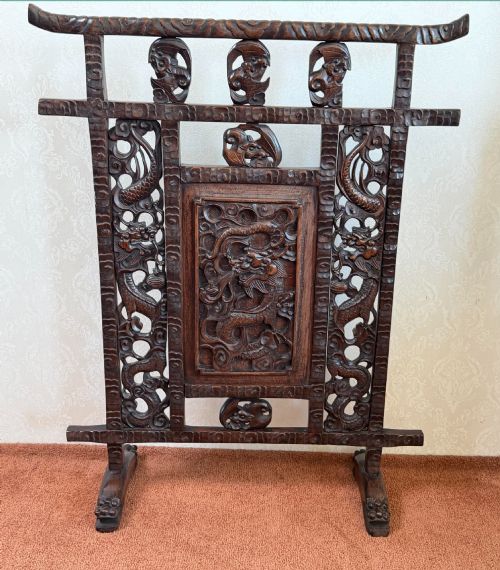
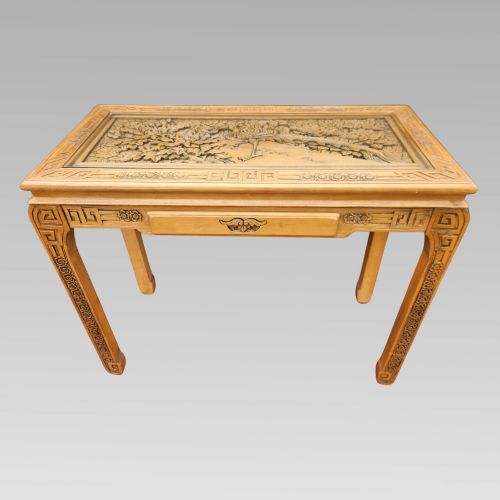


Chinese Relief Carved Table
These Chinese relief carved table examples bring dense hand-chiselled depth and dark timber grain into a room.
Chinese Relief Carved Table
A chinese relief carved table brings heavy sculptural woodwork into a domestic interior, often taking the form of nests, consoles, coffee tables, or occasional pieces. When searching this phrase, a buyer meets items originating from the nineteenth century up to the nineteen-thirties.
The most common forms on this page include nests of four tables and side or console tables. These pieces utilise traditional export and scholarly aesthetics, ranging from Qing Dynasty traditions to Chinoiserie and Chinese Export styles.
How they were made
Maker's hands shaped these items from dense timbers such as hardwood, teak, camphorwood, rosewood, and bamboo. Artisans carved motifs directly into the wooden surfaces or applied raised relief elements like decorated soapstone panels.
Some examples combine carved woodwork with glass tops or lacquer finishes to protect the intricate pictorial scenes. Construction methods include folding mechanisms and nested frames designed for practical versatility.
Dragons twist their wooden tails around table rims while hidden soapstone panels wait patiently for a curious thumb.
What varies in quality
The depth and crispness of the chisel work dictate the visual success of the carving, distinguishing casual production from masterful execution. Figures, foliage, and dragons emerge with sharper undercut details on finer examples.
Timber selection and structural stability also separate the tiers, as well-seasoned hardwoods and dense rosewoods hold complex joints better than lighter woods over decades of use.
The Chinese Relief Carved Table Glossary
- Relief carved
- A sculptural technique where figures and motifs project from a flat background surface. This method creates dramatic shadow play across floral and dragon designs.
- Nest of tables
- A set of graduated tables designed to slide neatly beneath one another. This form offers surface space that packs away compactly.
- Chinoiserie
- European artistic styles reflecting Chinese motifs and techniques. It appears frequently on lacquer coffee tables and decorative furniture.
- Hardwood
- Dense, durable timber harvested from broad-leaved trees. It provides the heavy, stable foundation required for deep carving.
Chinese Relief Carved Table: Frequently Asked Questions
Where should I place a Chinese relief carved table?
These tables suit hallways, reception rooms, and studies as functional surface areas or display pieces. Their carved tops reward close viewing in well-lit spaces.
Pair a nest of tables beside a seating area or use a console against an entryway wall. Their sculptural presence anchors a room without overwhelming the floor plan.
How do I care for carved wooden tables?
Dust the deep recesses regularly with a soft brush to prevent dirt accumulation in the carved channels. Keep timber surfaces away from direct heat sources to avoid wood splitting.
Apply occasional appropriate wax polish to maintain the sheen of hardwoods like rosewood and teak. Avoid harsh chemical cleaners that strip historical finishes.
What periods do these tables come from?
The pieces span from the late nineteenth century through the early decades of the twentieth century. This era includes Qing Dynasty outputs and later export items.
Dates range from eighteen-eighty pieces to nineteen-thirties Chinoiserie works. Each era brings distinct stylistic touches to the carved motifs.
How do I identify different table styles?
Look at the woodwork motifs, structural forms, and finish types to determine the style. Chinese Export and traditional scholarly items display deep naturalistic carving, while Chinoiserie pieces often feature lacquer and soapstone.
Nests and folding tables emphasise clever joinery and portability. Console tables showcase expansive friezes and dramatic leg carvings.