
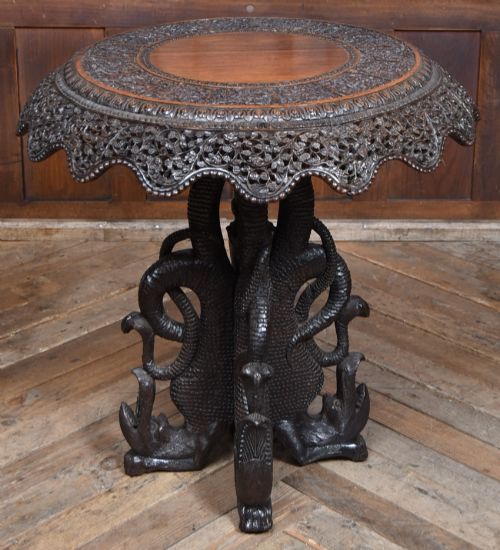


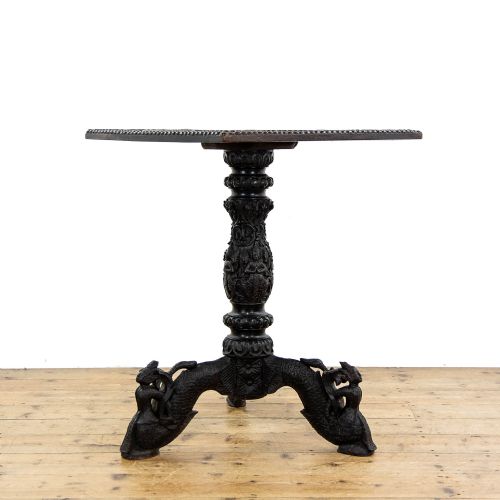


Carved Dragon Pedestal Table
A carved dragon pedestal table brings intricate Far Eastern craftsmanship into a room, offering a robust support for lamps, plants or displays.
Carved Dragon Pedestal Table
When searching for a carved dragon pedestal table, a buyer encounters pieces originating from nineteenth-century China, Japan, Burma and wider Far Eastern workshops. These items frequently appear as side tables, occasional tables, jardiniere stands and display surfaces.
The most common examples on this page are constructed from hardwood or rosewood, often featuring elaborate dragon motifs deeply carved into the structure. Many include inset marble tops or circular surfaces designed to hold vases and ornamental objects.
Stylistic influences range from Chinese Qing Dynasty work and Japanese Meiji periods to Anglo-Burmese and Anglo-Indian regional interpretations. Victorian aesthetic tastes also shaped the importation and adaptation of these ornately carved items for British interiors.
How they were made
Makers utilised dense timbers such as rosewood, teak and general hardwoods, which allowed artisans to execute deep, resilient relief carving without compromising the structural integrity of the legs and apron. Bronze components and glazed cinnabar surfaces also appear in specific examples.
Craftsmen set polished rouge marble or plain stone inserts directly into the wooden frames of table tops to create stable, heat-resistant surfaces suitable for displaying heavy planters and decorative jardiniere vessels.
Materials recorded across the current inventory include hardwood, rosewood, teak, bronze, marble, and fabric.
What varies in quality
The selection of materials creates a clear distinction across the range, particularly where dense rosewood or heavy inset marble slabs remain intact and well-fitted within the wooden frame, compared against softer woods or replacement panels.
The Carved Dragon Pedestal Table Glossary
- Jardiniere stand
- A tall pedestal table specifically designed to support heavy ceramic plant pots or flower urns. These stands often feature a marble or wooden insert to prevent water damage to the timber top.
- Hardwood
- Dense, durable timber harvested from broad-leaved trees, favoured by nineteenth-century carvers for its ability to hold intricate detail. Rosewood and teak are common examples found in this category.
- Meiji Period
- The era of Japanese history spanning from 1868 to 1912, noted in these listings for decorative bronze and mixed-media occasional tables. Work from this period often incorporates animal motifs like elephants alongside dragons.
- Qing Dynasty
- The final imperial dynasty of China, lasting from 1644 until 1912, associated here with heavy hardwood tables and inset marble tops. Pieces from this tradition display formal carved ornamentation.
- Aesthetic Movement
- A late nineteenth-century design current that promoted artistic expression over strict historical revival, influencing the interpretation and ebonisation of oriental furniture in Victorian interiors.
Carved Dragon Pedestal Table: Frequently Asked Questions
What were carved dragon pedestal tables used for?
These tables served primarily as display surfaces for ornamental items, lamps, and heavy ceramic planters within nineteenth-century reception rooms.
Their sturdy pedestal construction and elevated height positioned decorative objects effectively for viewing.
How do I identify Chinese Qing Dynasty tables?
Qing Dynasty pieces are typically identified through dense hardwood construction, deep relief carving depicting dragons, and fitted marble inserts.
Makers working in this tradition also employed traditional joinery methods without modern metal fasteners.
Are marble tops original to these tables?
Many nineteenth-century occasional tables and plant stands were manufactured with inset rouge marble or plain stone tops to accommodate heavy planters.
The stone slabs fit precisely into a routed wooden groove within the frame of the tabletop.
How do I care for a rosewood table?
Rosewood surfaces benefit from regular dusting with a dry, soft cloth and protection from direct sunlight and extreme humidity changes.
Avoiding harsh liquid polishes preserves the natural finish of the dense timber and intricate carvings.
What is an Anglo-Burmese table?
Anglo-Burmese pieces combine traditional British furniture forms with the deep, figurative woodcarving techniques native to nineteenth-century Burma.
These items were frequently imported to satisfy Victorian demand for exotic Far Eastern decorative arts.