

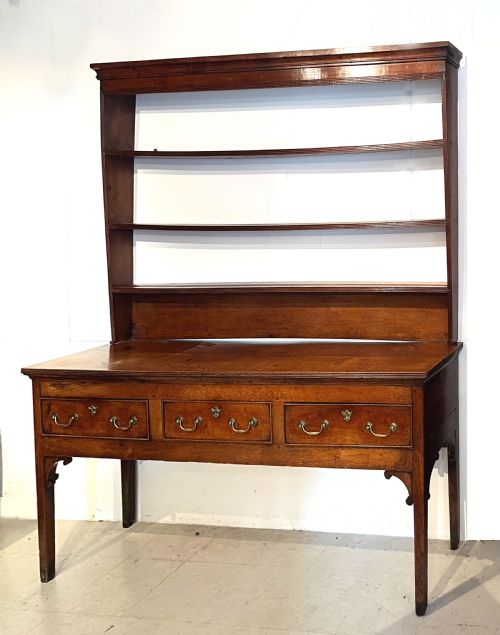


Brown Oak Hutch
A brown oak hutch brings honest country storage and warm timber grain into a modern room.
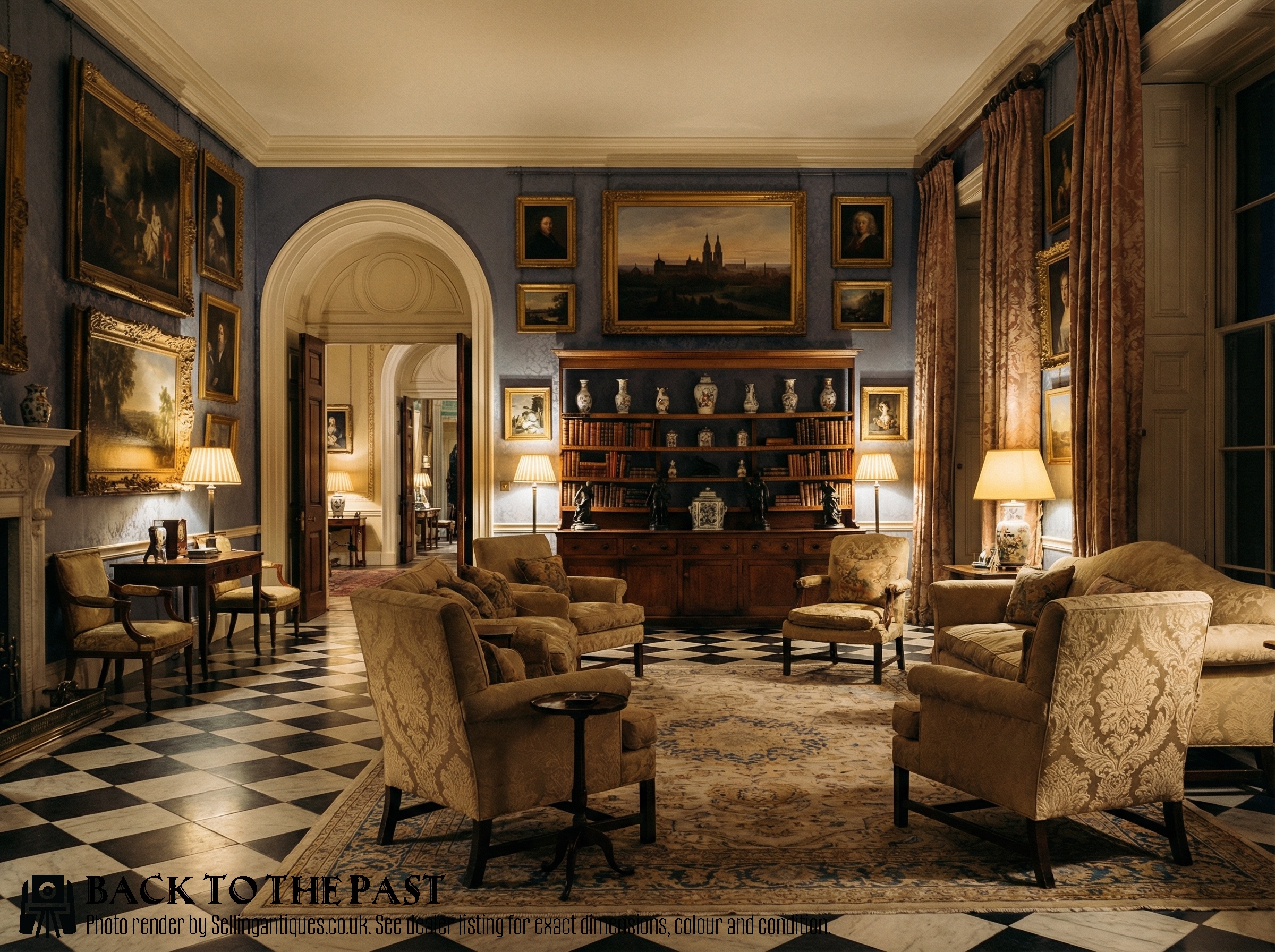
Brown Oak Hutch
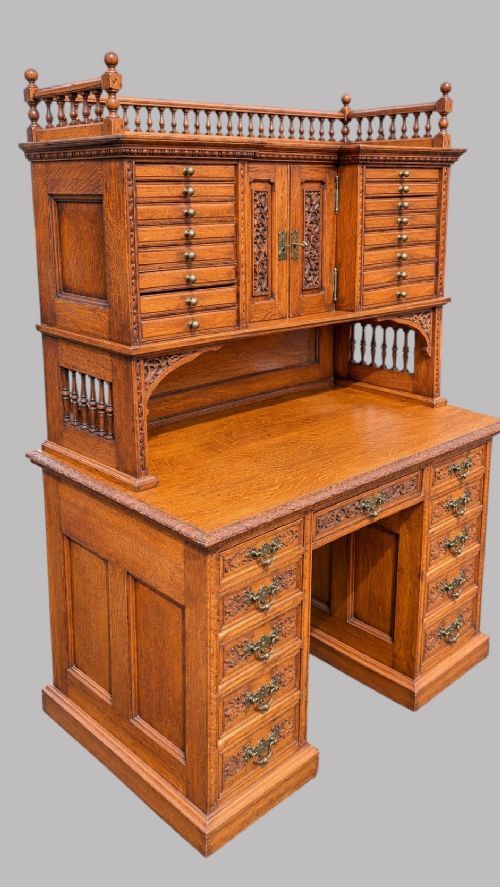
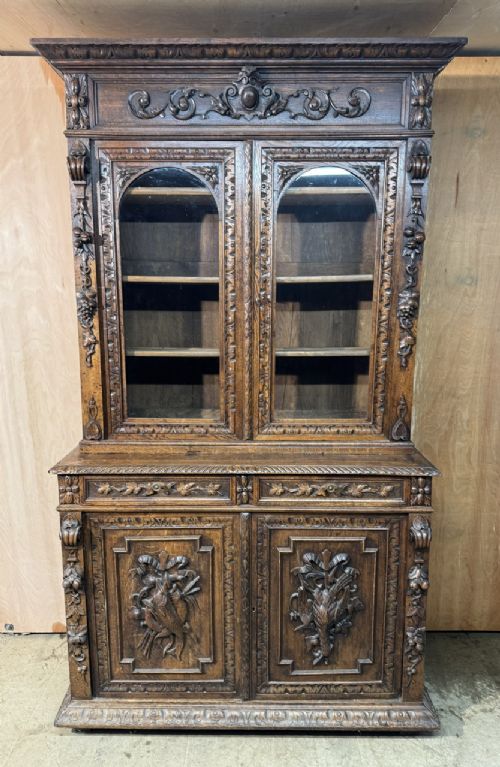
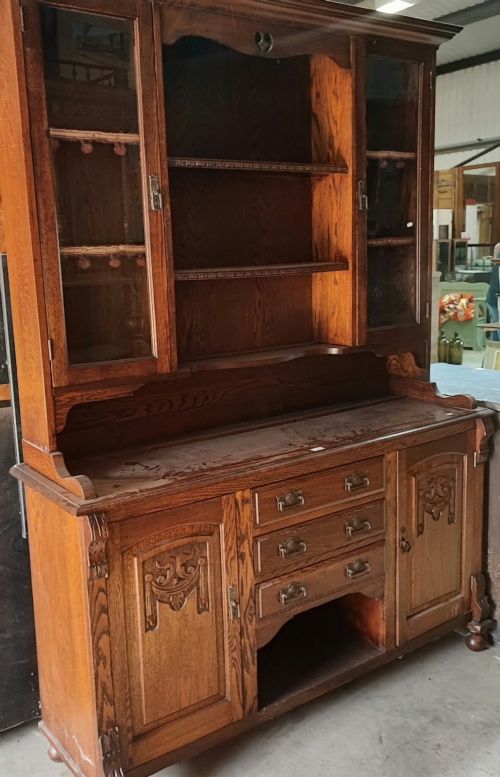
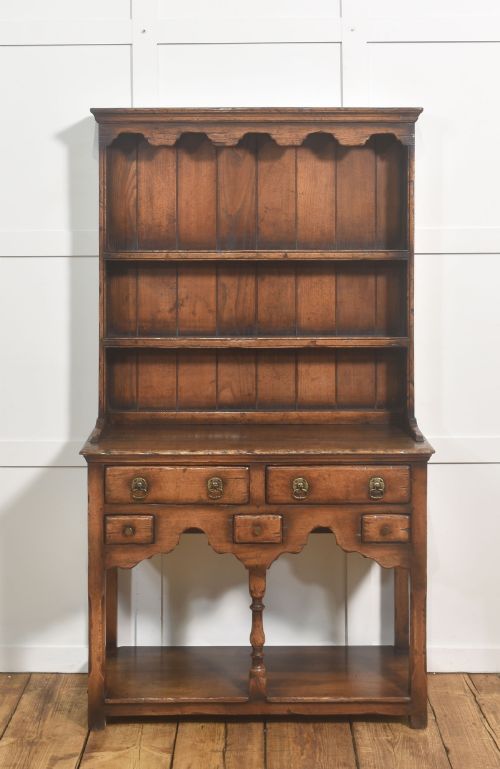
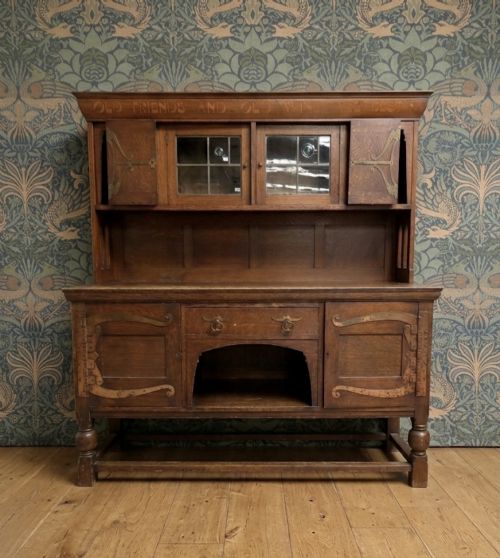
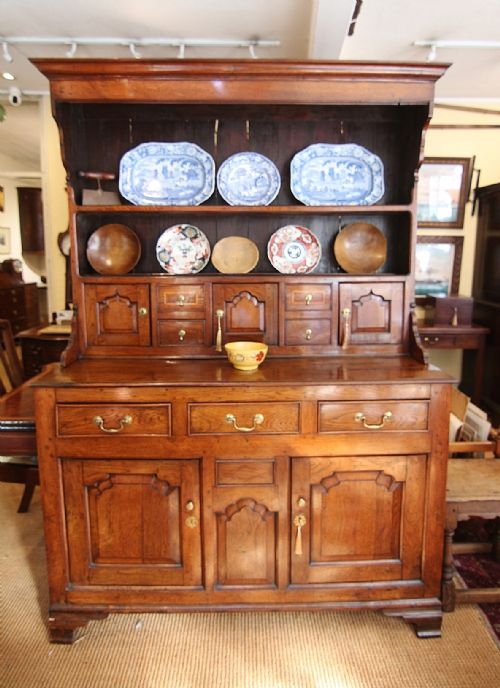
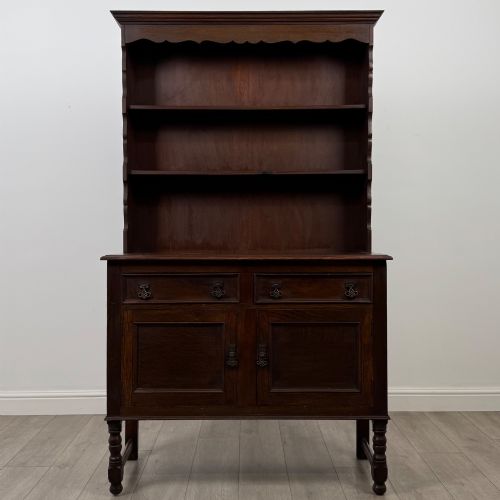
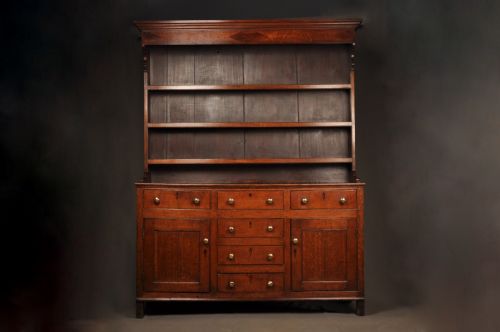
When you search for a brown oak hutch, you encounter sturdy timber storage furniture primarily designed for displaying and housing kitchenware or books. The pieces available here span from the 18th century through to the Edwardian period and the 1920s, reflecting centuries of utilitarian craftsmanship.
You are most likely to meet regional dressers with plate racks, sideboards, and cabinets constructed from solid oak. These forms range from simple Georgian country cottage pieces to elaborate Victorian and Arts and Crafts examples.
Originating largely from English, Welsh, and French provincial workshops, these items serve as practical focal points in dining spaces and kitchens. Their durable construction ensures they remain functional pieces of furniture rather than purely decorative items.
How they were made
Cabinet makers utilised solid oak timbers, frequently complemented by secondary woods such as pine and mahogany, to build these robust storage pieces. Metalwork in brass, iron, and copper appears on handles, hinges, and escutcheons.
Construction techniques relied on traditional joinery, incorporating hand-cut drawers, pegged joints, and occasional inlay wood detailing. Glazed doors featuring leaded glass panes appear on later Victorian and Edwardian examples.
A sturdy food court cupboard keeps the household cheese safe from nimble mice.
What varies in quality
The distinction between standard utility furniture and superior cabinet work lies in the selection of the timber and the refinement of the proportions. Richly figured oak and balanced vernacular designs elevate a piece beyond basic domestic storage.
The survival of original elements, such as plate racks, backboards, and brass hardware, determines the integrity of the piece. Regional variations, from Snowdonia to South Wales, also influence the character and execution of the work.
Ambrose Heal for Heal & Son·Shapland and Petter
The Brown Oak Hutch Glossary
- Pot-board
- An open lower shelf on a dresser traditionally used for storing pots and pans. This feature helps distinguish certain 18th-century regional pieces.
- Plate rack
- The shelving superstructure mounted on top of a dresser base for displaying ceramic plates. Original racks matching the timber and age of the base add considerable interest.
- Kneehole desk
- A writing table featuring a central recess for the legs flanked by banks of drawers. These forms appear in Victorian iterations.
- Breakfront
- A cabinet design where the central section projects forward from the side sections. This layout provides visual depth to larger storage units.
- Escutcheon
- A protective plate surrounding a keyhole, usually fashioned from brass. These details complement the primary oak timber.
Brown Oak Hutch: Frequently Asked Questions
How do I clean a brown oak hutch?
Dust the timber regularly with a soft, dry cloth to prevent the accumulation of grit in the grain. Avoid silicone-based polishes, opting instead for traditional beeswax to nourish the wood.
Keep the piece away from direct heat sources and strong sunlight to prevent the oak from drying out or splitting over time.
Are plate racks removable?
Many traditional dressers feature plate racks that sit on the base rather than being permanently fixed. This two-part construction made transport through narrow cottage doorways easier for earlier owners.
Checking the junction between the rack and the base reveals whether the superstructure is an original matching component or a later addition.
Where were these hutches made?
The pieces originate primarily from English and Welsh rural workshops, alongside provincial French makers. Regional styles often dictate specific moulding details and timber selections.
Local craftspeople built these items to serve the daily needs of farmhouse and village kitchens before they entered the antique market.
How do I date an oak hutch?
Examine the construction methods visible on the interior and the backboards, looking for hand-sawn marks and pegged joints. Older pieces from the 18th century often display wider timber boards and distinct vernacular hand-shaping.
Hardware styles, secondary woods like pine or mahogany, and overall proportions also provide clear indicators of whether a piece belongs to the Georgian, Victorian, or Edwardian era.