


Brown Oak Book Table
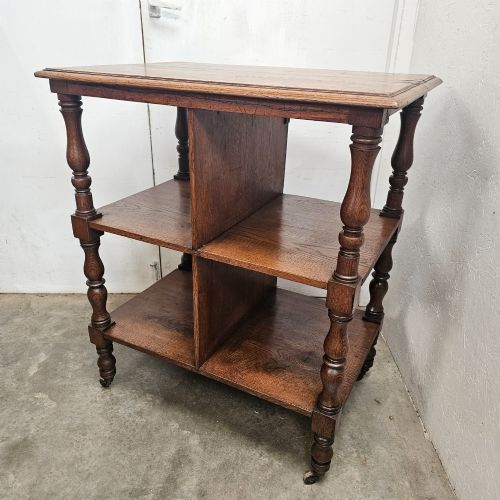
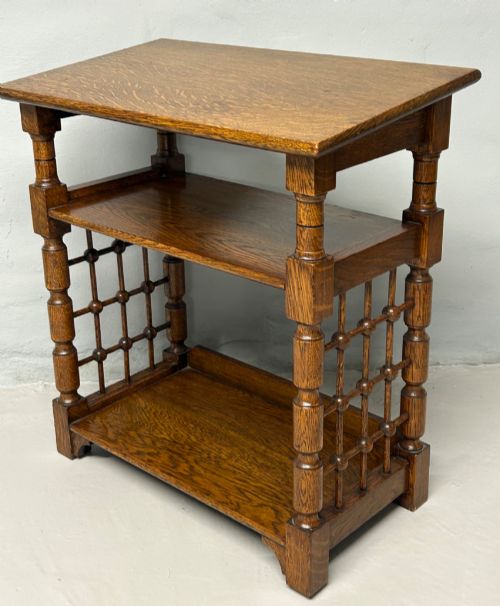
A brown oak book table combines the utility of a bookshelf with the footprint of a side table, offering sturdy display space for volumes alongside a seating area.
Brown Oak Book Table
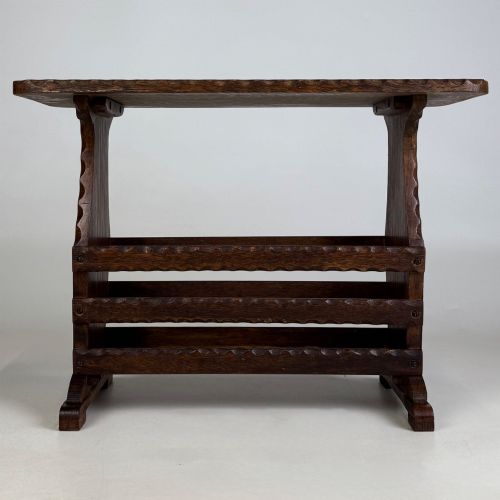
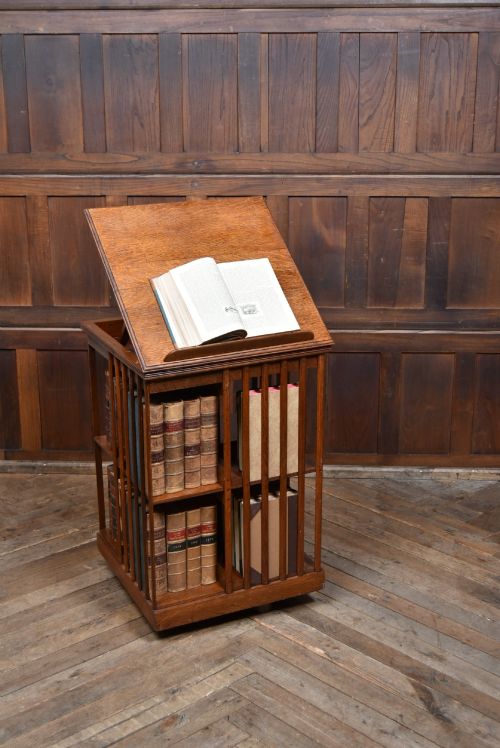
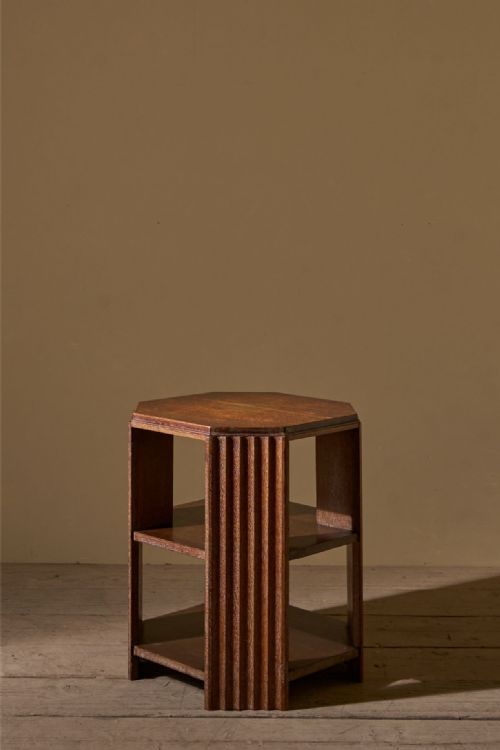
A brown oak book table serves dual functions, providing a solid surface for lamps or ornaments alongside integrated storage for books and periodicals. The selections on this page span the Victorian, Edwardian, and Art Deco periods, encompassing forms from revolving table-top bookstands to octagonal side tables with lower shelves.
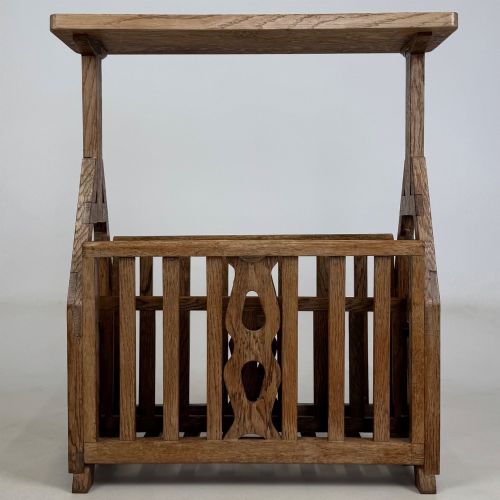
Makers utilised dense timber to create pieces that range from compact table-top book stands to larger library carts and magazine racks. Stylistic influences vary from plain vernacular designs to the characteristic joinery of the Arts and Crafts movement.
Most examples originate from the late nineteenth and early twentieth centuries, reflecting the domestic reading habits of the period. Buyers encounter variations including open front slope shelves, revolving mechanisms, and folding reading surfaces.
Distinctions in quality
Quality reveals itself in the choice of timber and the precision of the joinery rather than mere ornamentation. Superior pieces demonstrate careful matching of oak grain across prominent surfaces and robust construction that withstands the weight of heavy books.
The refinement of hardware, such as solid brass brackets, cast-iron adjustment mechanisms, and smooth-turning revolving platforms, separates standard domestic furniture from finer workshop pieces.
The furniture forms include side tables, revolving bookstands, library carts, and adjustable reading desks.
Leonard Wyburd for Liberty and Co·Carters of London
The Brown Oak Book Table Glossary
- Brown oak
- A rich, dark-toned variant of English oak, often valued for its distinctive deep colouration acquired through natural processes in the living tree.
- Revolving bookcase
- A compact shelving unit mounted on a concealed pivot, allowing books to be accessed from all sides while sitting on a table or the floor.
- Limed oak
- A wood finishing technique that leaves a white or pale pigment in the open pores of the oak grain to create a lighter, decorative surface.
- Magazine rack
- A specialised storage form integrated into side tables or stands, designed to hold periodicals upright or in a sloping trough.
Brown Oak Book Table: Frequently Asked Questions
What is a brown oak book table?
A brown oak book table is a piece of furniture designed to hold volumes while serving as a surface for lamps or decorative objects. These items combine shelving or magazine storage with the compact footprint of an occasional table.
They appear in various formats across this selection, including octagonal side tables, revolving bookstands, and library carts, predominantly from the late nineteenth and early twentieth centuries.
How do revolving book tables work?
Revolving book tables rest upon a hidden internal pivot and bearing mechanism concealed beneath the base. This engineering allows the entire tiered bookcase section to spin smoothly so readers can access titles from any seating position.
Craftsmen balanced the weight distribution carefully to prevent tipping when heavily loaded volumes filled the compartments.
How do I date a book table?
Dating relies on observing construction methods, timber treatments, and stylistic cues such as Arts and Crafts joinery or Art Deco limed finishes. Edwardian and Victorian pieces often show hand-cut elements and traditional wax polishes.
Later twentieth-century examples incorporate different hardware, such as modified rotating pivots and distinct fastening screws that indicate machine manufacturing.
Were these tables used in libraries?
While some larger library carts and mobile trolleys served institutional settings, most book tables were manufactured for domestic sitting rooms and studies. They kept favourite reading material close at hand beside armchairs.
Table-top versions sat comfortably on desks or larger tables to organise reference texts within arm's reach.
What styles are available?
The pieces span several distinct design movements, including Victorian vernacular, Edwardian utility, and the characteristic craftsmanship of the Arts and Crafts era. Art Deco examples introduce geometric forms and limed oak surfaces.
French regional styles and Gothic Revival details also appear among the listed items, showing diverse regional interpretations of domestic book storage.