

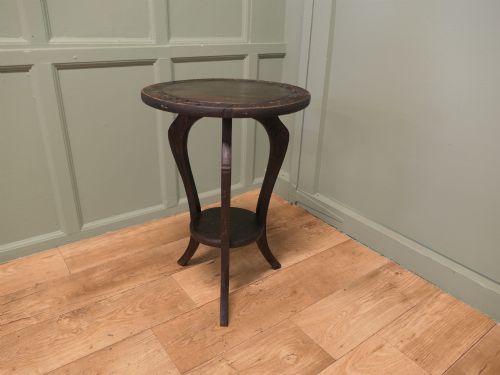
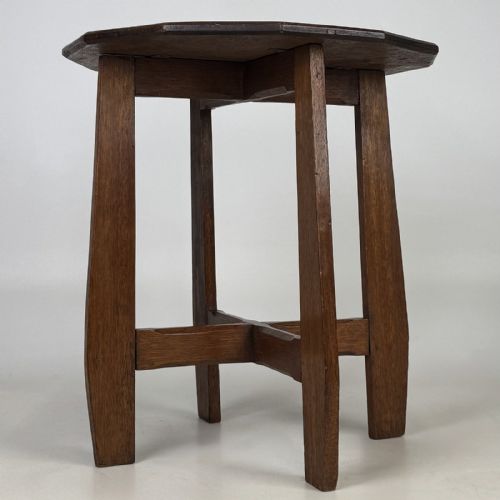
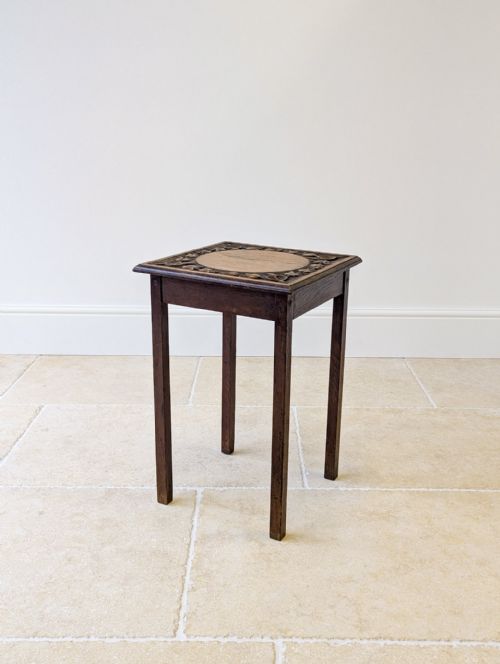
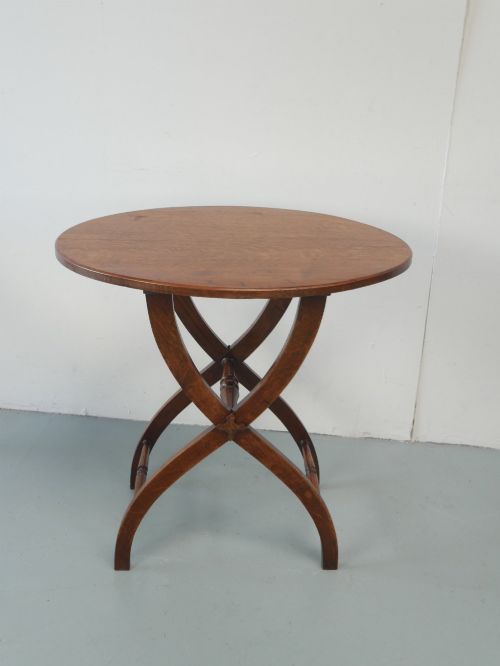
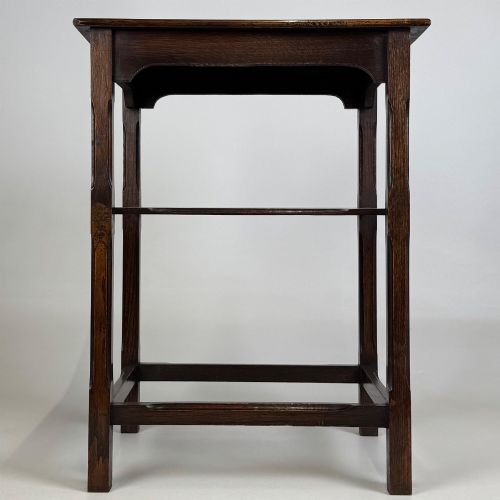
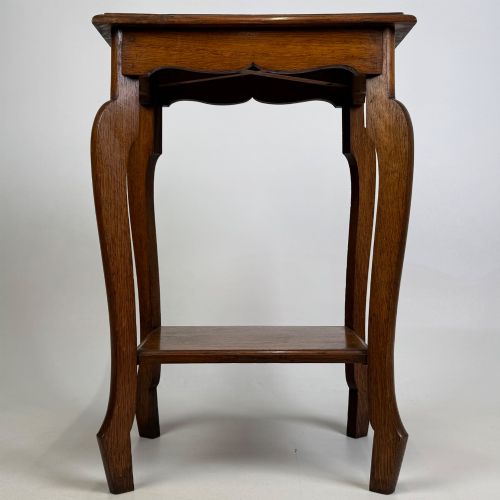
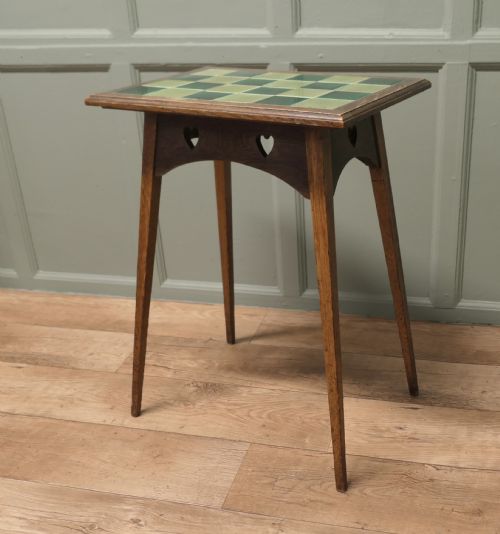
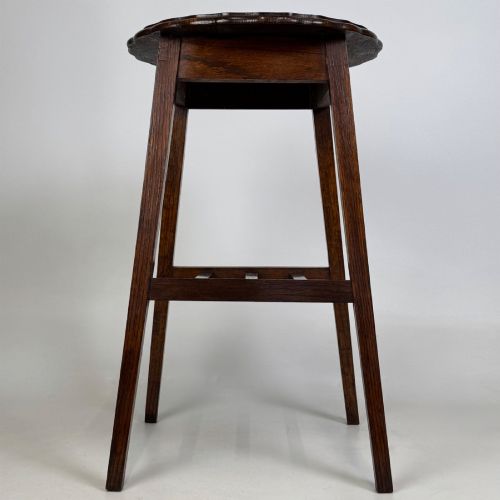
Edwardian Oak Occasional Table
An edwardian oak occasional table brings practical utility and unpretentious form to a room, drawing on durable native timber and straightforward design.
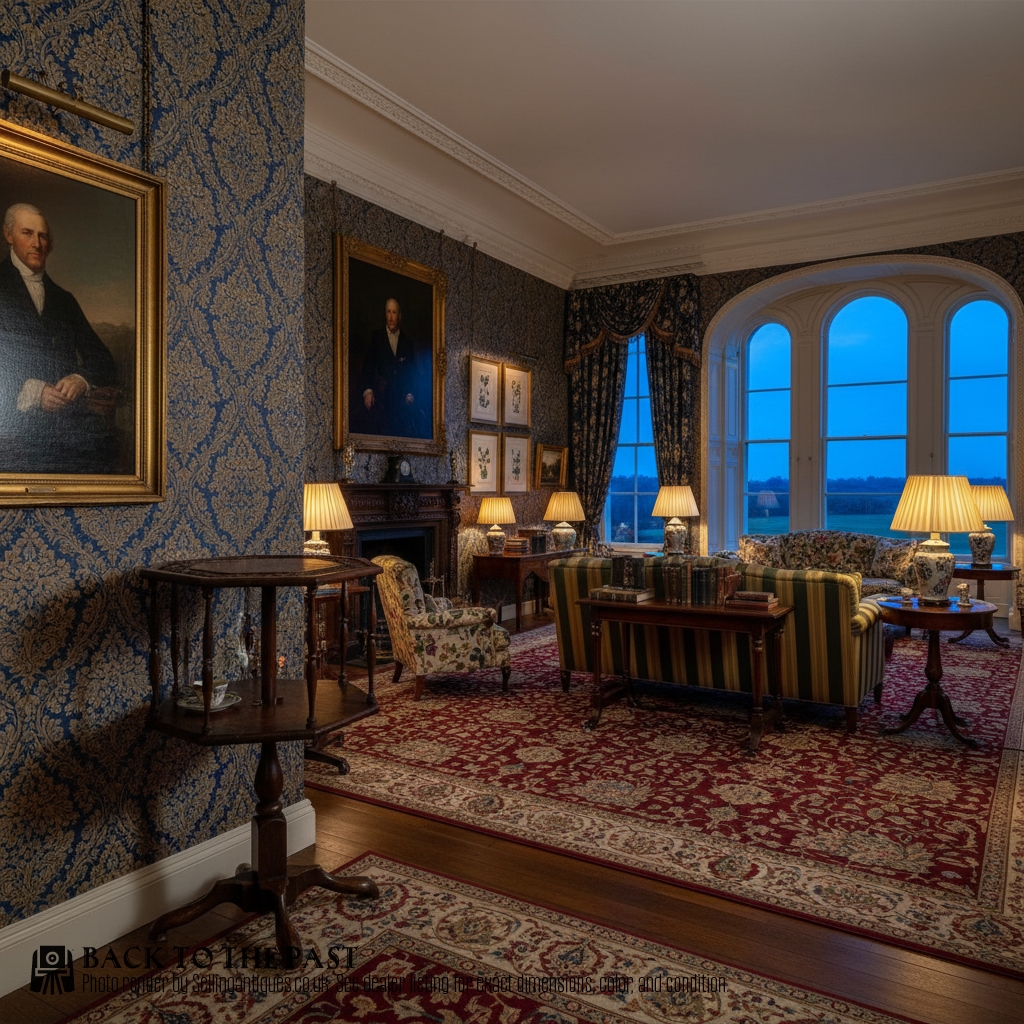
Edwardian Oak Occasional Table
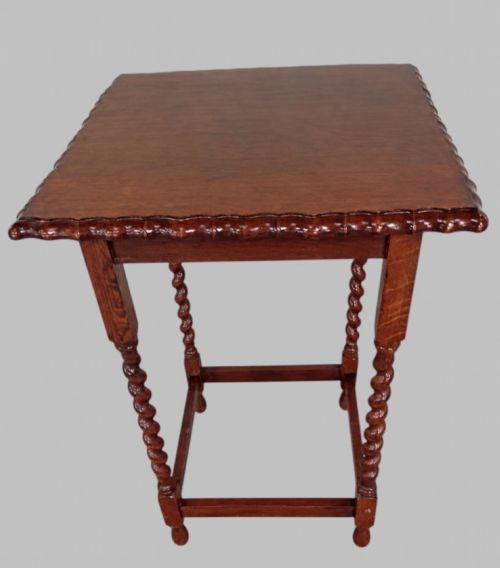
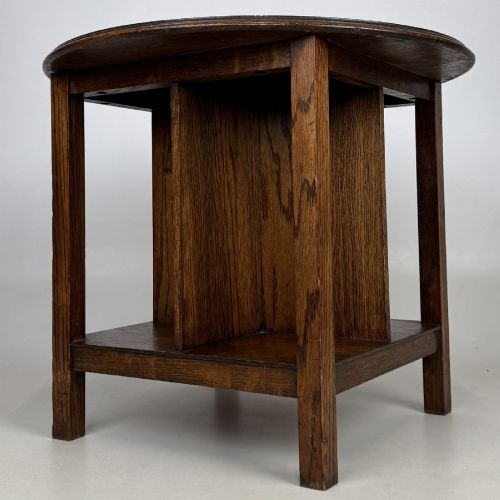
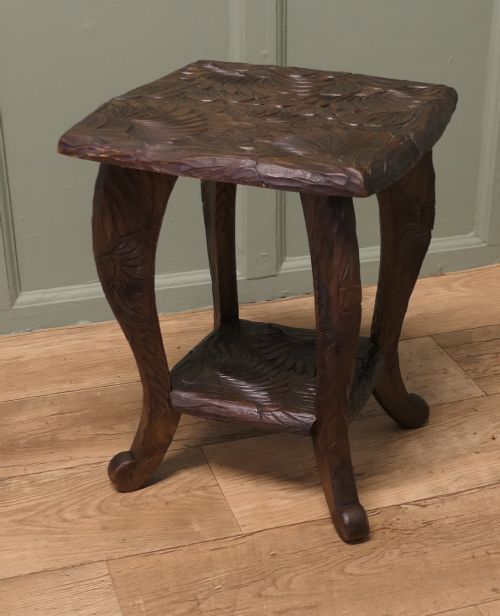
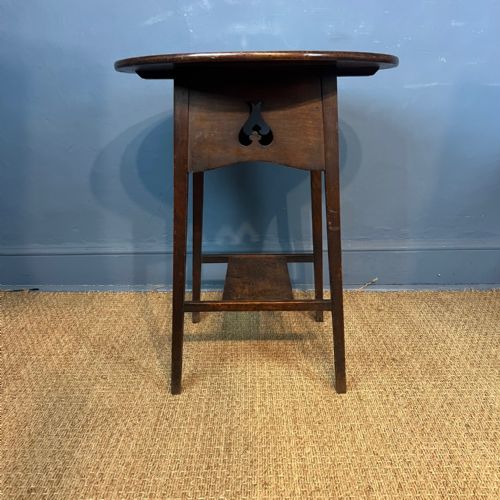
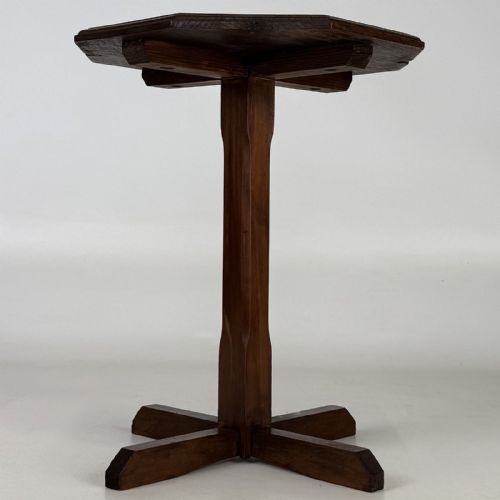
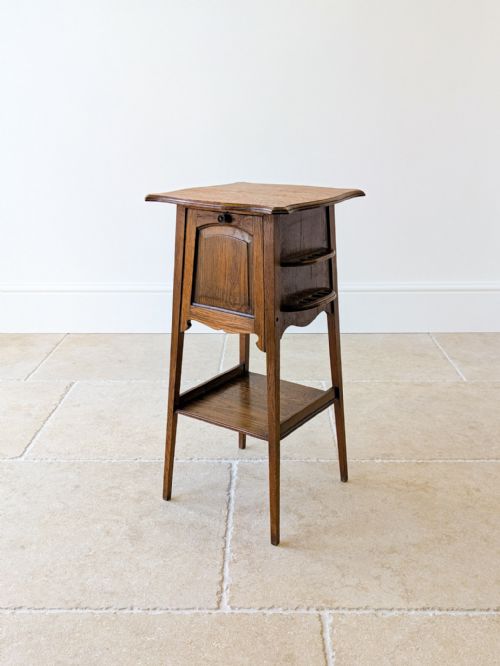
An edwardian oak occasional table encompasses small-scale surfaces designed for specific domestic tasks, such as holding a lamp, plant, or book beside a chair. These pieces emerge predominantly from the early twentieth century, reflecting a period when utilitarian furniture received thoughtful aesthetic treatment.
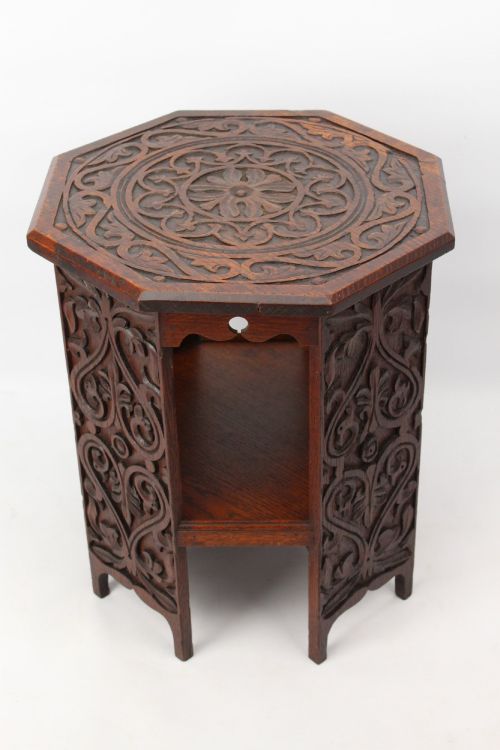
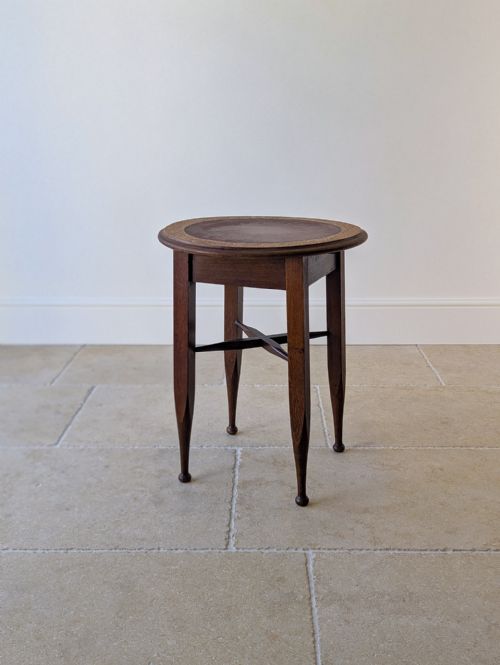
The most common formats encountered on this page include square, round, and octagonal variants, frequently accompanied by lower tiers or drop leaves. Makers of the era also produced nesting sets and specialised plant stands to suit compact interior spaces.
Materials and Construction
Solid oak and wood inlay form the structural foundation of these pieces, often paired with contrasting elements such as brass fixtures, copper tops, or ceramic tiles set into the surface. Cabinetmakers utilised sturdy joinery methods to ensure stability without sacrificing the lighter proportions favored in this era.
Surface decoration frequently includes carved motifs, chequered wood inlays, and specialised turnings like barley twists. These techniques highlight the influence of the Arts and Crafts movement, prioritizing visible material honesty and craftsmanship.
Edwardian Oak Occasional Table Retail Price Guide 2026
Typical asking prices for edwardian oak occasional table among the pieces listed under this phrase on Sellingantiques today, from the lower quarter to the upper quarter. They describe what is for sale here now, not the wider market.
Listings feature solid oak, brass, and ceramic tile materials applied across multiple decades including the Edwardian era and the nineteenth century.
Evaluating Execution
Superior examples demonstrate precise joinery, thoughtful timber selection, and clean execution of decorative inlays or carvings rather than heavy-handed ornamentation. The integration of secondary materials, such as inset ceramic tiles or metal trays, requires precise fitting that separates finer workshop production from standard commercial output.
Proportion and structural integrity define the upper tier of these tables. Well-balanced forms retain their original firmness in legs and tiers, whereas lesser pieces often show fatigue at joints or unrefined shaping in turned elements.
Shapland and Petter·Liberty and Co·William Birch·Baillie Scott·Hubert Simpson of Kendal·Fyne Ladye
The Edwardian Oak Occasional Table Glossary
- Occasional table
- A small, movable table designed for intermittent use in various domestic settings. These items function flexibly as lamp stands, plant holders, or side surfaces.
- Arts and Crafts
- A design movement emphasising handcraft, traditional techniques, and simple forms. Pieces from this tradition often display exposed construction details and honest use of oak.
- Barley twist
- A type of turning resembling a spiral rope, popular in furniture legs and supports. This decorative detail adds vertical movement to solid oak frames.
- Drop leaf
- A hinged table section that folds down to reduce the overall footprint. This mechanism allows the furniture to adapt easily to restricted spatial requirements.
Edwardian Oak Occasional Table: Frequently Asked Questions
What is an edwardian oak occasional table used for?
These tables served various domestic functions in the early twentieth century, primarily holding lamps, books, or decorative plants beside seating areas.
Their portable nature allowed owners to move them around a room as daily requirements shifted.
How do you identify an Arts and Crafts influence?
Arts and Crafts pieces emphasise visible construction, sturdy oak timber, and minimal ornamentation that highlights the natural grain of the wood.
Decoration often relies on subtle inlays, copper accents, or ceramic tiles rather than elaborate machine carvings.
Are tier tables and plant stands the same?
Tier tables feature multiple stacked surfaces connected by upright supports, designed to offer extra display space within a compact floor footprint.
Plant stands typically feature a taller, narrower profile with a single top surface specifically proportioned to hold pots.
How should I care for a vintage oak table?
Maintain the wood by keeping it away from direct heat sources and excessive moisture to prevent timber movement or cracking.
Regular application of a suitable wax polish preserves the natural sheen of the oak surface over time.