
Victorian Two Tier Table
These Victorian two tier table pieces offer double the surface area for lamps and displays, bringing period charm and practicality to any room.
Forms and Origins
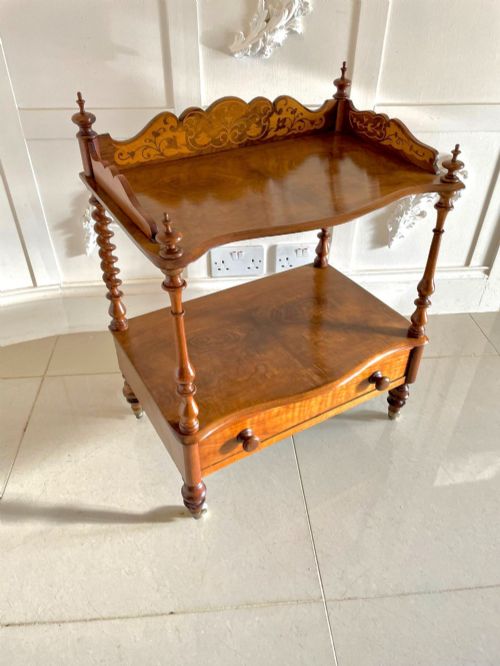
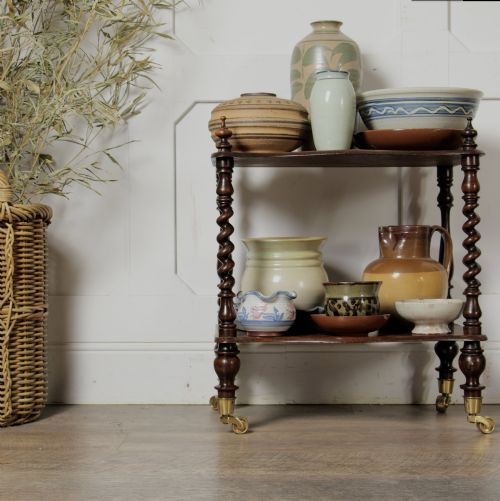
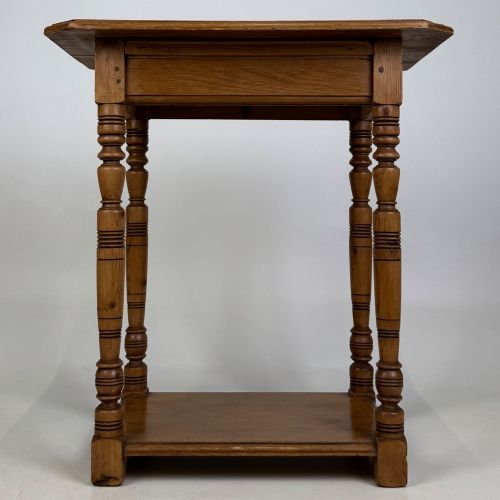
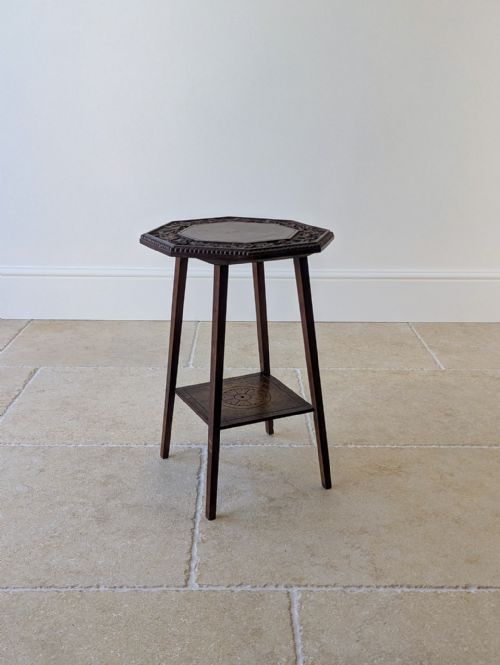
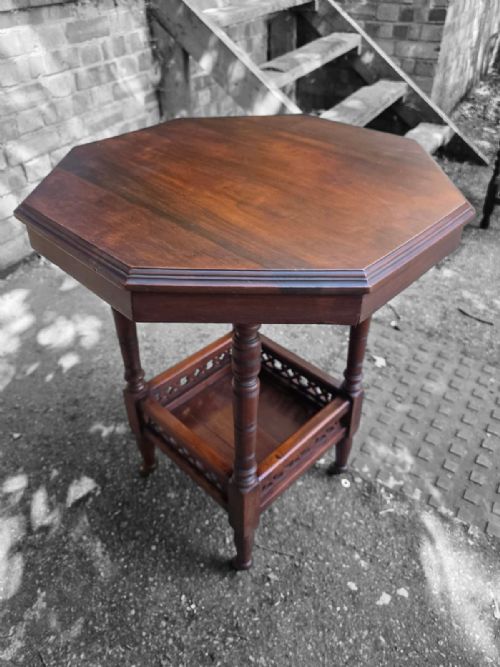
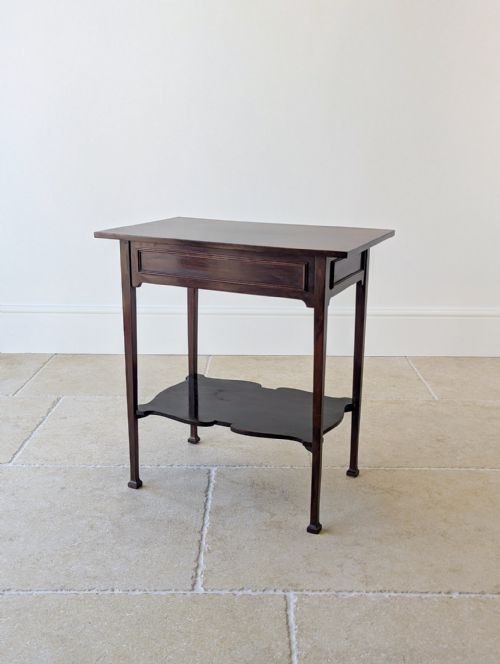
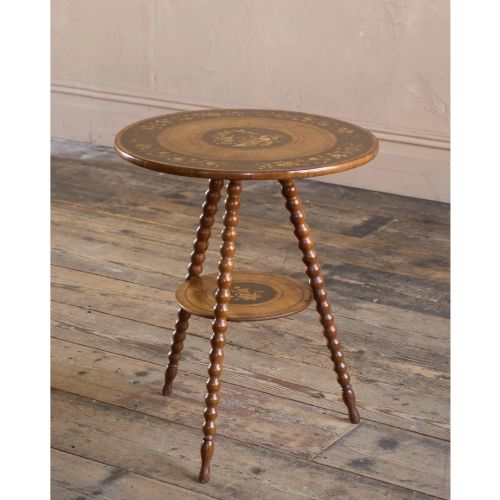
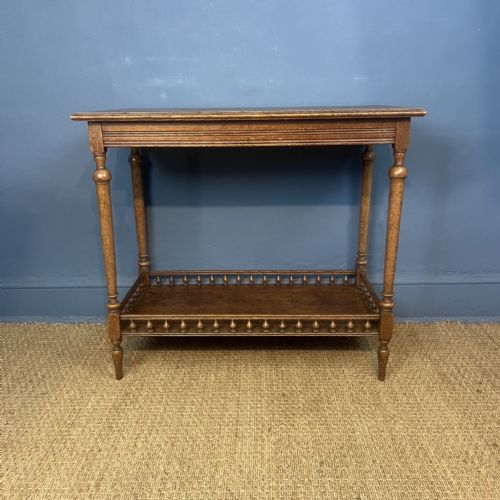
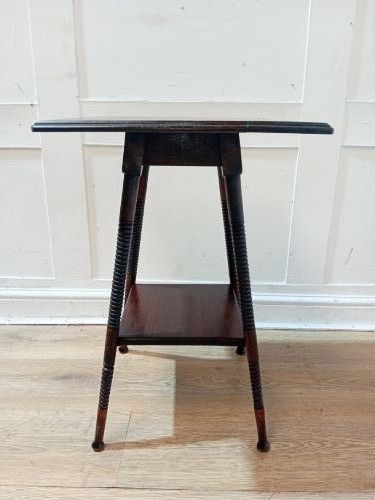
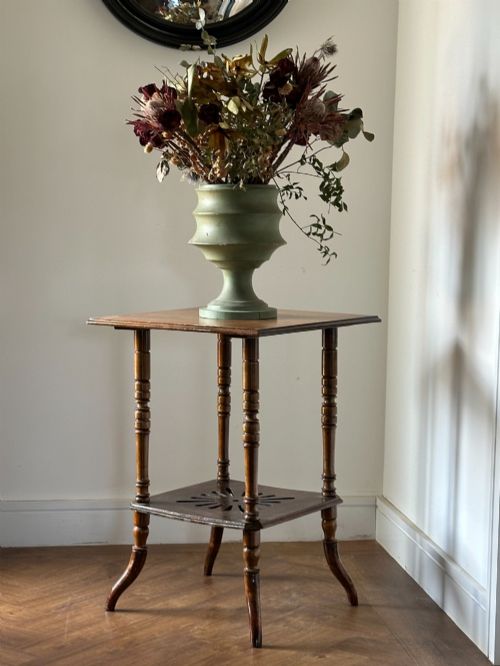
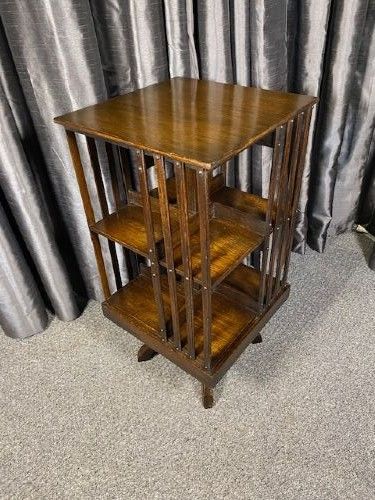
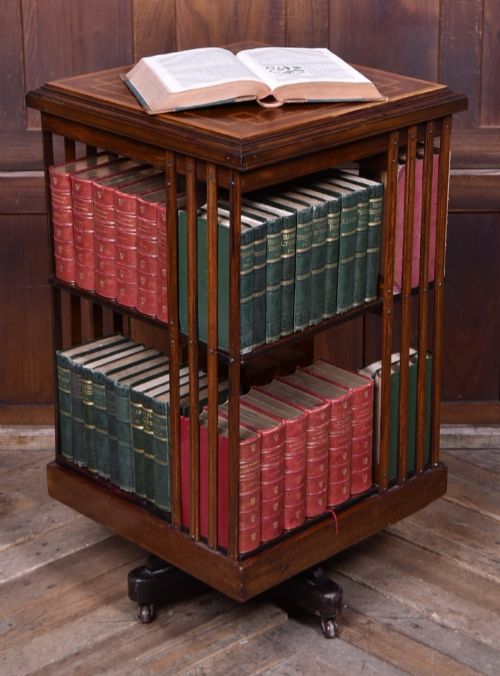
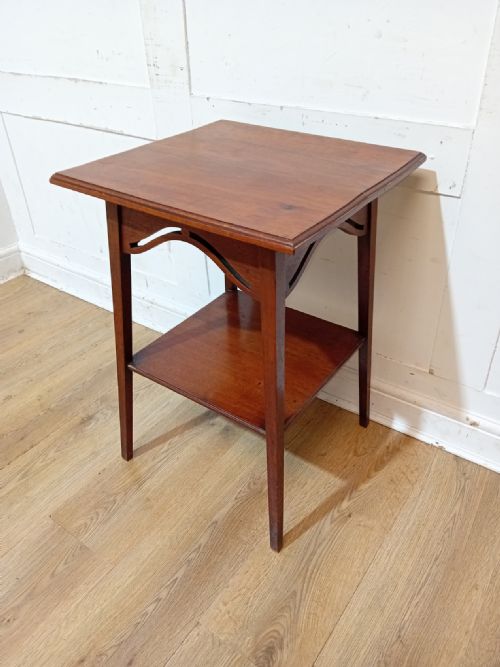
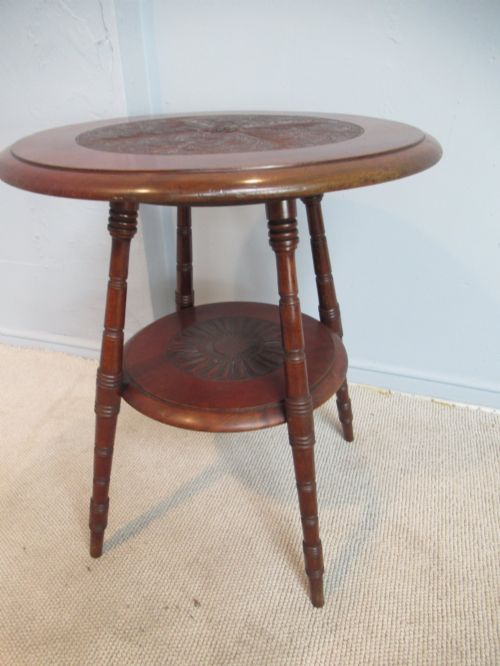
A victorian two tier table provides an upper display surface supported above a lower shelf, serving as an occasional side table, lamp table, or whatnot. These dual-level pieces emerge from the nineteenth century in various timber and bamboo formats.
The selections span straightforward side tables in mahogany and walnut alongside more decorative designs associated with the Aesthetic Movement and Arts and Crafts styles. Square, rectangular, and octagonal shapes appear frequently across the archive and current listings.
Makers utilised these dual surfaces for compact spaces, creating versatile stands that functioned as bedside displays, lamp tables, and small window stands throughout the Victorian era.
Materials and Construction
Cabinetmakers constructed these tables from hardwoods including mahogany, walnut, oak, and satinwood, frequently employing ebonised finishes or bamboo for distinct visual effects. Inlays of boxwood, brass details, and hand-painted black lacquer surfaces appear on specific examples.
Construction methods involve fitted joints connecting the primary tabletop to the lower tier, sometimes incorporating gallery rails, turned supports, or bamboo stalks depending on the chosen design aesthetic.
Retail Price Guide 2026
Typical UK retail prices for victorian two tier table, calculated from the Sellingantiques database of over a million retail prices indexed since 2003. This retail price guide relies exclusively on Sellingantiques data; no external sources or auction records are used, so the figures do not describe the wider market.
The recorded pieces utilise materials ranging from traditional mahogany, walnut, and oak to exotic bamboo, ebonised wood, and painted finishes.
Distinctions in Quality
Superior examples demonstrate refined timber selection, such as burr walnut or figured mahogany, alongside meticulous joinery and complex brass or boxwood inlays. Finer pieces often bear attribution to known cabinetmakers or workshops.
Simpler versions rely on bamboo or painted pine construction, where the value rests on original surface finishes and structural stability rather than elaborate cabinetmaking techniques.
H Ogden of Manchester·Collinson and Lock
The Victorian Two Tier Table Glossary
- Whatnot
- A piece of furniture consisting of a set of open shelves for displaying small objects. These tiered stands often double as side tables or bedside units.
- Etagere
- A piece of furniture with a set of open shelves for display. This French term describes tiered open shelving units common in nineteenth-century interiors.
- Aesthetic Movement
- A late nineteenth-century design movement that emphasised visual and artistic qualities over narrative subject matter. Pieces in this style often display Anglo-Japanese influences, ebonised wood, and brass fittings.
- Occasional Table
- A small table designed for intermittent use rather than a singular dedicated function. These pieces move easily around a room to hold lamps, drinks, or decorative items.
- Dumbwaiter
- A multi-tiered piece of furniture traditionally used for holding serving dishes or tableware. Victorian versions typically feature two distinct circular or shaped tiers supported by a central column or corner legs.
Frequently Asked Questions
How were these tables used?
These pieces functioned as lamp tables, bedside stands, window displays, or small side tables in nineteenth-century interiors.
The lower tier provided a convenient place for books, lamps, or decorative objects while keeping the main surface clear.
What woods were used?
Common timbers include mahogany, walnut, oak, and satinwood, alongside ebonised wood and exotic bamboo.
Finer examples incorporate contrasting inlays of boxwood or brass details to enhance the visual appeal of the grain.
How do I identify the style?
Styles range from traditional mahogany side tables to Aesthetic Movement designs featuring ebonised surfaces and Japanese influences.
Arts and Crafts examples display simpler, honest construction methods highlighting the natural grain of walnut or oak.