


Hexagonal Oak Side Table
A hexagonal oak side table brings geometric form and rich timber grain to a room, offering a compact surface suited for lamps and books.
Hexagonal Oak Side Table
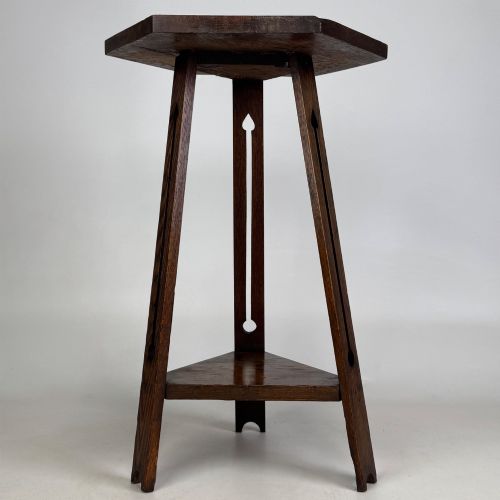
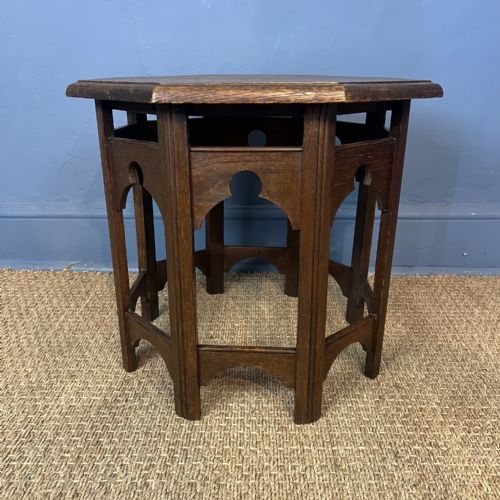
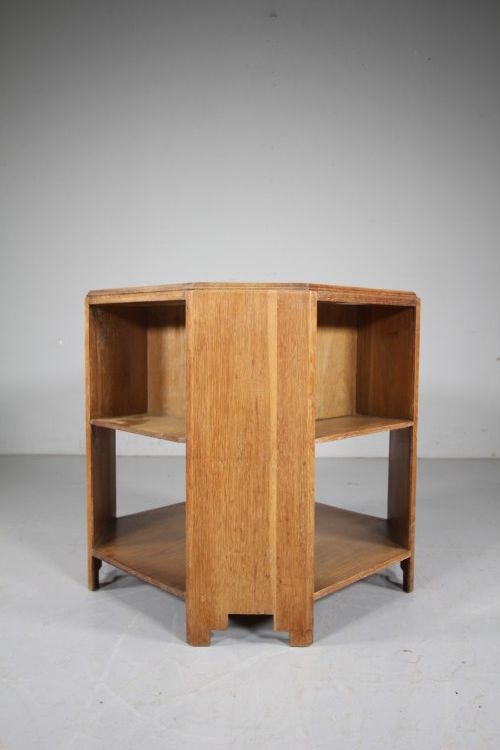
A hexagonal oak side table is a six-sided piece designed for occasional use, appearing across nineteenth-century and twentieth-century periods including Edwardian, 1930, 1890, 1910, and 1920 dates. These items function as side tables, occasional tables, coffee tables, plant stands, and bookcase tables.
The versions most commonly met on this page showcase distinct movement styles such as Arts and Crafts, Art Deco, Gothic Revival, Regency, Jacobean Revival, and Moorish Revival, reflecting varied domestic fashions from different decades.
How they were made
Makers utilised solid oak and pollard oak to construct these six-sided frames, occasionally incorporating distinctive timber growth patterns for visual depth. Structural integrity relies on traditional cabinet-making joinery suited to supporting tops of varying configurations.
Surface details incorporate applied materials like mother-of-pearl and brass hardware, alongside carved bases and lift-top mechanisms seen on specific nineteenth-century and twentieth-century examples.
Some tables double as plant stands, proving that Victorian ferns deserved furniture built specifically for their social standing.
What varies in quality
The standard of timber selection separates finer examples from simpler workshops, particularly when pollard oak or carefully matched grain patterns are employed on the top surfaces. The presence of specialised decorative elements, such as brass inlays or mother-of-pearl detailing, elevates the execution.
Constructive refinement shows in the handling of the six-sided geometry, where crisp lines on the edges and integrated lower tiers or bookcase sections demonstrate greater ambition from the maker.
Heals·Liberty
The Hexagonal Oak Side Table Glossary
- Pollard oak
- Timber taken from a tree that has been pruned at a height above livestock reach, producing a dense grain with characteristic cluster patterns. This decorative wood appears on select nineteenth-century occasional pieces.
- Occasional table
- A small, movable table designed for a specific, transient purpose in a room rather than permanent dining or writing. These six-sided versions serve beside seating or in corners.
- Arts and Crafts
- A design movement originating in the late nineteenth century that emphasised honest construction and simple materials. Pieces from this tradition often display exposed joinery and straightforward timber surfaces.
- Lift-top
- A hinged surface mechanism that opens to reveal internal storage space beneath the top. This functional feature occurs on specific lamp and side tables.
Hexagonal Oak Side Table: Frequently Asked Questions
Where does a hexagonal table fit best?
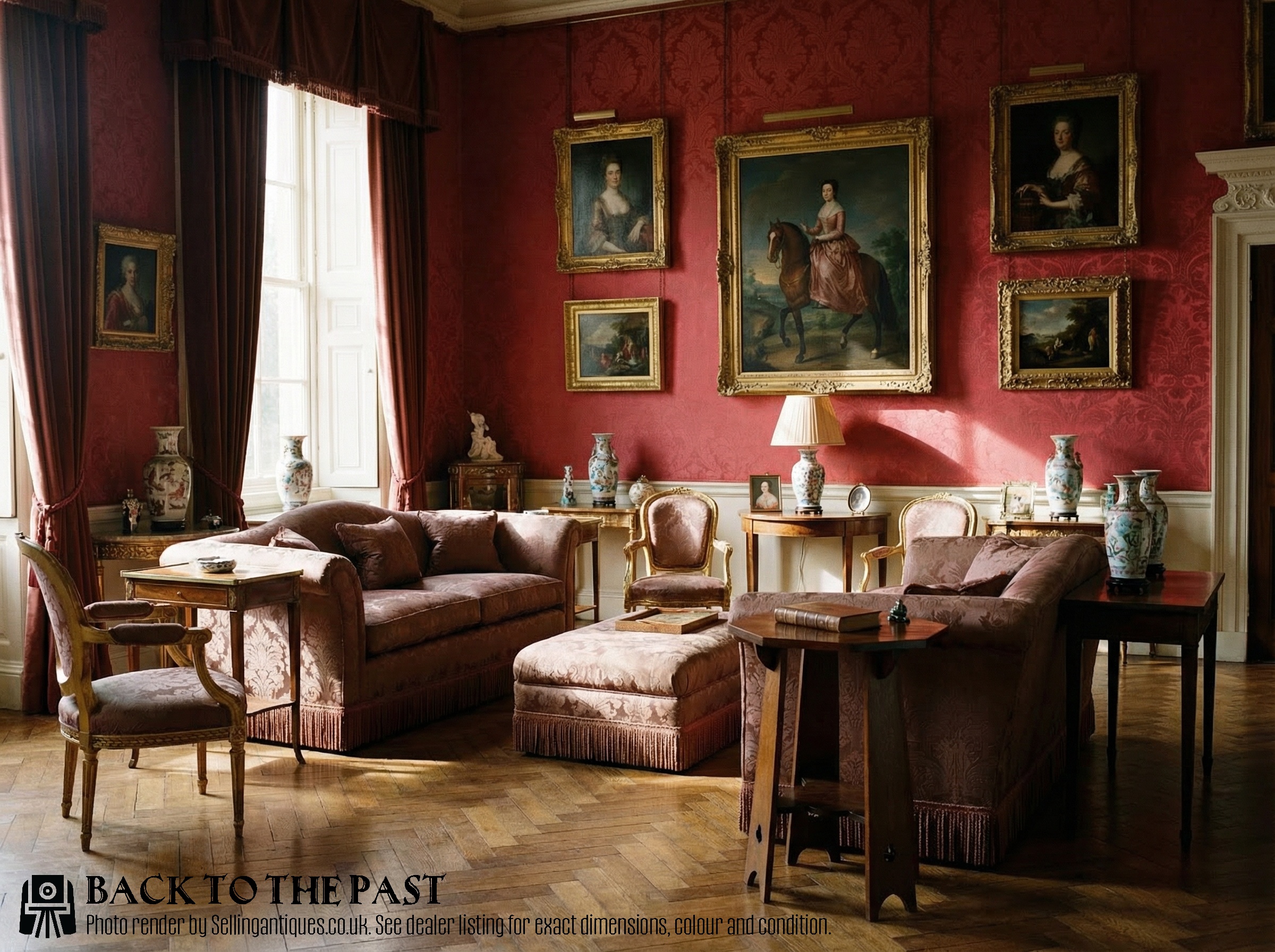
These compact pieces sit comfortably beside armchairs or sofas where a round or rectangular surface might feel too conventional.
The six-sided footprint allows the table to nestle into corners or float freely as a central lamp stand.
How do I date an oak table?
Dating relies on observing the stylistic markers, such as the geometric austerity of Arts and Crafts pieces or the clean lines associated with 1930s design.
Construction methods and timber preparation also offer clues to whether a piece originates from the nineteenth century or the Edwardian era.
Can these tables hold heavy lamps?
Solid oak construction provides a sturdy foundation capable of supporting table lamps, books, and everyday objects.
The stable six-sided base distributes weight evenly across the floor surface.
What is pollard oak?
Pollard oak is timber harvested from trees that were historically cut back to encourage dense, highly figured branch growth.
This creates a swirling, mottled grain pattern prized for decorative table tops.