

Brown Mahogany Pot Cupboard
A brown mahogany pot cupboard is a compact bedside piece designed to hold a chamber pot or night essential, combining practicality with rich timber grain.
Brown Mahogany Pot Cupboard
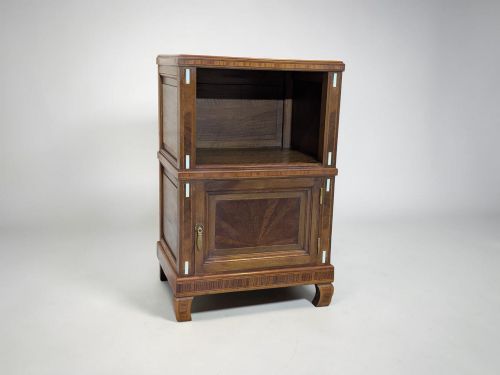
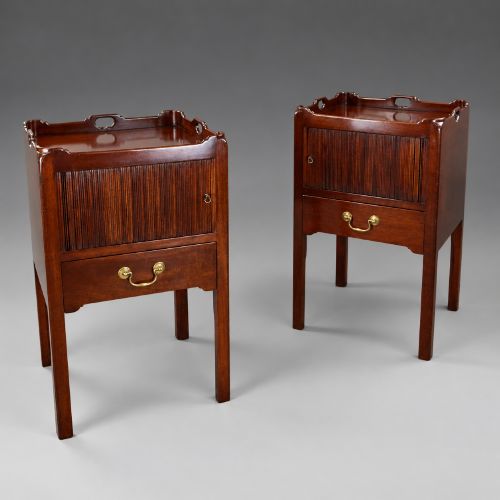
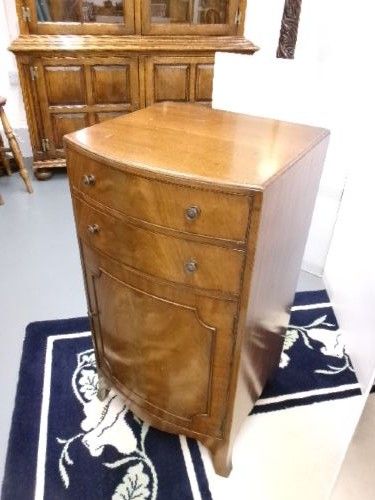
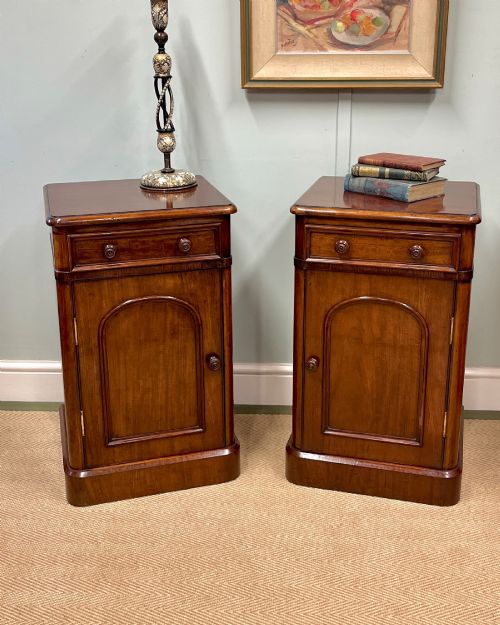
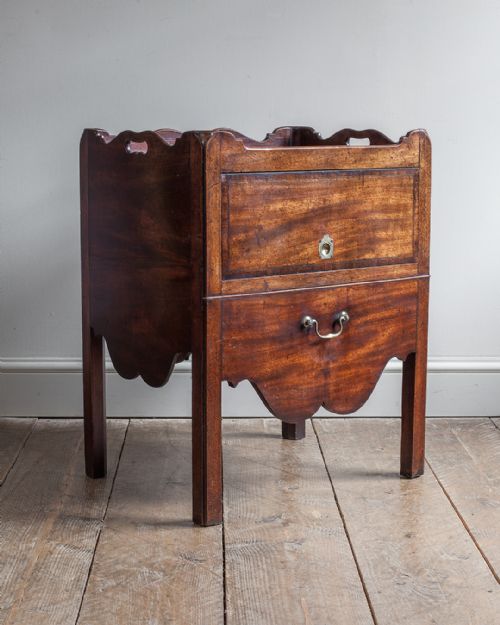
When you search for a brown mahogany pot cupboard, you encounter compact bedside pieces that evolved from Georgian night tables into Victorian and Edwardian bedside cabinets. These items primarily serve as small enclosed storage units placed beside a bed.
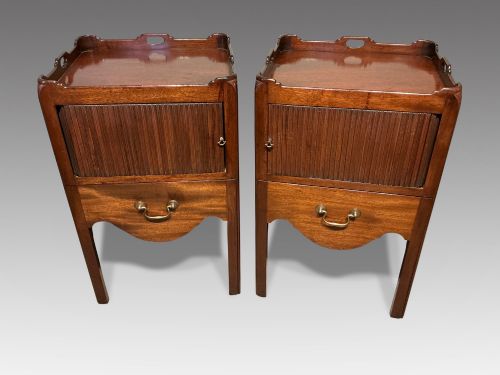
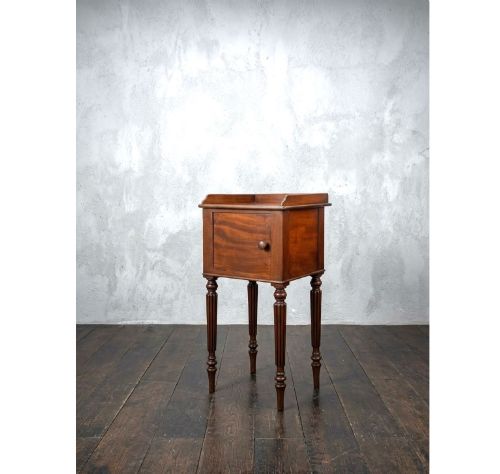
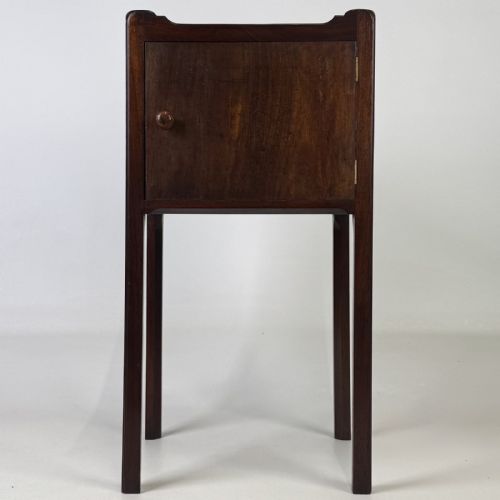
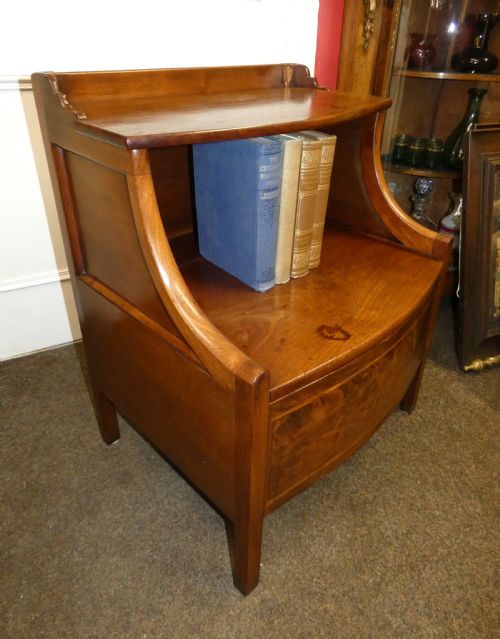
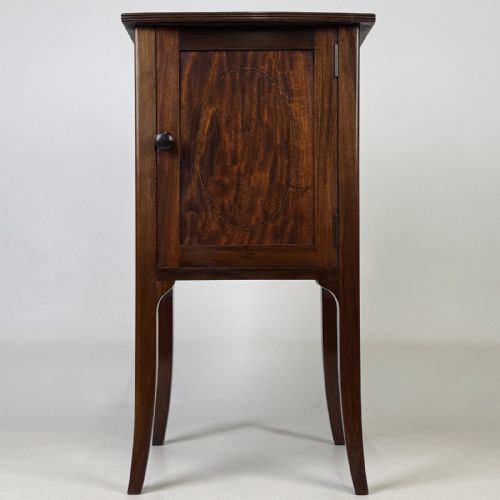
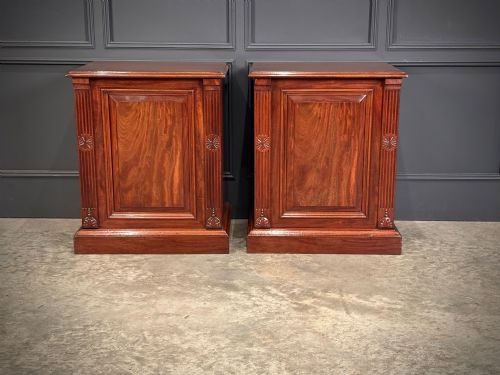
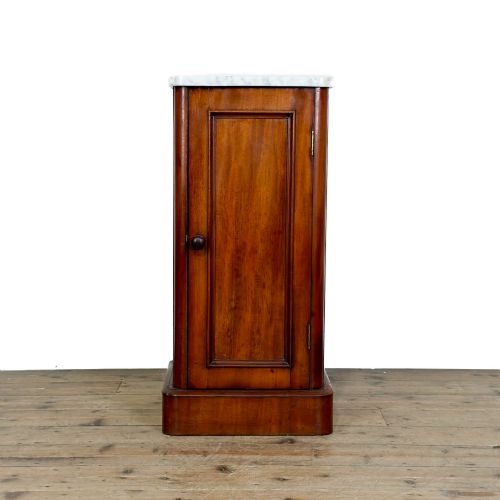
The selection here includes single pieces and matched pairs spanning the eighteenth, nineteenth, and early twentieth centuries. Common forms take the shape of small cupboards, commodes, and nightstands with panelled doors.
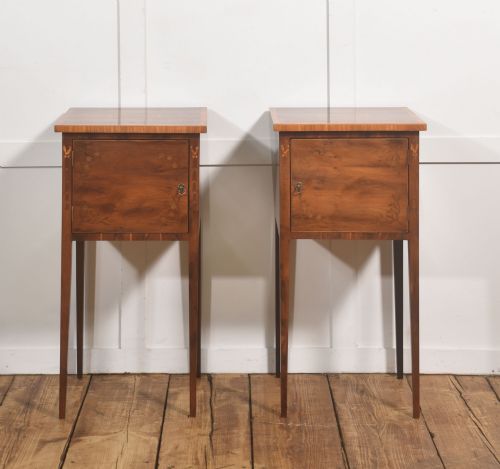
Georgian and Regency examples tend to show restrained classical proportions, whilst later Victorian and Edwardian versions often incorporate panelled doors or subtle inlaid stringing.
Materials and construction
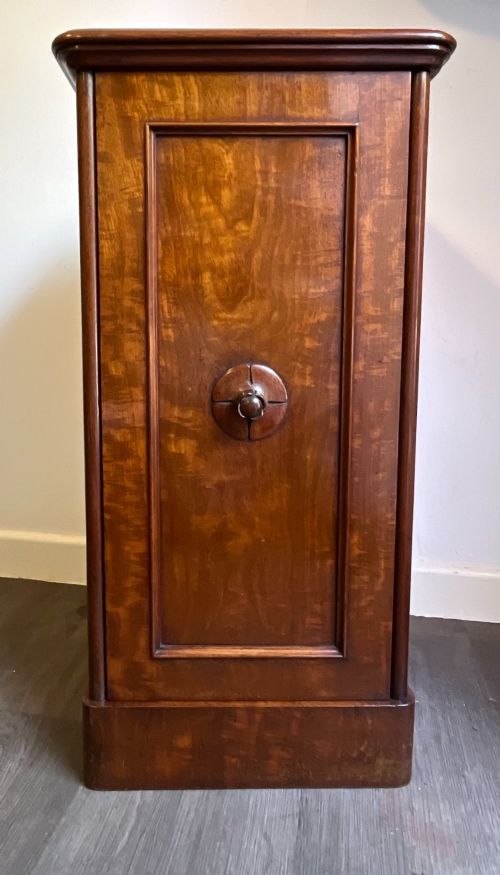
Cabinetmakers constructed these pieces primarily using solid mahogany and flame mahogany veneer, often enhanced by secondary timbers. Selected cuts display rich figuring across the main surfaces.
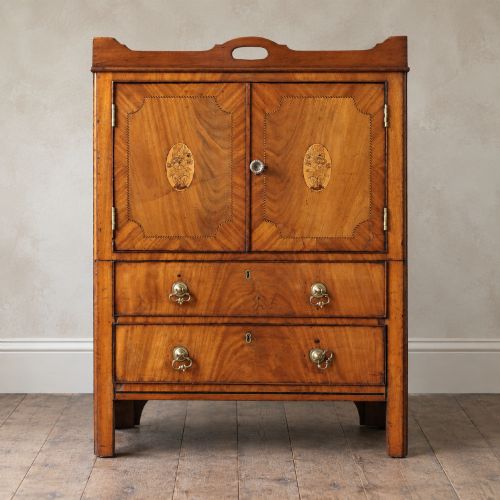
Workshops applied decorative details such as boxwood inlay, satinwood stringing, and brass fittings to punctuate the dark timber. Some later or continental examples integrate marble tops or marquetry panels into the design.
Brown Mahogany Pot Cupboard Retail Price Guide 2026
Typical asking prices for brown mahogany pot cupboard among the pieces listed under this phrase on Sellingantiques today, from the lower quarter to the upper quarter. They describe what is for sale here now, not the wider market.
Many a Victorian sleeper stored their midnight candle in the exact spot originally reserved for porcelain chamberware.
Assessments of quality
Quality rests in the selection of the timber grain, particularly where flame mahogany veneer is matched across the door panels and top surfaces. Finer pieces demonstrate precise joinery and well-fitted internal compartments.
The presence of crisp boxwood inlay or original brass hardware separates standard production items from finer workshop pieces. Structural integrity in the legs and carcase remains essential for pieces meant to support daily use.
Gillows·Heals·Harrods
The Brown Mahogany Pot Cupboard Glossary
- Pot cupboard
- A small enclosed bedside cabinet originally designed to house a chamber pot behind a door. These items later transitioned into general bedside storage units.
- Flame mahogany veneer
- A thin slice of mahogany cut from the fork of the tree to produce a distinctive, flamy grain pattern. Cabinetmakers laid this over a stable secondary wood.
- Tambour
- A flexible sliding shutter formed from narrow strips of wood glued to canvas. This mechanism conceals the upper section of certain night tables.
- Nightstand
- An alternative term for a small bedside table or cabinet. These pieces provide surface space and enclosed storage next to the bed.
- Marquetry
- Decorative patterns formed by fitting together contrasting veneers of wood. Dutch examples often display floral marquetry across the mahogany surfaces.
Brown Mahogany Pot Cupboard: Frequently Asked Questions
What is a brown mahogany pot cupboard used for today?
These compact pieces function primarily as bedside tables or small lamp stands in modern interiors. Their enclosed cupboards provide discreet storage for books and personal items.
Their shallow depth allows them to fit comfortably beside lower beds or within smaller guest rooms where space is restricted.
How do I date a brown mahogany pot cupboard?
Dating relies on observing structural characteristics, timber choice, and decorative styles such as Georgian restraint or Edwardian inlay. Earlier eighteenth-century pieces often display simpler architectural lines.
Later Victorian and Edwardian iterations frequently incorporate machine-sawn elements and lighter secondary woods within the carcase construction.
Are these pieces usually found as pairs?
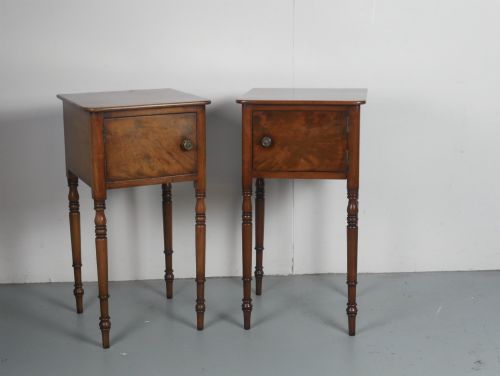
Both single cabinets and matched pairs appear regularly across the nineteenth and early twentieth centuries. Pairs often combine pieces that were closely matched during a later period rather than built together originally.
Single cupboards remain common because many bedrooms historically utilised only one bedside table.
Did these cupboards always have doors?
While most feature a single panelled door concealing a shelf or interior space, some variations utilise sliding tambour shutters or open tray tops. Georgian designs frequently combined a cupboard door below an open shelf or pull-out slide.