
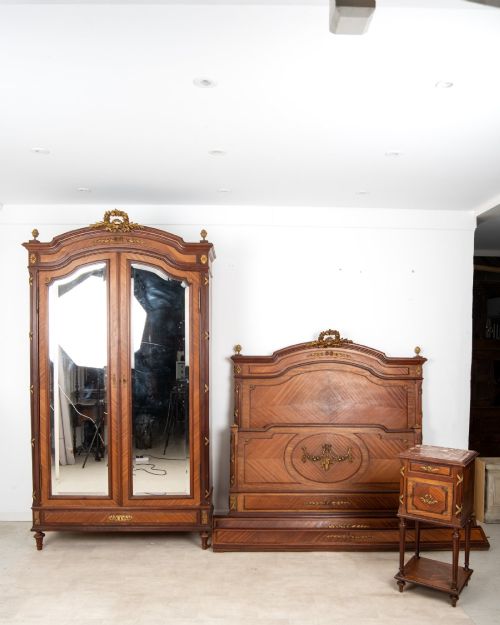
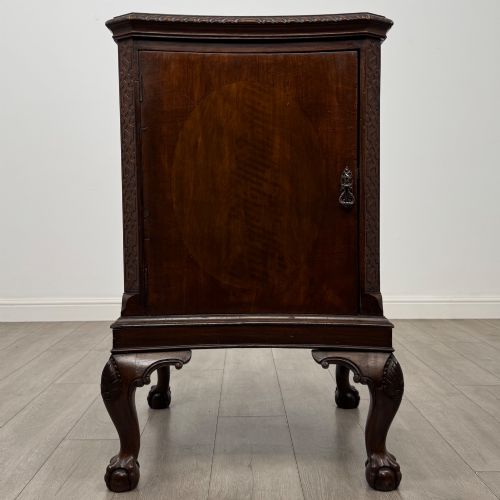
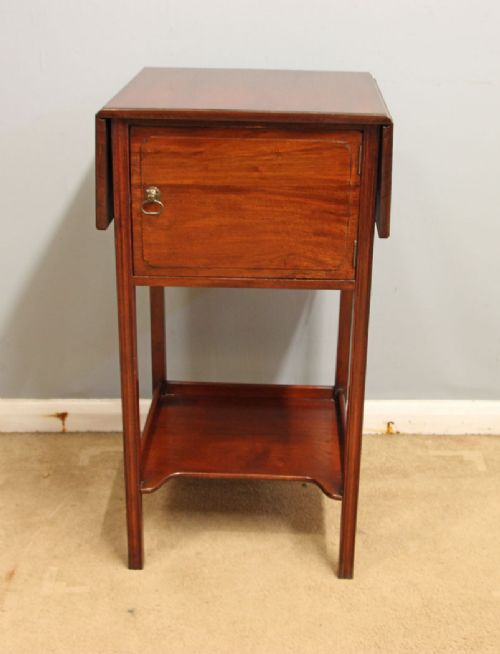
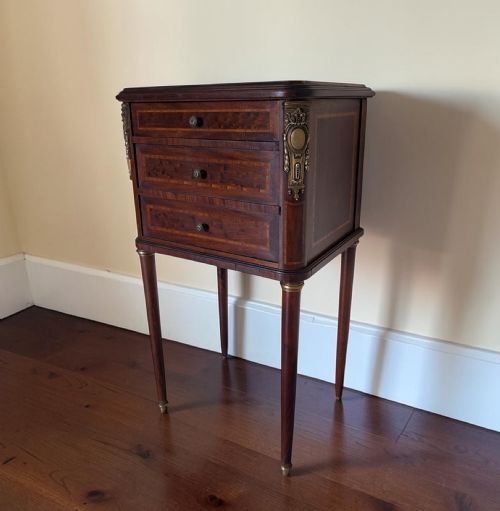
Edwardian Mahogany Nightstand
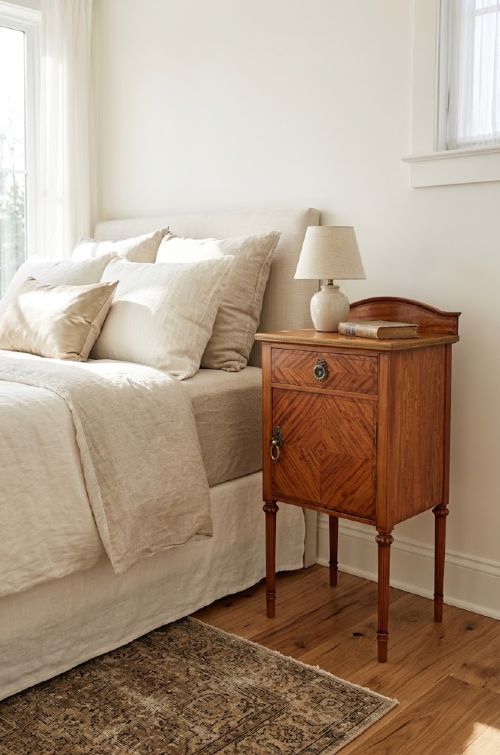
An Edwardian mahogany nightstand brings practical bedside storage and refined timber work to a bedroom.

What an edwardian mahogany nightstand is
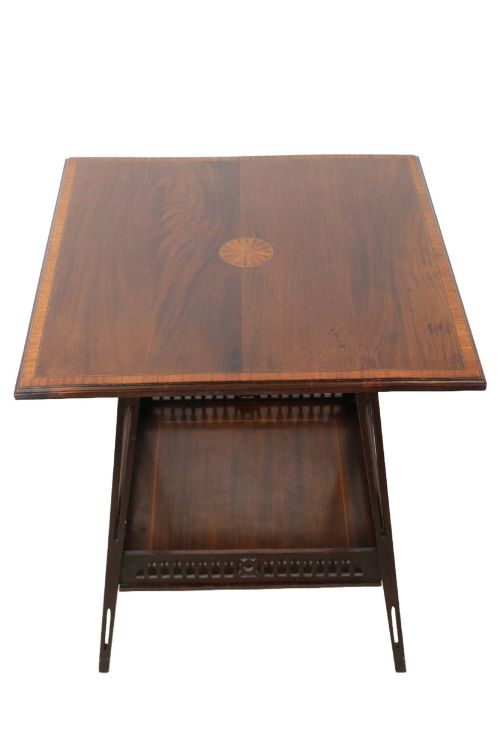
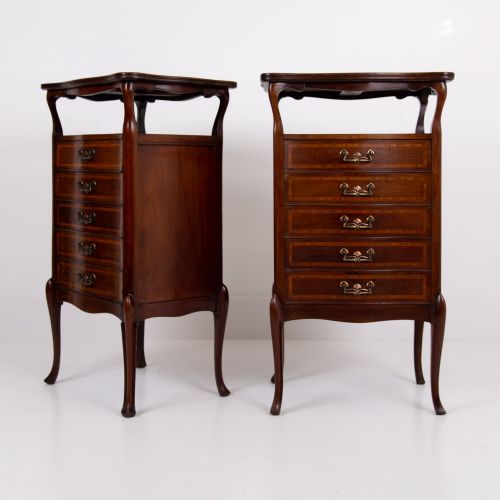
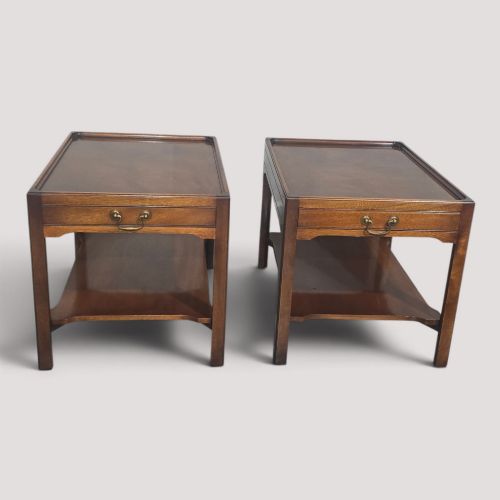
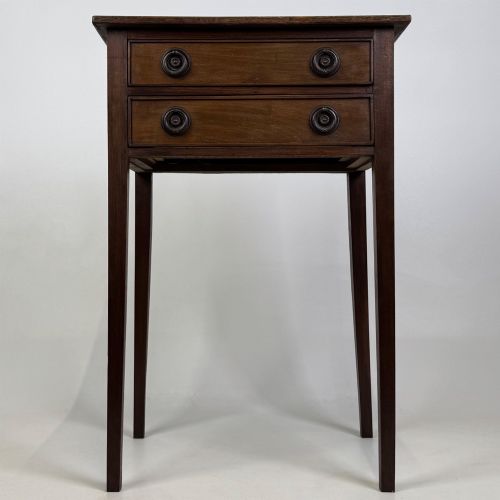
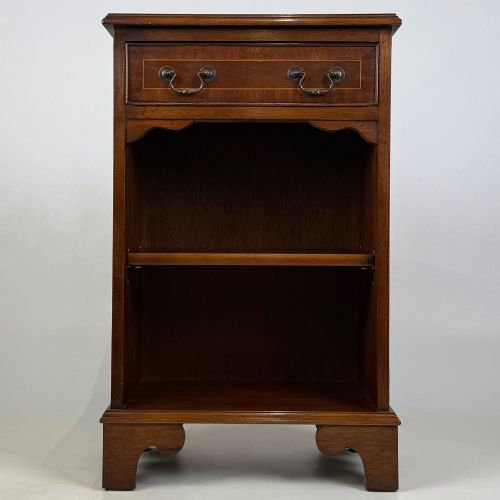
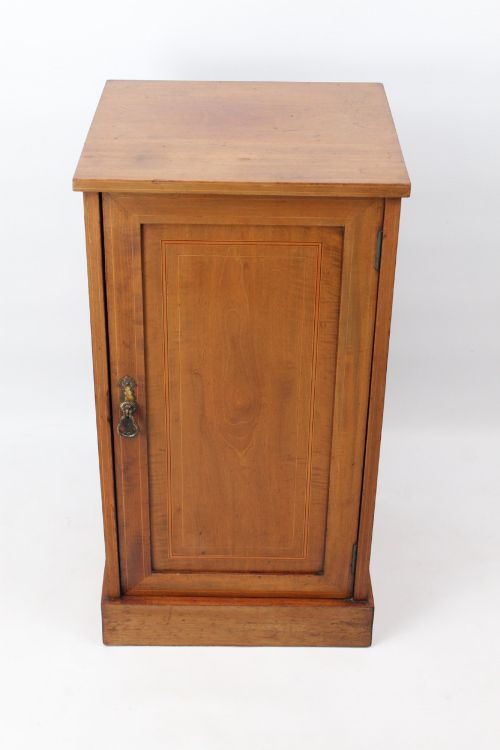
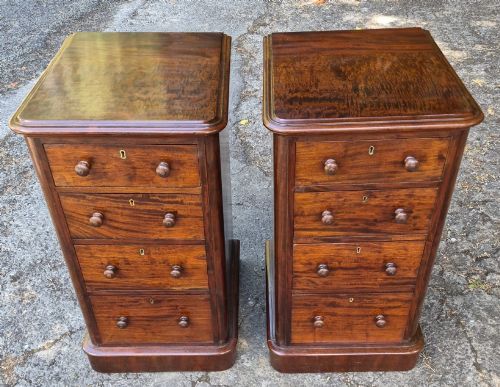
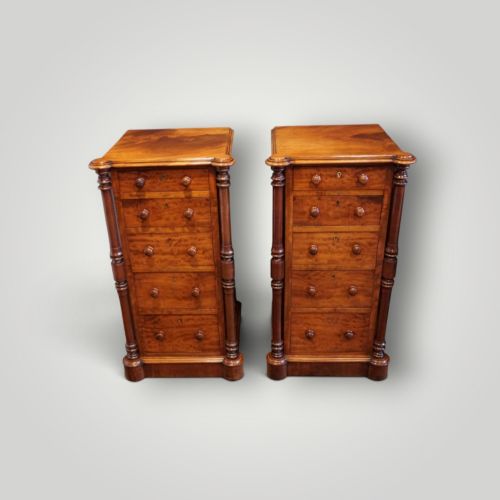
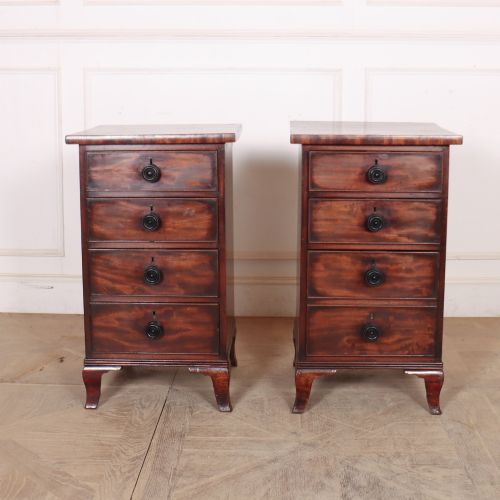
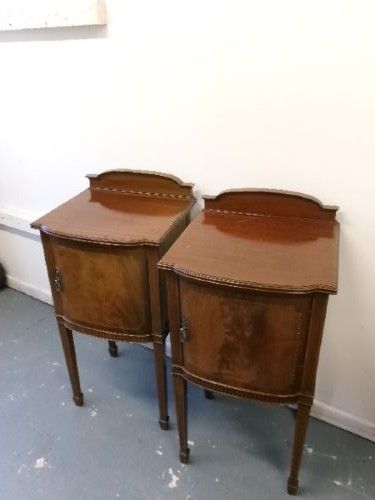
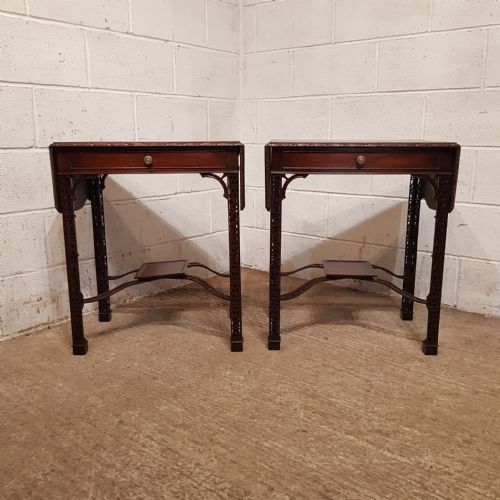
An edwardian mahogany nightstand encompasses a range of compact bedside storage and small utility tables produced around the turn of the twentieth century. The selections available on this page include bedside cabinets with cupboards, occasional tables, dropleaf designs, and tray-top formats.
Most pieces date from the Edwardian period or around nineteen hundred, alongside Victorian examples from the late nineteenth century. Forms vary from simple cupboards to drop-leaf occasional tables and Pembroke formats.
Makers and retailers such as Maple and Company and Edwards and Roberts contributed to this domestic furniture category. Buyers encounter traditional cabinet work designed to sit neatly beside a bed.
How they were made
These items rely primarily on mahogany timber, sometimes paired with maple, combined with brass hardware. Workshops applied decorative elements including satinwood and boxwood inlay to enrich the timber surfaces.
Construction techniques include drop-leaf mechanisms, tray tops, and enclosed cupboards with hinged doors. Makers utilised timber grain and contrasting inlay lines to define panels and tabletops.
Retail Price Guide 2026
Typical UK retail prices for edwardian mahogany nightstand, calculated from the Sellingantiques database of over a million retail prices indexed since 2003. This retail price guide relies exclusively on Sellingantiques data; no external sources or auction records are used, so the figures do not describe the wider market.
The listings on this site combine Edwardian and Victorian periods with materials including mahogany, brass, satinwood, boxwood, and marble.
What varies in quality
Quality rests upon the crispness of the cabinet work, the precision of the satinwood or boxwood inlay, and the selection of figured mahogany. Finer examples display meticulous joinery and balanced proportions across small footprints.
The integration of secondary timbers such as maple, the quality of brass fittings, and the complexity of forms like tray tops or drop leaves distinguish standard utility pieces from more ambitious workshop productions.
Maple and Company·Edwards and Roberts
The Edwardian Mahogany Nightstand Glossary
- Edwardian
- Pertaining to the reign of King Edward VII, spanning from nineteen hundred to nineteen ten, characterised by lighter furniture forms than the preceding Victorian era. This era favoured revived historical styles alongside neat domestic designs.
- Mahogany
- A durable tropical hardwood prized for its reddish-brown colour and stable grain, widely used in quality cabinet making. It takes a high polish and accepts fine inlay work.
- Satinwood inlay
- A decorative technique inserting lighter yellowish satinwood into contrasting darker timber surfaces to create geometric or floral patterns. This adds visual detail to plain cabinet doors and tabletops.
- Dropleaf
- A table design featuring hinged flaps that fold down to save space or lift up to extend the surface area. It provides adaptable proportions in compact bedrooms.
- Tray-top
- A tabletop finished with a raised moulded rim designed to prevent items from rolling off. This feature appears on select bedside cabinets and occasional tables.
Frequently Asked Questions
What is an edwardian mahogany nightstand?
An edwardian mahogany nightstand is a small wooden bedside table or cabinet produced during the early twentieth century. These pieces provide enclosed storage or surface space next to a bed.
They appear in various formats including cupboards, Pembroke tables, and drop-leaf occasional tables constructed from mahogany with optional inlay.
How do I identify an edwardian piece?
Edwardian furniture generally exhibits lighter proportions and brighter timber tones compared to heavier Victorian predecessors. Look for refined satinwood or boxwood inlay and classic revival styles.
Maker stamps or labels, when present, can further confirm the production period and workshop origin.
Where were these cabinets used?
These cabinets were designed primarily for domestic bedrooms to hold bedside lighting, reading material, and personal items. Their compact size suited the bedroom layouts of the period.
Certain drop-leaf and occasional variants also functioned in drawing rooms or parlours as utility surfaces.
What materials are used?
The primary material is mahogany timber, valued for its strength and rich grain. Makers often incorporated contrasting woods like satinwood and boxwood for decorative inlay.
Additional materials include brass for hardware fittings and occasional uses of maple secondary timber.