



Mahogany Night Stand
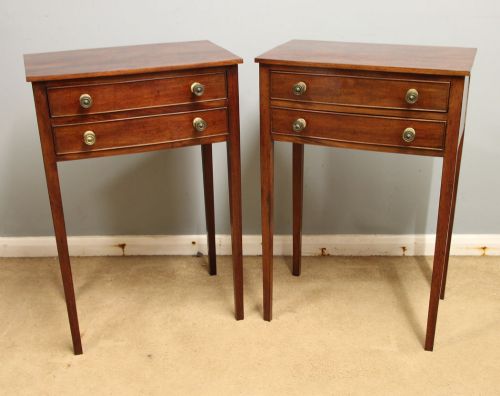
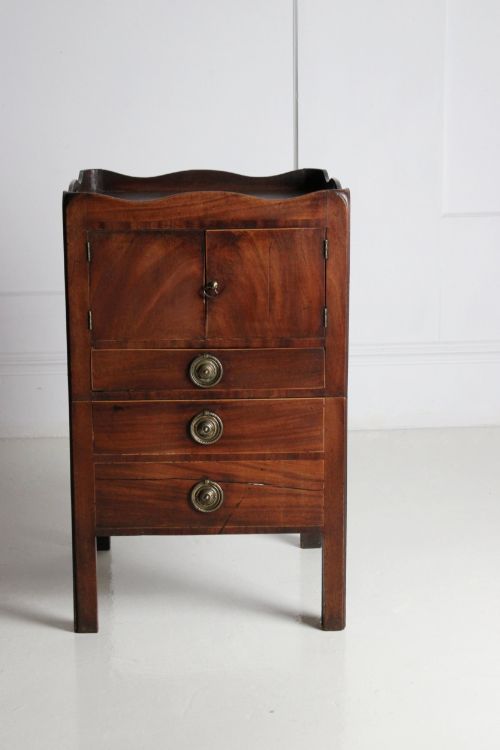
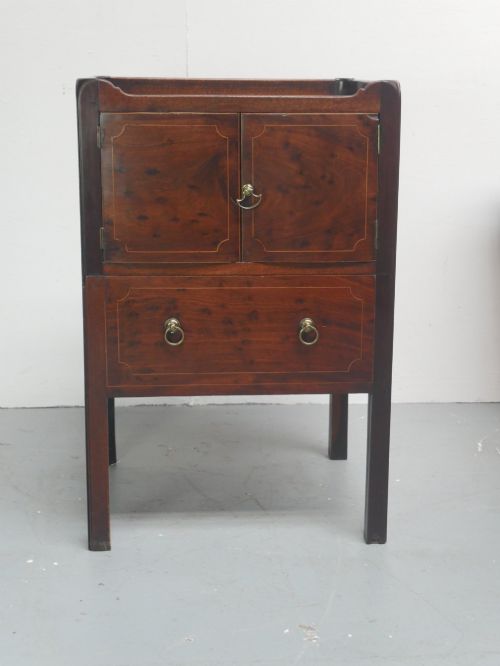
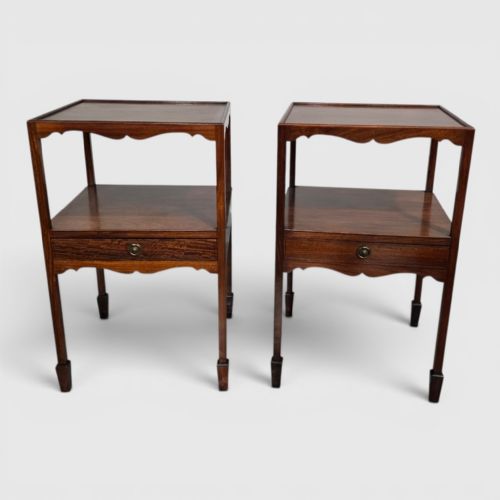
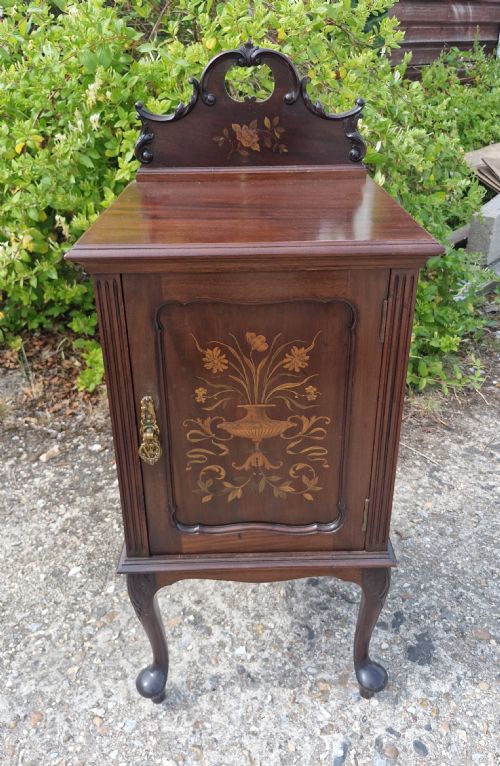
A mahogany night stand brings a refined Georgian or Victorian presence to the bedside with practical timber storage.
Mahogany Night Stand
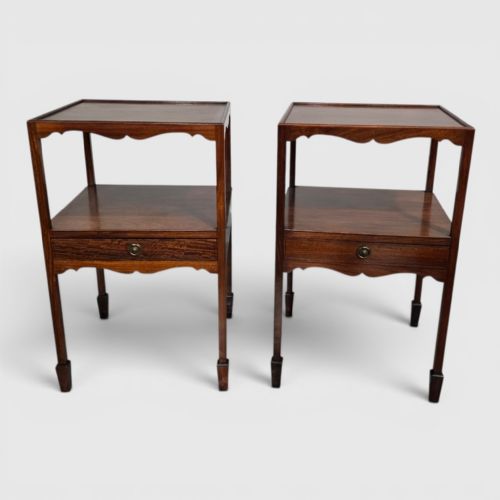
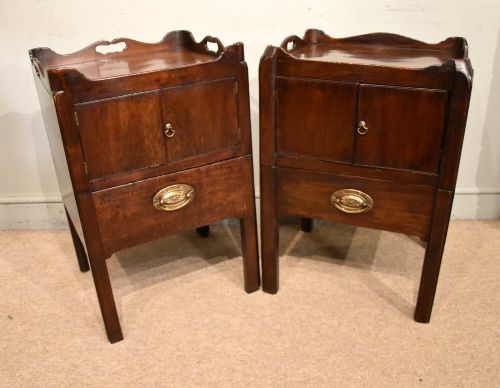
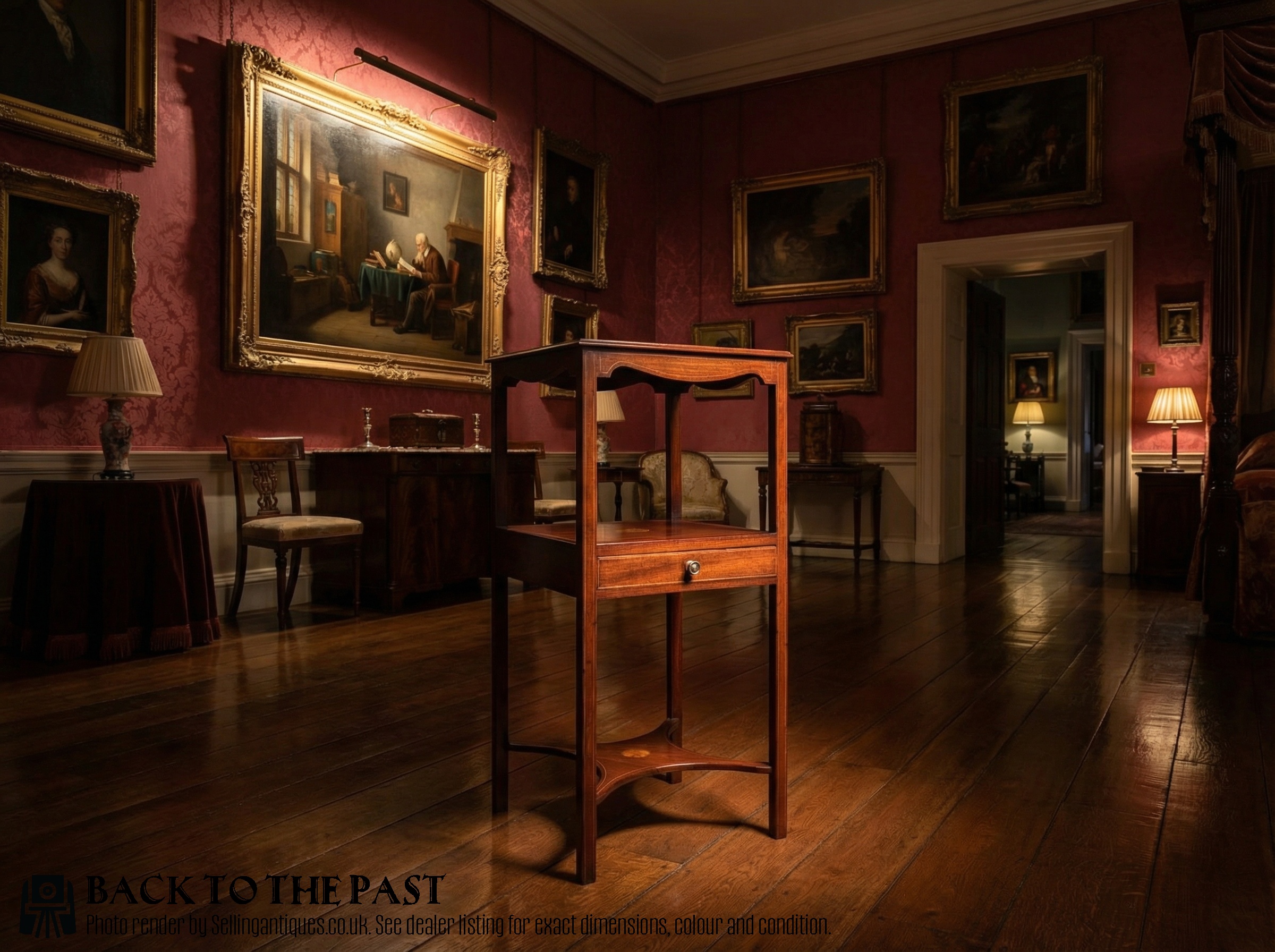
A mahogany night stand encompasses a range of historic bedside furniture designed to hold chamber lighting and personal items. Pieces matching this search phrase span compact cupboards, open tray-top tables, and enclosed washstands originating from the eighteenth century through the Edwardian period.
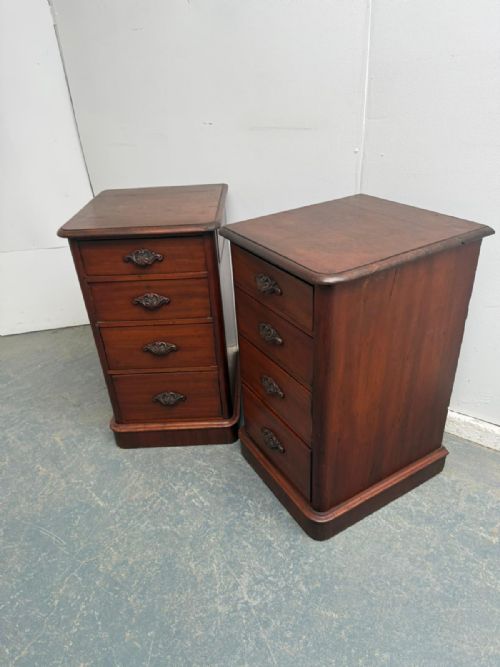
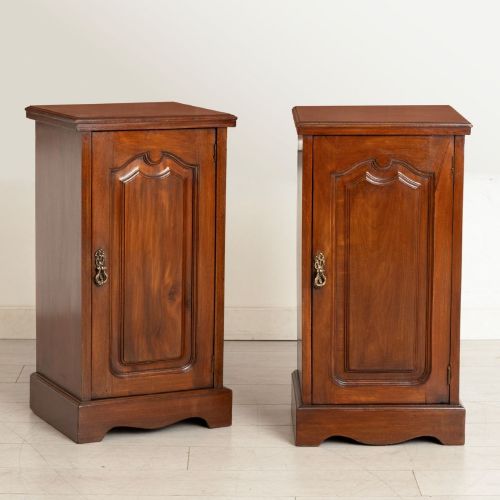
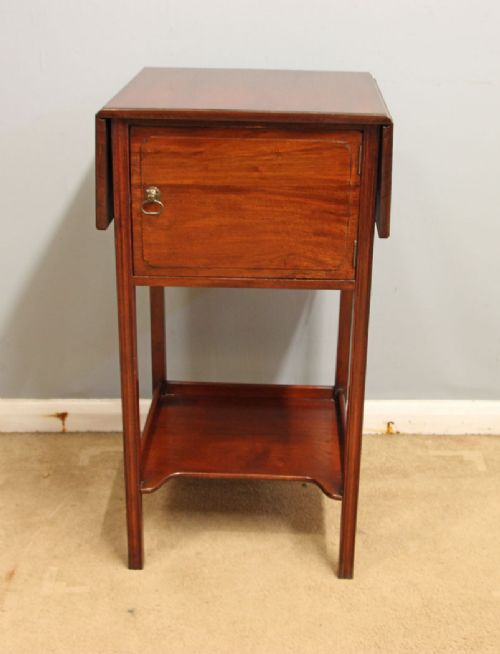
The most common formats on this page are enclosed bedside cabinets and lamp tables from the Georgian and Victorian eras. These range from simple square cupboards to refined Sheraton bow-fronted commodes and occasional tables.
Makers historically produced these pieces to stand beside high poster beds, resulting in heights and proportions tailored for practical bedroom use. Surviving examples frequently appear as matched pairs or individual side cabinets with subtle regional variations.
How they were made
Cabinetmakers built these pieces primarily using solid mahogany and Cuban mahogany, occasionally selecting flame veneer for cabinet doors and drawer fronts. Secondary structural timbers provide internal framing while brass hardware secures doors and supports drop-in washing basins where applicable.
Surface decoration relies on fine satinwood marquetry inlay, tambour shutters, and carved edges rather than excessive ornamentation. Marble tops appear on later French and Victorian variants to provide a durable, wipe-clean surface for bedroom use.
Listings feature examples spanning the Georgian era through the Edwardian period, incorporating materials like Cuban mahogany, marble, and satinwood inlay.
What varies in quality
Quality rests in the selection of timber grain, the crispness of any inlaid satinwood marquetry, and the structural integrity of the joints. Superior examples exhibit carefully matched mahogany veneers and original brass fittings that sit flush with the timber.
Finer pieces maintain precise proportions, particularly in complex forms like tambour-fronted cupboards and galleried tray tops. The integration of functional elements, such as sliding shelves and well-fitted drawer linings, distinguishes workshop production from standard output.
Howard And Sons·Gillows
The Mahogany Night Stand Glossary
- Tambour
- A flexible sliding shutter formed from narrow strips of wood glued to canvas. This technique allowed cabinetmakers to enclose curved bedside compartments without protruding doors.
- Commode
- A piece of furniture containing drawers or a cupboard, often enclosing a chamber pot in historic contexts. These items served as sophisticated bedroom necessities in Georgian households.
- Galleried surround
- A raised wooden edge framing the top of a table or cabinet. This feature prevented water jugs and small bedside objects from sliding off the surface.
- Satinwood
- A pale, lustrous exotic timber utilised for contrasting inlay work and banding. Cabinetmakers favoured it for decorative geometric motifs on late eighteenth and nineteenth-century furniture.
- Washstand
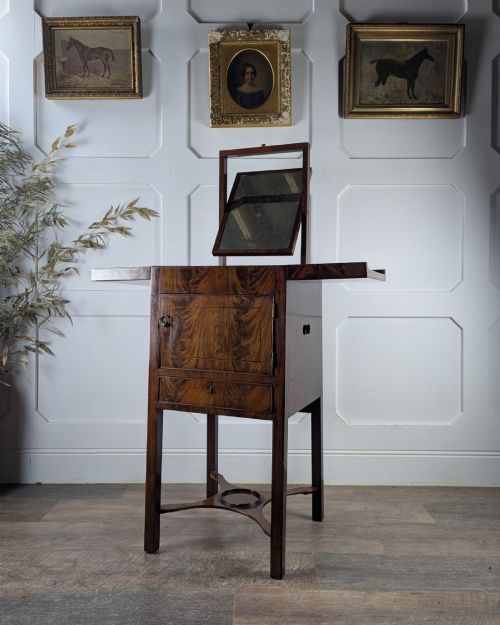
- A specialised piece designed to hold basins and ewers for morning ablutions. Fold-away versions concealed internal compartments beneath hinged wooden lids.
Mahogany Night Stand: Frequently Asked Questions
How do I date a mahogany bedside table?
Dating relies on observing construction methods, timber choices, and stylistic details such as leg shape and brass hardware. Georgian examples often display subtle hand-cut dovetails and Cuban mahogany timber.
Later Victorian and Edwardian pieces introduce machine-sawn elements, varied inlay patterns, and occasionally marble tops.
Were these pieces originally made in pairs?
Many historic bedside tables were built individually rather than as matched pairs, because historical bedroom layouts rarely utilised symmetrical furniture. Surviving pairs often represent items assembled together later or pieces commissioned for grander bedrooms.
Matching sets command particular interest due to their scarcity in early periods.
How do I care for antique mahogany?
Maintenance involves applying quality wax polish sparingly and avoiding direct sunlight to preserve the rich reddish-brown tone of the timber. Keeping pieces away from extreme temperature shifts prevents wood movement.
Gentle dusting with a soft cloth protects the historic patina built over centuries of use.