
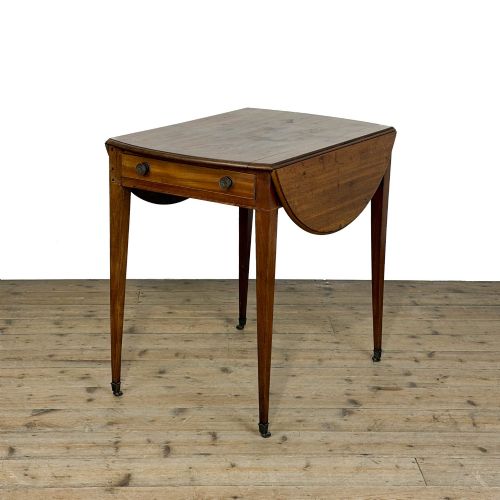
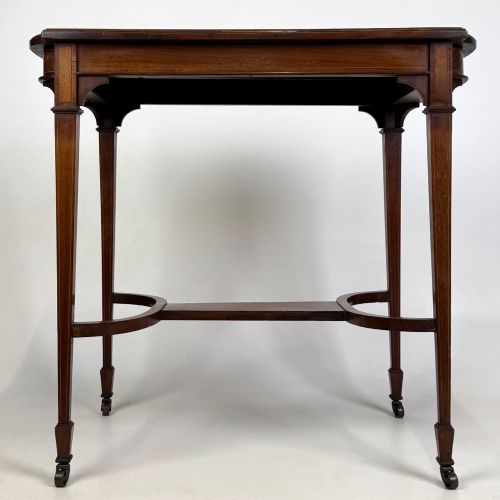
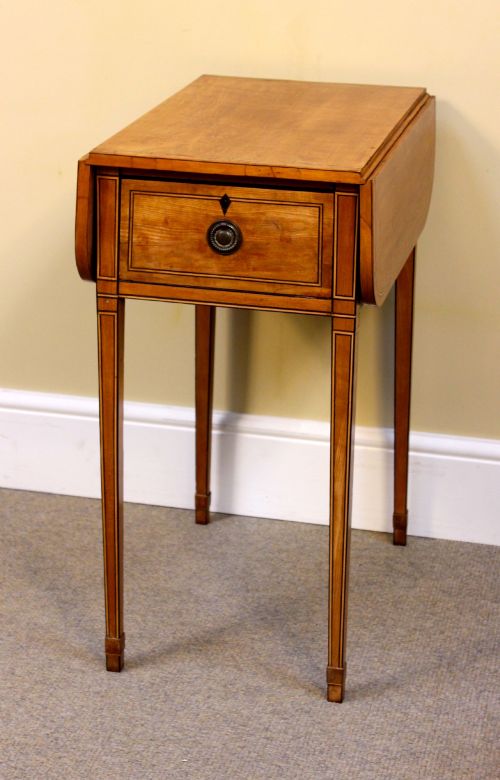
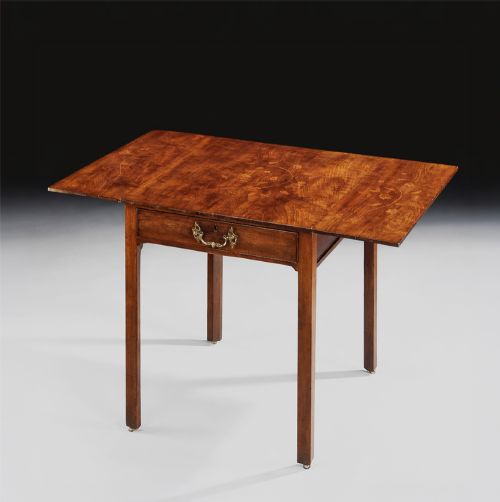


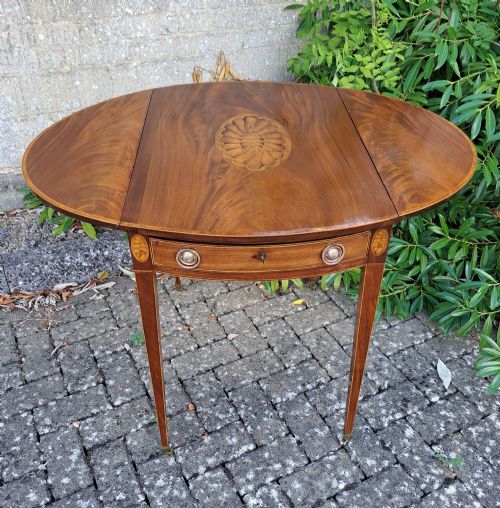

Tapered Leg Accent Table
A tapered leg accent table brings elegance and utility to any room, offering refined proportions and classic woodwork.
Tapered Leg Accent Table
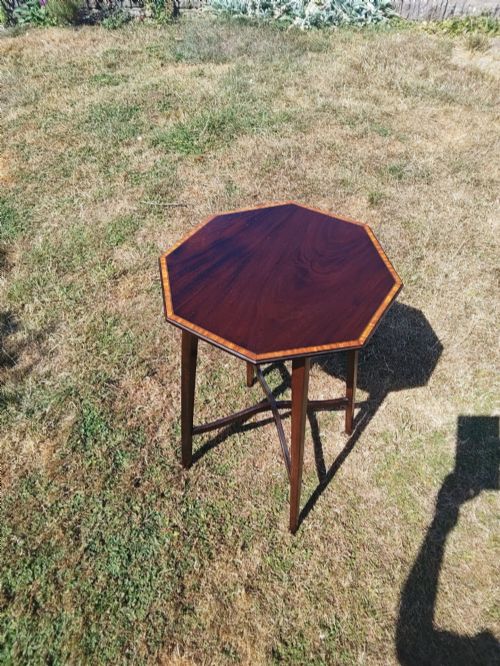
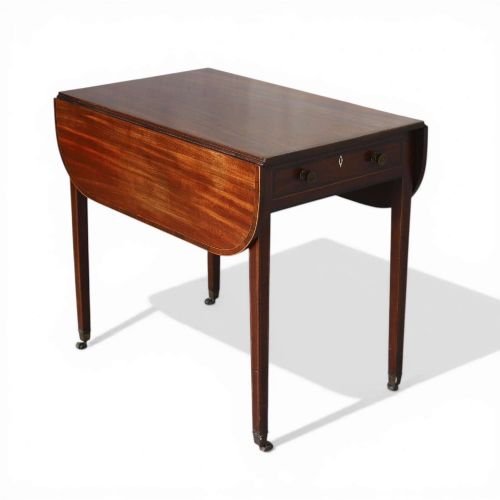
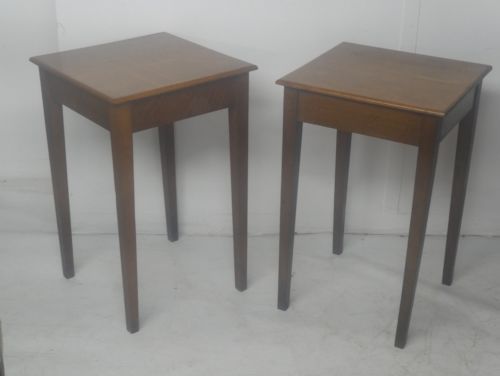
A tapered leg accent table encompasses forms such as pembroke tables, side tables, occasional tables, and console tables designed with slender, narrowing supports. These pieces emerge primarily from the eighteenth, nineteenth, and early twentieth centuries, spanning Georgian, Edwardian, Victorian, and Regency periods.
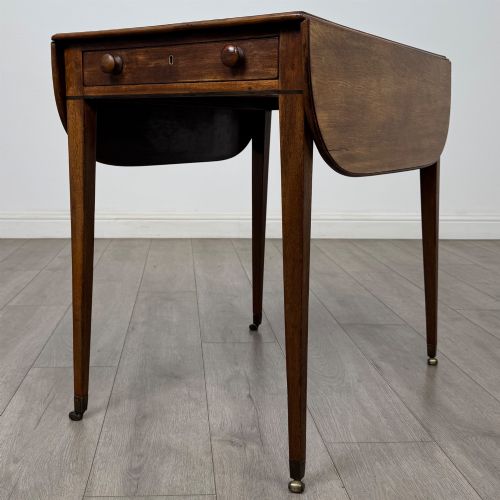
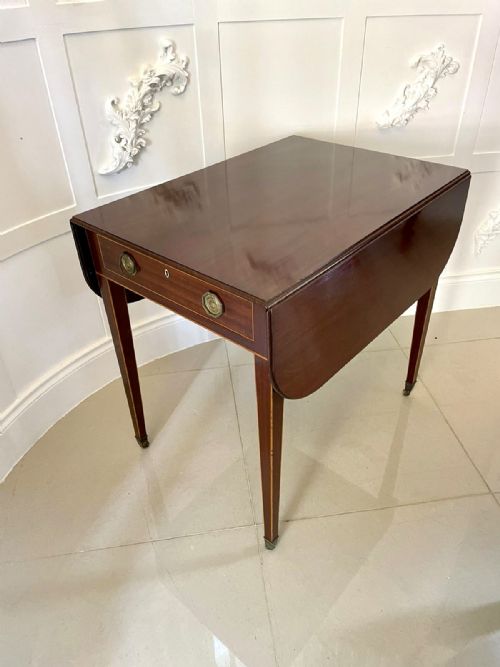
The pembroke table appears frequently among these selections, alongside drop-leaf, coffee, and lamp tables constructed from rich timbers. Makers of the past utilised these versatile formats to furnish drawing rooms, hallways, and parlours with functional grace.
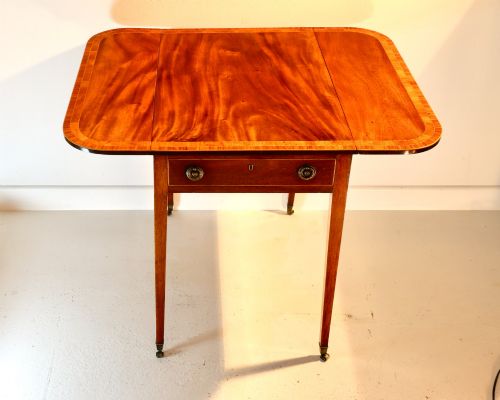
Buyers encounter examples decorated with stringing, cross banding, and painted details that reflect classical revival aesthetics. Each item demonstrates how domestic furniture evolved to balance decorative ambition with everyday utility.
Materials and Construction Techniques
Cabinetmakers constructed these tables predominantly from mahogany, often enhanced by contrasting veneers of satinwood, boxwood, and partridge wood. Inlays and boxwood lines define the borders of tabletops and drawer fronts, displaying high levels of joinery skill.
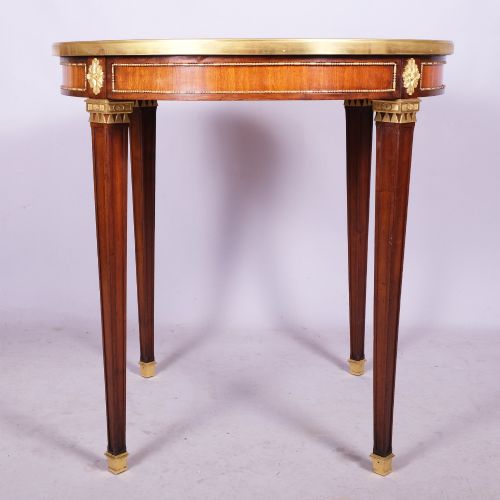
Selected pieces incorporate marble surfaces or hand-painted motifs, particularly within French bouillotte styles and late nineteenth-century satinwood productions. Brass accents and drop handles complete the hardware of many Georgian and Regency examples.
Some tables feature pull-out candle slides, reminding us of evenings spent playing cards by candlelight.
Assessing Craftsmanship and Condition
Quality rests upon the crispness of the inlay work, the selection of timber figures, and the structural integrity of the narrow legs. Superior examples maintain balanced proportions without wobble, utilising tight joinery and original timber panels.
The refinement of the cross banding and the subtlety of the painted or inlaid decoration distinguish master workshops from standard production pieces. Original brass fittings and smooth-running drawer mechanisms further elevate an example.
The Tapered Leg Accent Table Glossary
- Pembroke table
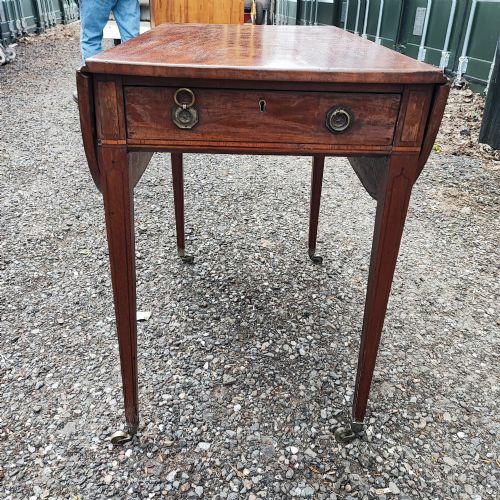
- A small occasional table featuring drop leaves on two opposing sides and frequently a single drawer. This form gained immense popularity during the Georgian period for breakfasting or writing.
- Cross banding
- A decorative border technique where veneer strips run perpendicularly to the grain of the central panel. This method frames tabletops with contrasting timber tones.
- Bouillotte table
- A small French card or occasional table featuring a raised brass gallery around a marble top. These items typically include small pull-out candle slides beneath the rim.
- Satinwood
- A lustrous, fine-grained hardwood native to India and the Caribbean, prized for its golden yellow sheen. Cabinetmakers utilised it extensively for neoclassical inlay and veneer work.
- Stringing
- Thin inlay lines of contrasting wood inlaid into channels cut into the primary surface. This linear decoration accentuates the geometric lines of table legs and aprons.
Tapered Leg Accent Table: Frequently Asked Questions
What is a pembroke table?
A pembroke table is a versatile small table with hinged drop leaves on two sides, designed to save space when folded down.
Historically utilised for multiple domestic tasks, these tables often feature a single drawer and slender legs suited to smaller sitting rooms.
How do I identify a Georgian table?
Georgian tables display classical proportions, sturdy timber construction, and restrained decorative elements such as subtle stringing or cross banding.
Examining the underside and drawer construction reveals hand-cut dovetails and period joinery techniques characteristic of the eighteenth and early nineteenth centuries.
Where should I place a side table?
Side tables fit naturally beside seating arrangements in living rooms, against hallway walls, or as bedside lamp surfaces.
Their compact footprints allow them to occupy tight corners while providing accessible display space for lighting and decorative objects.
What materials are most common?
Mahogany forms the primary structure for the majority of these listings, often paired with contrasting satinwood or boxwood veneers.
Certain French and neoclassical styles incorporate white marble tops and brass galleries to create a distinct continental aesthetic.