
Marquetry Inlay Table
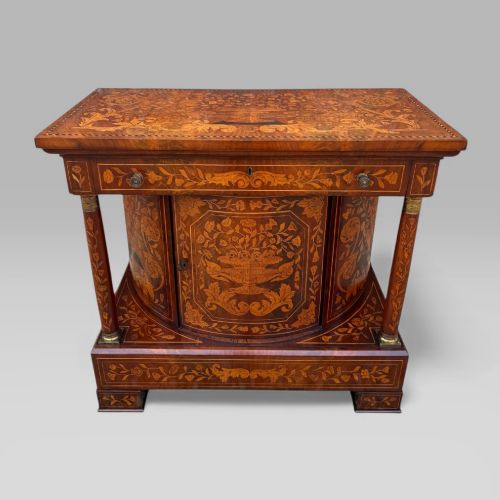
A marquetry inlay table brings complex pictorial wood veneers into domestic spaces, ranging from nineteenth-century French centre pieces to eighteenth-century Dutch consoles.
Marquetry Inlay Table
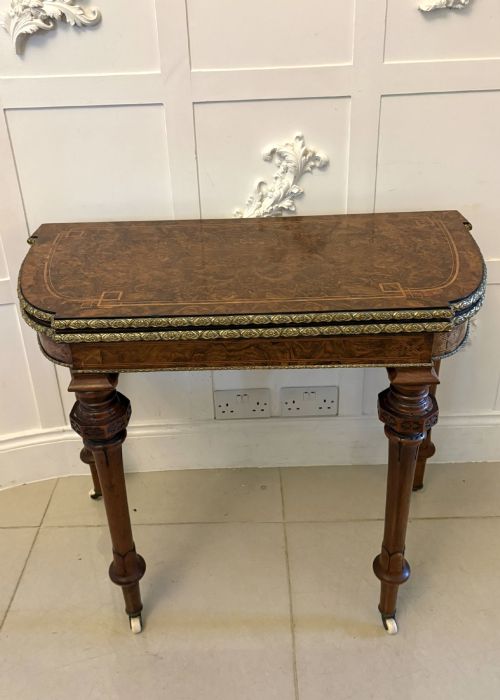
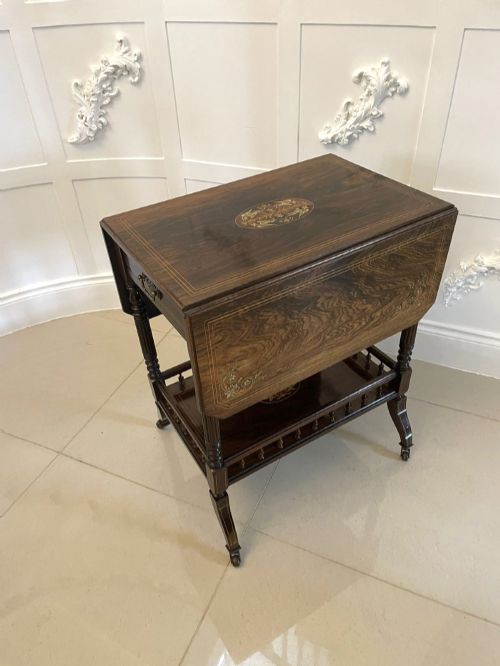
A marquetry inlay table primarily appears in nineteenth-century forms, with Victorian and French provincial examples dominating current choices. Centre tables, card tables, and occasional lamp tables represent the main domestic functions surviving today.
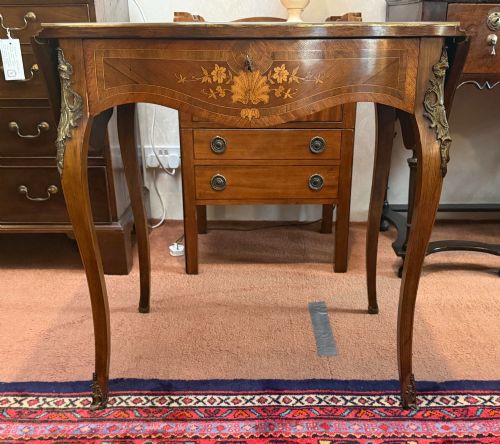
Makers drew from diverse regional aesthetics, including English Sheraton designs, Dutch floral cabinets, and French Louis XV revival pieces. These surfaces served specific social roles in drawing rooms, boudoirs, and libraries.
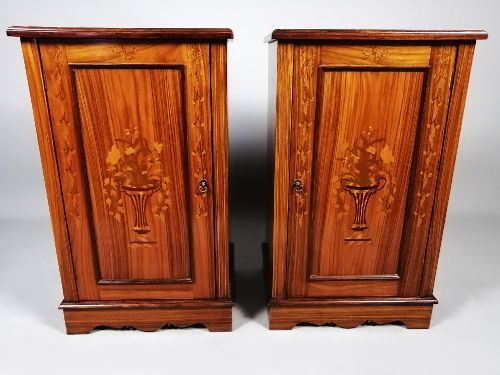
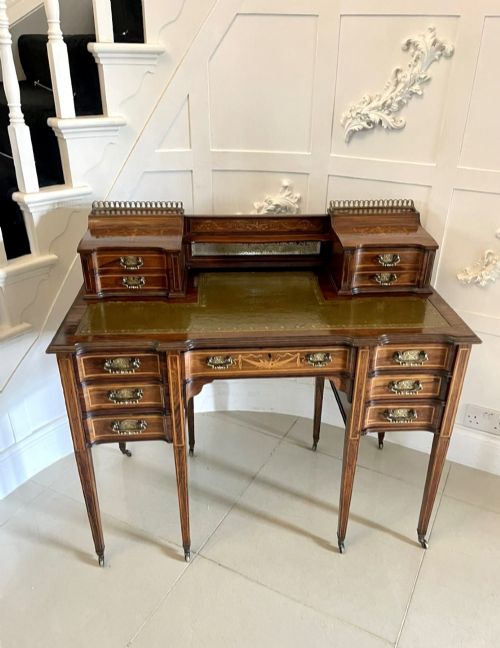
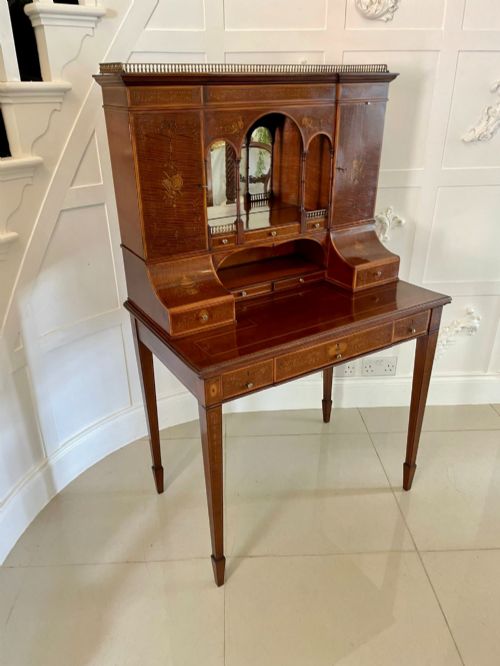
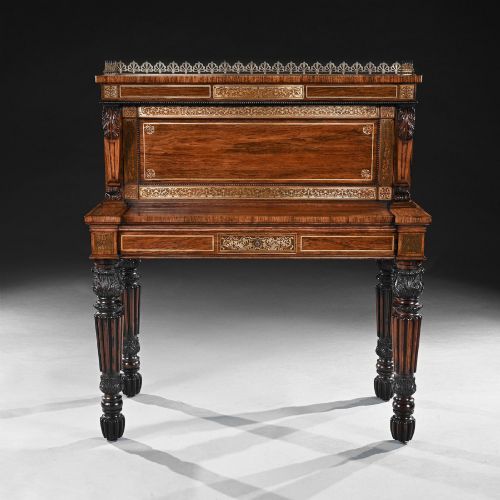
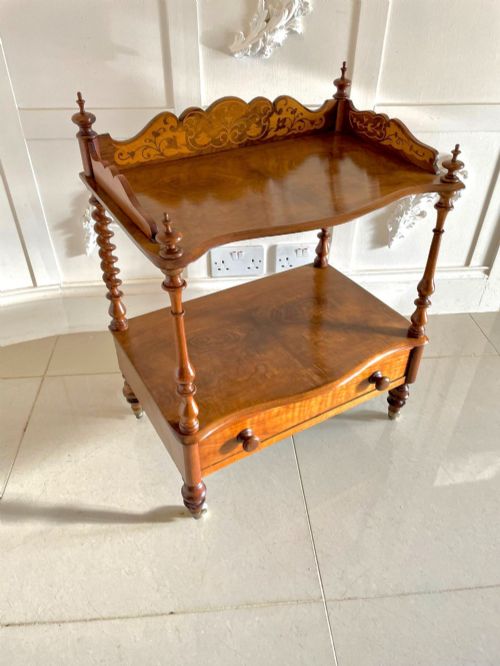
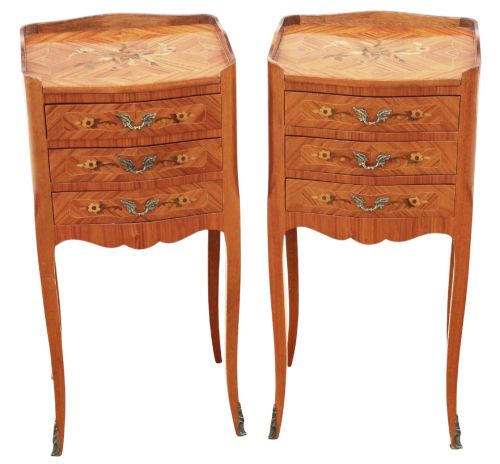
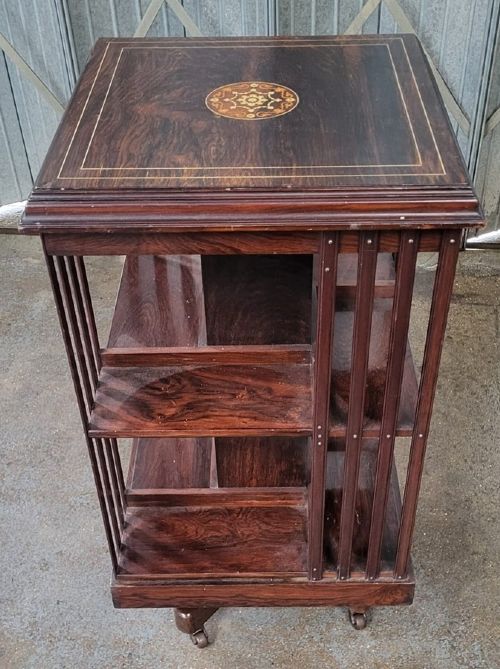
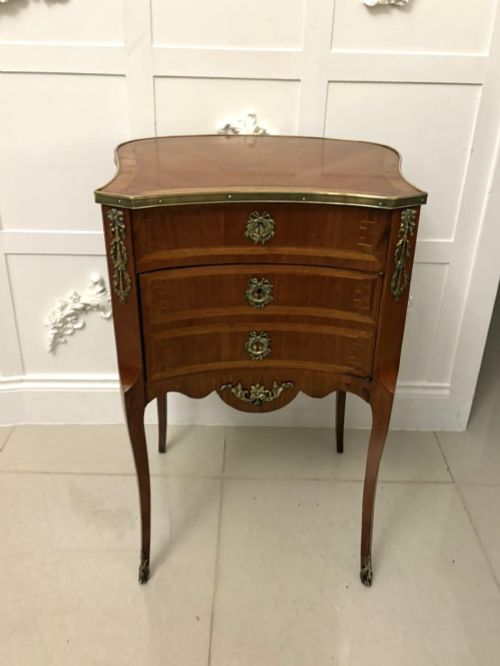
The material vocabulary spans Walnut, Rosewood, and Mahogany as primary structural timbers, accented with exotic veneers. Surviving forms extend from small bedside nightstands to large freestanding library desks.
Materials and Technique
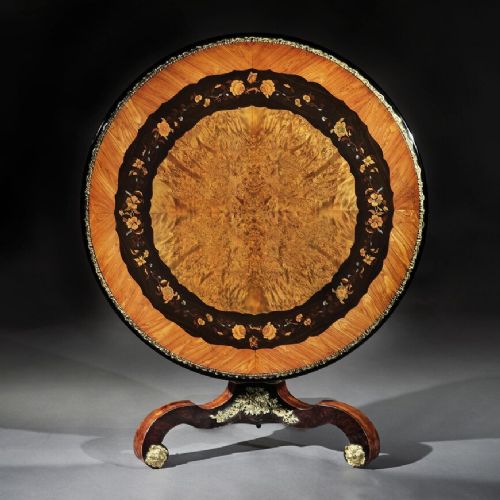
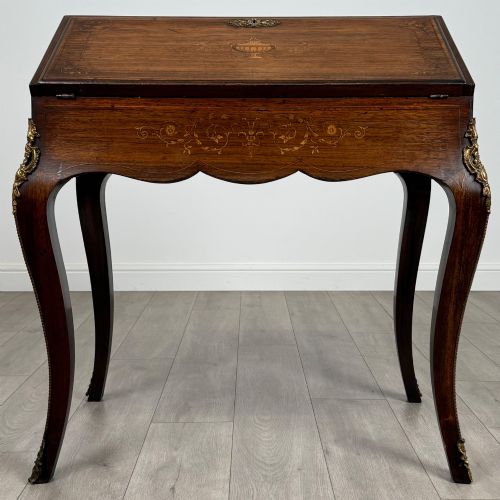
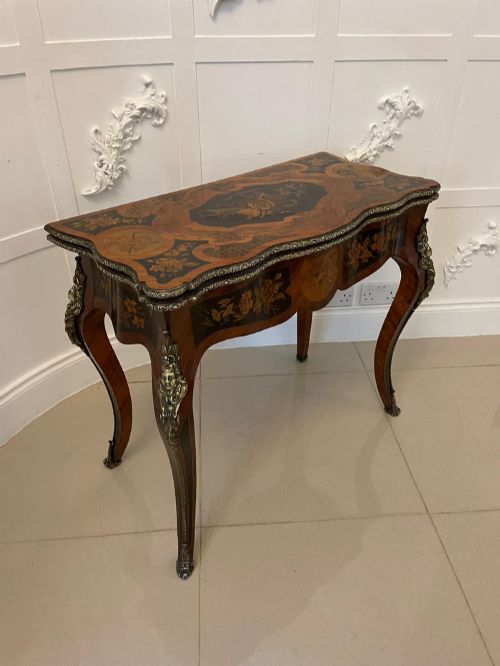
Craftsmen built structural carcasses using dense hardwoods like mahogany, walnut, and rosewood, applying contrasting veneers across the visible top surfaces. Cabinetmakers hand-cut delicate pictorial motifs from thin sheets of fruitwood, satinwood, and kingwood.
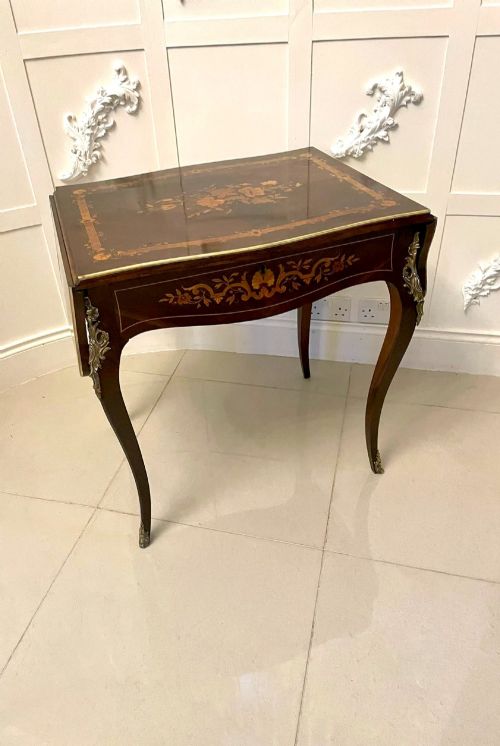
Makers integrated cast or chased ormolu mounts, brass stringing, and gilt bronze framing to accentuate the geometric and floral veneer panels. French workshops frequently combined tortoiseshell and brass in boulle work alongside traditional timber marquetry.
Current listings feature eighteenth, nineteenth, and twentieth-century pieces, spanning walnut, mahogany, and rosewood with extensive brass and ormolu mounts.
Assessing the Workmanship
Superior execution shows in the seamless tightness of the veneer joints and the natural tonal shading achieved through hot sand scorching. Lesser examples display wide glue lines, poorly matched grain directions, or stamped impressions substituting for hand-cut shading.
The choice of secondary timbers and the crispness of cast ormolu mounts separate standard production from high-status commissions. Finer tables maintain balanced pictorial compositions across all visible sides, whereas simpler pieces reserve decoration solely for the main top panel.
Gillows Oxford Street Workshop·Edward Holmes Baldock·George Bullock·Edwards & Roberts
The Marquetry Inlay Table Glossary
- Marquetry
- The art of applying small pieces of veneer to a structure to form decorative pictorial patterns. This differs from parquetry through its use of figurative and floral designs rather than geometric tiling.
- Ormolu
- Gilded bronze mounts applied to furniture edges and corners. French cabinetmakers utilised these metallic details to protect vulnerable corners and enhance visual elegance.
- Veneer
- Thin slices of fine timber applied over a secondary ground wood. This technique allowed makers to utilise expensive and figured woods economically.
- Boulle
- A detailed marquetry technique combining tortoiseshell and brass. Developed in seventeenth-century France, it created high-contrast metallic and dark surfaces.
- Console
- A table designed to stand against a wall, frequently supported by brackets or legs. Eighteenth-century Dutch and English examples often featured elaborate floral inlay upon these flat surfaces.
Marquetry Inlay Table: Frequently Asked Questions
How do I clean a marquetry table?
Dust surfaces regularly with a soft, dry cloth to prevent particulate accumulation within the fine veneer joints. Avoid moisture and commercial silicone polishes, applying traditional beeswax sparingly to nourish the aged timber.
Keep these tables away from direct sunlight and modern central heating vents. Rapid temperature fluctuations cause the underlying wood to expand, which eventually lifts the delicate veneer pieces.
Where were these tables placed?
Centre tables sat proudly in the middle of Victorian drawing rooms, displaying decorative objects or serving guests during gatherings. Card tables remained folded against walls until needed for evening gaming.
Smaller occasional tables and bedside stands populated bedrooms and private boudoirs for holding lamps or writing materials. Larger writing desks occupied studies, combining functional drawers with elaborate decorative tops.
How do I date a table?
Examine the underlying construction timbers, such as oak or pine secondary woods, to establish baseline manufacturing methods. Hand-cut dovetails and traditional hand-planed surfaces indicate earlier eighteenth and nineteenth-century origins.
Compare stylistic motifs like Louis XV revival curves or Edwardian satinwood banding against documented historical periods. The presence of specific maker stamps or labels underneath provides definitive chronological confirmation.
Are these tables fragile?
These pieces require sensible handling due to the age of the historic wood and glue beneath the surface. Normal domestic use remains entirely appropriate when heavy impacts and abrasive items are avoided.
Environmental stability matters more than physical handling for long-term preservation. Maintaining consistent indoor humidity prevents the shrinkage that causes individual veneer elements to detach.