



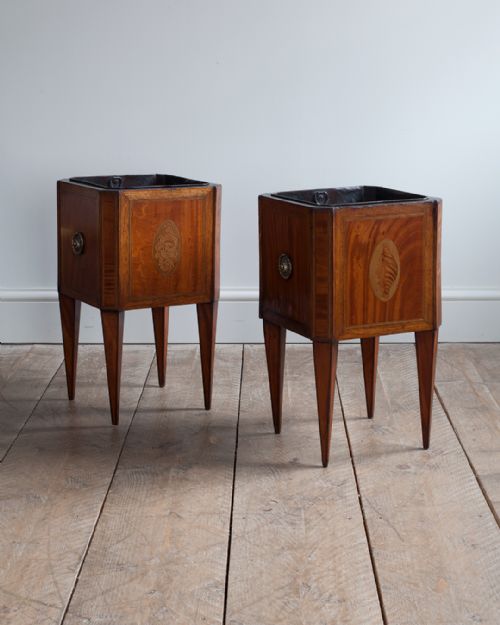
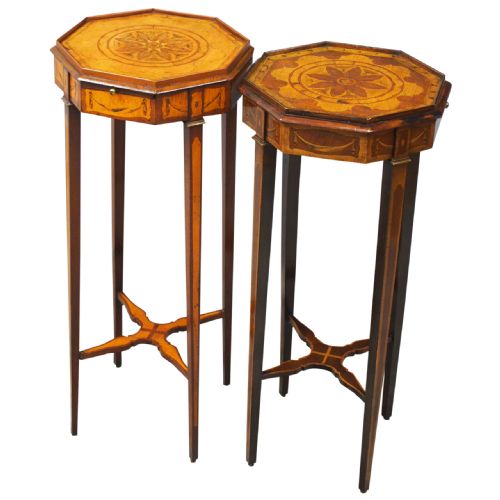


Sheraton Style Urn Stand
These sheraton style urn stand pieces bring neoclassical elegance to a room, offering slender proportions and refined geometry that collectors prize.
Sheraton Style Urn Stand
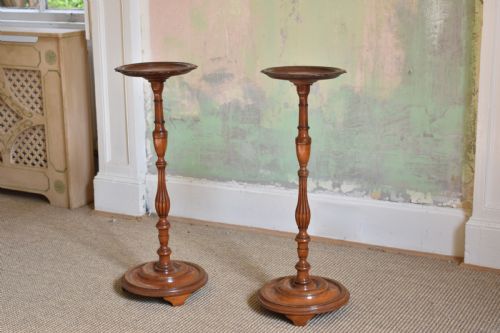
A sheraton style urn stand takes the graceful, light forms of the late eighteenth century and reappears through Edwardian and Georgian revival periods. These compact occasional tables, candle stands and plant stands serve to elevate decorative vessels or light sources in a reception room.
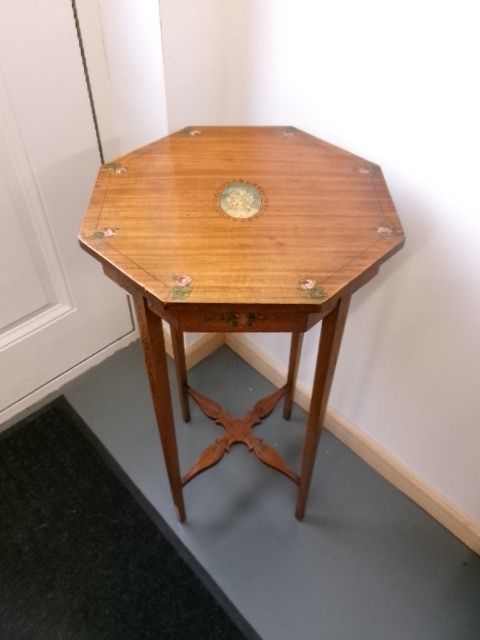
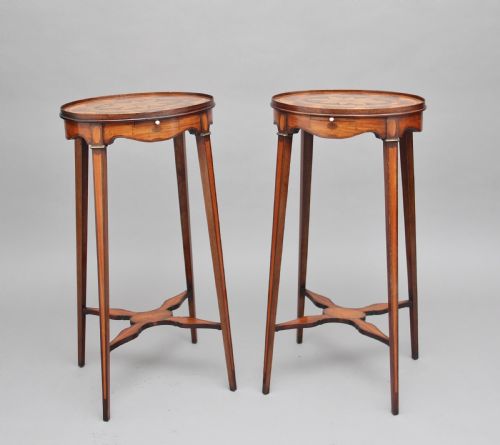
You will most frequently encounter Edwardian Sheraton Revival pieces alongside authentic Georgian examples dating back to the late eighteenth century. The selection spans versatile octagonal tables, painted satinwood pieces and mahogany supports with delicate inlay.
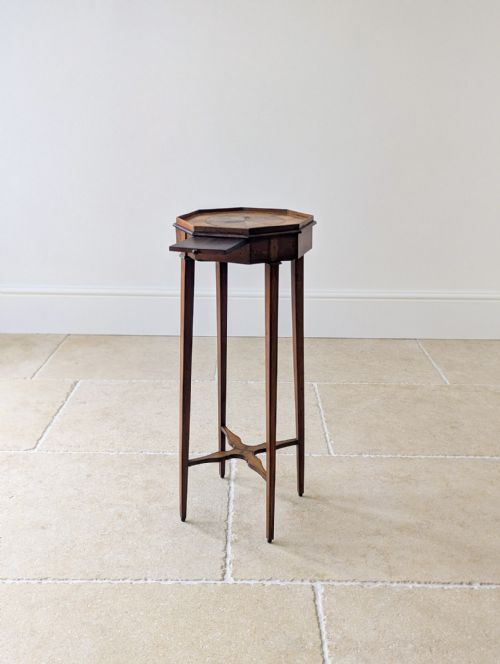
Makers drew on neoclassical vocabulary to shape these stands, utilising tapered legs and geometric tops. They function equally well today as lamp tables or side tables beside seating.
Materials and Construction
Cabinetmakers constructed these stands primarily from mahogany and satinwood, often applying detailed inlay to the timber surfaces. Painted timber and hand painted decoration also feature prominently, particularly on Edwardian revival examples executed in the neoclassical manner.
Selected pieces incorporate contrasting woods and bone details to accentuate the crisp lines of the octagonal or square tops. Joinery remains neat and restrained, supporting the slender, upright posture characteristic of the style.
Sheraton Style Urn Stand Retail Price Guide 2026
Typical asking prices for sheraton style urn stand among the pieces listed under this phrase on Sellingantiques today, from the lower quarter to the upper quarter. They describe what is for sale here now, not the wider market.
Listings feature pieces spanning from the Georgian period through Victorian and Edwardian revivals up to 1910.
Judging Quality and Execution
Quality reveals itself in the crispness of the inlay and the choice of timbers, where finely figured satinwood or rich mahogany elevates a piece above standard production. The subtlety of hand painted neoclassical motifs and the balance of slender legs dictate the desirability of an individual stand.
Better examples maintain structural integrity despite their light, airy proportions, with tight joints and precise geometry in octagonal and square formats. The integration of decorative elements should feel purposeful rather than cluttered.
The Sheraton Style Urn Stand Glossary
- Sheraton Revival
- A design movement drawing inspiration from the late eighteenth-century work of Thomas Sheraton, popular during the Edwardian era. It favours light proportions, satinwood, and classical ornament.
- Neoclassical
- A style rooted in classical antiquity that emphasises symmetry, straight lines, and restrained ornament. It shapes much of the decorative vocabulary seen on these stands.
- Satinwood
- A lustrous, yellow-toned timber prized for fine cabinetmaking and frequently used as a veneer or solid ground for inlay. It catches the light effectively in smaller occasional pieces.
- Urn Stand
- A small, tall table specifically designed to hold a tea urn, vase, or decorative vessel. Their compact tops and elevated heights suit this specialised function.
Sheraton Style Urn Stand: Frequently Asked Questions
What is a sheraton style urn stand used for today?
These versatile pieces function naturally as lamp tables, plant stands, or occasional side tables in a drawing room or hallway. Their compact footprints allow them to fit into narrow spaces while adding a decorative focal point.
Historically designed to elevate urns or candles, today they readily support small sculptures, table lamps, or floral arrangements without dominating the surrounding furniture.
How do I distinguish Edwardian revival from Georgian pieces?
Georgian examples, dating back to the late eighteenth century, display genuine age-related patina and construction methods specific to that period. Timbers and joinery reflect the working practices of eighteenth-century workshops.
Edwardian Sheraton Revival pieces, made around 1900, imitate these earlier neoclassical forms with bright satinwood finishes and machine-assisted precision in the inlay work.
Are these stands sturdy enough for daily use?
Despite their slender proportions and delicate tapered legs, well-constructed examples remain structurally sound for holding lamps or decorative objects. Their lightweight design is intentional, reflecting neoclassical aesthetic priorities.
Placement in low-traffic areas prevents accidental knocks, preserving the fine timber surfaces and delicate inlay work on the tops and legs.
What woods should I expect to find?
Mahogany and satinwood dominate the selection, often accompanied by painted timber finishes and contrasting inlay details. Some pieces incorporate bone or multiple wood types to create geometric patterns.
Edwardian makers frequently utilised satinwood and painted decoration to capture the airy elegance associated with late eighteenth-century neoclassical design.