
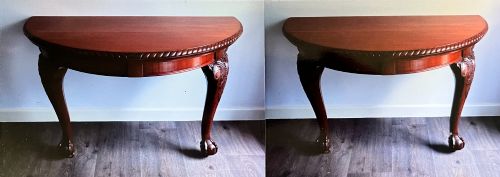
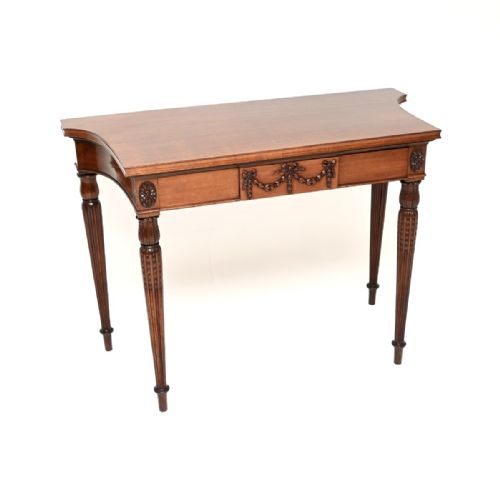
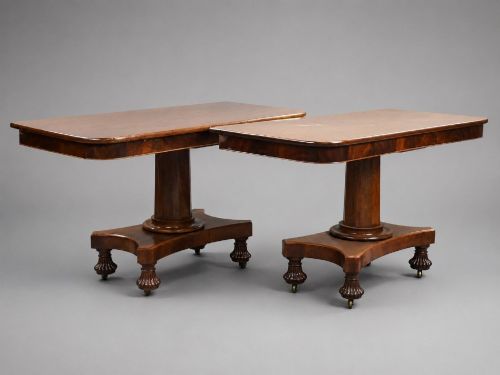
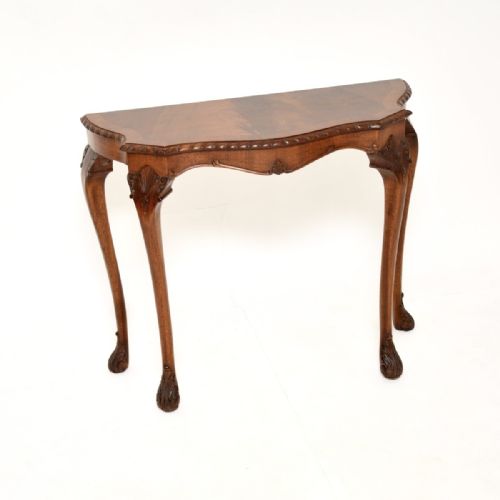

Brown Mahogany Pier Table
A brown mahogany pier table brings architectural presence and rich timber grain to a hall or reception room.
Brown Mahogany Pier Table
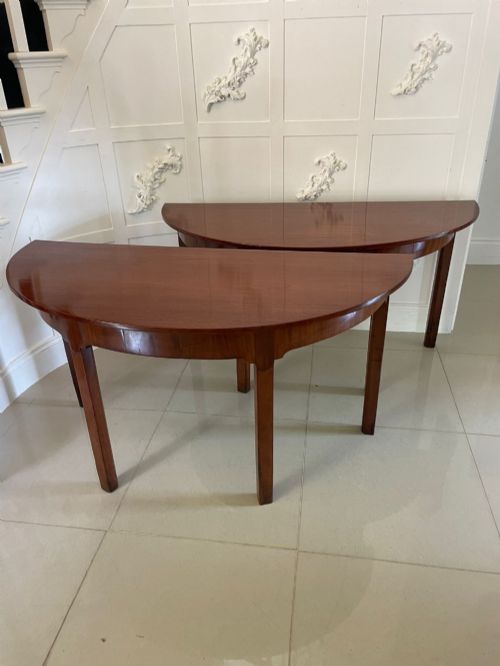
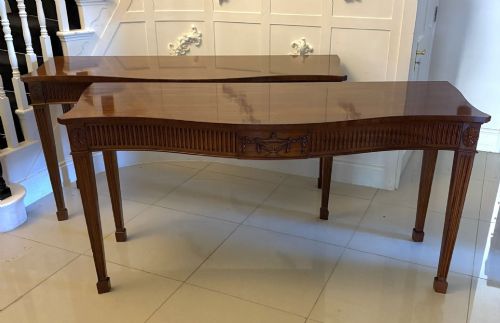
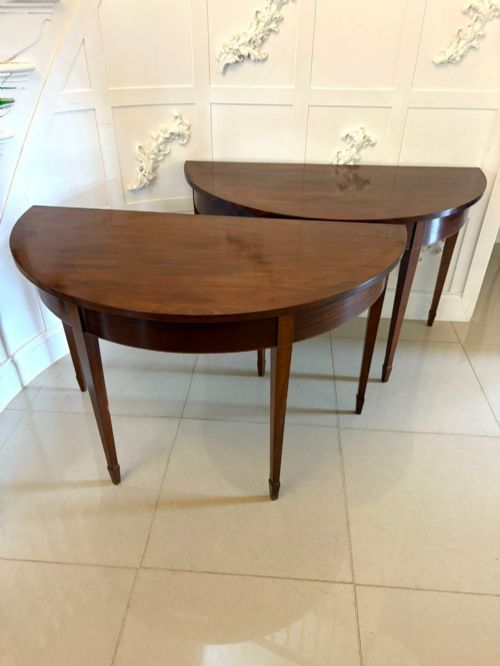
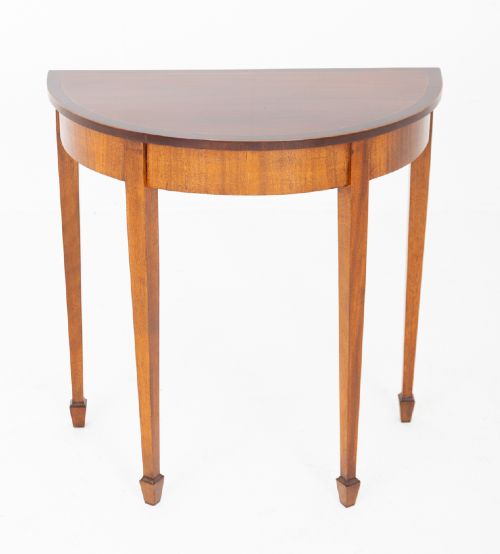
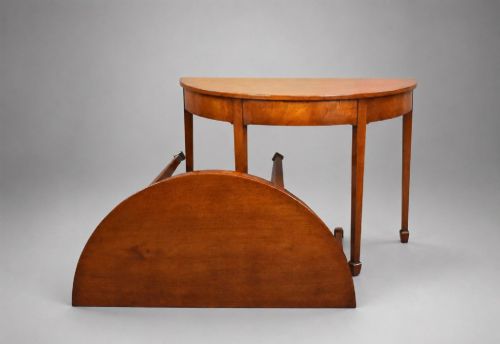
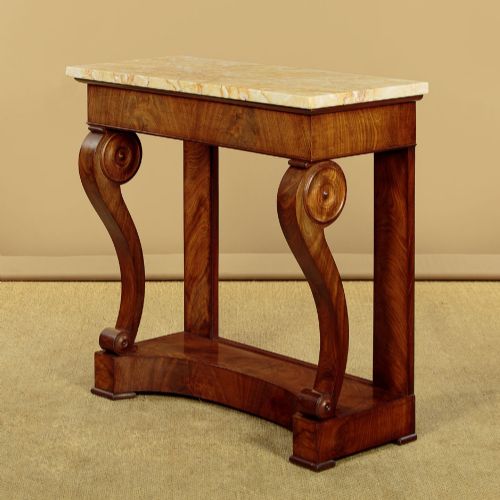
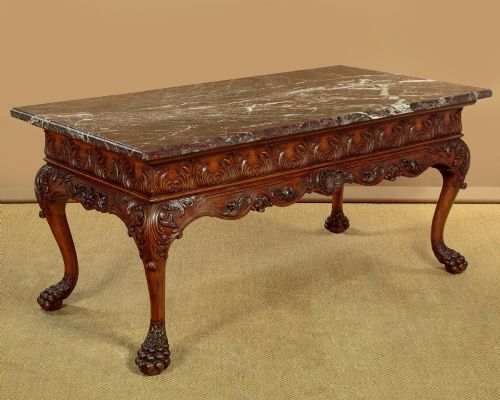
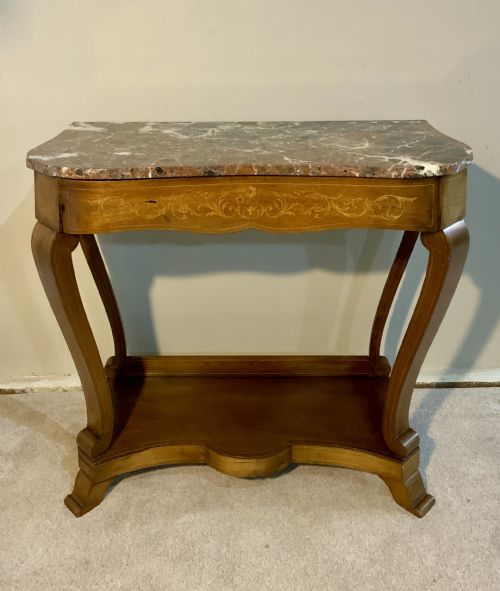
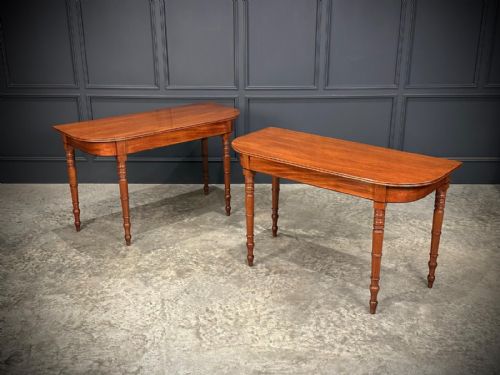
When you search for a brown mahogany pier table, you encounter formal wall-mounted or console tables designed to sit against a pier wall between windows or beneath a mirror. These pieces appear in forms such as demi-lune console tables, serpentine serving tables, and marble top hall tables.
The pieces span periods from the Georgian era and the Regency period through to Victorian and later revival dates, reflecting shifting tastes in interior architecture. You will frequently find them grouped in pairs or offered as individual console tables shaped with straight or curved fronts.
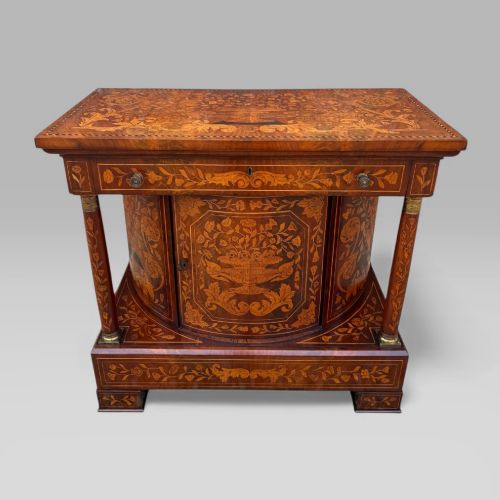
Origins represented in the selection stretch across English workshops, Dutch marquetry makers, French Charles X designs, and Biedermeier cabinets. They serve primarily as decorative display surfaces rather than everyday dining furniture.
How they were made
Cabinet makers utilised solid mahogany and flame mahogany veneer applied to supportive secondary timbers, often accentuating the surfaces with boxwood inlay, satinwood stringing, or neoclassical carving. The application of veneer required precise hand-cutting to create symmetrical grain patterns across curved demi-lune tops and friezes.
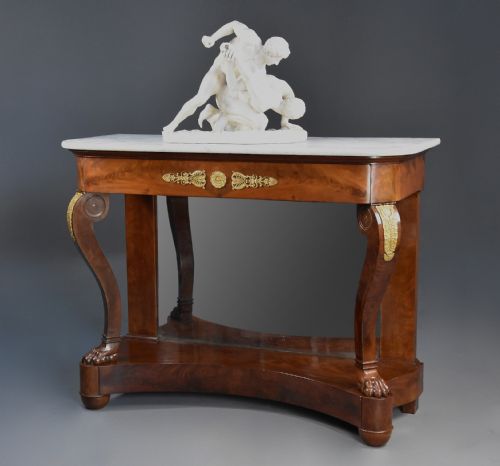
Many examples incorporate heavy white or grey marble tops fitted directly into the timber frame to provide a durable and cool surface for display. Ormolu mounts and brass detailing occasionally accent the mahogany structure, particularly on continental pieces from the nineteenth century.
Several tables arrive with their original matching mirrors, proving that interior decorators have refused to separate the furniture from its glass since the early nineteenth century.
What varies in quality
The standard of a brown mahogany pier table depends heavily on the selection of timber figure, such as highly prized flame mahogany veneer, and the crispness of hand-carved neoclassical details. Finer examples display meticulous attention to timber matching across complex serpentine or demi-lune curves.
Structural integrity and the originality of integrated elements, such as marble slabs and brass or ormolu mounts, distinguish standard production from exceptional cabinet work. The harmony between the proportions of the mahogany base and the weight of the stone top dictates the overall visual success of the piece.
The Brown Mahogany Pier Table Glossary
- Pier table
- A side table designed to stand against the wall space between two windows, frequently paired with a matching wall mirror. These tables usually feature flat backs to sit flush against the plaster.
- Demi-lune
- Half-moon shape. This curved form allows the table to project into a room while occupying minimal depth against the wall.
- Serpentine
- A wave-like curved shape featuring a convex centre flanked by concave sides. It requires advanced woodworking skill to veneer and construct.
- Ormolu
- Gilt bronze ornamentation applied to furniture. This technique was favoured on French and Regency examples to highlight architectural details.
- Marquetry
- The art of applying decorative veneer pieces to a structure to form intricate pictorial designs. Dutch makers frequently employed this technique on walnut and mahogany carcasses.
Brown Mahogany Pier Table: Frequently Asked Questions
Where should I place a pier table?
These tables belong against a flat wall in a hallway, drawing room, or beneath a large mirror where their decorative form can be appreciated without obstructing heavy traffic.
Because their depths are generally shallow compared to dining tables, they fit comfortably in narrow spaces while providing a surface for lamps or ornaments.
Can I use it as a serving table?
Many examples listed under this category share forms with serving tables and console tables, making them suitable for displaying dishes or drinks during gatherings.
However, consider the delicacy of inlaid surfaces or marble tops when planning heavy daily usage in active dining spaces.
How do I identify a Georgian pier table?
Georgian pieces typically exhibit restrained classical proportions, solid mahogany construction, and understated carved details such as paterae or fluted legs.
Later revival pieces from the twentieth century often adopt these eighteenth-century motifs but can be identified through timber preparation and secondary woods.
Are marble top tables original?
Many period console tables were manufactured specifically to carry heavy marble slabs, acting as solid stone surfaces for decorative objects.
Checking the rebate in the timber frame helps determine whether the stone sits correctly within the original design parameters of the cabinet maker.