
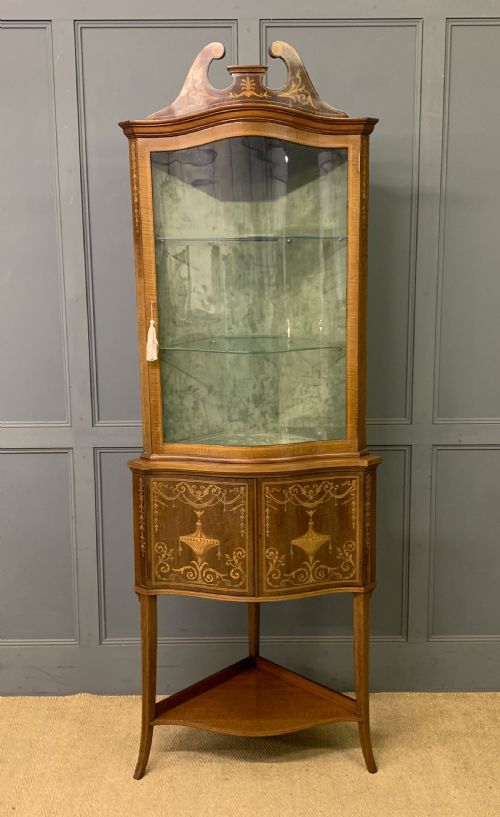


Brown Mahogany Corner Stand
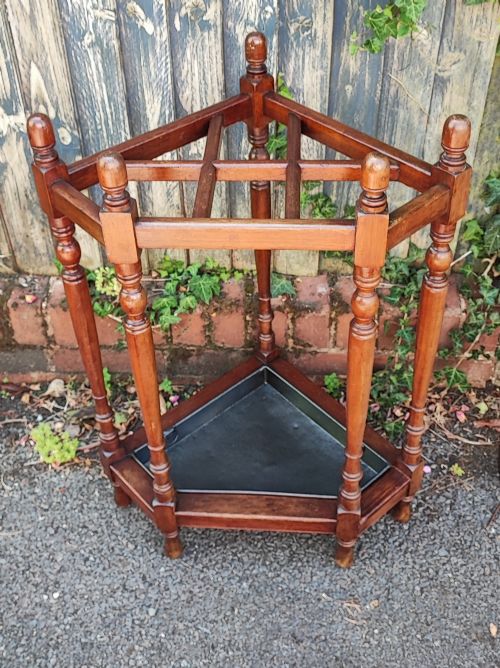
These brown mahogany corner stands span centuries of cabinet-making, offering clever space-saving forms designed to fit neatly into domestic interiors.
Brown Mahogany Corner Stand
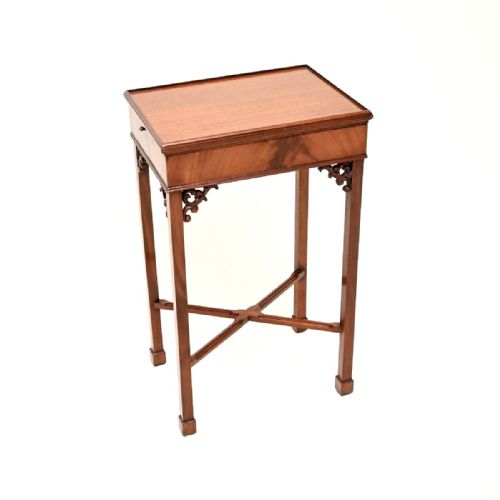
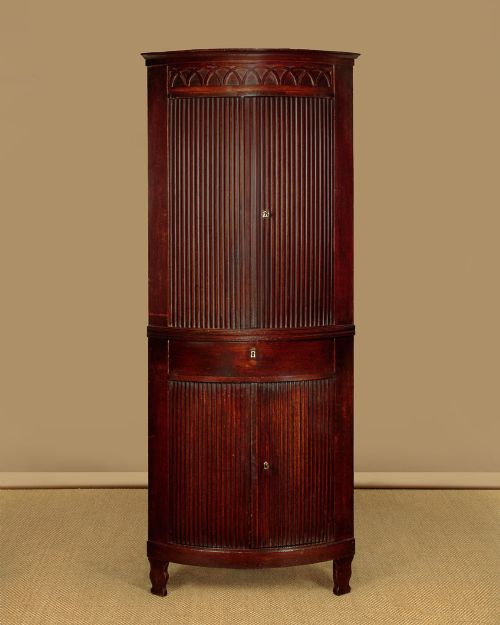
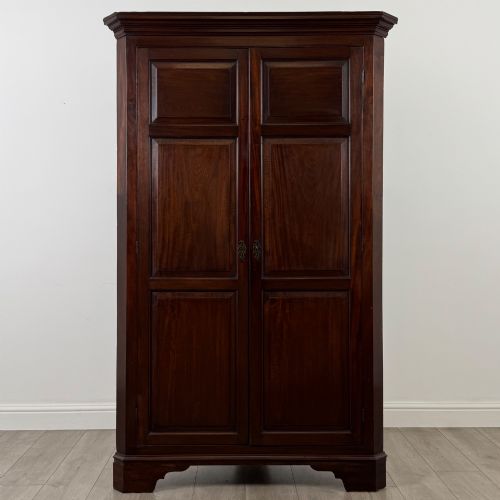
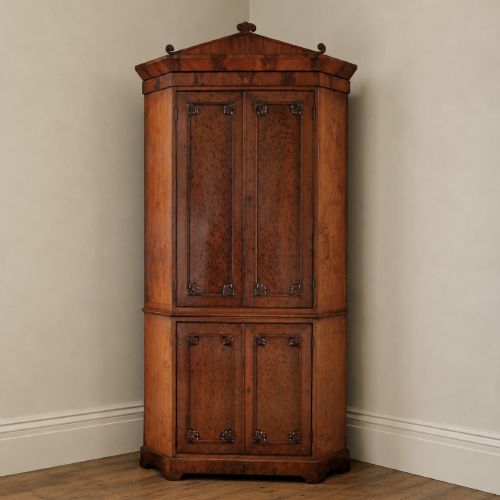
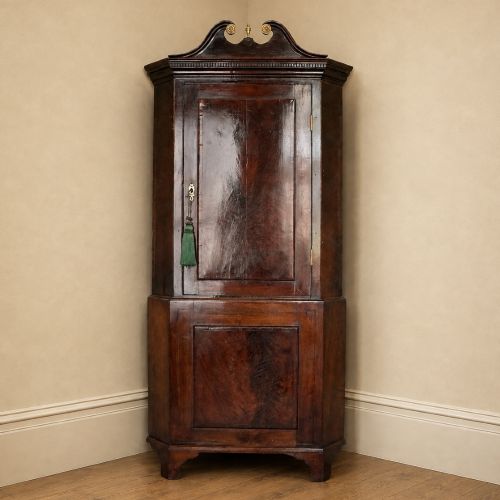
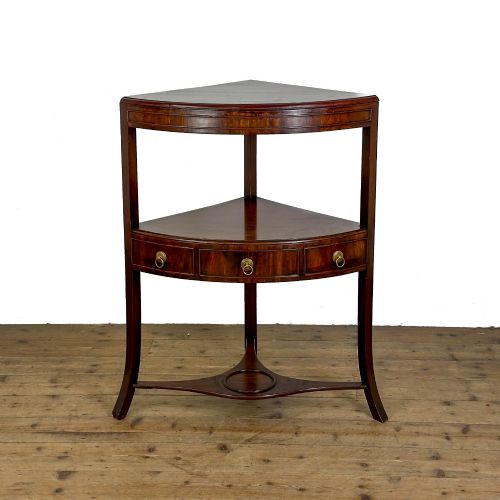
A brown mahogany corner stand is a practical furniture form designed to utilise neglected room junctions, appearing most frequently as cupboards, washstands, or tiered shelving units. The pieces on this page span Georgian, Regency, Victorian, and Edwardian periods, reflecting changing domestic requirements across different centuries.
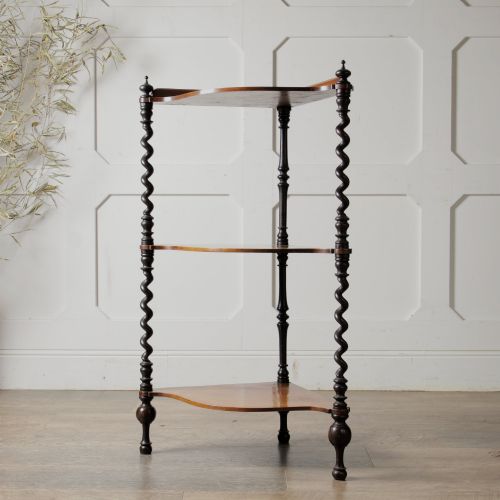
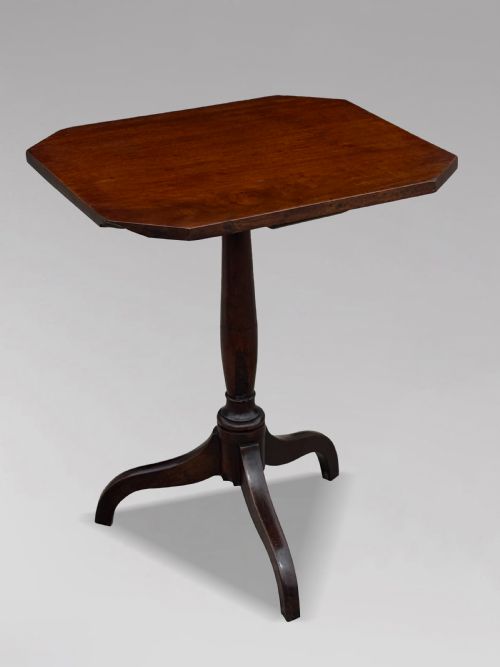
The most common iterations you will encounter are tall standing corner cupboards and washstands, alongside occasional tables and multi-tiered whatnots adapted for corner placement. These objects served varied functions historically, from storing china and serving washing utensils to displaying ornaments.
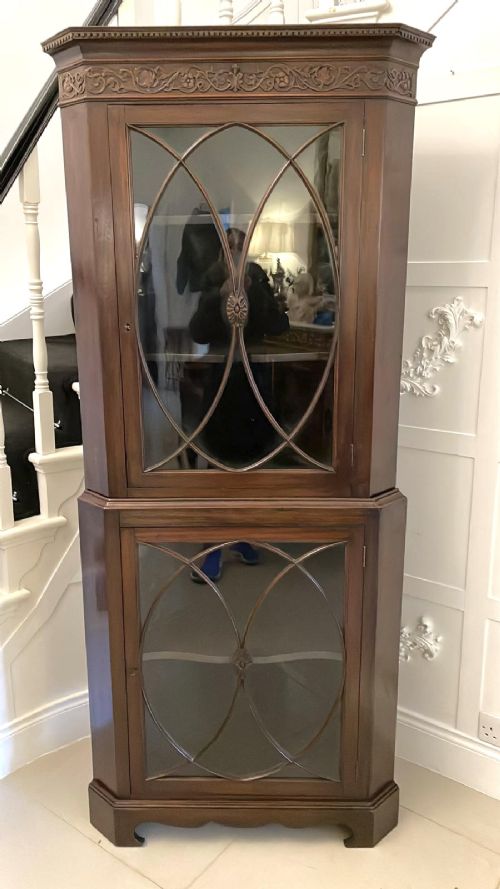
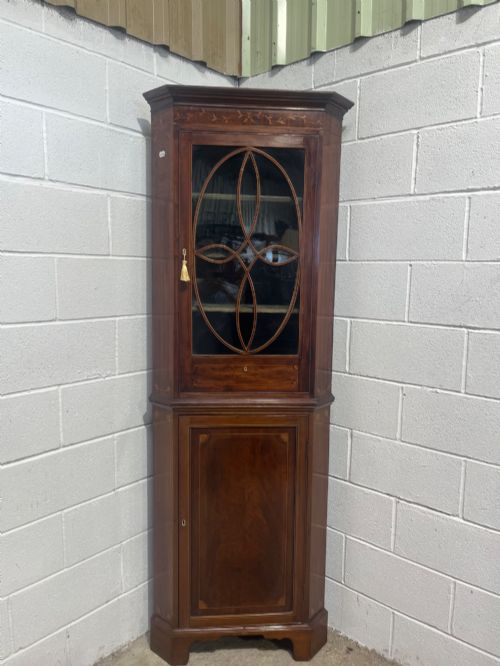
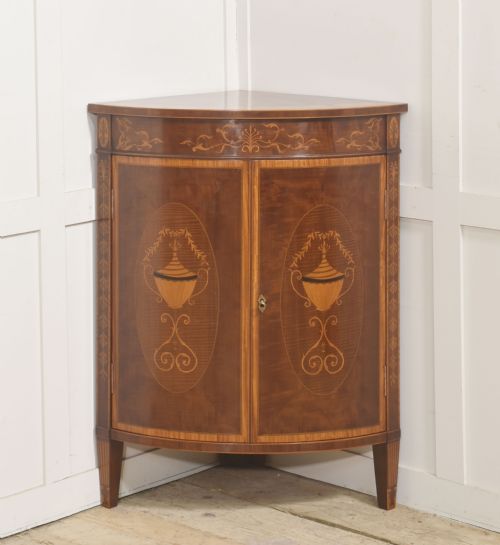
Examples range from simple double-height cupboards to inlaid Sheraton Revival pieces featuring glazed doors or delicate boxwood and satinwood detailing. Their architectural shape allows them to anchor a room without dominating the central floor space.
Assessing quality and craftsmanship
Quality in a brown mahogany corner stand is determined by the selection of timber, particularly the grain figuration seen in choices like plum pudding mahogany, and the crispness of any inlaid decoration. Superior examples display seamless mitre joints, well-proportioned cornices, and original brass fittings that complement the scale of the piece.
The refinement of internal shelving, the clarity of glass in astragal-glazed doors, and the retention of original keys or stands separate standard utility pieces from finer cabinet-maker commissions. Lower quality or heavily altered items often lose the subtle proportioning necessary for an effective corner fit.
Materials appearing across the inventory include solid mahogany, glass, brass, walnut, and decorative inlays of satinwood and boxwood.
The Brown Mahogany Corner Stand Glossary
- Astragal glazed
- A method of framing glass panes within a door using thin moulded wooden strips. This creates a grid pattern popular in Georgian and later revival cabinetry.
- Whatnot
- A set of open shelves supported by pillars, used for displaying ornaments or books. These tiered pieces often appear in corner formats.
- Sheraton Revival
- A late nineteenth and early twentieth-century style reviving the lighter neoclassical forms of the eighteenth century. Pieces typically feature delicate satinwood inlay and tapered legs.
- Washstand
- A specialised piece of furniture designed to hold a basin and jug for personal washing. Many corner versions include apertures on the top surface.
Brown Mahogany Corner Stand: Frequently Asked Questions
Where should I place a corner stand?
These pieces fit naturally into the dead space where two walls meet, making them ideal for smaller rooms or hallways that require functional storage without losing floor area.
Because their footprint is triangular or multi-sided, they anchor corners effectively while drawing the eye upward through height rather than width.
How do I date a mahogany corner cupboard?
Dating relies on observing construction methods, timber thickness, and stylistic details such as cornices, hardware, and the presence of inlay versus carved decoration.
Georgian examples tend to show heavier architectural cornices and solid timber panels, whereas Edwardian Sheraton Revival pieces frequently incorporate lighter satinwood stringing and machine-sawn components.
Can corner washstands still be used today?
While their original washing function is obsolete, surviving washstands adapt easily as plant stands, lamp tables, or unusual bedside surfaces in modern homes.
Their recessed tops originally designed for basins now serve well to contain small decorative items or plant pots safely.