


Georgian Bowfront Stand
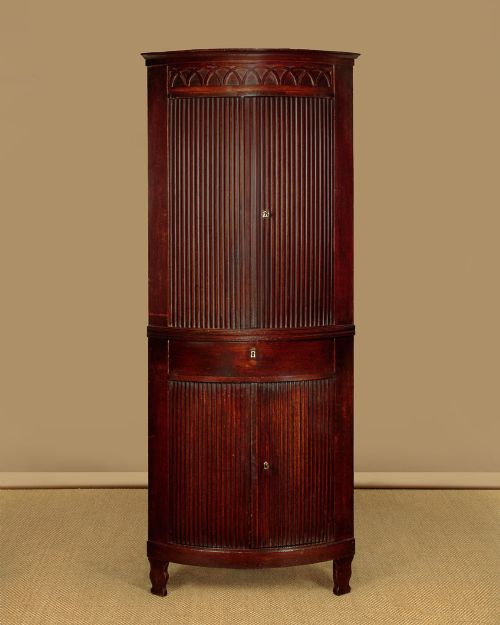
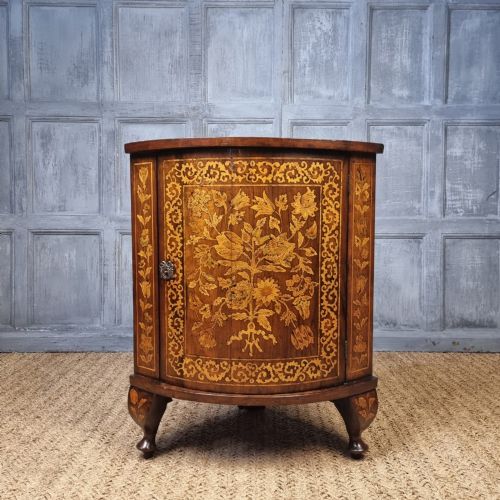
These georgian bowfront stand pieces are curved timber furnishings designed to fit into room corners, offering practical storage with distinct period character.
Georgian Bowfront Stand
The version you most frequently meet on this page is the mahogany standing corner cupboard or washstand with a curved front. Many examples combine cupboard storage with display shelves or folding tops designed for washing equipment.
Materials and construction
The primary material across these listings is mahogany, frequently enhanced with flame mahogany veneer, boxwood inlay, and walnut highlights. Oak and fruitwood also appear in secondary framing or specific regional cabinetwork.
Makers shaped these curved fronts using specialised timber bending techniques and precise veneer work, fitting brass hardware and glass panels into corner forms.
Several washstands hide clever fold-down tops, perfect for concealing your morning ablutions from unexpected callers.
Distinctions in quality
The distinction between standard utility pieces and finer examples rests on the selection of timber figures, such as matched flame mahogany veneer. Subtle string inlay in boxwood and well-executed joinery separate provincial items from more ambitious cabinetwork.
Original hardware, intact glass, and unaltered stands elevate a piece far above items that have undergone heavy adaptation or replacement of their structural components.
The Georgian Bowfront Stand Glossary
- Bowfront
- A convex curving front profile characteristic of certain cabinet furniture. This shape softens room angles and provides extra internal depth.
- Corner Cupboard
- A cabinet built specifically to fit into the interior corner of a room. It maximises space while housing display items or domestic stores.
- Washstand
- A piece of furniture designed to hold washing basins and pitchers, often featuring tiered surfaces or splashbacks. Some versions include folding tops to conceal the basin area.
- Flame Mahogany
- A wood veneer cut from the fork of a mahogany tree where the grain creates a flamy, flickering pattern. Cabinetmakers reserved this timber for prominent display surfaces.
- Boxwood Inlay
- Narrow strips of pale boxwood inserted into contrasting dark timber to create decorative borders. This technique defines panel edges and highlights structural lines.
Georgian Bowfront Stand: Frequently Asked Questions
Where did they place a corner cupboard?
These cupboards stood directly in the corner of a dining room, parlour, or bedroom to utilise unused architectural space. Their curved profiles allowed them to blend smoothly into the room angle.
Domestic interiors in the Georgian period relied on such space-saving forms to keep rooms uncluttered while providing secure storage for china, glass, or documents.
What is flame mahogany?
Flame mahogany is a highly figured wood veneer that displays a distinct, undulating grain pattern resembling flickering fire. It was sliced from specific sections of the mahogany log where branches met the main trunk.
Cabinetmakers placed these veneers on prominent doors and drawer fronts to catch the light and demonstrate the maker's skill.
Are these pieces solid mahogany?
Most pieces combine solid structural framing with veneers applied to secondary woods like oak or pine. This construction method prevented warping on large curved surfaces while keeping the exterior visually uniform.
Inspect the edges and interior surfaces to understand how the cabinetmaker balanced structural stability with decorative exterior timbers.