


Corner Wash Basin Stand
A corner wash basin stand tucks neatly into unused angles of a room, offering both period charm and a compact surface for lamps or plants.
Corner Wash Basin Stand
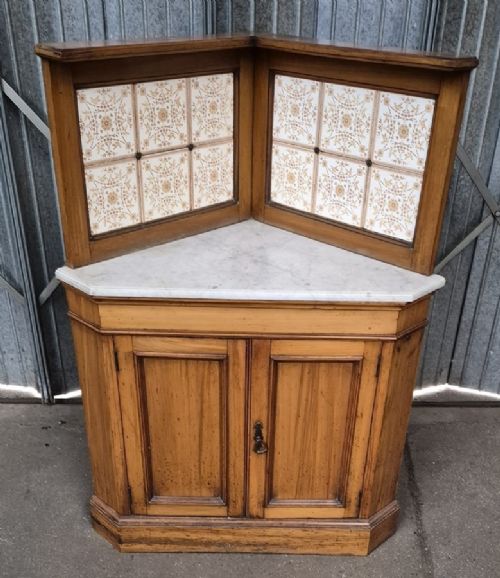
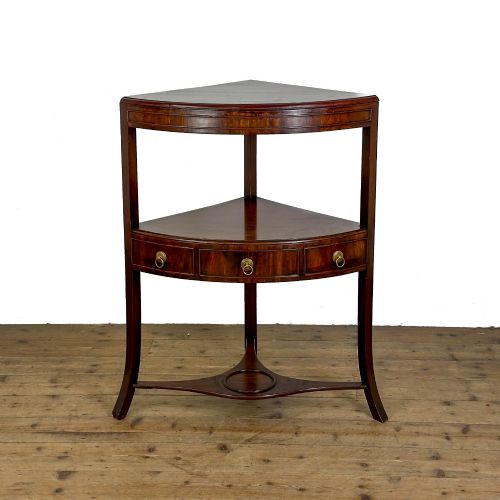
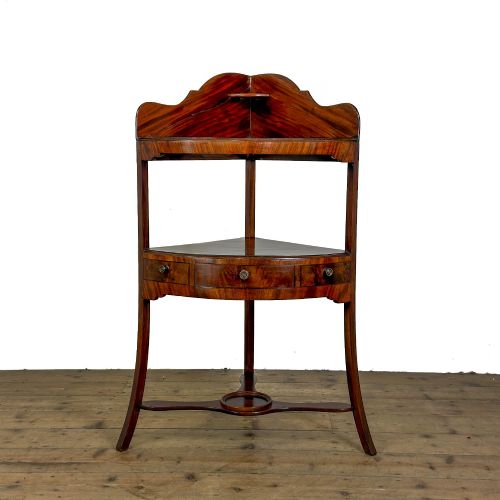
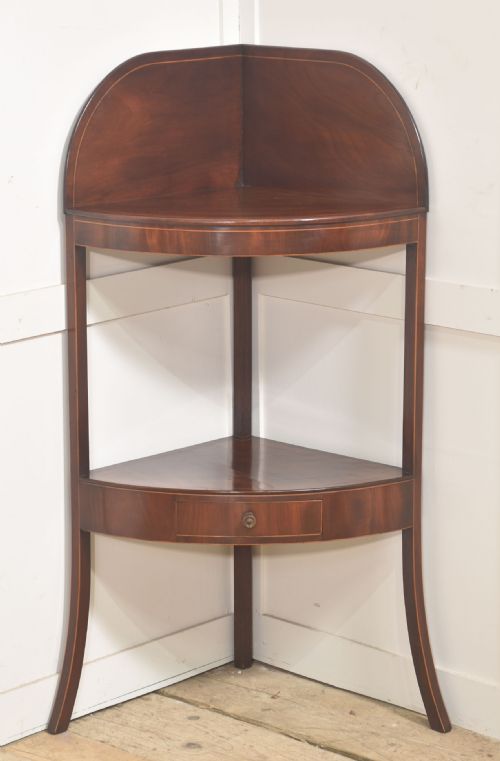
When you search for a corner wash basin stand, you encounter pieces designed to fit snugly into room angles, most frequently dating from the Georgian and Victorian eras. These items predominantly appear in mahogany, sometimes featuring satinwood or walnut, with notable examples displaying boxwood inlay or marble tops.
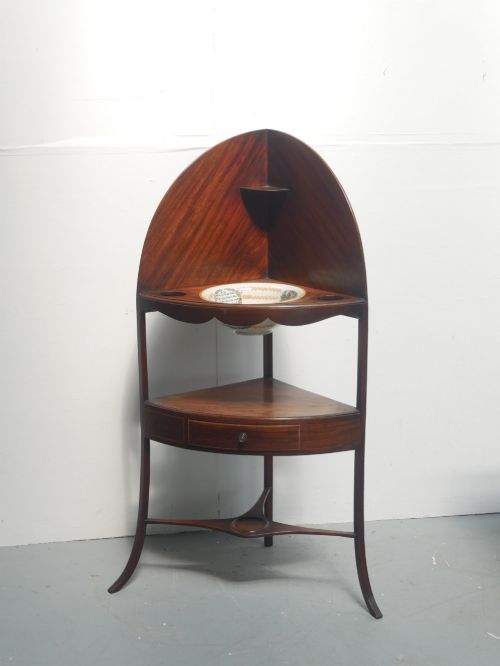
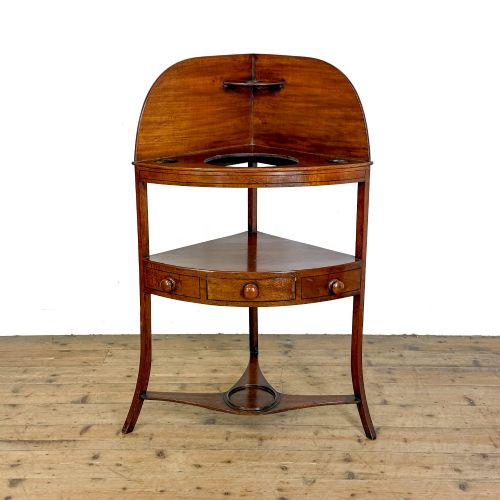
The standard configuration utilises a triangular footprint to maximise awkward spaces, often incorporating lower tiers for storage and apertures originally intended for basins. While many retain their traditional character as washstands, some examples adapt easily to serve as occasional lamp or plant tables in modern interiors.
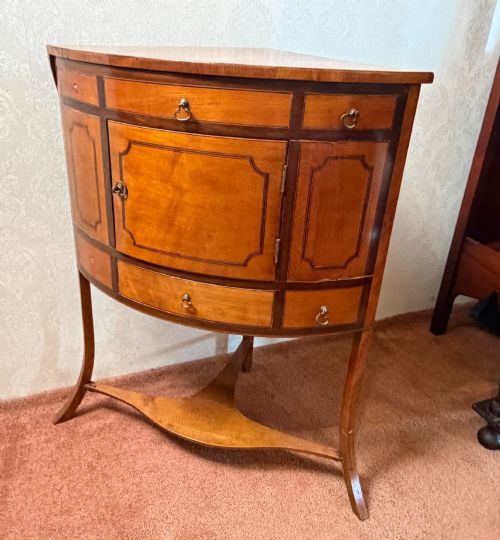
The selection ranges from simple, functional 18th-century pieces to more elaborate folding designs with bow fronts. Regency and 19th-century interpretations also appear, showing how cabinetmakers continuously refined this space-saving form over successive generations.
How they were made
Cabinetmakers relied heavily on mahogany as the primary timber, shaping solid boards and utilising veneers to achieve rich grain patterns. Boxwood inlay frequently provides subtle linear contrast around the edges and panels of finer Georgian pieces.
Structural hardware typically incorporates brass for handles, hinges, and small fittings. Later Victorian iterations integrate heavy marble tops, reflecting shifts in sanitation and material preferences during the nineteenth century.
Current listings span from the Georgian period through the Regency and Victorian eras, demonstrating the enduring utility of the corner form.
What varies in quality
The distinction between standard utility pieces and finer examples rests upon the choice of timber and the crispness of the cabinetmaking. Select items employ highly figured mahogany and precise boxwood stringing, whereas simpler versions rely on plain boards without decorative embellishment.
Mechanical complexity also separates the ordinary from the exceptional, particularly in folding designs and specialised mechanisms. Pieces bearing maker stamps reflect workshop pedigree, elevating their standing above unsigned vernacular items.
Walker & Sons·Gillows Lancaster
The Corner Wash Basin Stand Glossary
- Mahogany
- A durable tropical hardwood prized for its deep reddish-brown colour and stable working properties. It forms the structural and visual basis for the majority of these stands.
- Boxwood inlay
- Narrow strips of pale boxwood inserted flush into the darker mahogany surface to create geometric borders. This decorative technique characterises many refined Georgian examples.
- Bow front
- A convex, outwardly curved front facade that softens the rigid angles of furniture. This curved profile appears on select late 18th-century stands.
- Marble top
- A polished stone slab fitted to the upper surface to provide a water-resistant workspace. This feature becomes prominent on later Victorian iterations.
- Washstand
- A specialised item of furniture designed to hold a basin, jug, and related washing paraphernalia. Many survive today repurposed as decorative display tables.
Corner Wash Basin Stand: Frequently Asked Questions
What is a corner wash basin stand?
A corner wash basin stand is a specialised triangular piece of antique furniture built to fit into the intersecting walls of a room. These stands provided a stable, space-saving station for personal hygiene before modern plumbing.
Today, they are frequently repurposed in hallways or living spaces as decorative corner tables for lamps, ceramics, or small plants.
How do I identify a Georgian stand?
Georgian stands typically date from the 18th century up to the early 19th century, constructed primarily from solid mahogany with slender legs and tier configurations. Look for traditional joinery, subtle boxwood inlay, and tapered supports characteristic of the period.
Later Victorian versions often introduce heavier elements such as inset marble tops or different hardware suited to changing domestic habits.
Did they all hold water basins?
Yes, the circular cutouts on the upper tier were originally designed to support ceramic washbowls and ewers. Some specialised variants also feature folding tops that concealed the basin when not in use.
Over time, many lost their original ceramic basins, leaving the wooden apertures as the primary clue to their original function.
Where should I place one at home?
These stands excel in empty corners where standard rectangular furniture will not fit comfortably. Their compact triangular footprints allow them to anchor difficult angles in hallways, bedrooms, or reception rooms.
They function particularly well carrying small table lamps or trailing greenery, drawing the eye upward and utilising otherwise dead architectural space.