




Brown Leather Footstool
A brown leather footstool brings warmth and practical support to a room, appearing in forms ranging from traditional buttoned ottomans to playful animal figures.
Brown Leather Footstool
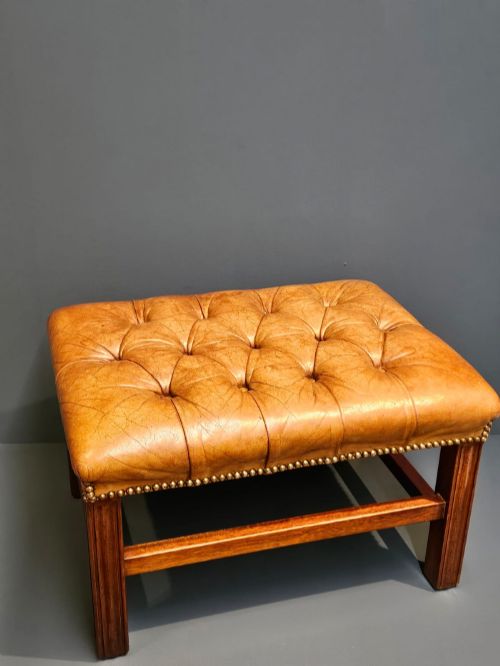
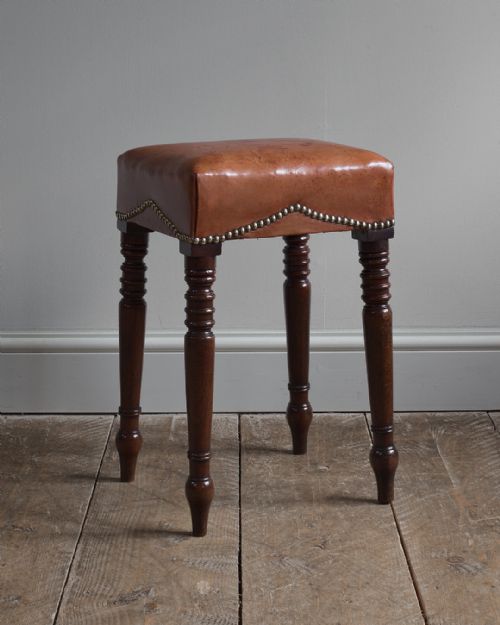
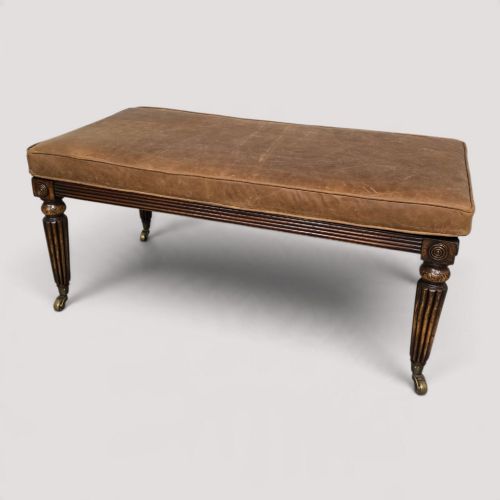
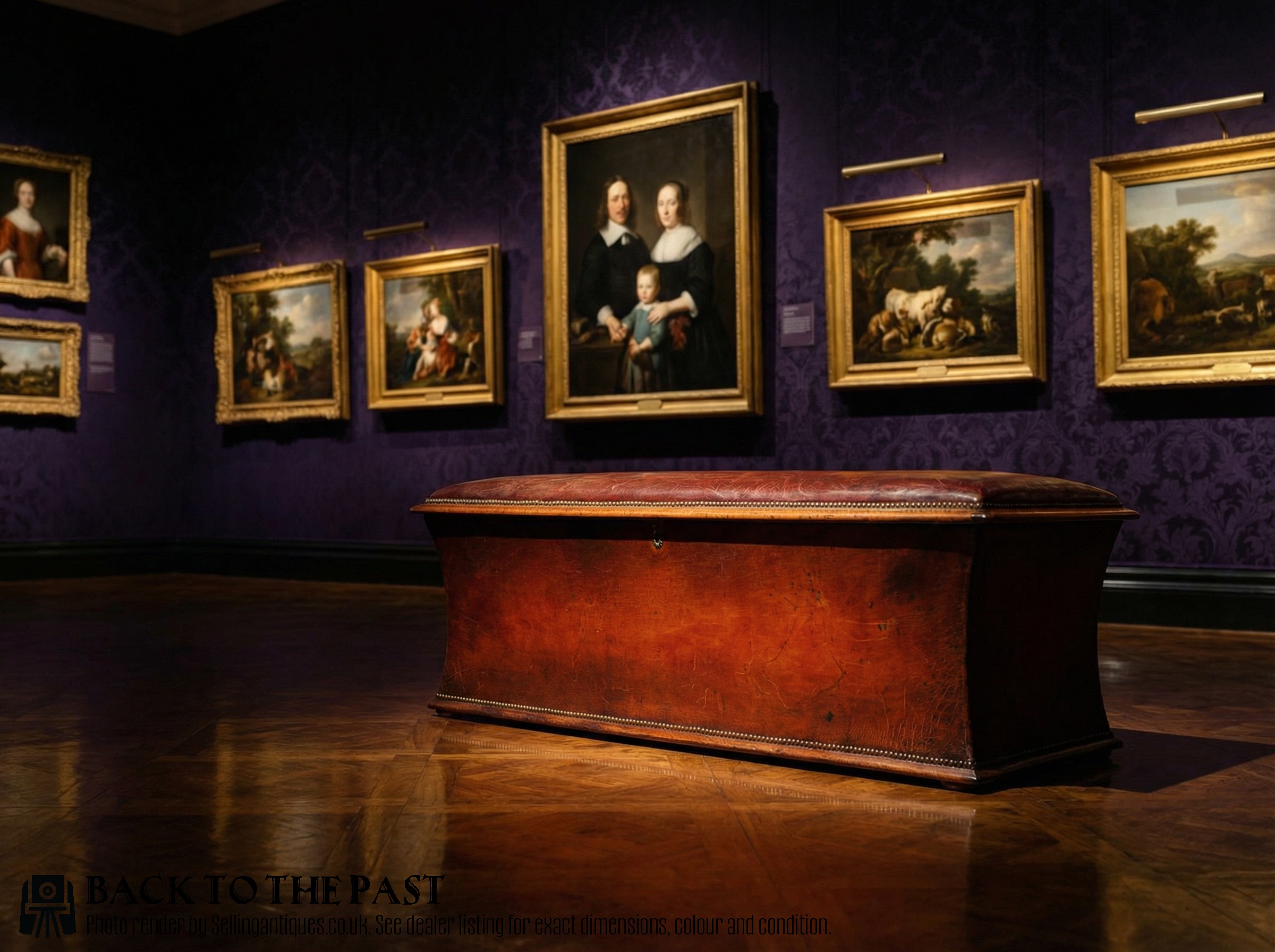
A brown leather footstool takes many forms across this selection, appearing as large country house ottomans, piano stools, window seats, and whimsical animal figures. The versions most commonly met combine rich leather upholstery with traditional timber frames spanning the nineteenth and early twentieth centuries.
The evidence shows heavy representation from the Victorian and Edwardian eras, alongside Arts and Crafts pieces and mid-century designs. Buyers encounter everything from simple walnut x-frame stools to large buttoned ottomans designed for substantial reception rooms.
How they were made
Frames rely upon traditional cabinet timbers including mahogany, walnut, oak, and yew wood, sometimes accented with brass or steel components. Upholsterers used materials such as wood wool beneath hand-dyed or tan leather to build firm, lasting shapes.
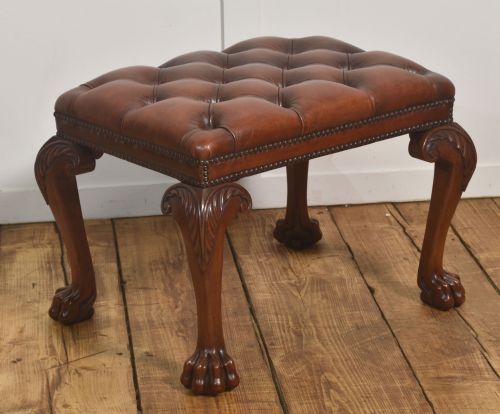
Joinery methods reflect the period of origin, from carved cabriole legs and lion's head details to structural x-frames. Leather surfaces often feature traditional buttoning techniques that secure the upholstery to the internal padding.
Brown Leather Footstool Retail Price Guide 2026
Typical asking prices for brown leather footstool among the pieces listed under this phrase on Sellingantiques today, from the lower quarter to the upper quarter. They describe what is for sale here now, not the wider market.
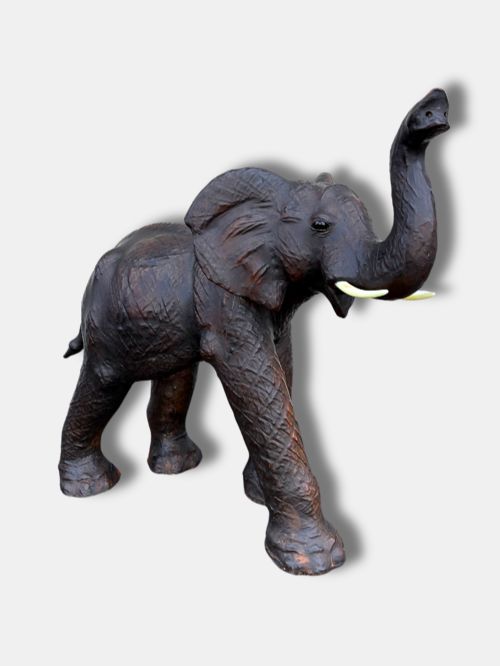
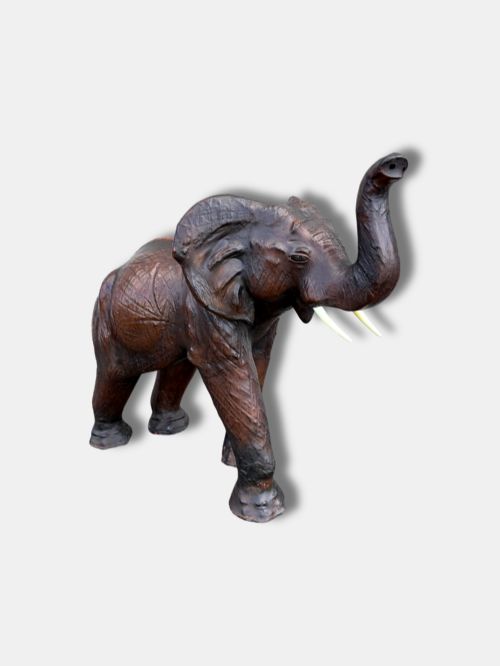
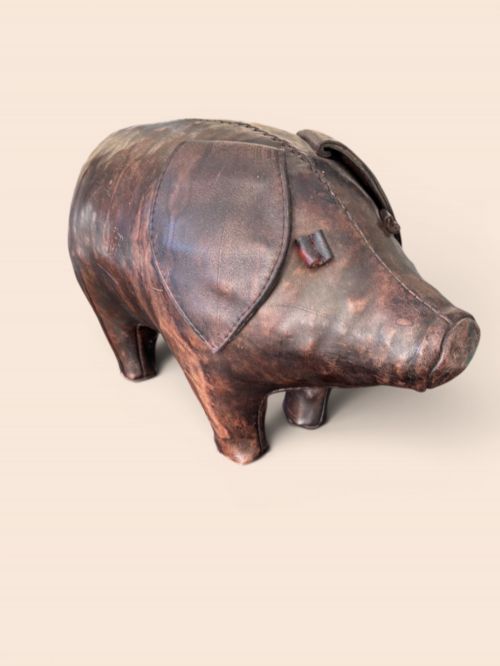
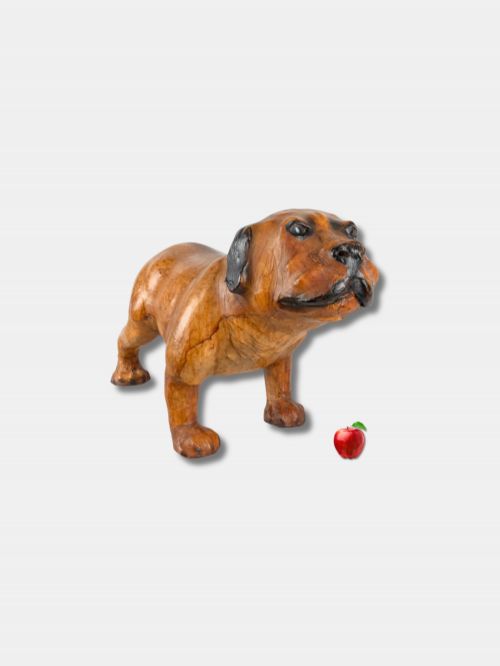
Among the stately mahogany ottomans hide leather pigs and hippopotamuses ready to support weary feet.
What varies in quality
Quality separates simple utility seating from substantial pieces by notable makers like Liberty of London or Arthur Simpson of Kendal. The depth of the leather patination and the complexity of the timber carving, such as X-frame structures or carved lions' heads, dictate the distinction between standard and exceptional examples.
The integrity of the frame and the depth of the buttoning also define the upper tier of these pieces. Heavier country house ottomans and figural leather animals display a higher level of artisanal skill than standard piano stools.
Arthur Simpson Of Kendal·Liberty·Omersa Workshop·James Shoolbred·Fritz Hansen
The Brown Leather Footstool Glossary
- Ottoman
- A low, upholstered seat or footstool without a back or arms, frequently built in large proportions for country houses.
- Cabriole leg
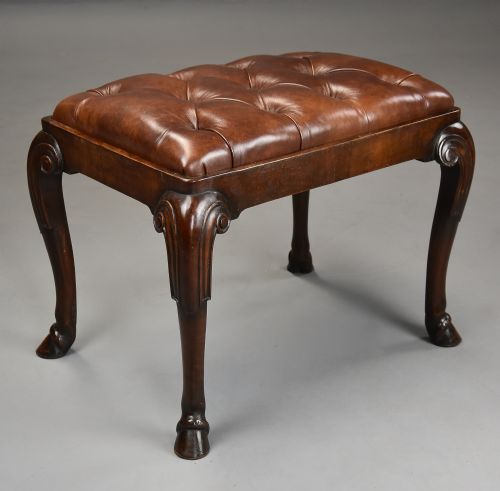
- A furniture leg that curves outward and then tapers inward, commonly seen on walnut pieces from the Queen Anne style and Victorian periods.
- Buttoned
- An upholstery technique where indentations are formed across the leather surface using secured buttons, creating deep tufts.
- X-frame
- A structural furniture base formed by intersecting diagonal timber members that provide stable support for the seat above.
- Wood wool
- A traditional packing and stuffing material made from fine wood shavings used inside historical upholstery layers.
Brown Leather Footstool: Frequently Asked Questions
What periods do these footstools come from?
The pieces span from the nineteenth century through the Edwardian era and into the mid-twentieth century.
Most items originate from Victorian and Edwardian workshops, alongside Arts and Crafts examples and later mid-century modern designs.
How were these stools used historically?
They served multiple domestic functions, from supporting feet by the fireplace to providing seating at pianos or in window bays.
Larger ottomans functioned as central furniture pieces in country house drawing rooms and libraries.
How do I identify an Arts and Crafts stool?
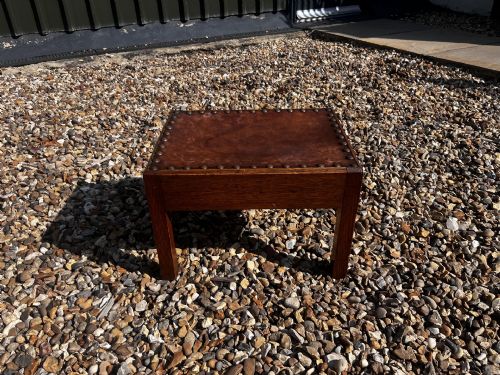
Arts and Crafts pieces emphasise honest construction in solid oak, often associated with makers like Arthur Simpson of Kendal.
They display simpler, sturdier lines that highlight the natural grain of the timber and traditional handcrafting methods.