
Brown Leather Accent Chair
A brown leather accent chair brings rich texture and enduring comfort to a room, drawing on centuries of upholstery traditions.
Brown Leather Accent Chair
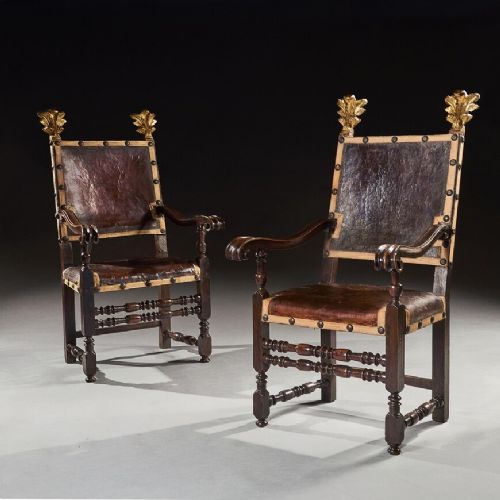
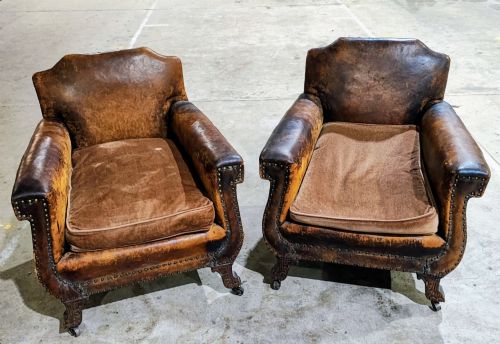
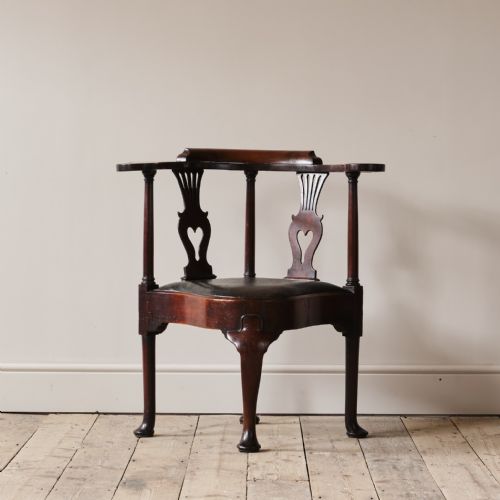
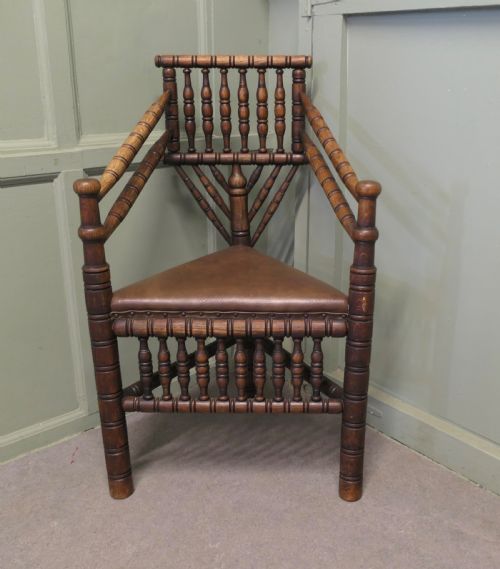
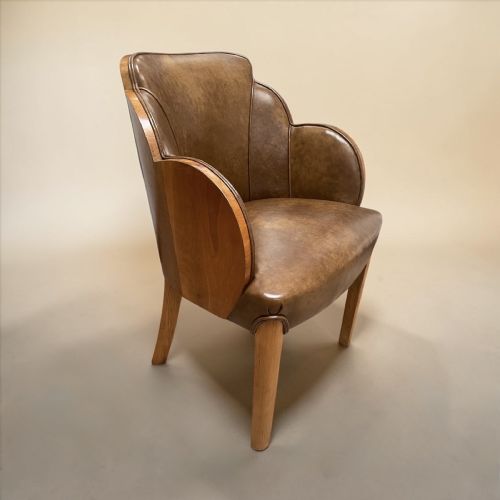
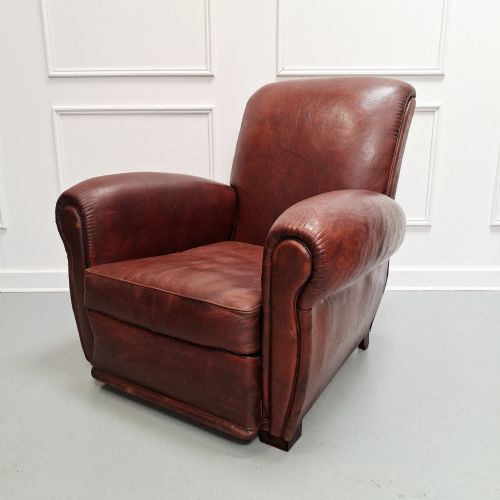
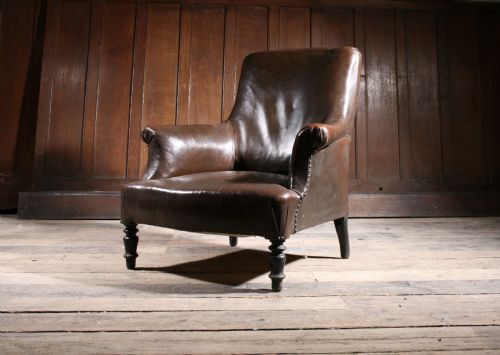
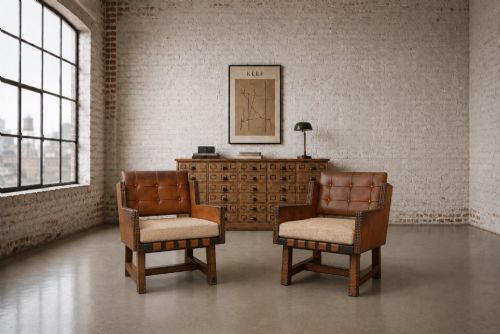
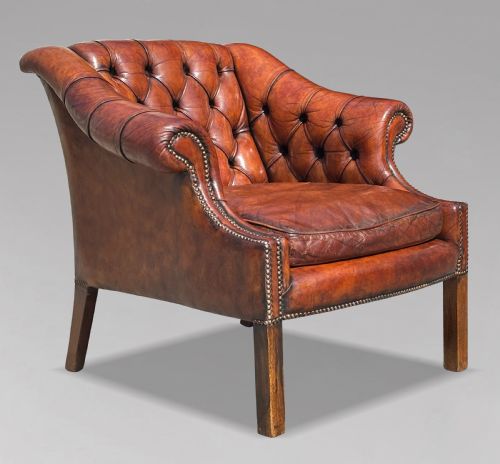
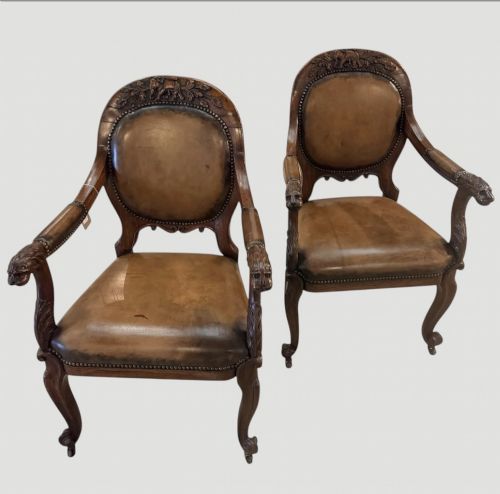
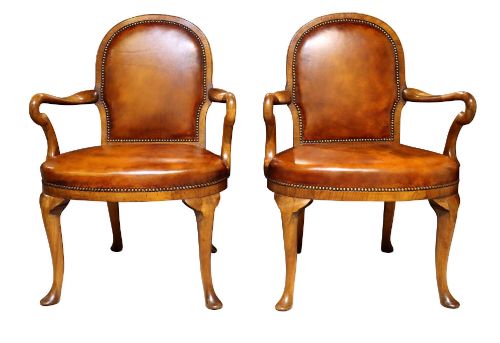
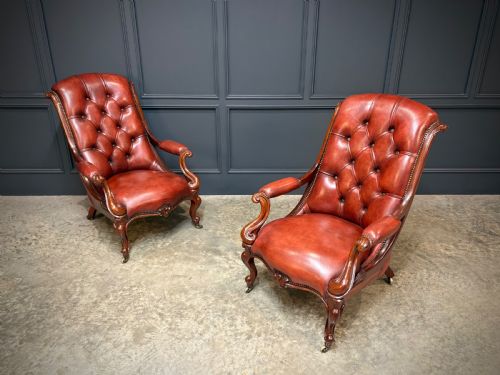
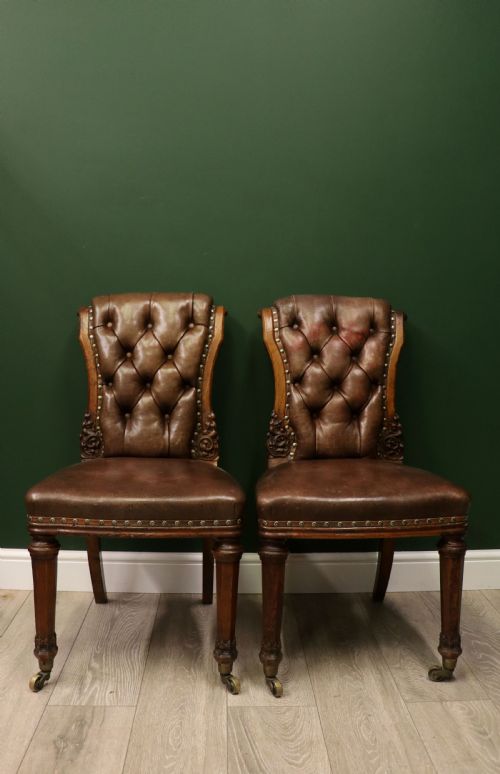
A brown leather accent chair serves as a practical focal point in a study, library or living space. When exploring this selection, buyers encounter forms ranging from 18th-century mahogany corner seats and George II library armchairs to 19th-century Victorian buttoned designs and French Art Deco club chairs.
The inventory spans multiple centuries, incorporating periods such as the 17th, 18th, 19th and early 20th centuries. Armchairs dominate the offerings, alongside side chairs, hall chairs, dining chairs, stools and desk chairs, reflecting diverse historical functions.
How they were made
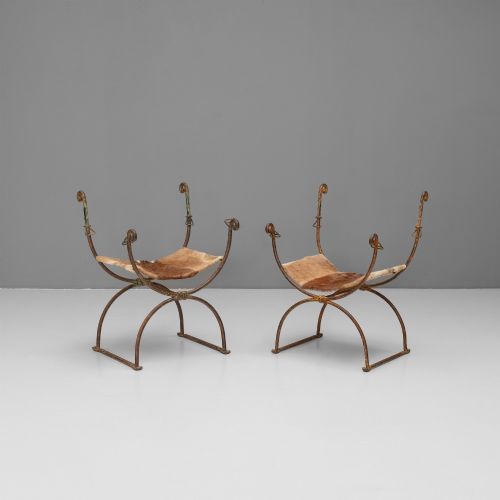
Frames are constructed from solid hardwoods including oak, walnut, mahogany, rosewood and fruitwood, sometimes accented with brass details or cane work. These sturdy timber skeletons support the seating structure through traditional joinery and X-frame supports.
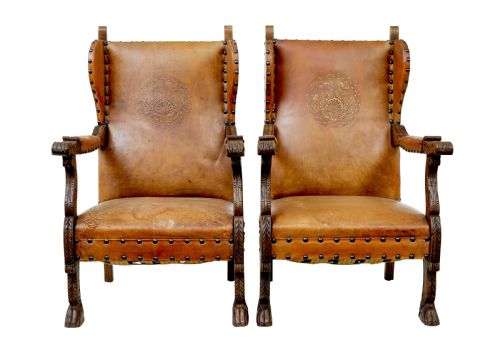
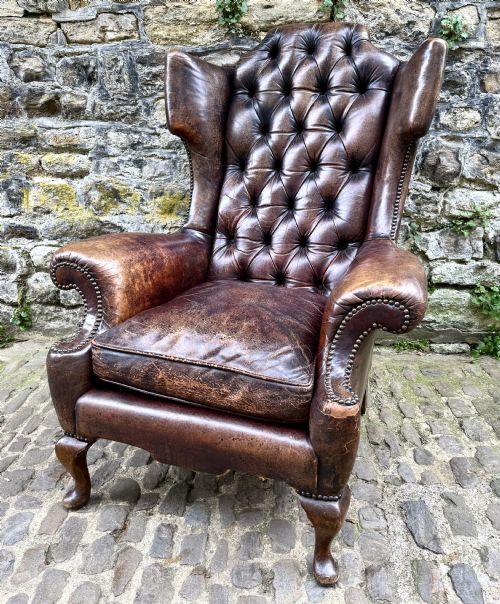
Upholstery relies on leather, occasionally embossed or woven, shaped into button-backed panels, wingback profiles and club chair cushions. Artisans utilised materials like sheep's hide and turned wood elements to achieve both structural integrity and tactile richness.
Listings feature frames made from oak, walnut, mahogany, rosewood, fruitwood and cane across the 18th, 19th and early 20th centuries.
What varies in quality
The distinction between standard examples and exceptional pieces rests upon the precision of the timber carving and the character of the leather hide. Finer items exhibit sophisticated joinery, such as walnut framing or parcel-gilt details, paired with deeply buttoned upholstery and generous proportions.
Stylistic execution creates further differentiation, moving from utilitarian seating to high-status library and club armchairs attributed to specific design movements like Gothic Revival or Art Deco. The coherence of the timber grain and the depth of the leather patina define the upper tier of the range.
Harry and Lou Epstein·A.W.N. Pugin
The Brown Leather Accent Chair Glossary
- Club chair
- A deep, comfortable armchair with upholstered armrests, typically covered in leather.
- Wingback
- An armchair with side panels or wings attached to the back, designed to shield the sitter from draughts.
- Button-back
- An upholstery technique where indentations are formed by pulling buttons through the padding to secure the leather in a diamond pattern.
- Gothic Revival
- A design style drawing on medieval architectural motifs, frequently expressed in heavy oak frames and pointed arches.
- Bergère
- An enclosed upholstered armchair with wooden framing exposed around the sides and back.
Brown Leather Accent Chair: Frequently Asked Questions
What is a brown leather accent chair?
A brown leather accent chair is an occasional seat featuring a timber frame and leather upholstery, designed to add functional seating and visual warmth to a room.
These pieces range from compact side chairs and stools to substantial club armchairs and wingbacks originating from various historical periods.
How do I identify a Victorian leather armchair?
Victorian examples often feature heavy dark woods like oak or rosewood, combined with buttoned leather upholstery and deep padding. Many incorporate stylistic cues from Gothic Revival or Victorian design movements.
Looking closely at the turned wooden legs, frame proportions and buttoning style helps confirm the nineteenth-century origin.
What distinguishes Art Deco club chairs?
Art Deco club chairs from the 1930s typically display rounded, low-profile silhouettes covered in smooth leather or sheep's hide. They prioritise enveloping comfort and streamlined forms over ornate carving.
Their generous proportions and minimalist wooden elements set them apart from earlier Victorian and Georgian seating.
How were these chairs used historically?
These seats served varied domestic functions, from reading and writing in libraries to dining and formal entertaining. Stools and side chairs provided flexible supplementary seating around the home.
Larger library and club armchairs were built for prolonged relaxation in studies and drawing rooms.