


Oak and Leather Chair
When you search for an oak and leather chair, you encounter a durable seating form shaped across the nineteenth and twentieth centuries.
Oak and Leather Chair
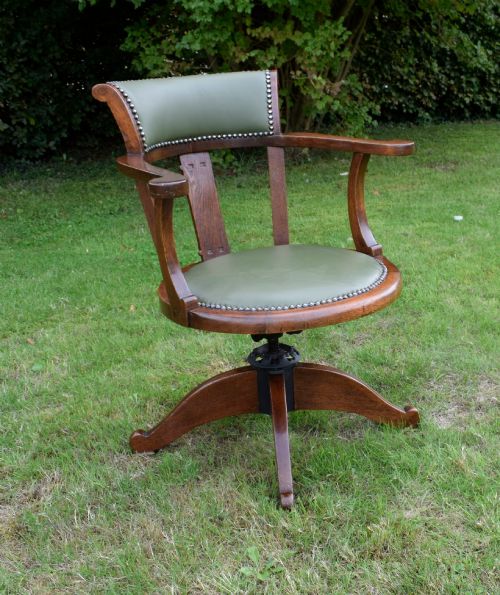
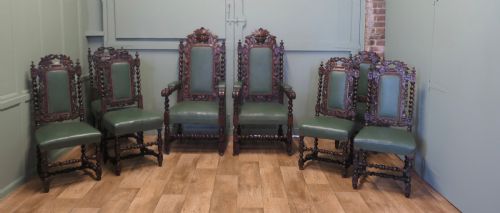
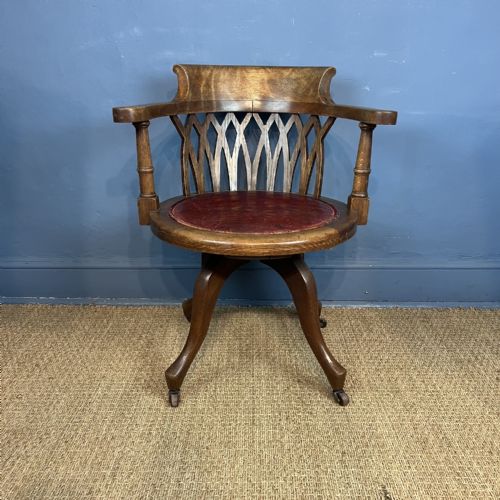
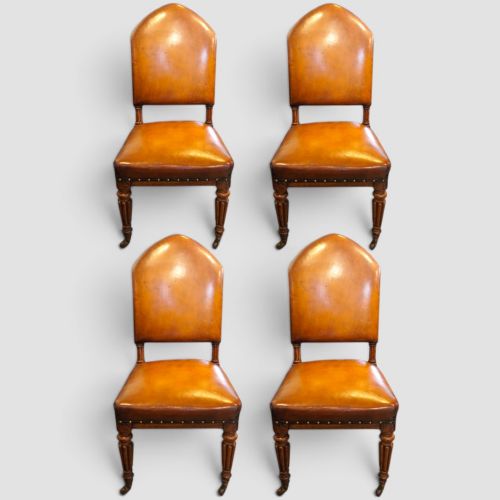
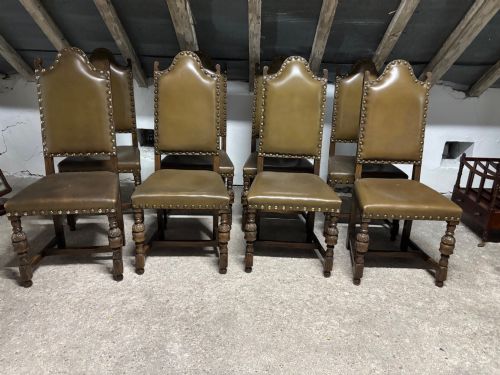
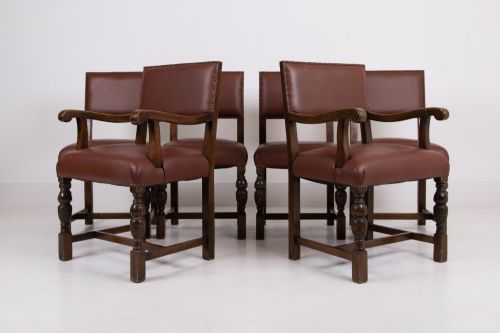
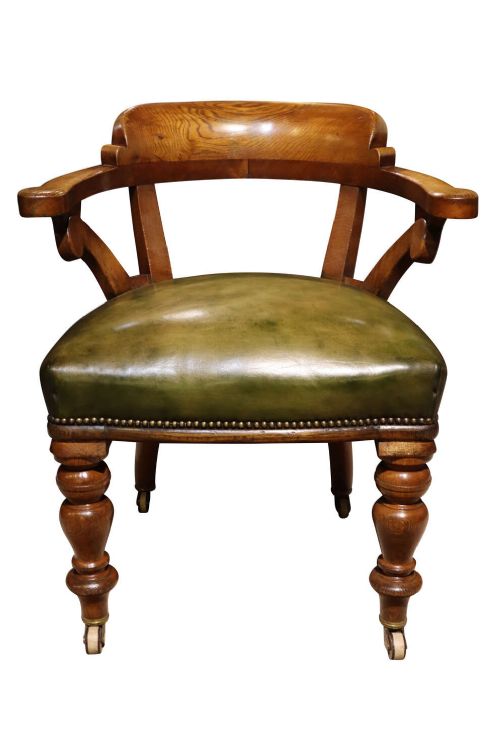
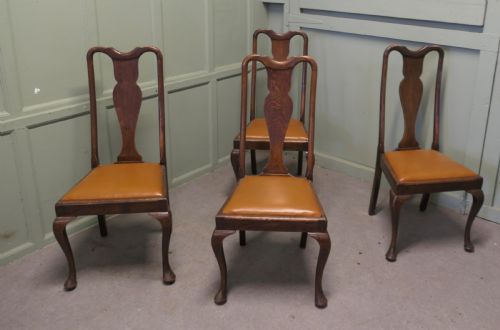
An oak and leather chair combines a sturdy timber frame with a supple hide seat or back, appearing frequently in dining sets, library armchairs, and swivel office formats.
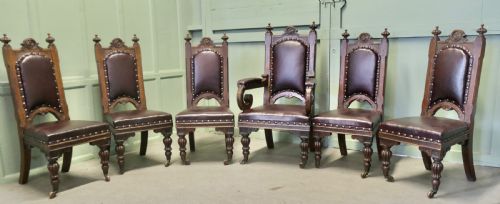
The selections span Victorian, Edwardian, and early twentieth-century periods, alongside revivals drawing on Jacobean, Gothic, and Arts and Crafts design idioms.
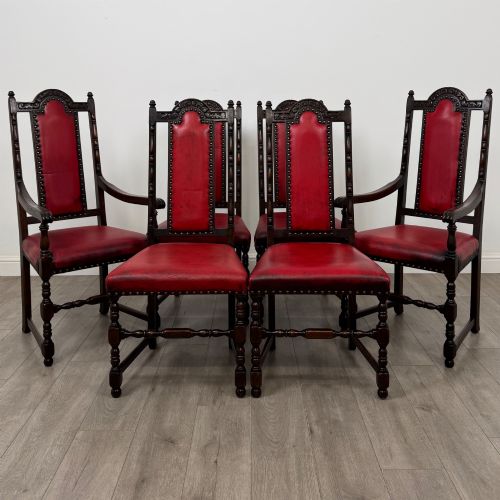
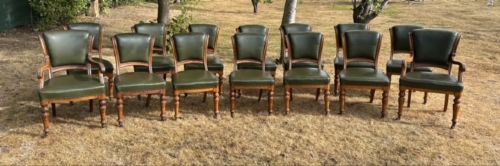
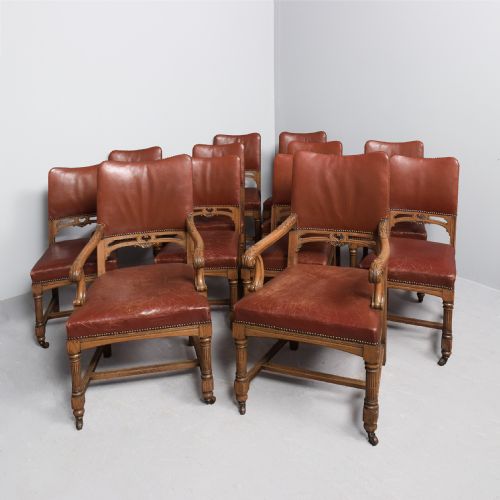
Buyers commonly meet large sets of dining chairs or single revolving desk chairs suited to studies, boardrooms, and living spaces.
How they were made
Frames rely on solid oak, sometimes golden or carved, assembled with mortise and tenon joints to support heavy daily use.
Upholstery incorporates plain, embossed, painted, or Moroccan leather secured with metal studs, brass accents, and occasional cane or woven elements.
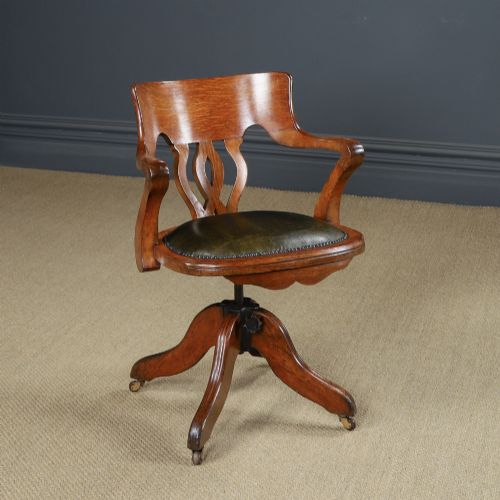
Revolving and tilting office formats utilise cast iron, metal, and bentwood mechanisms to permit movement.
Listings span the Victorian, Edwardian, and 1920s periods, featuring materials such as brass, cane, cast iron, and Moroccan leather.
What varies in quality
The depth of carving, the integrity of the joinery, and the weight of the timber frame distinguish standard utility seating from finer library and boardroom commissions.
The grade of the leather, the neatness of the studwork, and the preservation of original swivel or tilting mechanisms govern the overall execution of the piece.
Gillows·Bruce James Talbert·S and H Jewell·A W N Pugin
The Oak and Leather Chair Glossary
- Turners Chair
- A heavy three-legged armchair constructed from turned oak rails. This form dates back to medieval traditions.
- Revolving Desk Chair
- A seat fitted with a central spindle and metal base allowing rotation. These often include tilting adjustments.
- Gothic Revival
- A nineteenth-century style incorporating architectural motifs such as pointed arches and tracery into furniture. It draws inspiration from medieval buildings.
- Wingback Armchair
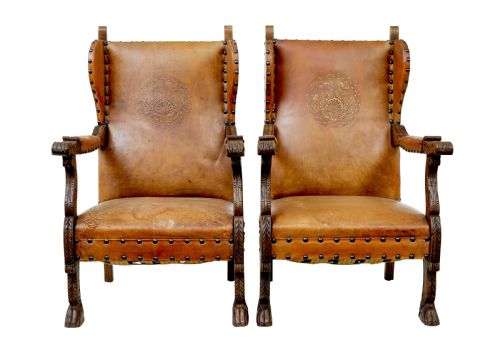
- A fireside seat featuring protective side panels designed to shield the occupant from drafts. These typically pair oak frames with deep leather upholstery.
- Arts and Crafts
- A movement prioritising visible construction and honest materials over machine-made ornamentation. It produced sturdy golden oak and leather seating.
Oak and Leather Chair: Frequently Asked Questions
How do I date an oak and leather chair?
Dating relies on combining the stylistic clues of the wooden frame with the construction methods used underneath the upholstery. Victorian and Edwardian pieces often display distinct revival motifs or early mechanical swivel systems.
Examining the type of oak, the cut of the timber, and the style of the leather fastening helps narrow the decade of manufacture between the nineteenth and twentieth centuries.
Were these chairs used in offices?
Many oak and leather chair designs were built specifically for commercial offices, libraries, and boardrooms. Swivel desk chairs and revolving captain chairs feature heavily in the historical record.
These pieces combine sturdy oak frames with adjustable metal mechanisms to accommodate long hours of administrative work.
How should I care for vintage leather?
Vintage leather requires gentle cleaning and regular conditioning to maintain its flexibility and prevent the hide from drying out. Avoiding direct sunlight and excessive heat preserves both the material and the metal studwork.
Applying suitable balms helps retain the natural colour and texture found on nineteenth and twentieth-century upholstery.
Are dining chairs available in large sets?
Dining chairs frequently appear in matching groups ranging from sets of four up to fourteen pieces. These large suites were traditionally commissioned for substantial dining rooms and boardrooms.
Matching sets in solid oak with leather seats demonstrate the uniform craftsmanship favoured by makers during the Victorian and Edwardian eras.