

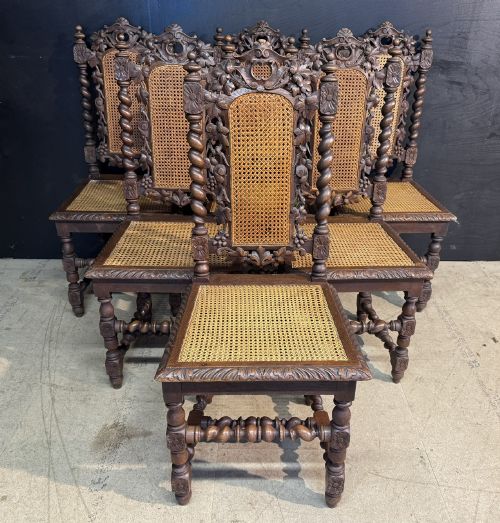
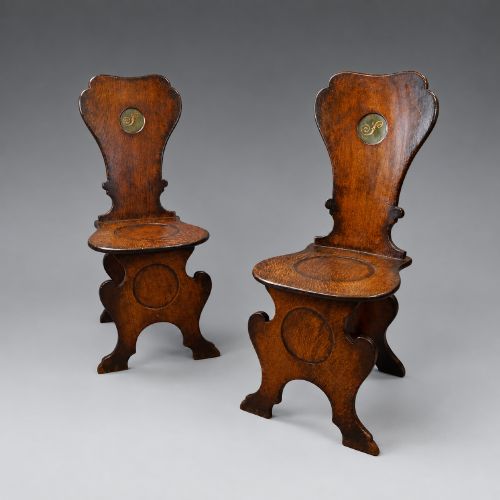
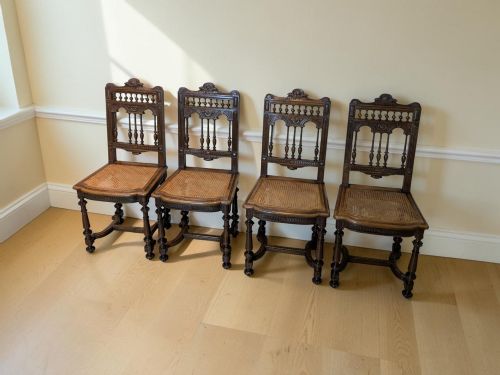
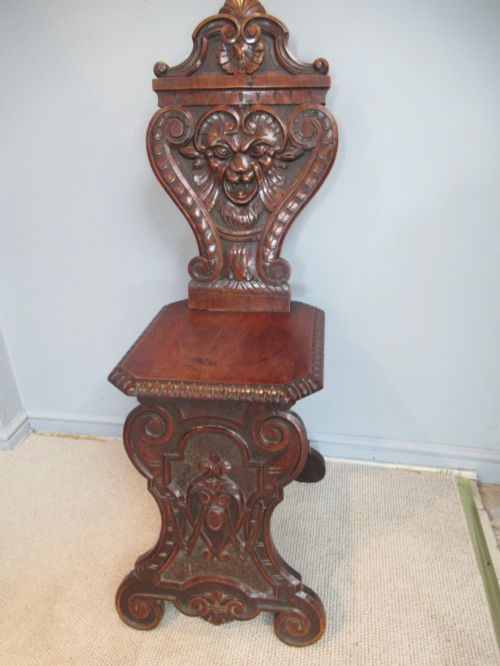






Renaissance Revival Side Chair
These renaissance revival side chair examples deliver architectural carving and historic gravitas to any room.
Renaissance Revival Side Chair
A renaissance revival side chair brings heavy historic ornament and architectural presence into a domestic interior. These pieces draw on Italian, Spanish, and Flemish design motifs from earlier centuries, reinterpreted by nineteenth-century makers.
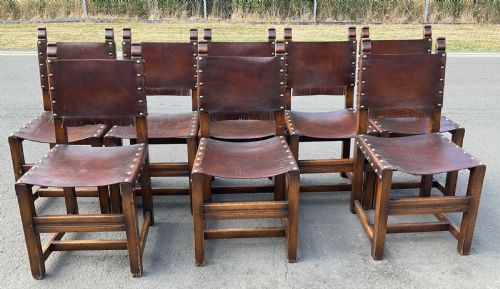
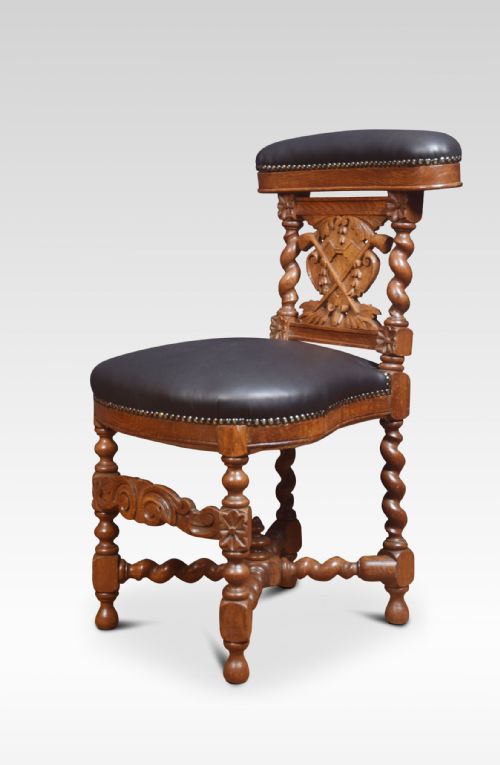
The selections on this page appear across forms such as hall chairs, dining chairs, armchairs, and sgabello chairs. Walnut and oak dominate the offerings, frequently accompanied by carved detail and upholstery in leather or velvet.
Buyers most often encounter nineteenth-century pieces alongside later variations stretching into the early twentieth century. These chairs suit spaces that demand strong silhouettes and dark timber tones.
How They Were Made
Cabinetmakers worked primarily in walnut, oak, and mahogany, selecting timbers capable of supporting deep relief carving. Artisans shaped these woods using hand-carving chisels to create figural panels, strapwork, and elaborate crest rails.
Surface decoration frequently incorporated brass fittings, paint accents, and bone inlay within the wooden structure. Upholstered variants utilised leather and velvet fastened with decorative tacks to provide seating comfort.
Renaissance Revival Side Chair Retail Price Guide 2026
Typical asking prices for renaissance revival side chair among the pieces listed under this phrase on Sellingantiques today, from the lower quarter to the upper quarter. They describe what is for sale here now, not the wider market.
Several chairs incorporate inlaid bone details that gleam starkly against dark walnut panels.
What Varies in Quality
The distinction between ordinary and exceptional examples rests upon the depth and sharpness of the carving. Crisp, hand-carved relief work on walnut or oak indicates a higher level of workshop skill than shallow machine routing.
Structural integrity and timber selection further separate standard production from superior pieces. Dense hardwoods and robust joinery ensure longevity, while secondary woods and heavy veneer wear differently over time.
The Renaissance Revival Side Chair Glossary
- Sgabello
- A light wooden chair originating in the Italian Renaissance, featuring a supportive backrest and trestle or board-like legs instead of four conventional posts. These functional seats often stood in grand hallways.
- Renaissance Revival
- A nineteenth-century design movement that drew inspiration from sixteenth-century European architecture and furniture. This style utilised classical motifs, heavy carving, and symmetric proportions.
- Flemish
- Pertaining to the historic region of Flanders, a stylistic descriptor often applied to nineteenth-century furniture featuring elaborate scrollwork and punch-ground backgrounds. Such pieces emulate earlier Netherlandish carving traditions.
- Hall Chair
- A tall, upright wooden seat designed for display in entrance halls rather than prolonged sitting. These items typically feature solid wood seats and prominent back panels bearing crests or carved decoration.
- Bone Inlay
- A decorative technique where small pieces of bone are set into recesses carved into the timber surface. This method creates geometric or figurative patterns contrasting against dark wood.
Renaissance Revival Side Chair: Frequently Asked Questions
Where did people use these chairs?
These pieces served multiple functions across historic domestic spaces, primarily acting as decorative seating in grand entrance halls or formal dining rooms. Their rigid backs and upright proportions encouraged correct posture rather than relaxed lounging.
Today, buyers place them in studies, hallways, or living areas where their strong sculptural forms act as focal points. They function well as occasional seating rather than primary everyday chairs.
How do I identify the period?
Dating relies on examining the timber species, construction methods, and tool marks left by the maker. Nineteenth-century interpretations often combine historic motifs with machine-assisted joinery while retaining hand-carved surface details.
Comparing the carving depth and secondary woods against documented examples helps distinguish nineteenth-century revival work from later reproductions. Subtle variations in patination and hardware also indicate age.
How do I care for the wood?
Maintenance involves keeping timber surfaces away from direct sunlight and excessive temperature fluctuations that cause wood to dry and split. Regular dusting with a soft, dry cloth preserves the finish without building up residue.
Applying a traditional beeswax occasionally nourishes carved walnut and oak surfaces. Avoid liquid cleaners or silicone-based polishes which damage historic finishes.
Are pairs and sets common?
Surviving examples frequently appear as matched pairs of hall chairs or dining chairs. Larger sets of dining chairs occur less frequently due to dispersal over time.
Acquiring a matched pair offers balanced placement options within a room layout. Larger sets provide uniform seating for historic dining settings.