


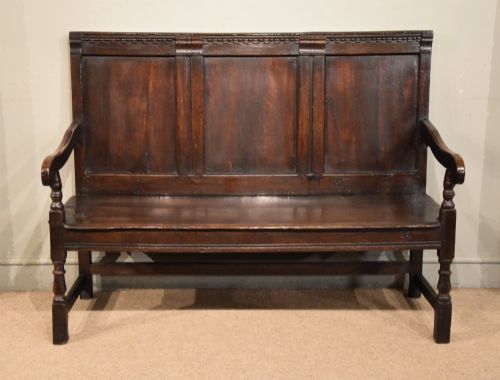
Oak High Back Seat
An oak high back seat brings centuries of solid craftsmanship and robust utility directly into a hallway or dining room.
Oak High Back Seat
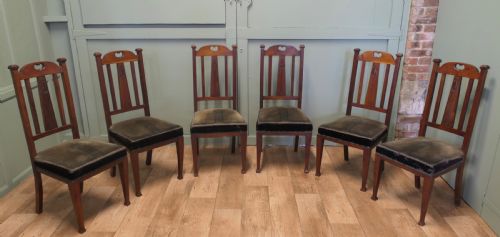
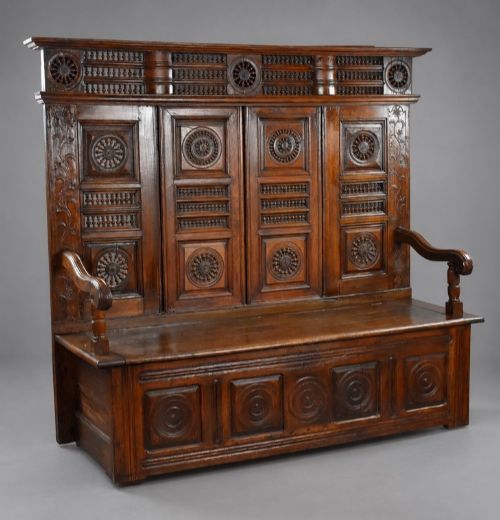
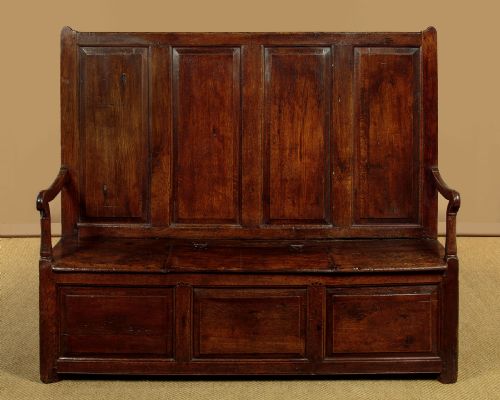
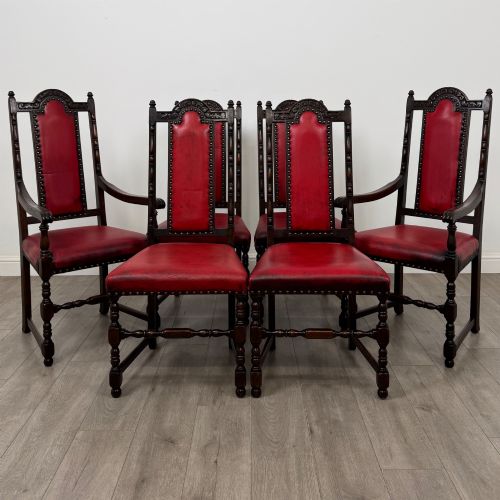
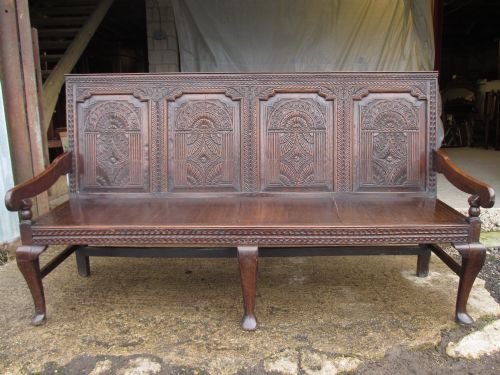
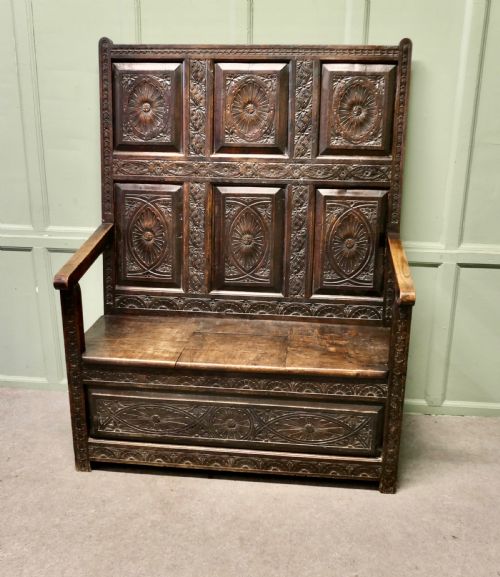
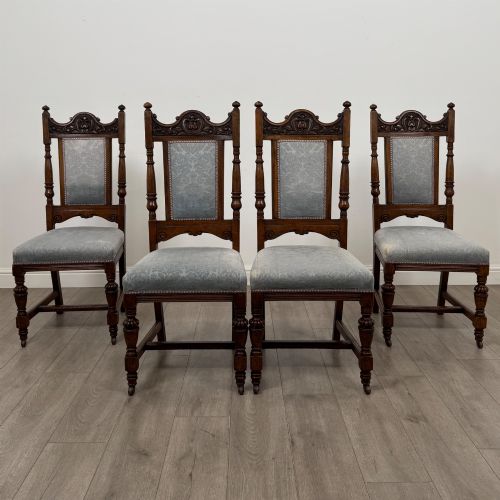
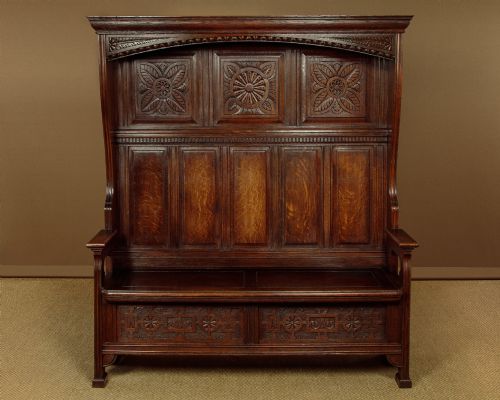
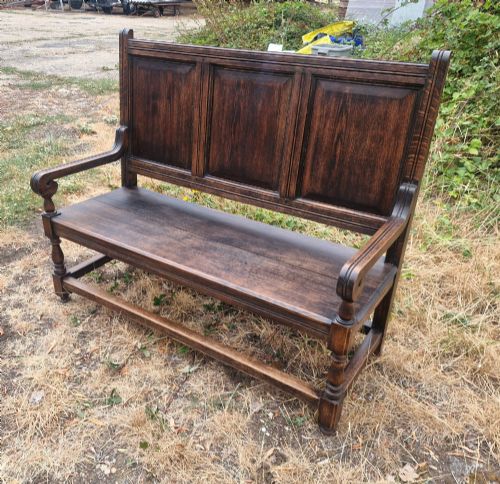
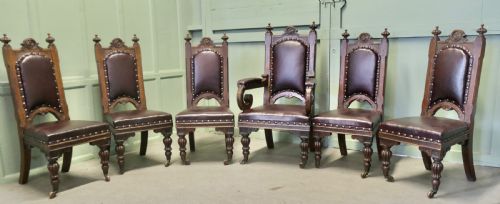
When you search for an oak high back seat, you encounter substantial seating designed to keep draughts away from the body in older properties. The selection ranges from enclosed box settles with integrated storage and panelled backs to tall dining chairs and hall benches originating across the seventeenth, eighteenth, nineteenth and twentieth centuries.
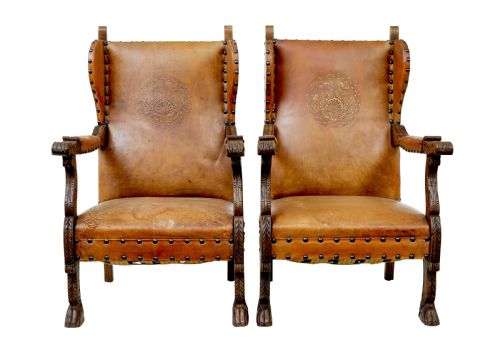
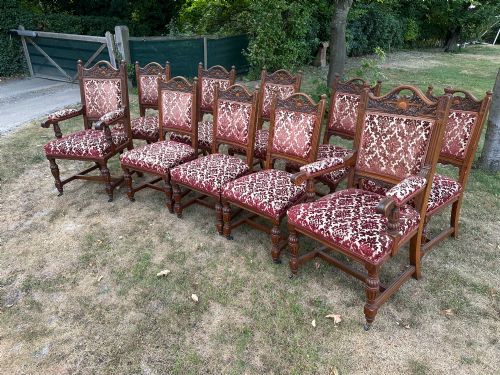
You are most likely to meet seventeenth and eighteenth-century box settles or nineteenth-century Gothic and Jacobean revival dining sets and hall benches on this page. These pieces serve both practical seating and architectural functions, often featuring carved woodwork, rush seats, or leather upholstery.
Makers and schools such as Liberty, Morris and Co, and the Glasgow School appear alongside regional Windsor and ladderback forms. The periods span the Victorian, Edwardian, and Georgian eras, maintaining a heavy reliance on solid oak timbers throughout.
How they were made
Carpenters constructed these seats primarily from solid oak, sometimes combining ash, elm, or rush for seats and secondary components. Joinery relied on traditional mortise and tenon joints secured with wooden pegs to handle the heavy stress placed on tall frames.
Surface decoration involved hand carving, panel moulding, and occasional painted or embossed leather additions. Upholstered versions utilised materials like velvet, fabric, and brass tacks over supportive padding.
The listings here span the 17th Century to the 1920s, showcasing oak alongside elm, ash, rush, and leather.
What varies in quality
The degree of hand carving and the crispness of the architectural details distinguish standard utilitarian seating from finer artistic works. Heavy box settles with integrated storage show quality through the integrity of their original panelwork and base timbers.
Originality of surface finish and the retention of early rush seats or period leather upholstery heavily influence the character of the piece. Later revivals vary according to the depth of the cabinetmaker's adherence to seventeenth and eighteenth-century joinery standards.
Liberty·Morris and Co·William Morris
The Oak High Back Seat Glossary
- Settle
- A wooden bench with a high back, solid arms, and often a box base used for storage. This form kept occupants warm by blocking cold draughts in large rooms.
- Rush
- Dried marsh grass twisted into cords and woven to create flexible, resilient seat pads. It appears frequently on ladderback and Arts and Crafts chairs.
- Box settle
- A heavy seat featuring a hinged lid beneath the cushion or board, providing concealed storage for household goods. They stood near hearths in country houses.
- Panel-back
- A construction method utilising wooden frames fitted with flat or carved central panels. This technique allowed timber to expand and contract safely without splitting.
- Revival
- A stylistic movement where nineteenth and twentieth-century makers reinterpreted historical periods such as the Jacobean or Gothic eras. These pieces emulate older proportions using contemporary workshop methods.
Oak High Back Seat: Frequently Asked Questions
What is an oak high back seat used for?
These seats functioned primarily as draught-excluding furniture in large halls, kitchens, and corridors. Their high wooden panels blocked cold air currents around the shoulders and head.
Over time, they evolved from utility seating into decorative statements for country houses and period interiors. Box varieties additionally offered secure storage space for blankets, boots, or dry goods.
How do I tell an 18th century settle from a revival piece?
Eighteenth-century examples display natural timber oxidation, hand-cut joinery marks, and wear patterns consistent with centuries of use. The wood often exhibits slight warping and shrinkage that modern machinery cannot easily replicate.
Revival pieces from the Victorian or Edwardian periods generally feature machine-tooled elements, tighter uniformity, and revival-specific decorative motifs. Examining the underside and interior boards reveals the construction methods and age of the fixings.
Where should I place a high back settle in my home?
A high back settle performs well in an entrance hall or large boot room, offering both a place to sit and concealed storage. Their tall frames help define open-plan spaces by acting as low partition walls.
They also suit large dining kitchens or living rooms where their architectural presence anchors the room. Ensure the high back does not block natural light sources when positioning the seat.