
Brown Horse Portrait
A brown horse portrait captures the individuality and spirit of equine subjects, spanning centuries of British and European sporting art.
Brown Horse Portrait
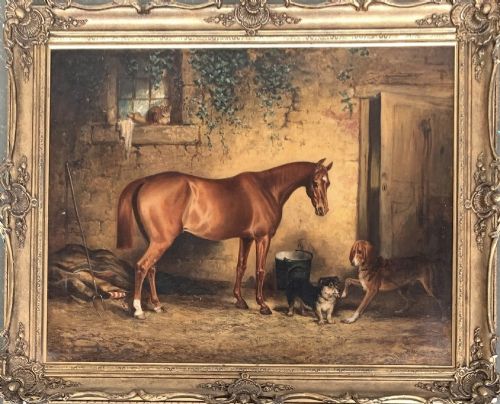
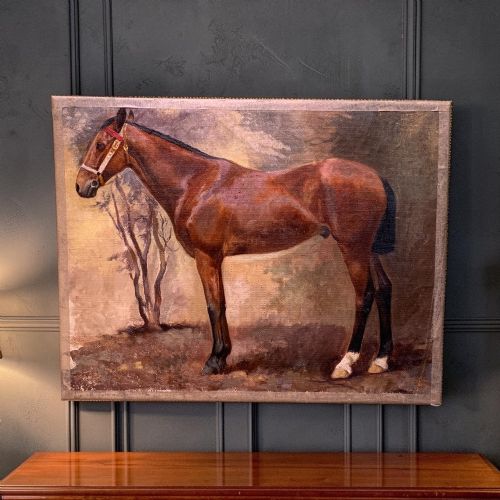
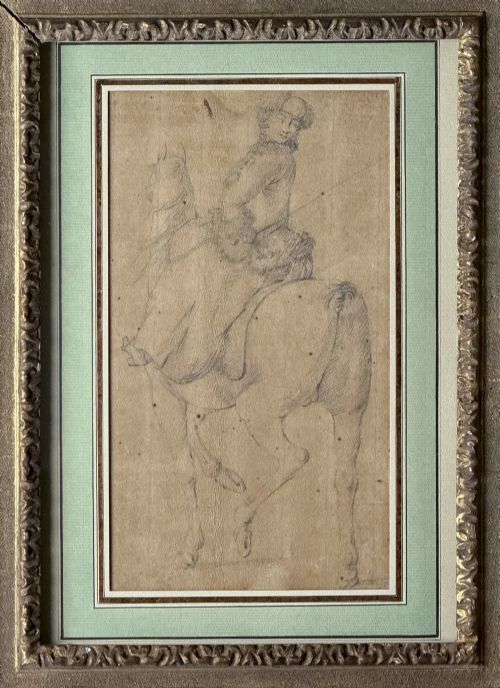
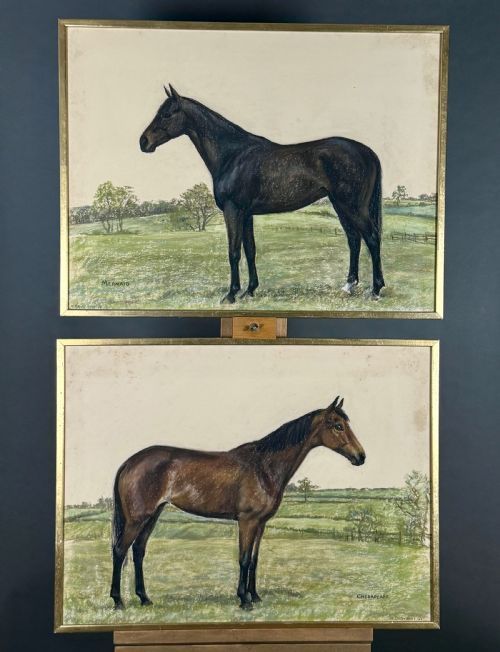
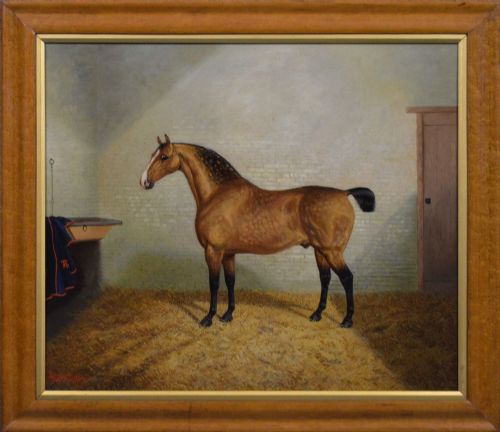
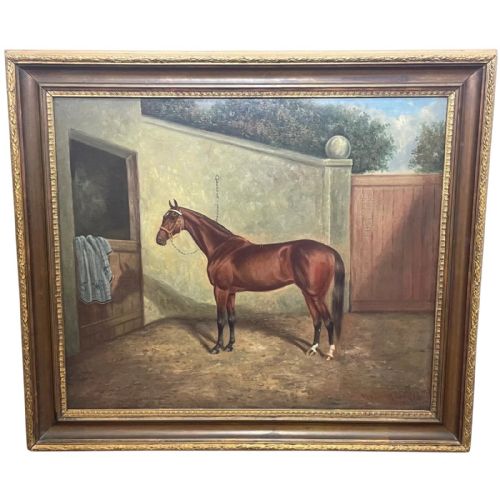
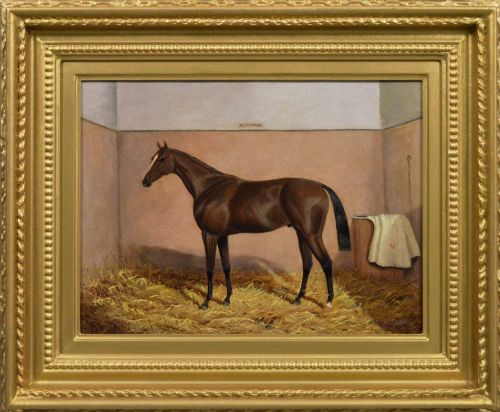
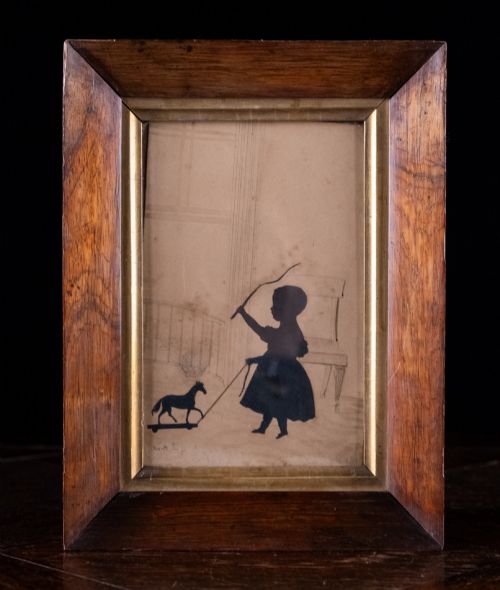
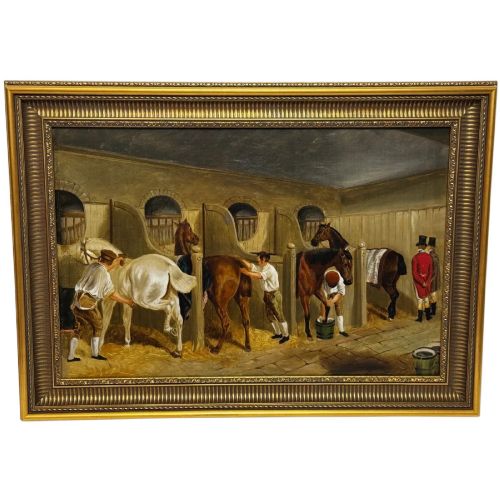
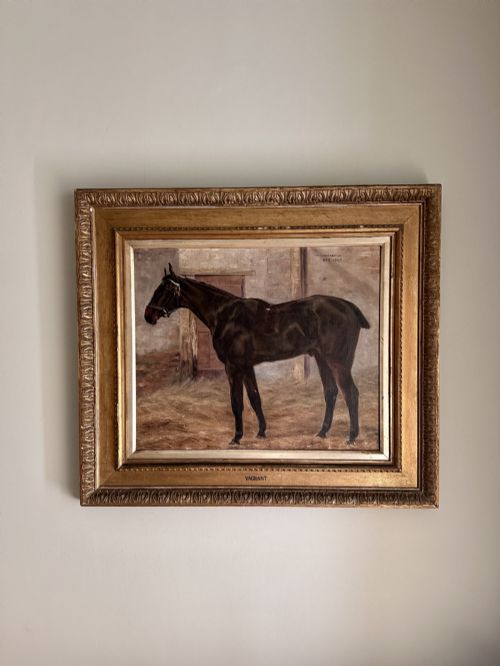
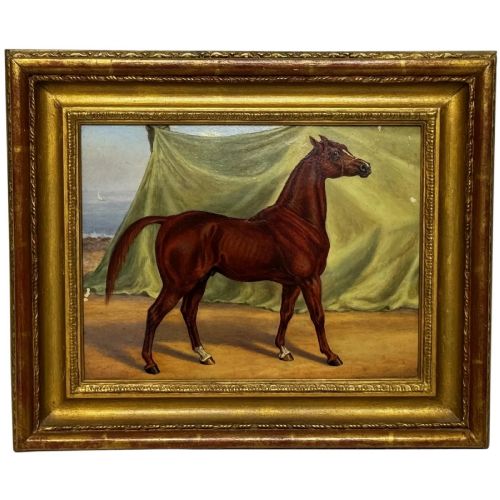
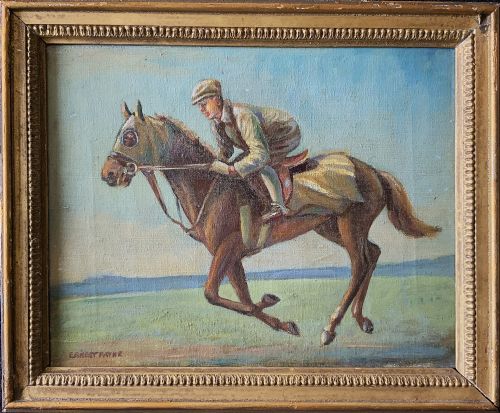
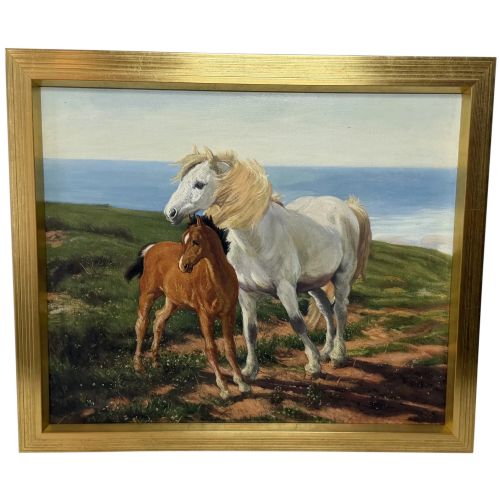
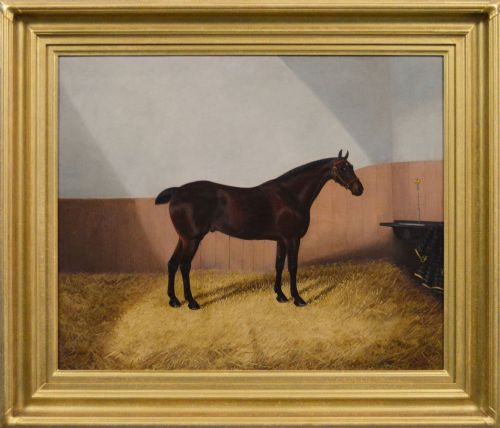
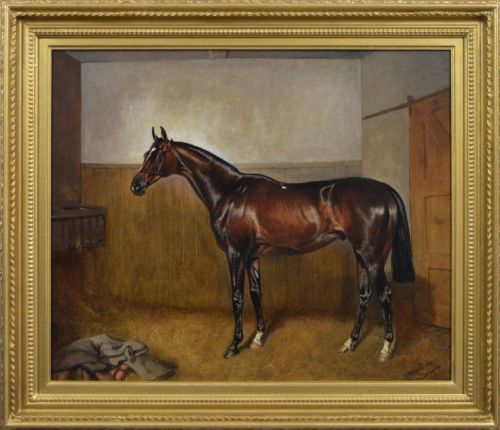
A brown horse portrait focuses on individual equines, ranging from titled racehorses and hunters to stable companions recorded across the eighteenth, nineteenth, and twentieth centuries. These works appear primarily as oil paintings on canvas or panel, alongside watercolours, pastels, and framed drawings.
The tradition encompasses named champions like Spion Kop and Flying Fox alongside anonymous mounts, often rendered in stable interiors, river landscapes, or formal racing settings. Pieces frequently reflect British Sporting Art and Victorian equestrian traditions, documenting prized animals with careful anatomical attention.
Materials and Techniques
Artists built these compositions primarily using oil paint on stretched canvas or wood panels, though works on paper, card, and porcelain wall plaques also occur. Ground layers supported meticulous brushwork that defined muscle structure, glossy coats, and bridle details.
Frames play an integral role in presentation, frequently utilising giltwood or gilt wood moulding that complements the darker tones of the equine subjects. Watercolour and pastel techniques appear in works on paper, allowing for lighter, immediate studies of horses and ponies.
Brown Horse Portrait Retail Price Guide 2026
Typical asking prices for brown horse portrait among the pieces listed under this phrase on Sellingantiques today, from the lower quarter to the upper quarter. They describe what is for sale here now, not the wider market.
Some portraits immortalise horses with surprisingly grumpy expressions, proving that equine individuality has charmed owners for centuries.
Differentiating Quality
Quality rests upon the artist's command of equine anatomy, perspective, and the psychological presence of the animal rather than mere technical neatness. Superior works capture the specific temperament, stance, and conformation of a recognised hunter or racehorse rather than presenting a generic silhouette.
The handling of light across the horse's coat, the depth of the background landscape or stable interior, and the integrity of the original period framing separate masterworks from provincial records.
Henry Barraud·Albert Clark·Augustin Edouart·Fred Fitzpatrick·John Ferneley Senior·Helena Maguire·Ernest Payne·George E Sharpe·Samuel Spode·C W Tuck·Thomas Walker Bretland·John Alfred Wheeler·William Williams
The Brown Horse Portrait Glossary
- Bay
- A coat colour of horses characterised by a reddish-brown body with a black mane, tail, and lower legs. This colouring forms the subject of numerous historical equestrian studies.
- Equestrian Art
- Depictions of horses acting as the primary subject matter across paintings, drawings, and sculptures. This genre flourished in Britain throughout the Georgian and Victorian periods.
- Provenance
- The documented history of ownership of an artwork, tracing its path from the original commission through estates and galleries. Clear provenance often verifies the identity of the horse or the artist.
- Sporting Art
- A genre of painting and illustration dedicated to rural sports, horse racing, hunting, and prized animals. British practitioners established strong regional schools during the eighteenth and nineteenth centuries.
Brown Horse Portrait: Frequently Asked Questions
How do I identify the age of a horse portrait?
Dating relies on stylistic clues, costume details of any handlers or jockeys present, and the construction methods of the canvas stretcher or frame. Period inscriptions on the reverse often provide specific dates or the name of the horse.
Material analysis of the canvas and pigments further supports the era of creation, aligning with the Victorian, Edwardian, or Georgian periods recorded in the evidence.
Were these portraits painted from life?
Many professional equine artists painted commissioned portraits directly from life at the subject's stable or training grounds. Owners frequently hired specialists to record prized racehorses, hunters, and stallions with absolute anatomical accuracy.
Some provincial or retrospective works relied on earlier studies, prints, or specific racing records to commemorate notable winners and estate animals.
What settings typically appear in these paintings?
Common backgrounds include architectural stable interiors, rolling pasture landscapes, river views, and racecourse finish lines. These settings reflect the actual environment of the animal, whether working as a hunter or competing on the turf.
Landscape details often help contextualise the geographic origin and period style of the artwork.
How should I care for an antique oil painting?
Protect oil paintings on canvas from direct sunlight, extreme temperature fluctuations, and high humidity to prevent cracking and warping. Keep the surface free from dust using a soft, dry brush without applying pressure to the paint layer.
Avoid hanging pieces near active heat sources and consult a professional conservator for any cleaning or structural repairs.