






Brown Hardwood Pedestal
A brown hardwood pedestal brings solid timber and carved presence to a room, holding plants, lamps or displays with steady poise.
Brown Hardwood Pedestal
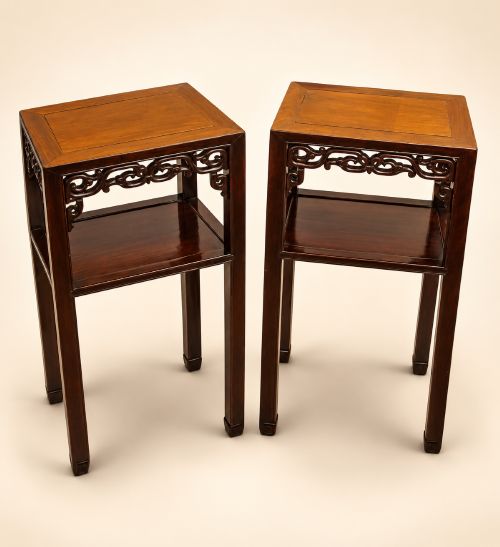
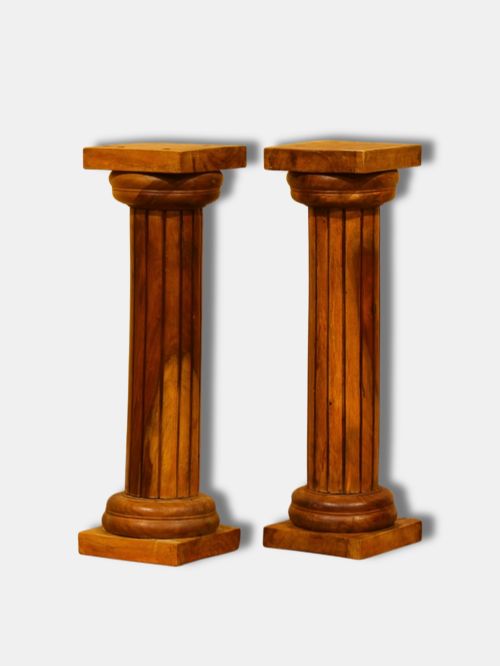
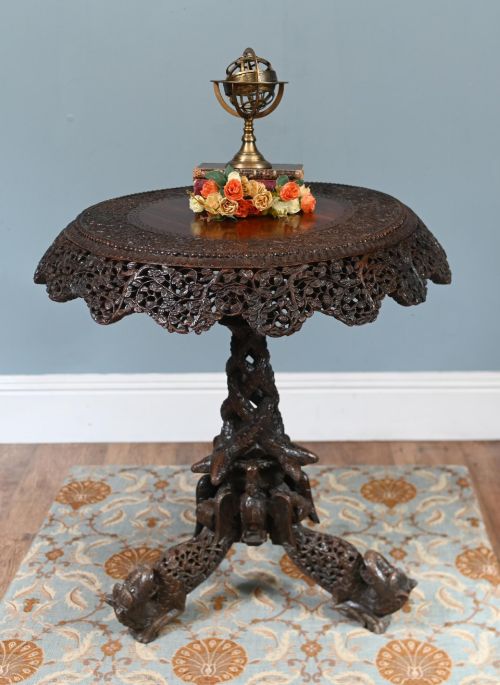
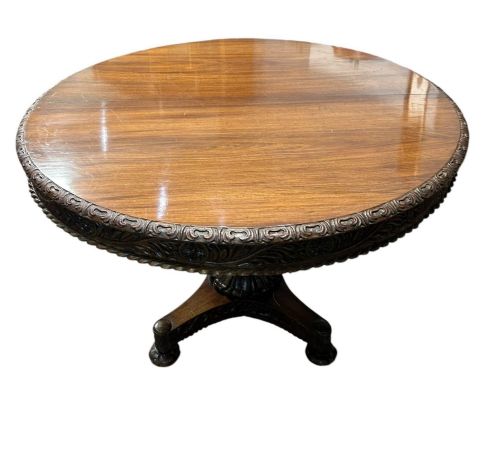
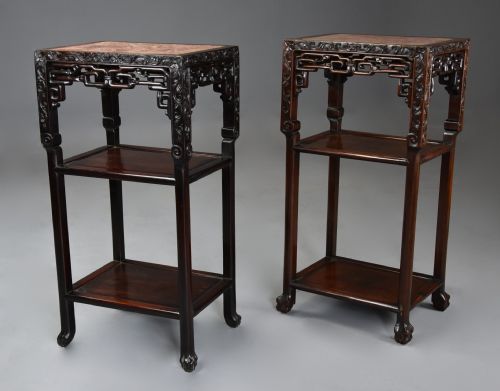
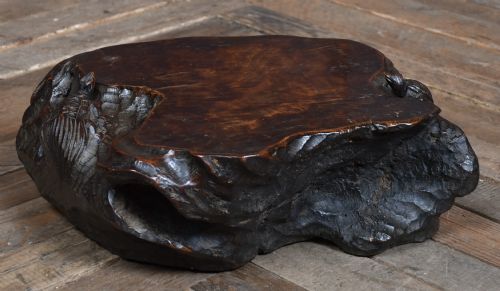
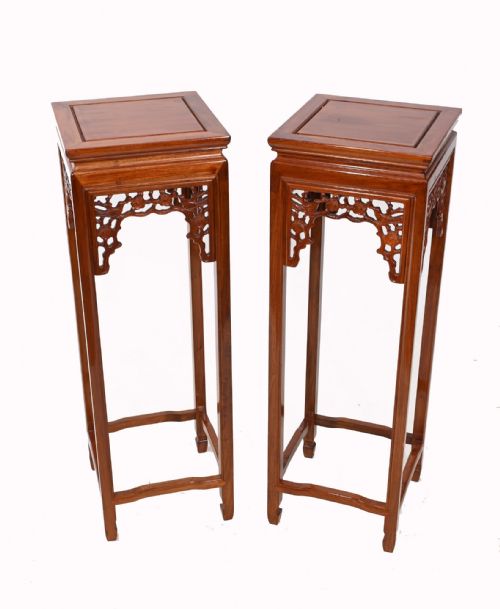
A brown hardwood pedestal encompasses a range of structural and display supports designed to elevate objects or fill interior spaces. The selection on this page centres primarily upon Chinese export furniture, alongside Anglo-Indian, Burmese and French Neoclassical examples.
Most items take the form of small stands, plant supports, jardiniere holders and occasional tables rather than tall architectural columns alone. These objects originate largely across the nineteenth century, stretching from the Victorian era into the early decades of the twentieth century.
Makers utilised dense timbers to create forms intended for practical use and decorative display within domestic interiors. Buyers encounter everything from round dining tables and partner desks to square coffee tables and carved vase stands.
How they were made
Craftsmen built these pieces using dense timbers such as teak, rosewood, elm and huali hardwood, often enhanced by hand-carved relief work depicting natural motifs. Structural integrity relied upon traditional joinery, allowing substantial weight-bearing capacity in relatively compact forms.
Certain examples incorporate contrasting materials, pairing dark wooden frames with inset marble tops or brass detailing to create visual variety and practical surfaces. Hand-carved elements demonstrate significant manual labour, with intricate detailing applied to aprons, legs and borders.
Brown Hardwood Pedestal Retail Price Guide 2026
Typical asking prices for brown hardwood pedestal among the pieces listed under this phrase on Sellingantiques today, from the lower quarter to the upper quarter. They describe what is for sale here now, not the wider market.
Geographic origins represented include Chinese Qing Dynasty workshops, Anglo-Indian colonial cabinetmakers and French neoclassical designers.
What varies in quality
Quality reveals itself through the crispness of the carving and the selection of the timber grain, where superior pieces exhibit deep, clean relief work without softness in the edges. The density and weight of the wood itself dictate longevity and stability, particularly in items designed to support heavy planters or stone tops.
Construction methods also distinguish the range, as well-fitted joints and thoughtful proportions separate workshop pieces from standard utilitarian items. Surface finish plays a role, with finer examples retaining a deep, warm patina developed through the natural ageing of the timber.
The Brown Hardwood Pedestal Glossary
- Huali hardwood
- A fragrant and dense Asian timber prized by traditional furniture makers for its rich colour and fine grain. It forms the basis of many high-status Qing Dynasty stands.
- Jardiniere
- A large ornamental pot or container for plants, which required sturdy dedicated stands to hold its weight safely. These stands often feature inset marble tops to protect the wood from moisture.
- Torchiere
- A tall stand or floor lamp designed to hold a light source or decorative object high above the ground. In wooden furniture, it translates to an elongated column or pedestal.
- Neoclassical
- A style drawing inspiration from classical antiquity, featuring symmetrical lines, column forms and restrained ornamentation. French examples from the twentieth century frequently adopt this vocabulary.
Brown Hardwood Pedestal: Frequently Asked Questions
What is a brown hardwood pedestal used for?
These pieces serve primarily to elevate items such as ceramic planters, vases, lamps or decorative objects within a room. Their sturdy construction also allows them to function as small occasional tables for daily use.
Historically, they provided a designated focal point for prized possessions, lifting them off the floor to showcase craftsmanship and material quality. Today, they integrate easily into various interior schemes as functional accent furniture.
How do I date a nineteenth-century pedestal?
Dating relies upon examining the timber characteristics, tool marks left by manufacture, and stylistic conventions associated with specific periods. Nineteenth-century pieces often show hand-finishing details and regional carving motifs that shift from Victorian influences toward Qing Dynasty or colonial styles.
Comparing the joinery methods and the type of secondary woods used underneath can further narrow down the decade of production. Documentation or family provenance sometimes aids in establishing a precise timeline.
Are these pedestals strong enough for heavy plants?
Dense timbers such as teak, padauk and huali provide exceptional structural strength capable of supporting heavy loads. Many stands were originally engineered precisely to bear the weight of large ceramic planters filled with damp earth.
Buyers should inspect the specific joinery and leg configuration of individual pieces to ensure stability under weight. Most nineteenth-century examples remain remarkably solid due to the superior density of the wood.
How do I care for antique hardwood furniture?
Maintaining these pieces involves keeping them away from direct heat sources and rapid humidity changes that can cause timber to split. Regular dusting with a soft, dry cloth preserves the surface without building up chemical residues.
Periodically applying appropriate natural waxes helps nourish the wood and maintain its deep patina. Avoid using modern silicone-based polishes which can permanently alter the finish of antique surfaces.