




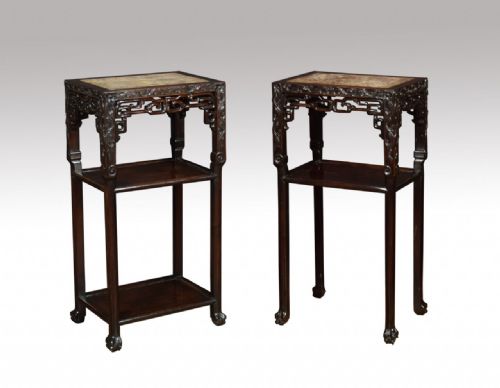


Pair Chinese Pedestal Tables
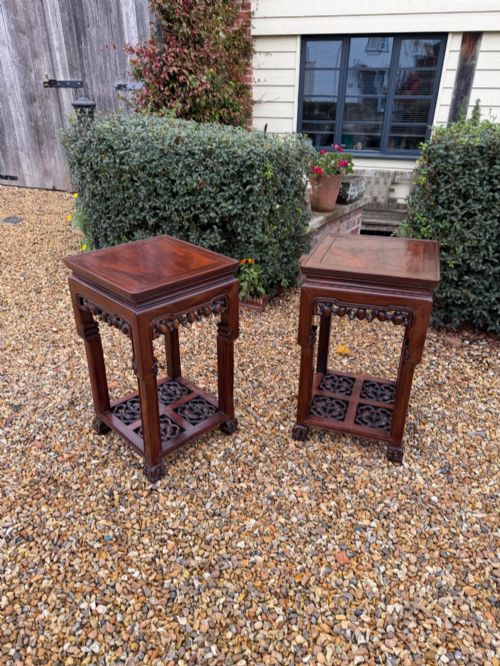
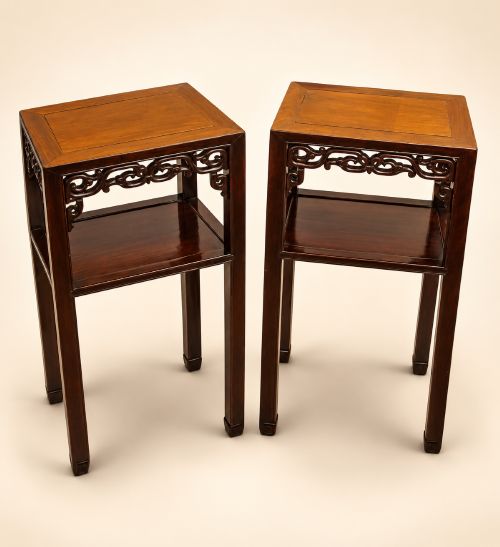
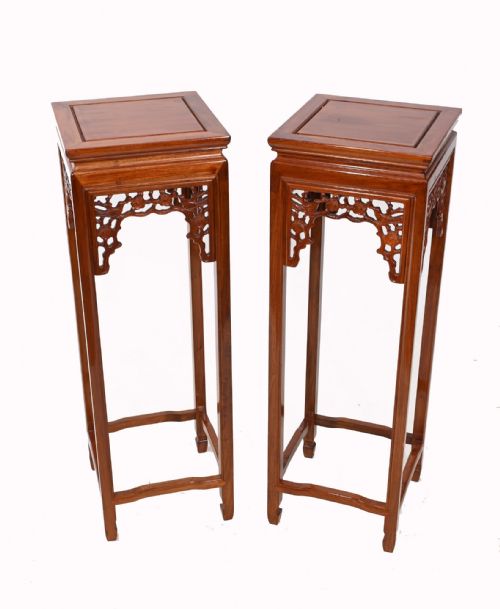
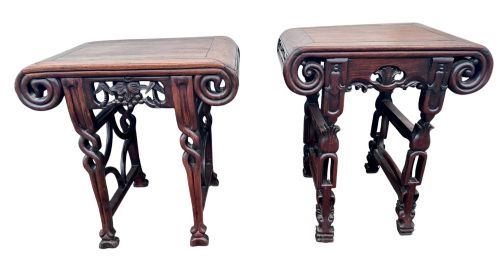
Pair Chinese pedestal tables bring architectural presence and dense timber grain to a room, functioning as versatile supports for plants, lamps or urns.
Pair Chinese Pedestal Tables
When searching for pair chinese pedestal tables, buyers encounter matching pairs of freestanding hardwood furniture primarily originating from the nineteenth century, including the Qing Dynasty and Republic periods.
The dominant forms on this page include plant stands, pot stands, urn stands, and occasional side tables, often utilised to elevate decorative objects within a traditional or eclectic interior scheme.
Most examples hail from the late nineteenth century, reflecting periods such as 1890 and 1900, alongside occasional Victorian-era imports and later 1920 productions designed for Western export markets.
Materials and construction
Carpenters constructed these items using dense timbers such as huali wood, rosewood, padouk, and general Asian hardwoods, selected for their structural strength and rich natural colouration.
Many surfaces incorporate inset rouge marble tops or polished stone panels, contrasting smoothly against carved wooden frames that frequently employ traditional joinery without relying on metal fasteners.
Surface decoration extends to mother-of-pearl inlay, brass accents, lacquered finishes, and intricate hand-carved floral or geometric motifs typical of Chinese export and Qing Dynasty traditions.
Pair Chinese Pedestal Tables Retail Price Guide 2026
Typical asking prices for pair chinese pedestal tables among the pieces listed under this phrase on Sellingantiques today, from the lower quarter to the upper quarter. They describe what is for sale here now, not the wider market.
Factors of quality
The primary distinction between standard examples and superior pieces lies in the crispness of the hand-carving and the structural integrity of the dense hardwood frame.
The selection and fitting of inset marble panels significantly influence the overall standard, particularly where the stone exhibits rich natural veining and sits flush within the timber surround.
Consistency between the two items defines a successful pair, ensuring that matching proportions, timber grain, and decorative motifs align harmoniously across both stands.
The Pair Chinese Pedestal Tables Glossary
- Huali wood
- A fragrant and durable Asian hardwood prized for its decorative grain and strength in Qing Dynasty furniture. It provides a stable foundation for intricate hand-carving.
- Rouge marble
- A deep reddish ornamental stone frequently used for inset tops on nineteenth-century urn and plant stands. It offers a cool, smooth surface that contrasts with dark timber.
- Padouk
- A heavy, reddish-brown tropical timber utilised in traditional Chinese furniture making. Its dense cellular structure permits sharp detailing during the carving process.
- Jardiniere
- A large decorative pot or planter designed to hold growing plants. These stands frequently support such vessels within interior settings.
- Qing Dynasty
- The final imperial dynasty of China, spanning from the seventeenth to the early twentieth century. Objects from its later decades dominate the carved hardwood market.
Pair Chinese Pedestal Tables: Frequently Asked Questions
What were these tables originally used for?
These tables served primarily as elevated platforms for heavy decorative items, including large porcelain fishbowls, bronze urns, flowering plants, and scholar's rocks.
In traditional interiors, lifting objects off the floor protected them from dampness while drawing the eye to prized artistic possessions.
How do I care for antique hardwood tables?
Maintain the timber by dusting regularly with a soft, dry cloth and avoiding placement near direct heat sources or strong sunlight, which can dry out the natural grain.
Treat the polished surfaces occasionally with appropriate wax to preserve the depth of colour and protect the timber from atmospheric moisture.
How do I distinguish nineteenth-century pieces?
Nineteenth-century items typically display the heavy weight, deep hand-carving, and dense tropical hardwoods characteristic of Qing Dynasty workshops and export production.
Examine the underside and joints for traditional pegged construction and timber shrinkage appropriate to age rather than modern mechanical fastenings.
Can these support modern lamps and heavy items?
The dense hardwoods and sturdy pedestal construction provide exceptional load-bearing capacity suitable for modern table lamps, heavy ceramics, and large decorative vessels.
Ensure that the base of your object sits evenly across the top surface, particularly on marble-inset designs, to maintain proper balance.