







Pair Hardwood Plant Tables
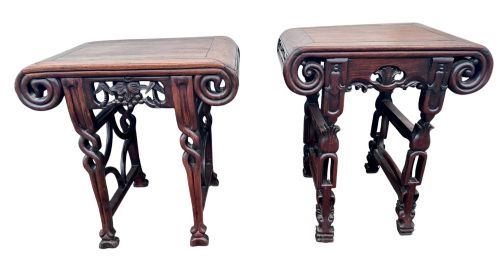
Pair hardwood plant tables are heavy timber display surfaces raised on slender legs, designed to elevate urns and pots in nineteenth-century interiors.
Pair Hardwood Plant Tables
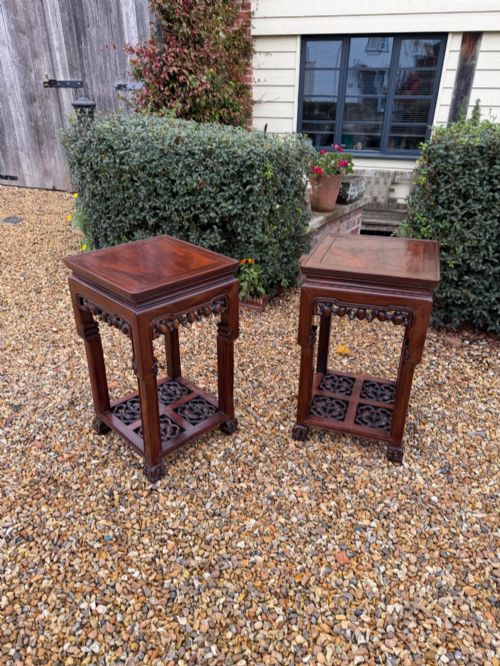
Pair hardwood plant tables emerge primarily from nineteenth-century Chinese workshops alongside occasional Anglo-Indian interpretations. Buyers frequently encounter matched pairs functioning as side tables, jardiniere supports, and occasional stands.
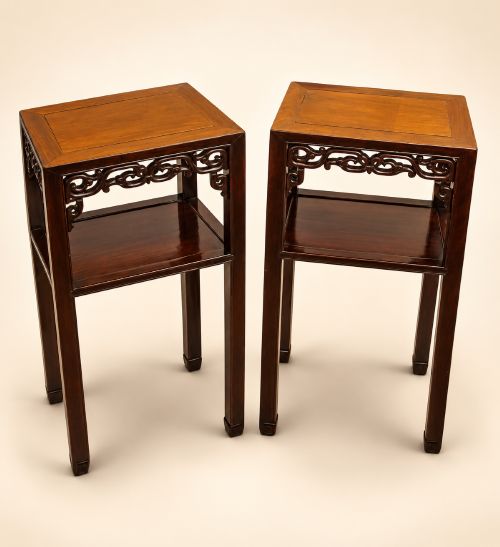
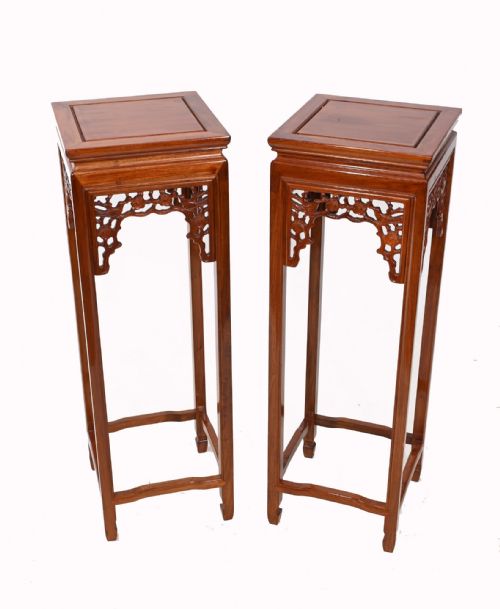
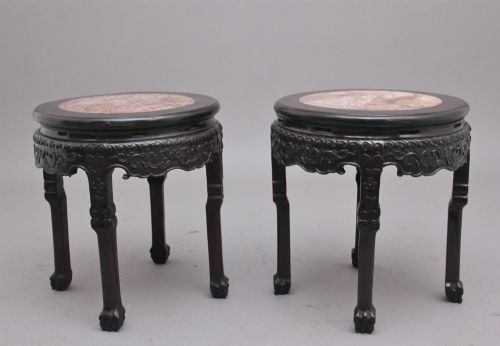
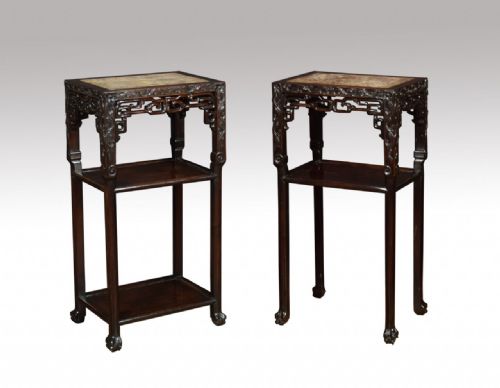
The dominant forms span low pot stands, tall pedestal stands, and two-tier tables. Many feature shaped tops designed to accommodate ceramic vessels, marble inserts, or porcelain panels.
The materials and styles cross Qing Dynasty traditions and export variations. These pieces serve contemporary rooms as sculptural pedestals for plants, lamps, and decorative objects.
Materials and construction
Carpenters utilised dense tropical timbers including huali wood, hongmu, rosewood, padouk, and general hardwood. These heavy woods provided the structural integrity required to support weighty marble tops and ceramic urns.
Carving and joinery defined the production process, often integrating mother-of-pearl inlay, lacquer finishes, and inset porcelain panels. Artisans shaped frames into geometric or floral motifs reflective of traditional Asian joinery.
Pair Hardwood Plant Tables Retail Price Guide 2026
Typical asking prices for pair hardwood plant tables among the pieces listed under this phrase on Sellingantiques today, from the lower quarter to the upper quarter. They describe what is for sale here now, not the wider market.
Some nineteenth-century artisans carved camels into the timber frames.
Judging quality in construction and material
Quality rests in the density of the timber and the crispness of the hand-carving. Dense rosewood and huali wood retain structural stability far better than softer substitute timbers.
The integration of inset elements, such as rouge marble tops or porcelain panels, dictates the tier of the piece. Superior examples display seamless joins between stone and timber, alongside deep, undercut carving rather than shallow surface moulding.
The Pair Hardwood Plant Tables Glossary
- Huali wood
- A fragrant and durable Asian hardwood prized for its rich grain. It appears frequently in Qing Dynasty furniture.
- Hongmu
- A category of dense, dark tropical hardwoods utilised for traditional Chinese tables and stands. The term translates to red wood.
- Jardiniere
- An ornamental pot or stand for holding plants or flowers. These items often sat atop nineteenth-century pedestal stands.
- Padouk
- A heavy, durable timber exhibiting reddish hues. It forms the structure of various export stands.
- Qing Dynasty
- The final imperial dynasty of China, spanning from sixteen-forty-four to nineteen-twelve. Pieces from this era often feature elaborate carved motifs.
Pair Hardwood Plant Tables: Frequently Asked Questions
How were pair hardwood plant tables used historically?
These tables served primarily to elevate heavy porcelain urns, jardinieres, and decorative plants within formal reception rooms. Their sturdy timber construction supported the considerable weight of water and soil.
Over time, owners also utilised them as lamp tables or occasional surfaces in domestic settings.
What woods appear in these plant tables?
Makers utilised dense tropical timbers such as huali wood, hongmu, rosewood, and padouk. These heavy materials offered the necessary strength for intricate carving.
Some examples also incorporate ebonised finishes, lacquer work, and mother-of-pearl detailing.
How do I identify a nineteenth-century piece?
Nineteenth-century examples display traditional Chinese joinery methods and dense tropical hardwoods without modern adhesives. Look for hand-carved detailing and patination accumulated over decades of use.
Periods often correspond to the Qing Dynasty, incorporating specific regional carving styles from that era.
Can these tables hold heavy modern planters?
The dense hardwoods employed in these tables provide substantial weight-bearing capacity. Rosewood and huali wood structures easily support heavy ceramic pots and stone urns.
Care should be taken to protect vulnerable marble or wood surfaces from moisture damage using suitable coasters.