


Brown Hardwood Console Table
A brown hardwood console table brings centuries of global craftsmanship and architectural timber into a room.
Brown Hardwood Console Table
A brown hardwood console table encompasses narrow serving surfaces, altar tables, and wall-anchored ledges designed for domestic and ceremonial interiors. When searching for a brown hardwood console table, buyers frequently encounter traditional Chinese forms, including altar tables and trestle tables dating from the eighteenth and nineteenth centuries.
Materials and construction
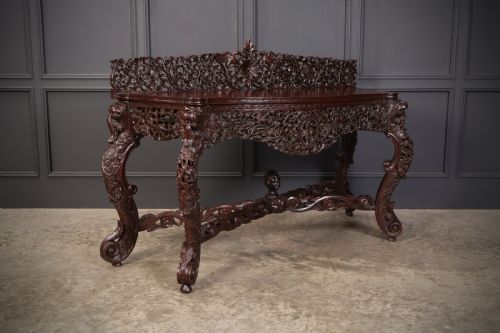
Workshops utilised dense timbers such as padauk, mahogany, satinwood, teak, and elm, often carved with intricate motifs like dragons or foliage. Joinery relied on precise interlocking joints rather than metal fasteners, allowing the heavy hardwood components to remain stable over generations.
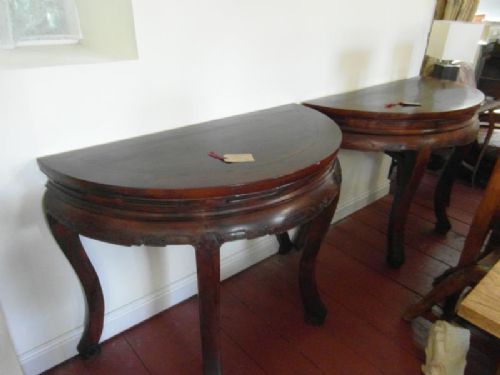
Surface treatments ranged from plain plank tops to elaborate Chinoiserie carvings, sometimes complemented by inlaid bone or glass elements. Craftsmen shaped these materials into corner tables, demi lune consoles, and centre tables using traditional hand tools.
Current listings feature hardwood, elm, padauk, mahogany, satinwood, teak, and bone across nineteenth-century and early twentieth-century periods.
Judging the execution
Quality rests in the crispness of the carving and the selection of the timber, where dense grain patterns and uniform colour command greater respect. Pieces exhibiting precise joinery and well-balanced proportions demonstrate superior workshop execution compared to simpler, coarser variants.
The integrity of the original surface finish and the depth of relief work on panels or legs distinguish masterworks from utilitarian items. A well-preserved piece retains its structural rigidity and the subtle tool marks left by nineteenth-century carvers.
The Brown Hardwood Console Table Glossary
- Console table
- A table designed to stand against a wall, frequently supported by brackets or legs that emphasise its frontal display.
- Altar table
- A rectangular table originating from Chinese domestic and temple use, characterised by protruding ends and recessed legs.
- Demi lune
- A half-moon shape used for console tables designed to sit flush against a wall.
- Padauk
- A heavy, durable tropical hardwood with a reddish-brown tone frequently utilised in colonial and oriental furniture.
- Chinoiserie
- European artistic style reflecting Chinese motifs and decorative techniques, applied to furniture and interiors.
Brown Hardwood Console Table: Frequently Asked Questions
Where should I place a console table?
These narrow tables suit entrance hallways, living room perimeters, and dining spaces where floor space is limited. Their shallow depth allows them to sit against walls without obstructing thoroughfares.
Positioning them beneath mirrors or artwork creates a balanced focal point in a room. They also function well as serving surfaces during gatherings.
How do I care for hardwood furniture?
Keep hardwood pieces away from direct heat sources and strong sunlight to prevent the timber from drying out or splitting. Dust regularly with a soft, dry cloth rather than using silicone-based polishes.
Occasional applications of beeswax nourish the grain and preserve the natural sheen of the timber. Handle carved elements gently during cleaning to avoid catching delicate edges.
What is an altar table?
An altar table is a traditional form featuring a long, narrow rectangular top, often with upturned flanges at the short ends. Originally used in temples and ancestral halls, these tables held ceremonial objects.
In modern interiors, their elevated height and slender proportions make them practical display surfaces. They combine architectural presence with functional storage space.
How do I identify Qing Dynasty pieces?
Qing Dynasty furniture often displays deep, intricate carvings of dragons, foliage, or symbolic motifs executed in dense tropical hardwoods. These pieces frequently show traditional joinery methods without modern metal fasteners.
Examining the underside and interior reveals the hand-worked nature of the timber and period construction techniques. The patination developed over centuries gives the wood a deep, rich tone.