
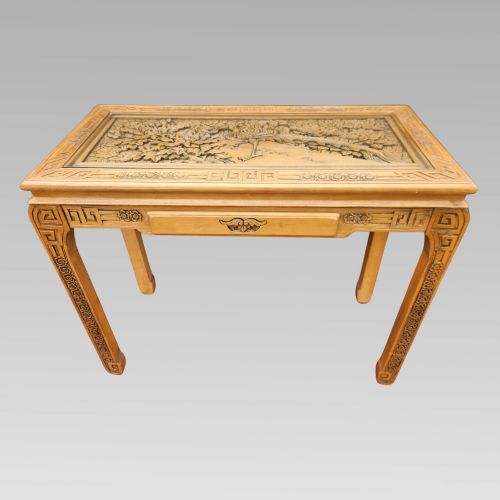


Antique Chinese Altar Desk
An antique chinese altar desk brings architectural presence into a room, offering striking proportions and centuries of craftsmanship.
Antique Chinese Altar Desk
An antique chinese altar desk encompasses versatile forms ranging from console tables and side tables to writing desks and trestle tables. These pieces originate predominantly from the nineteenth century, including specific dates across the eighteen hundreds and early twentieth century. Buyers seeking this search phrase frequently encounter console tables and side tables adapted from traditional temple or domestic furnishings.
The aesthetic bridges formal architectural styles and provincial utility, reflecting Qing dynasty influences and traditional Chinese woodworking. Forms vary from simple plank-top trestle tables to multi-drawer console variations designed for practical use. The selection reflects diverse regional outputs spanning classic altar styles to everyday writing desks.
How they were made
Construction relies heavily on elm and various hardwoods, frequently complemented by structural pine and decorative lacquer. Artisans utilised durable joinery techniques to build stable frames without relying on modern fasteners, accommodating natural wood movement over decades of use.
Surface finishes include traditional lacquered wood alongside exposed hardwood grains, occasionally accented with brass or other metal hardware. Certain examples incorporate marble inserts or feature plank-top constructions designed to support heavy ceremonial objects or daily writing tasks.
These tables often kept their flanged ends so ancestral offerings wouldn't slide off during sacred rituals.
What varies in quality
Quality rests upon the selection of timber, where dense hardwoods and figured elm command greater appreciation than softer pine foundations. The integrity of the original joinery and the subtlety of proportion distinguish refined scholarly pieces from utilitarian provincial items.
The preservation of original lacquer finishes and authentic metal mounts significantly influences the character of each piece. Superior examples exhibit harmonious balance in their altar-style proportions and restraint in decorative carving.
The Antique Chinese Altar Desk Glossary
- Altar table
- A traditional Chinese table featuring upturned flanged ends, originally utilised for ceremonial offerings in temples or domestic halls. These forms now serve as striking console surfaces in contemporary interiors.
- Elm
- A resilient hardwood favoured by Chinese cabinetmakers for its fibrous grain and structural stability. It patinates richly over centuries of handling.
- Plank-top
- A table construction method utilising wide boards joined to create a solid working surface. This technique provides the characteristic expansive top seen on trestle tables.
- Qing dynasty
- The final imperial dynasty of China, spanning from sixteen forty-four to nineteen twelve. Furniture from this era encompasses both courtly refinements and diverse regional provincial styles.
- Trestle table
- A table design supported by end assemblies rather than four individual corner legs. This configuration allows greater legroom and structural rigidity.
Antique Chinese Altar Desk: Frequently Asked Questions
How were these tables used originally?
Originally, these tables functioned as elevated platforms for ancestral tablets, ritual vessels, or ceremonial offerings within domestic halls and temples. Trestle and altar variations also supported scholars while reading, painting, or writing.
Over time, many forms transitioned into domestic reception rooms for display purposes. Their sturdy construction easily accommodated heavy decorative objects and everyday utility.
What materials should I expect to find?
The primary materials recorded in these pieces include elm and various dense hardwoods, alongside secondary structural woods like pine. Surfaces frequently feature traditional lacquer finishes or show the natural grain of the timber.
Metal fittings, including brass mounts and drawer pulls, appear on functional writing desks and console tables. Occasional examples incorporate marble panels within the wooden framework.
How do I date a Chinese elm table?
Dating relies upon examining construction methods, timber patination, and stylistic markers associated with the nineteenth century and the early nineteen hundreds. Traditional joinery without modern iron nails usually indicates significant age.
Wear patterns around foot rails and drawer handles provide clues regarding long-term domestic use. Comparing the proportions to documented Qing dynasty and provincial styles helps clarify the period.
How do I style an altar table at home?
An altar table works exceptionally well against a hallway or living room wall as a console, displaying ceramics, lamps, or books. Their slender profiles ensure they do not dominate smaller circulation spaces.
Pairing the dark hardwood or lacquered elm with neutral walls allows the sculptural lines to stand out. They bridge traditional and contemporary interiors through their clean, architectural silhouettes.