

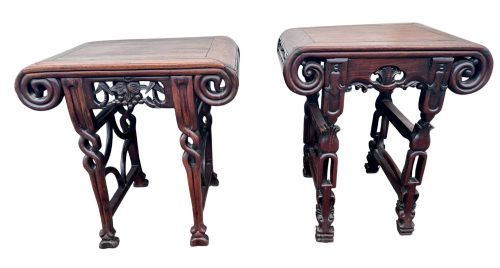


Carved Scroll End Table
A carved scroll end table brings striking lines and historic craftsmanship into a room, offering both surface utility and distinct sculptural character.
Carved Scroll End Table
A carved scroll end table is a distinctive form spanning multiple centuries and global traditions, uniting functional surface utility with expressive, curved terminals. When you examine a carved scroll end table on this page, you encounter pieces that range from English and Irish Regency designs to Italian neoclassical works and Chinese Qing Dynasty kang or opium tables.
The selections available here cover diverse object types functioning as side tables, occasional tables, coffee tables, bedside tables, centre tables, console tables, and altar tables. Materials span hardwood, rosewood, burr oak, burr walnut, ash, and painted woods, often enhanced with brass, gold leaf, and silver gilt.
Dating across the nineteenth century into the early twentieth century, these pieces reflect distinct regional aesthetics. You find English country examples alongside Asian hardwood forms and elaborate Italian tables featuring carved dolphins.
Materials and construction methods
Makers utilised dense timbers such as rosewood, burr oak, burr walnut, and various Asian hardwoods to ensure structural integrity and a fine grain for carving scroll terminals. These woods were shaped and joined using traditional cabinetmaking techniques suited to low kang tables, tall altar consoles, and occasional side tables.
Surface ornamentation involved intricate hand carving, occasionally combined with paint, gold leaf, and silver gilt highlights to accentuate the sculptural scroll ends. Brass mounts and stretcher frames provided additional reinforcement and decorative contrast across nineteenth-century and early twentieth-century examples.
Listings feature woods including rosewood, burr oak, burr walnut, ash, and hardwood alongside painted and gilded surfaces.
Evaluating quality and execution
Quality in these tables rests upon the crispness and depth of the hand carving, particularly along the scroll ends and structural mounts. Fine execution shows purposeful grain selection in rosewood, burr oak, or walnut, where the natural figures of the timber complement the carved forms rather than compete with them.
Proportion and joinery dictate the standing of a piece, distinguishing robustly constructed altar and centre tables from lighter occasional forms. The integration of decorative elements like gold leaf or gilt must appear harmonious with the underlying wood to signify superior craftsmanship.
Whytock and Reid·George Smith
The Carved Scroll End Table Glossary
- Kang table
- A low Chinese table traditionally used on a heated brick bed or kang for dining, writing, or serving tea. These pieces frequently feature carved scroll ends.
- Occasional table
- A small, versatile table intended to be moved about a room as needed for lamps, drinks, or display. They appear across Regency and later periods in rosewood and mahogany.
- Gilt
- A thin layer of gold applied to wood or other surfaces through leaf or powder methods. It creates a reflective decorative finish seen on Italian and twentieth-century tables.
- Stretcher
- A horizontal member connecting the legs of a table to provide structural stability. Burr oak and hardwood examples often utilise stretchers for extra support.
- Altar table
- A tall, narrow console table originating from Chinese domestic and temple architecture. They often display elegant proportions and scroll-ended top surfaces.
Carved Scroll End Table: Frequently Asked Questions
What is a scroll end table?
A scroll end table is a low or standard-height surface defined by curled or voluted terminals at either end of the top board. These designs appear across both European decorative arts and Asian furniture traditions.
Such forms include Chinese kang or opium tables, English occasional tables, and Italian console tables, all sharing the distinctive sweeping profile at the ends.
How do I date a rosewood occasional table?
Dating a rosewood occasional table involves examining the joinery methods, timber preparation, and stylistic cues of its period. Nineteenth-century examples often exhibit hand-cut joints and dense, heavy tropical hardwoods selected for their rich grain.
Comparing the carved scroll details and leg configurations against documented Regency or Victorian designs helps narrow the manufacturing window.
Where should I place a carved side table?
A carved side table functions effectively beside seating furniture or against a wall to display decorative objects and lamps. Their sculptural scroll ends make them suitable for focal points in living rooms or studies.
Matching the scale of the table, whether a low Asian kang form or a taller European occasional piece, ensures it integrates smoothly with existing interior layouts.