





Chinese Square Side Table
These Chinese square side table pieces offer sturdy timber construction and balanced proportions, bringing traditional craftsmanship and enduring utility to any interior scheme.
Chinese Square Side Table
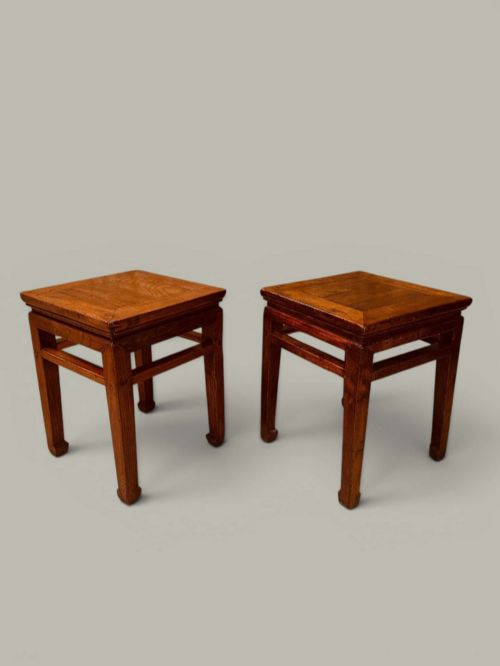
A Chinese square side table provides a compact surface area, typically appearing in forms such as low tables, occasional tables, coffee table stands, and pedestal stands. These items emerge from the nineteenth century, including specific dates around eighteen eighty, eighteen ninety, nineteen hundred, and nineteen ten.
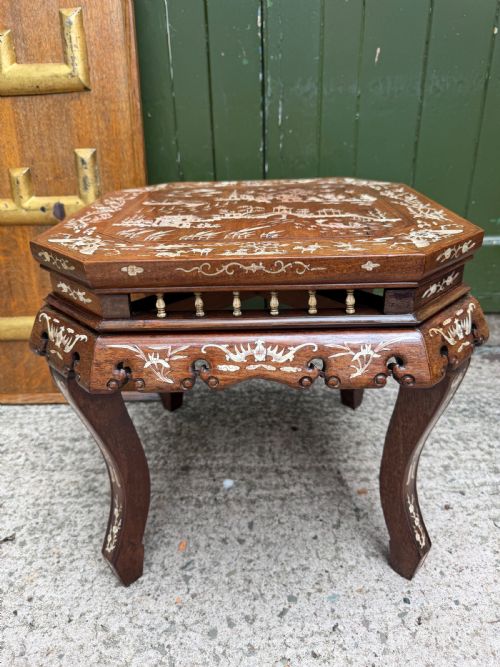
The aesthetic bridges several related categorisations, encompassing Qing Dynasty, Chinese traditional, Chinese Qing style, and Chinoiserie. Buyers encounter matching pairs and individual pieces utilised across various historical interior contexts.
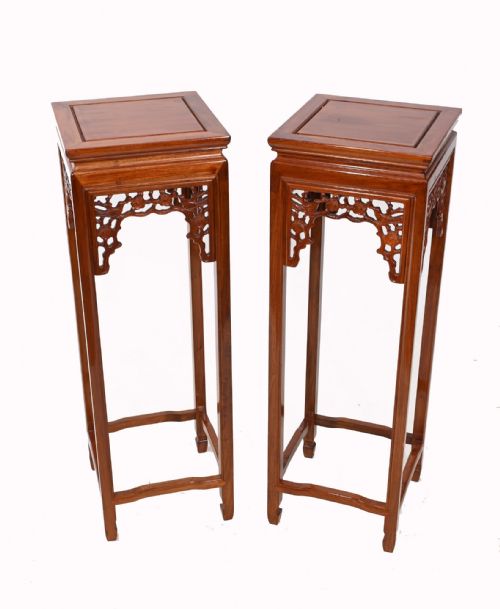
Object types stretch beyond basic surfaces into plant stands, pedestal stands, stools, and centre tables. Hardwood forms dominate the selection, often incorporating inset marble panels or carved structural elements.
Materials and construction methods
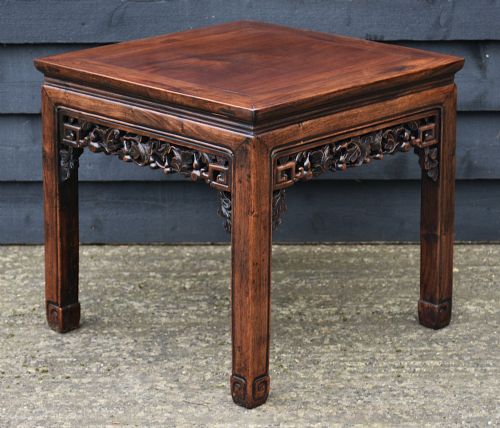
Construction relies heavily on dense timbers, specifically rosewood and hongmu, alongside general hardwood and carved hardwood. Workshops utilised these heavy woods to achieve rigid, durable frames capable of supporting stone inserts.
Selected examples integrate marble tops or painted wood surfaces within the structural framework. Carving techniques appear on late nineteenth century two-tier tables and plant stands, showing traditional joinery methods without metal fixings.
Chinese Square Side Table Retail Price Guide 2026
Typical asking prices for chinese square side table among the pieces listed under this phrase on Sellingantiques today, from the lower quarter to the upper quarter. They describe what is for sale here now, not the wider market.
Some nineteenth century makers thoughtfully ensured their plant stands could double as impromptu seating for very small, very patient emperors.
Assessing quality and craftsmanship
Superior examples display crisp, purposeful carving on the hardwood frame and tighter grain patterns in the rosewood or hongmu timber. The integration of inset marble panels demands precise fitting, where lesser examples show uneven clearances or simpler timber selection.
Proportion and structural integrity separate standard utility tables from finer decorative stands. Well-preserved surfaces retain the natural depth of the wood, whereas heavier restoration or surface wear alters the original finish.
The Chinese Square Side Table Glossary
- Hongmu
- A dense, dark hardwood utilised in traditional Chinese furnituremaking. This heavy timber is prized for its strength and rich natural colour.
- Rosewood
- A heavily grained, durable hardwood favoured for fine low tables and stands. Its natural stability allows for intricate carving.
- Qing Dynasty
- The final imperial dynasty of China, spanning from sixteen forty-four to nineteen twelve. Pieces from this era often feature traditional motifs and refined proportions.
- Chinoiserie
- Western interpretation and imitation of Chinese artistic traditions and motifs. This style influenced decorative arts across European and Asian interior schemes.
- Pedestal Stand
- A tall, narrow support table designed for display purposes. These objects frequently accommodate vases, plants, or decorative items.
Chinese Square Side Table: Frequently Asked Questions
What is a Chinese square side table used for?
These pieces serve as functional surfaces for lamps, decorative objects, or tea service within a room. Their compact square footprint allows them to fit neatly beside seating or in corners.
Taller variants function as plant stands or pedestal supports for display items. Their sturdy timber construction ensures they handle daily use reliably.
How do I identify a Qing Dynasty table?
Identification relies on observing traditional joinery methods, dense timber usage, and specific stylistic markers. Nineteenth century pieces often incorporate carved details and heavy hardwoods like hongmu or rosewood.
Comparing the proportions and surface wear against documented examples helps confirm the period. Inset marble panels and traditional framing are common indicators.
Are these tables sturdy enough for daily use?
The dense hardwoods utilised in these tables provide considerable structural strength and weight. Rosewood and hongmu resist standard daily wear effectively when maintained properly.
Care should be taken with marble-inset surfaces to avoid heavy impact. Regular dusting and appropriate placement away from direct heat sources preserve the timber.
What is the difference between a low table and a plant stand?
Low tables offer a broad, low surface intended for seating areas or central placement. They provide stability and ample tabletop space for everyday objects.
Plant stands feature a taller, narrower elevation designed to lift decorative items off the floor. Their proportions focus on vertical display rather than surface area.