
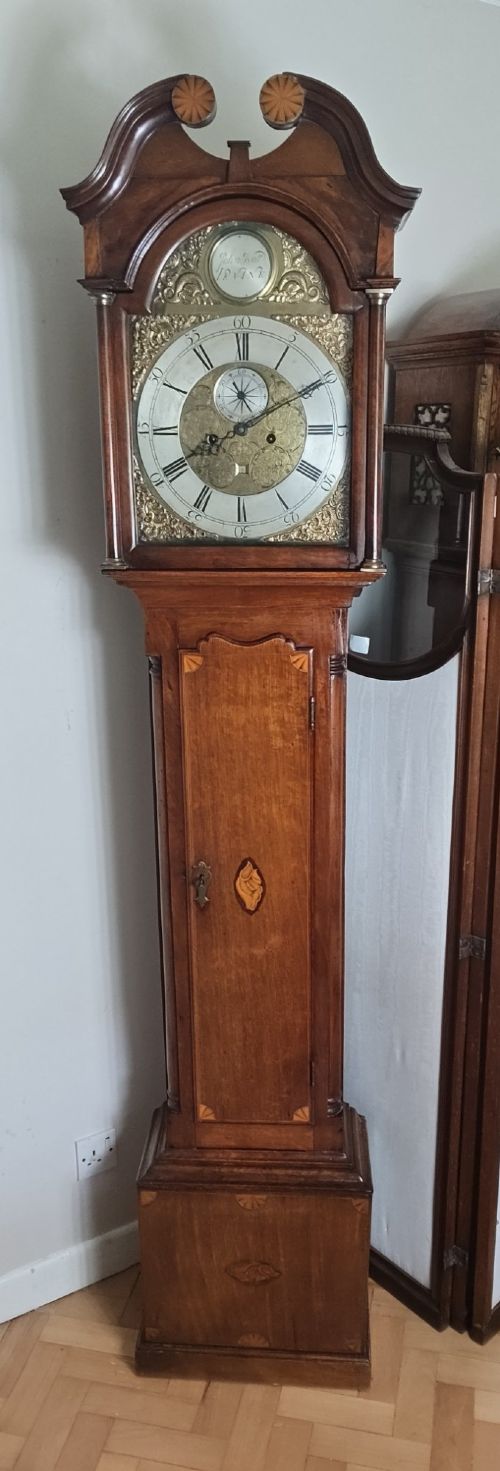
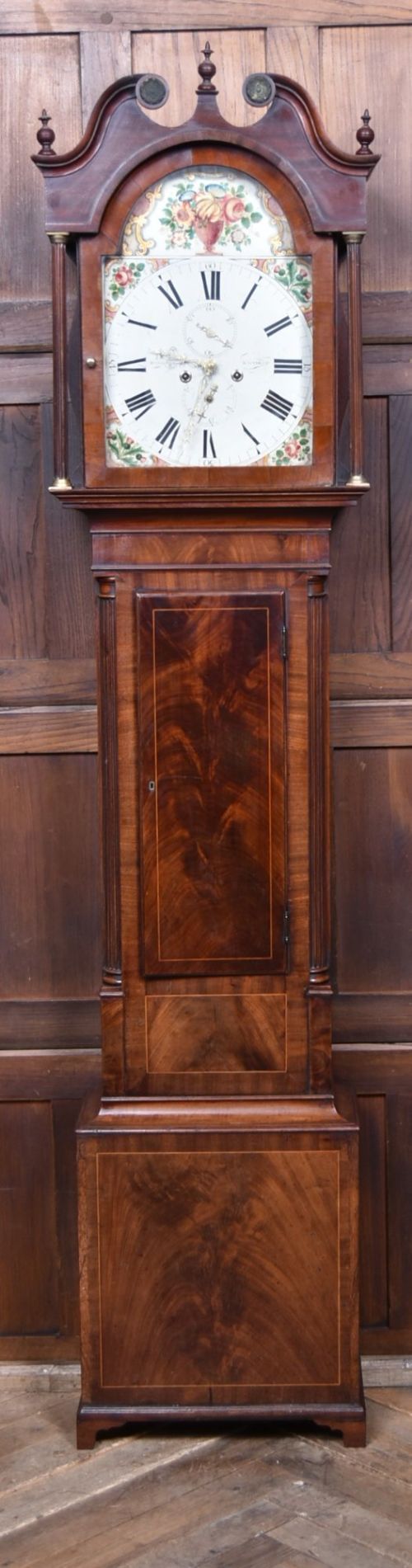
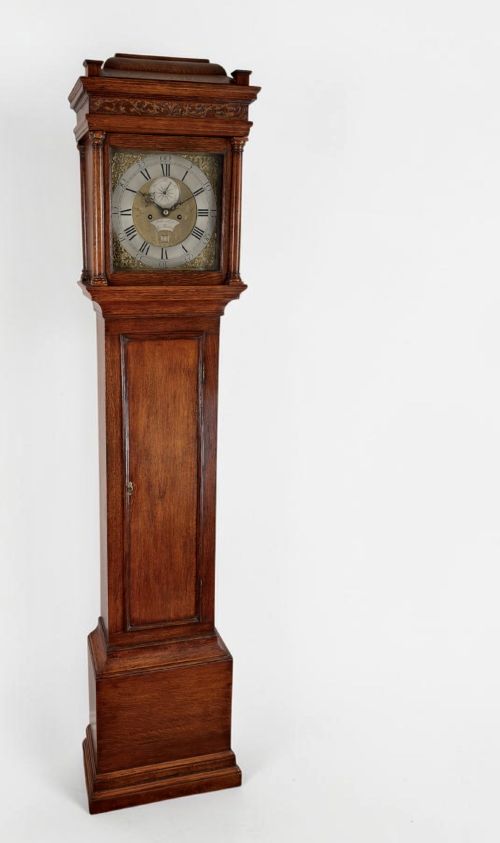
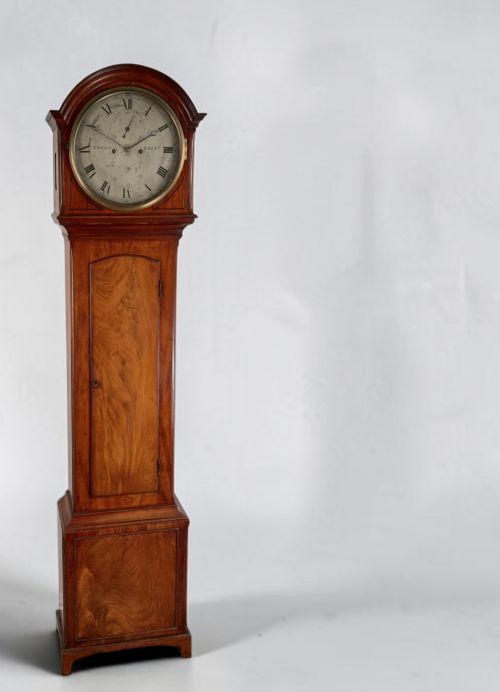
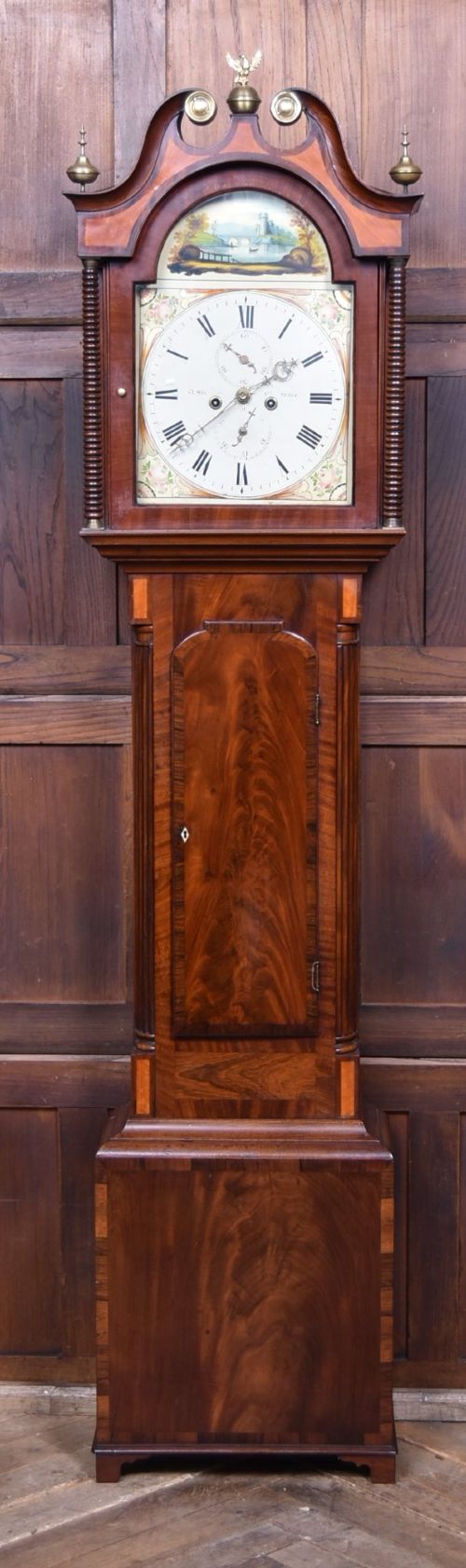
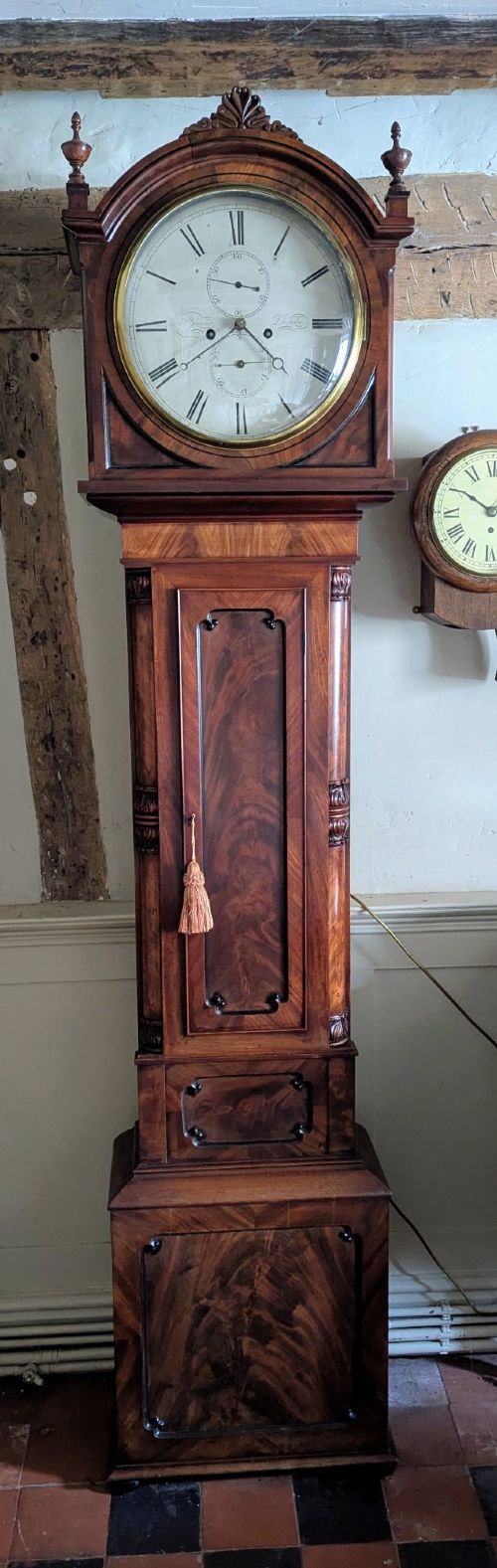
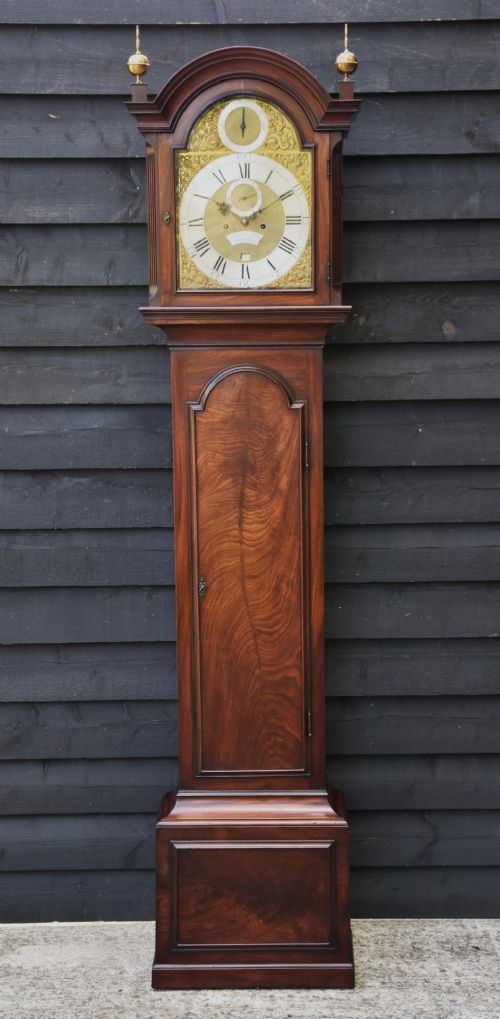
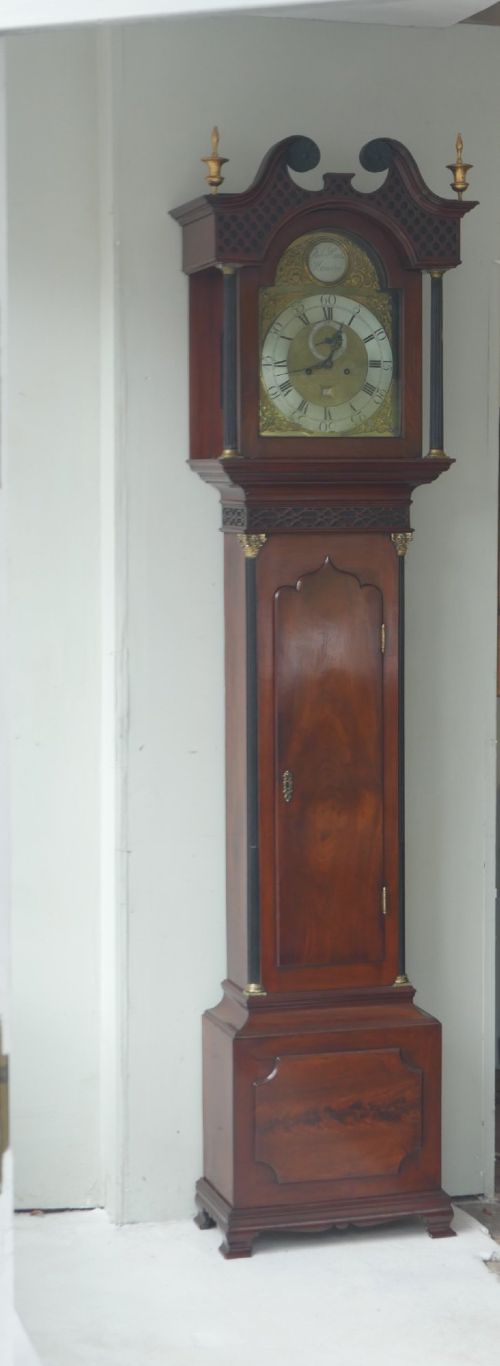
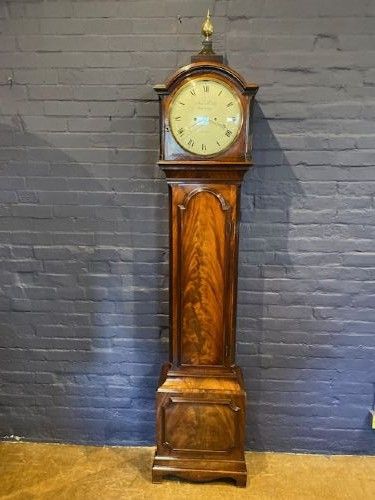
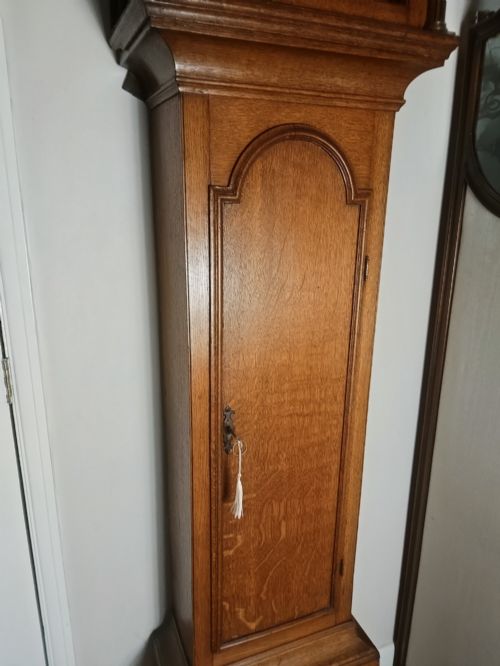
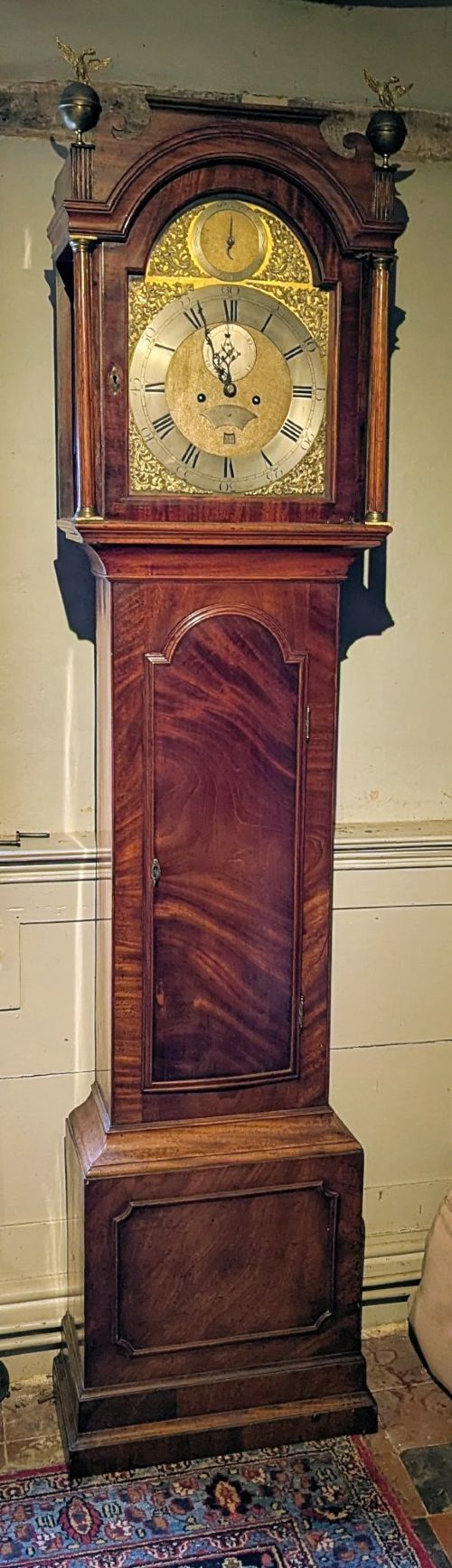
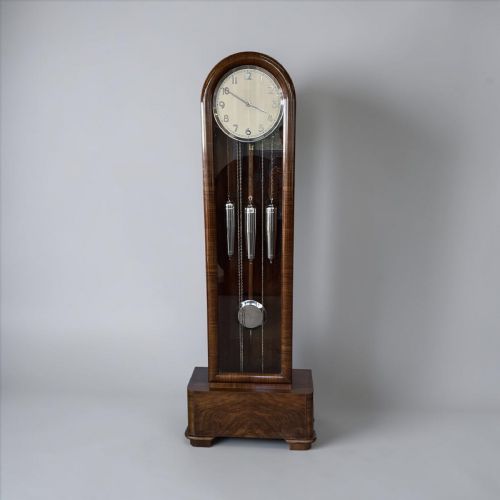
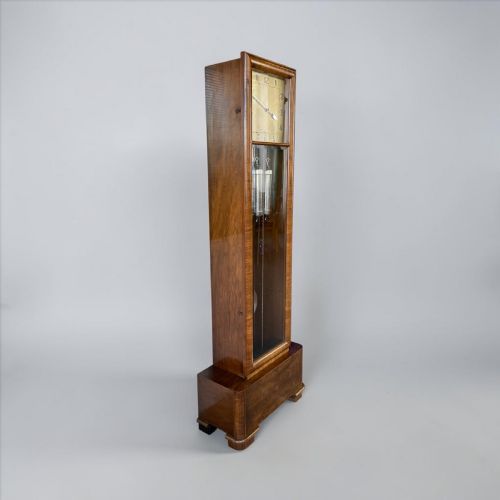
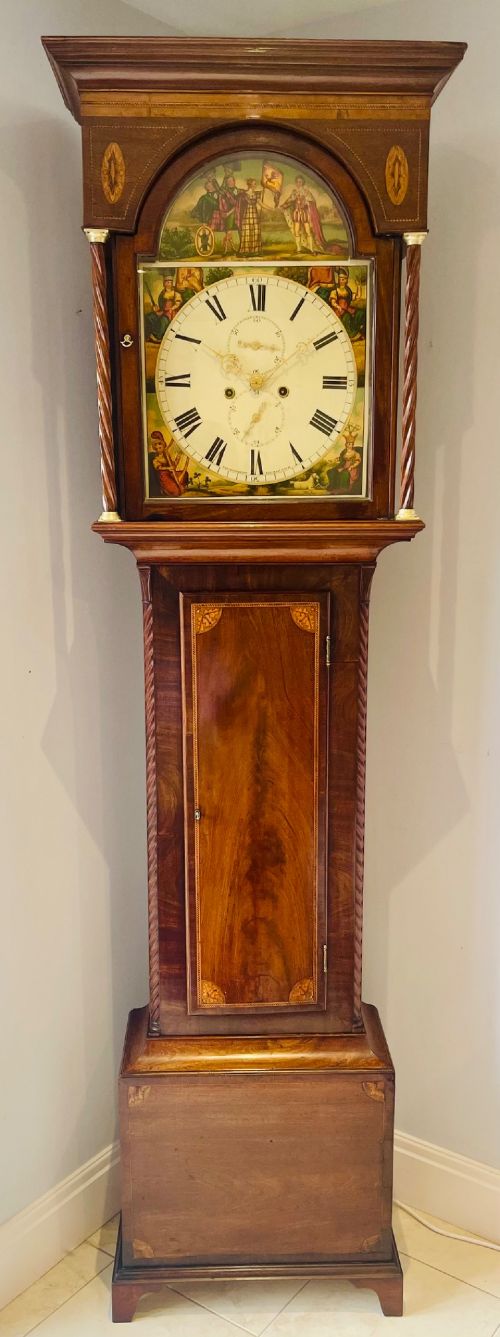
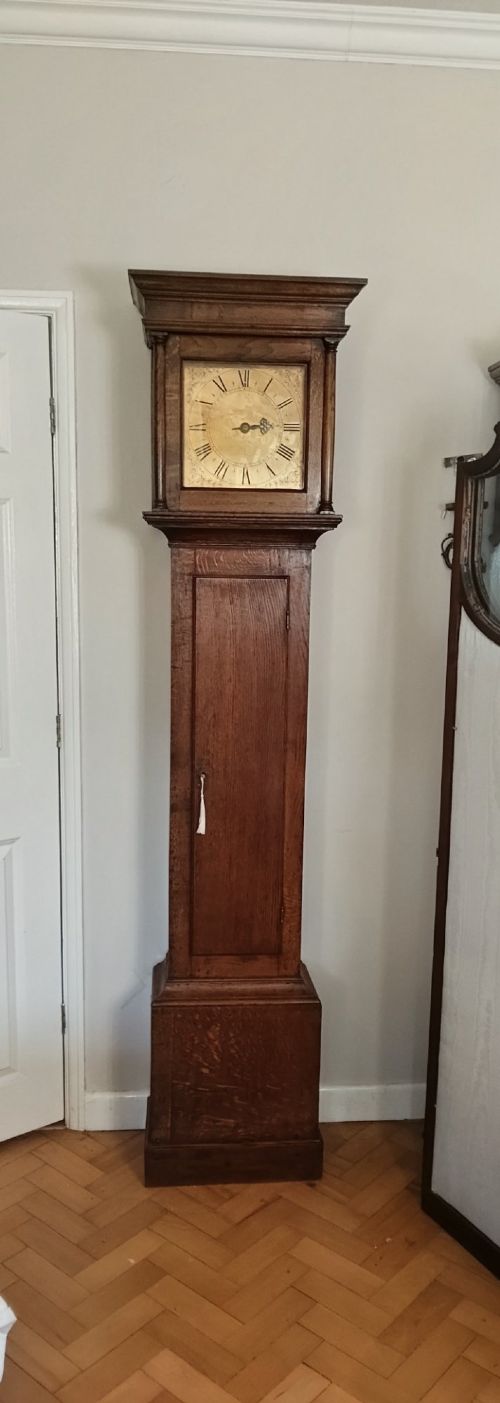
Brown Grandfather Clock
These brown grandfather clock examples are tall floor-standing timepieces housed in wooden cases that anchor a room with steady presence.
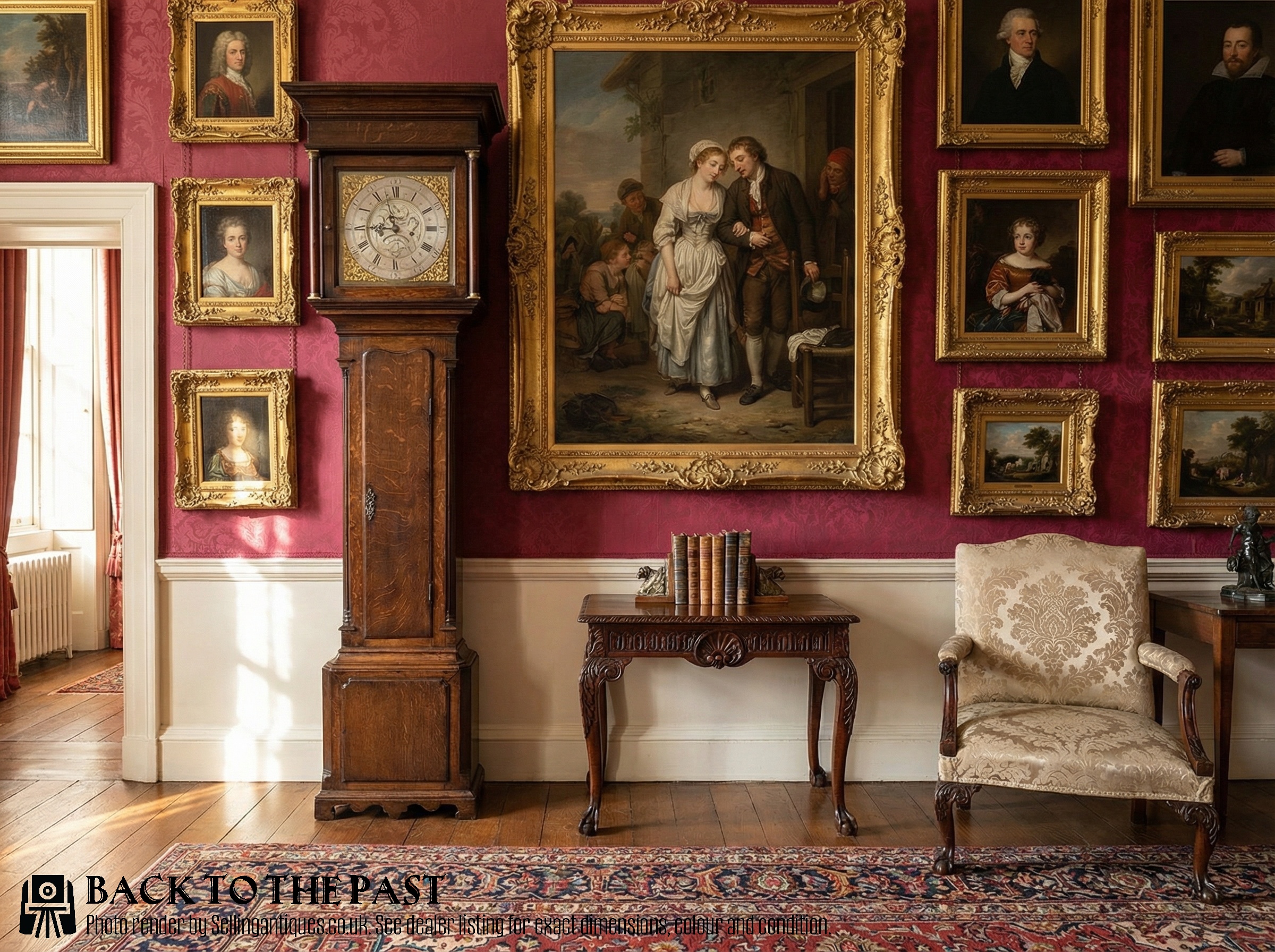
Brown Grandfather Clock
A brown grandfather clock stands tall in the room, enclosing a pendulum and weights within a wooden trunk that stretches from floor to dial. Buyers searching for this phrase meet floor-standing timepieces originating from the Georgian, Victorian, Edwardian and Art Deco periods.
The materials recorded in these longcase forms lean heavily towards timber bodies fitted with brass dials, glass covers and painted iron faces. Oak and mahogany dominate the older examples, while walnut and alternative woods appear across later centuries.
Makers stamp their regional identities onto dials spanning English counties and Scottish towns, resulting in diverse provincial styles within the same basic architecture. Cabinets range from simple domestic cases to grand architectural structures with moon phases or musical movements.
How they were made
Cabinetmakers constructed the tall wooden cases using solid timbers like mahogany and oak, often incorporating veneers such as burr walnut for decorative grain patterns. These tall housings required precise joinery to maintain rigidity over metres of height while keeping the delicate pendulum and weight system enclosed.
Dials combined cast brass faceplates with engraved silvered chapters, painted iron surfaces, and glass doors to protect the hands and movement. Clockmakers fitted mechanical gear trains driven by weights or springs, sometimes adding moon rollers, chimes or multiple bells.
Brown Grandfather Clock Retail Price Guide 2026
Typical asking prices for brown grandfather clock among the pieces listed under this phrase on Sellingantiques today, from the lower quarter to the upper quarter. They describe what is for sale here now, not the wider market.
Listings span multiple eras including Georgian, Victorian, Edwardian and Art Deco, utilising mahogany, oak, walnut, brass and glass.
What varies in quality
The refinement of the cabinetwork dictates much of the standing, separating simple provincial boxes from pieces featuring sophisticated architectural mouldings, fine brass inlay or rich timber figuring. Dial execution plays an equal role, where crisp engraving, hand-painted details and clean casting separate standard production from superior workshops.
Mechanical complexity introduces another layer of distinction, shifting simple time-and-strike movements towards eight-bell musical arrangements, moon phases and domestic regulators.
Hendrie Ogg·Lee of Great Marlow·Green of Edinburgh·D. Straiton·James McCabe·Handley & Moore·Winsor Bishop Norwich·William McEwan·Matt Wylie·Thomas Webbe·Edward White·Nathaniel Brown·Brown of Glasgow
The Brown Grandfather Clock Glossary
- Longcase clock
- The formal term for a floor-standing pendulum clock housed in a tall wooden case, commonly called a grandfather clock.
- Moon phase
- A dial mechanism displaying the lunar cycle through a rotating disc behind the clock face.
- Regulator
- A precision timekeeper designed for high accuracy, often featuring a simplified dial layout for clear reading.
- Granddaughter clock
- A smaller version of the longcase clock, built with a reduced height suitable for lower ceilings.
- Arch dial
- A clock face featuring a curved upper section, frequently housing auxiliary dials or painted ornamentation.
Brown Grandfather Clock: Frequently Asked Questions
What is a brown grandfather clock?
A brown grandfather clock is a tall floor-standing timepiece enclosed in a timber case, designed to track hours through a pendulum and weight-driven movement.
These pieces combine cabinetmaking with mechanical clockwork, serving both as functional timekeepers and dominant pieces of room furniture.
How do you wind a grandfather clock?
Winding involves using a crank key to pull up the weights inside the trunk or winding the springs via the dial face.
Careful handling ensures the movement remains balanced and keeps accurate time without straining the historical internal gears.
Where were these clocks made?
These clocks originated in workshops across English counties, Scottish towns and Welsh locations, built by regional clockmakers and cabinetmakers.
Provincial makers signed their dials, leaving records of local craftsmanship from the Georgian era through to the twentieth century.
How do you tell periods apart?
Periods are identified by case design, timber choice, dial materials and stylistic shifts ranging from early Georgian simplicity to Victorian elaboration and Art Deco geometry.
Cabinet proportions and dial painting techniques provide clear clues to the decade or century of manufacture.