
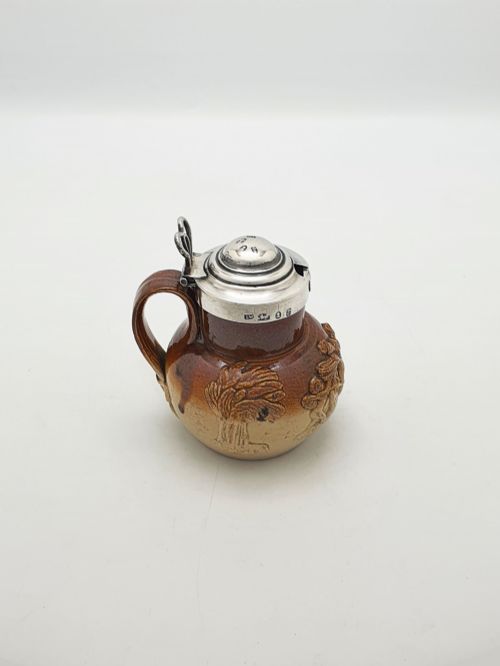


Brown Glaze Pottery Jug
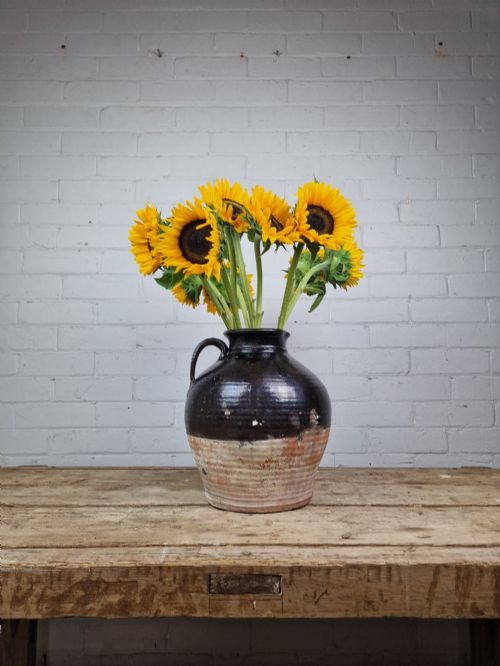
These brown glaze pottery jugs bring dense tactile weight and earthy warmth to a room, spanning periods from seventeenth-century slipware to Victorian art pottery.
Brown Glaze Pottery Jug
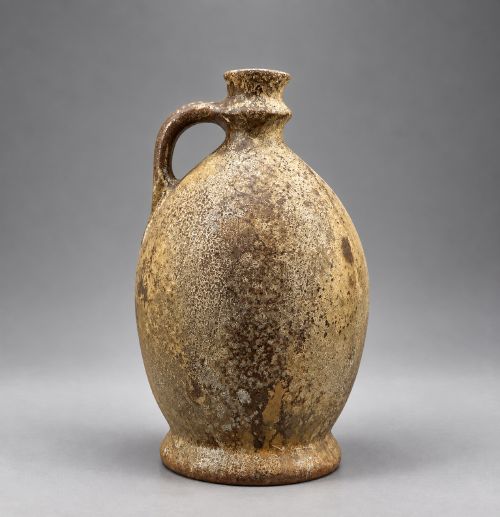
A brown glaze pottery jug encompasses utilitarian vessels and decorative pitchers shaped from clay, spanning domestic flagons, harvest jugs, and character Toby jugs. When you search for a brown glaze pottery jug, you encounter pieces originating from Georgian domestic service through to Victorian art potteries and twentieth-century workshops.
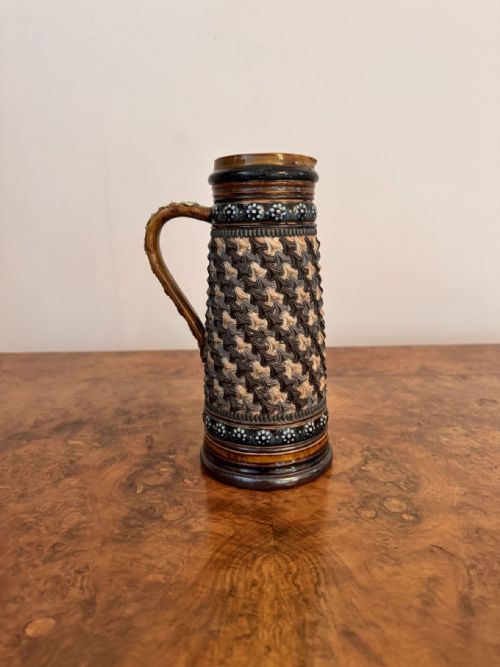
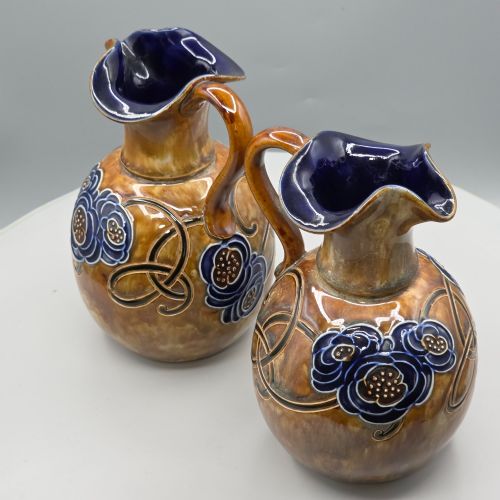
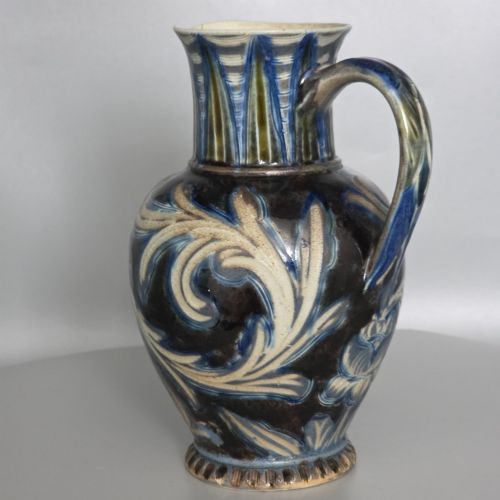
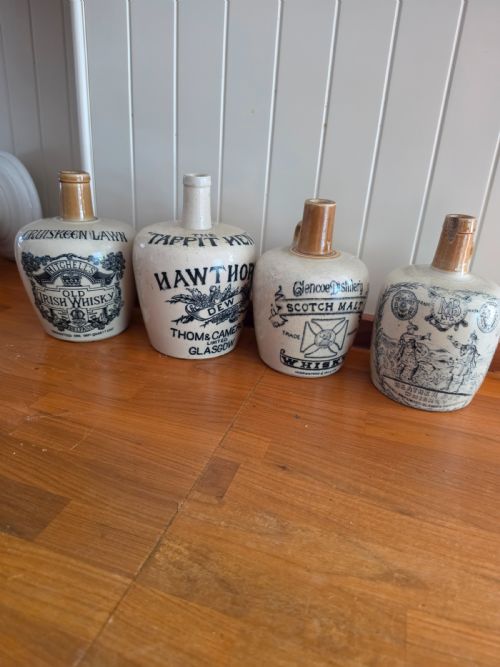
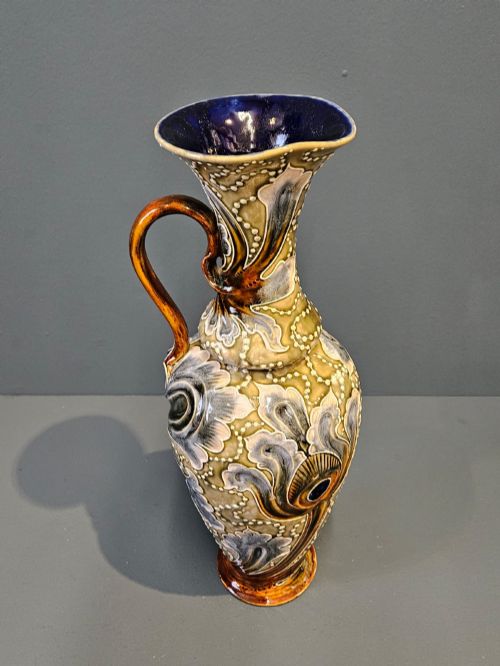
The selections on this page draw heavily from nineteenth-century production, particularly salt-glazed stoneware from Doulton Lambeth alongside slipware and earthenware forms. You will find both stout advertising flasks meant for tavern counters and slender ewers finished with sterling silver collars.
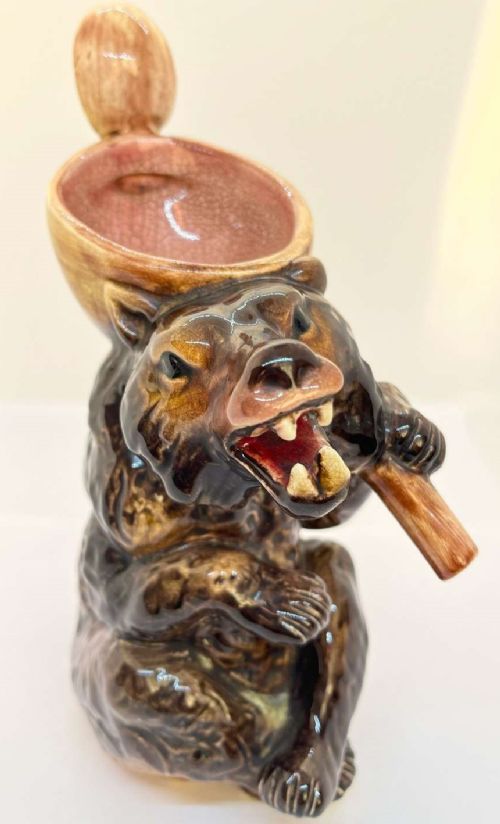
Forms range from simple loop-handled oil bottles to elaborate majolica vessels moulded with bullrushes, animals, and sporting motifs. Each piece reflects the functional traditions of British and continental ceramic centres operating across multiple centuries.
Materials and Techniques
Potters shaped these vessels using dense clays, earthenware, and robust stoneware bodies designed to hold liquids securely without leaking. The foundational bodies were often thrown on a wheel or moulded into character shapes before receiving their characteristic surface treatments.
Glazing techniques defined the rich exterior finishes, utilising salt-glazing methods that produced textured orange-peel surfaces, alongside smooth lead glazes and rich slip applications. Some pieces received transfer-printed Chinoiserie designs or incised Art Nouveau ornamentation fired directly into the clay body.
Metal mounts frequently augmented the ceramic work, with makers adding sterling silver collars, hinged lids, and silver-plated rims to elevate utilitarian jugs into formal serving pieces.
The listings on this site encompass periods from the seventeenth century through to the Edwardian era, utilising stoneware, earthenware, and salt glaze.
Distinctions in Quality
Quality rests in the crispness of the moulded detail and the control evident in the surface glaze, separating heavy commercial output from master studio pieces. Sharp incised work, clean transfer printing, and well-defined relief decoration indicate superior craftsmanship.
The integration of precious metal hardware also alters the standing of a vessel. Original sterling silver collars and fitted hinged lids demonstrate high-tier workshop commission rather than standard domestic utility.
Balance and throwing precision dictate the tactile success of simpler slipware and stoneware vessels, where wall thickness and handle attachment reveal the potter's competence.
Holdcroft·Royal Doulton·Doulton Lambeth·Emma Shute·George Jones
The Brown Glaze Pottery Jug Glossary
- Salt Glaze
- A finish achieved by throwing common salt into the kiln during high-temperature firing, creating a pitted texture resembling an orange peel.
- Slipware
- Pottery decorated with a thin mixture of clay and water applied before firing to create contrasting surface patterns or overall colour depth.
- Majolica
- A colourful earthenware pottery style utilising lead-glazed opaque tin enamel, frequently moulded with naturalistic plant and animal forms.
- Stoneware
- A heavy, durable ceramic fired at high temperatures until vitrified, rendering the body completely impermeable to liquids without requiring internal glazing.
- Toby Jug
- A figurative pitcher modelled as a stout, cheerful person wearing eighteenth-century attire, typically holding a mug of beer or a pipe.
Brown Glaze Pottery Jug: Frequently Asked Questions
How do I date a stoneware jug?
Dating relies on examining the manufacturing marks, base profile, and the style of the handle. Stoneware from the seventeenth and eighteenth centuries often displays hand-thrown irregularities and stamped collector numbers, whereas Victorian pieces commonly feature factory culls, registration diamonds, or specific maker stamps.
Hardware components provide further chronological clues. The presence of a hallmarked sterling silver collar or hinged lid supplies an exact year of mounting, narrowing down the period of production considerably.
Were these jugs used for serving drinks?
Many of these vessels served practical roles in taverns and homes as flagons, ale pitchers, and water containers. Robust stoneware and salt-glazed jugs held liquids such as wine, oil, and whisky for daily consumption and storage.
Other examples, such as decorative ewers, puzzle jugs, and character Toby jugs, functioned primarily as display pieces or tavern entertainment items rather than everyday tableware.
What is a puzzle jug?
A puzzle jug is a drinking vessel featuring a perforated neck that prevents normal drinking. Users had to figure out how to draw liquid through a hidden system of hollow spouts and channels without spilling.
These pieces were popular in communal drinking settings across British taverns during the eighteenth and nineteenth centuries to test the sobriety and ingenuity of patrons.