


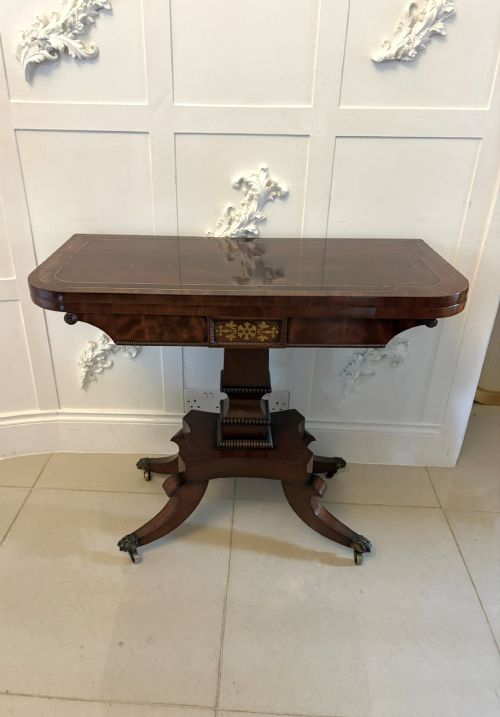
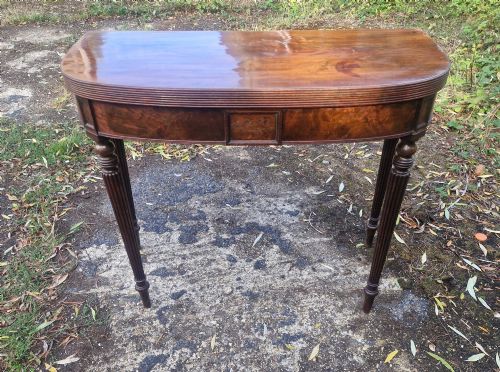
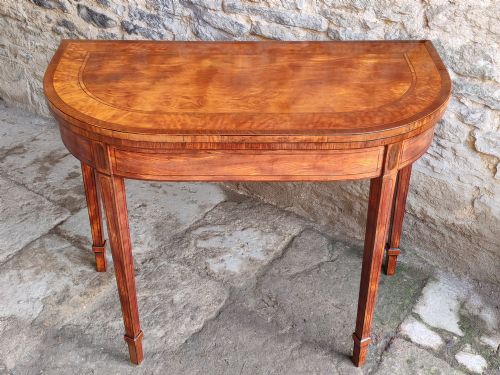
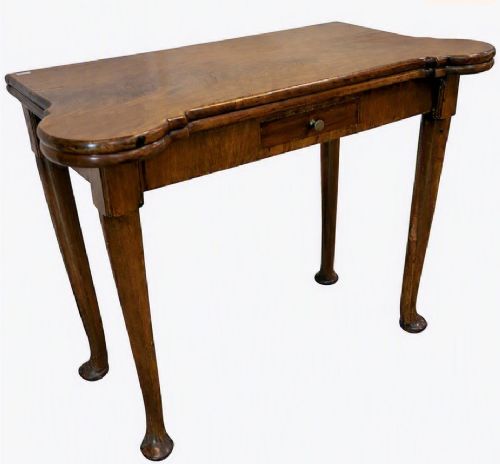
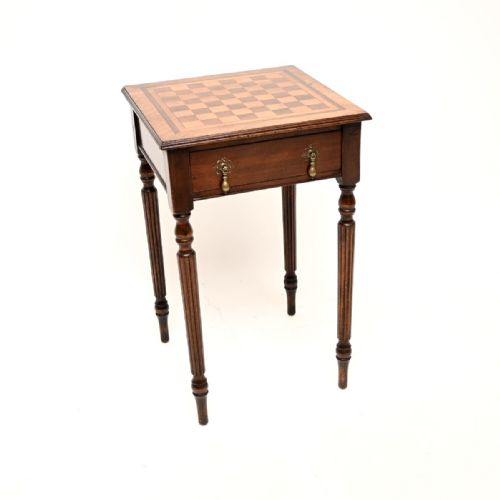
Brown Gaming Table
A brown gaming table offers a practical surface for pastimes while bringing period timber warmth into a room.
Brown Gaming Table
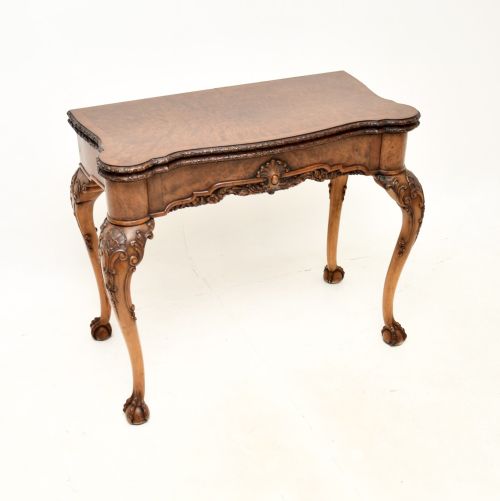
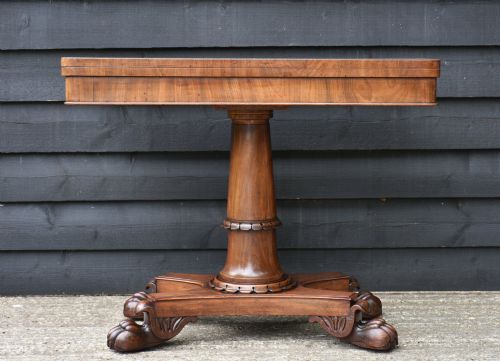
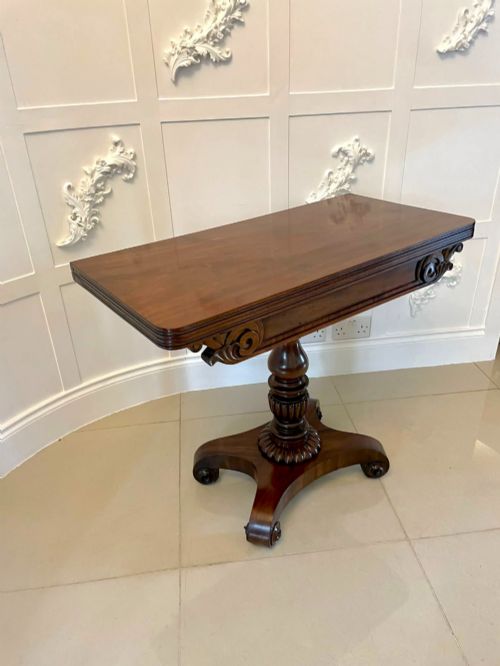
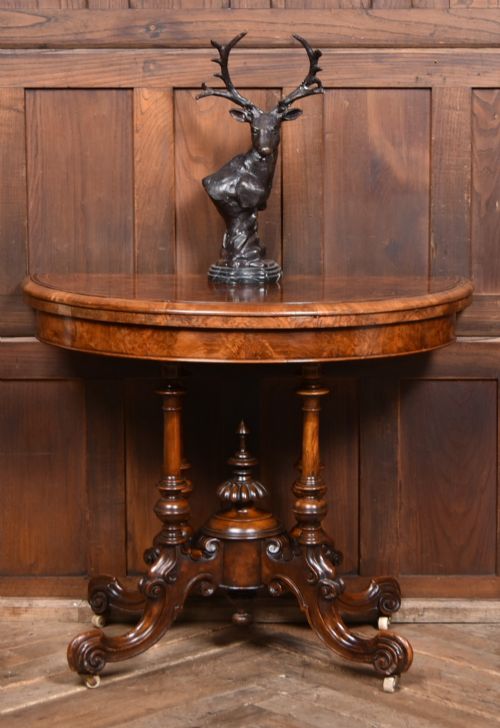
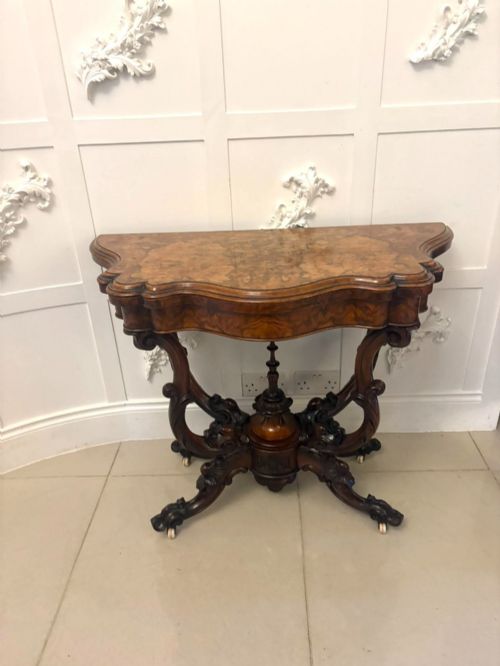
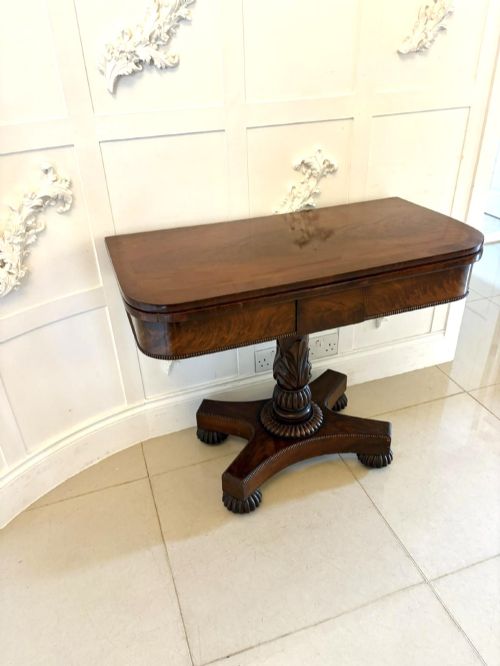
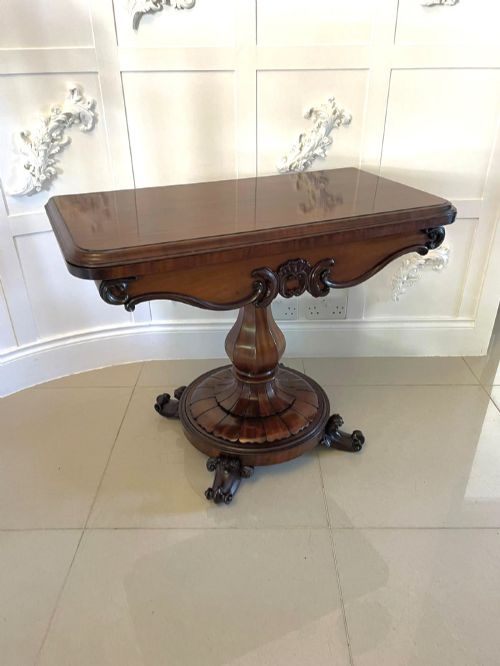
A brown gaming table spans multiple centuries of design, appearing frequently in 18th century, Regency, and Victorian periods under various forms such as card tables, chess tables, and fold-over games tables. These pieces serve dual functions, operating as compact side or console tables when closed and opening to reveal playing surfaces.
The most common examples encountered on this page are mahogany card tables from the Georgian and Victorian eras, alongside burr walnut games tables with fold-over tops. Makers constructed these items to occupy modest spaces in parlours and drawing rooms while accommodating evening entertainment.
Variations include tea and work tables that share identical folding mechanisms or swivel tops designed for domestic utility. Buyers select these items for their rich brown timber tones, ranging from flame mahogany to figured walnut and rosewood.
Materials and construction
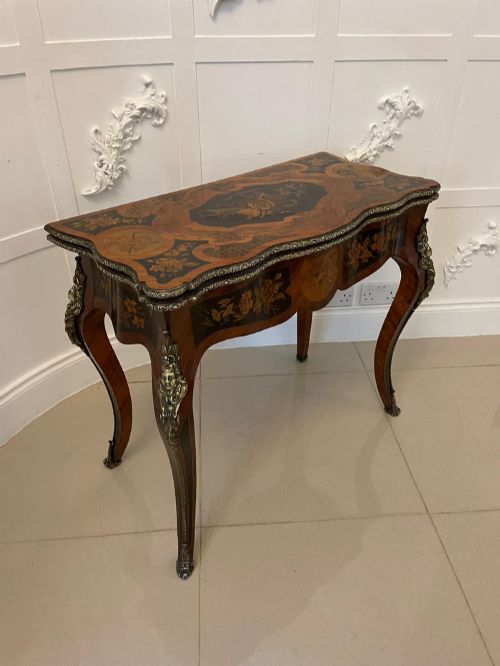
Cabinet makers utilised dense hardwoods like mahogany, walnut, and satinwood for the primary carcases, often applying veneers and crossbanding in burr yew, kingwood, or amboyna to create striking geometric patterns on the tops. Timber selection focused on rich figuring and grain movement.
Joinery methods involved concertina actions, swivel tops, and fold-over hinges that required precise carpentry to ensure the surface remained level when open for play. Brass inlays, ormolu mounts, and hand-carved basket bases frequently complemented the timber structures.
Listings feature mahogany, walnut, and satinwood across Georgian, Regency, and Victorian periods.
Quality differences
The distinction between standard and superior pieces rests on the choice of timber figure, such as flame mahogany or burr walnut, and the crispness of any inlaid marquetry or brass work. Original patination and depth of colour indicate how well a surface has survived over centuries.
Structural integrity of the folding or concertina action dictates mechanical success, where tight joints and smooth swivel movements separate master carpentry from simpler workshop output.
Antoine Lampre·Giles Grendey·Gillows
The Brown Gaming Table Glossary
- Fold-over
- A table top hinged along the centre that opens outward to double the surface area for games or dining. This mechanism often conceals a storage well underneath.
- Concertina action
- An expanding frame mechanism that pulls outward when a table top opens, providing support for all four corners without a central swinging leg. It requires complex internal joinery.
- Crossbanding
- A narrow strip of veneer applied to the border of a table top with the grain running perpendicular to the central panel. This technique frames the primary wood figure.
- Marquetry
- Decorative patterns formed by fitting together small pieces of coloured wood veneer onto a carcase. It appears on finer cabinet work.
- Demi-lune
- A half-moon shape with a curved front and flat back edge, typical of console and card tables designed to stand flat against a wall.
Brown Gaming Table: Frequently Asked Questions
What is a brown gaming table used for?
These tables provide a stable surface for card games, chess, and general leisure activities in domestic spaces.
When closed, they function as console, side, or tea tables against a wall or in the centre of a room.
How do you open a fold over games table?
The top leaf lifts and rotates or folds outward on hinges to rest upon a pivoted leg or an extending concertina frame.
Users should lift the timber carefully to avoid straining original 18th or 19th century joints and hinges.
What woods are used for these tables?
Makers primarily employed mahogany, walnut, and satinwood, often enhanced with rosewood, kingwood, or burr walnut veneers.
Decorative elements frequently include brass inlay, ormolu mounts, and contrasting wood crossbanding.
How do I identify a Regency games table?
Regency examples often feature dark mahogany or rosewood timbers, brass inlay work, and classical architectural proportions.
They frequently date from the early 19th century and incorporate swivel top mechanisms or bold pedestals.