
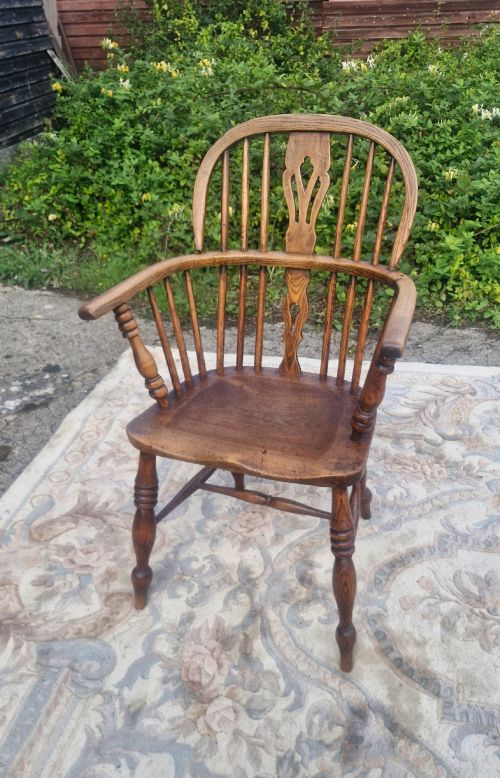


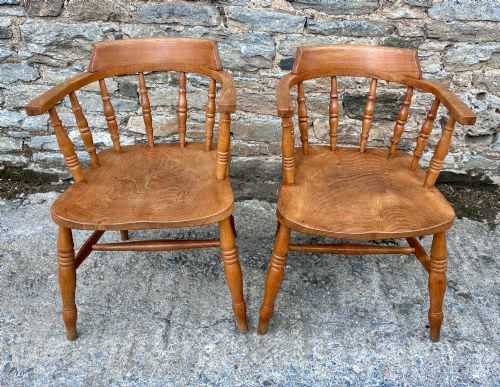
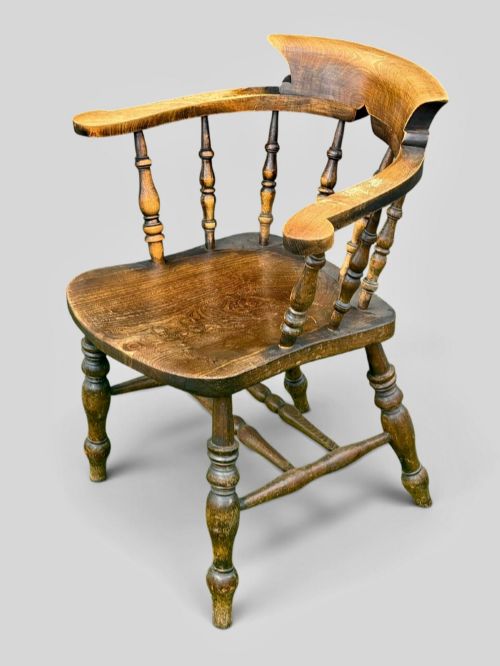
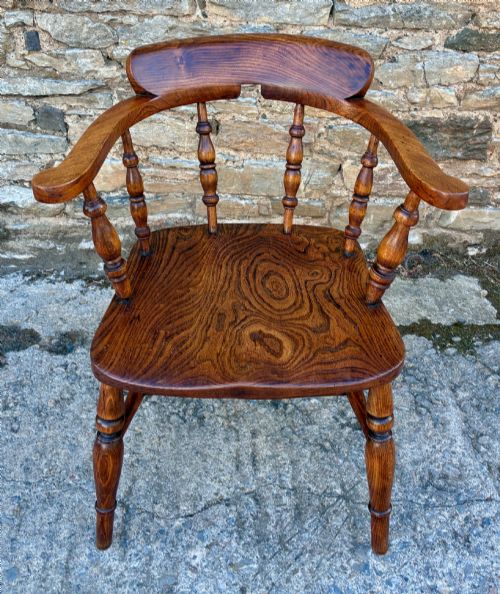
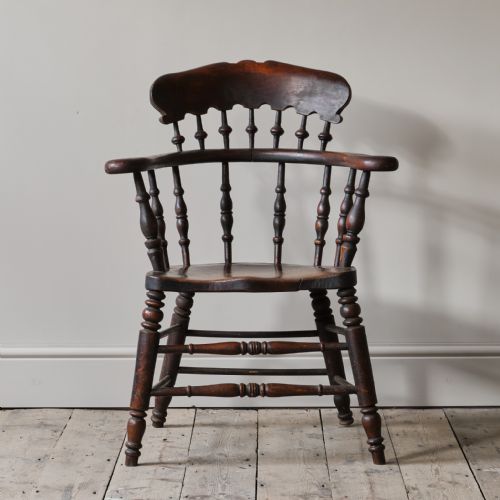
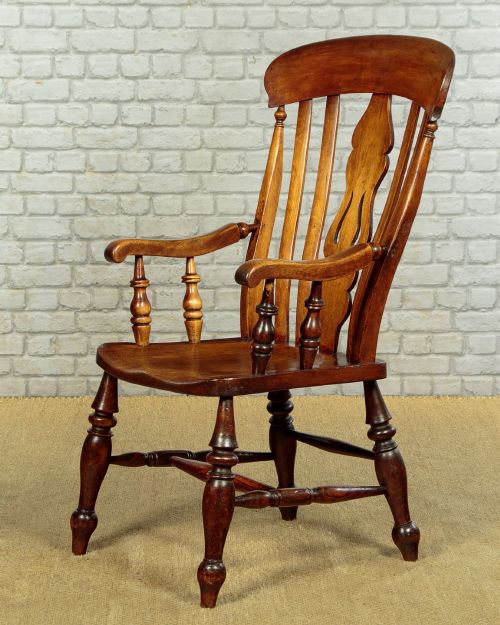
Brown Elm Desk Chair
A brown elm desk chair brings rugged regional character to a study, built from solid timbers that age with a rich, dark patina.
Brown Elm Desk Chair
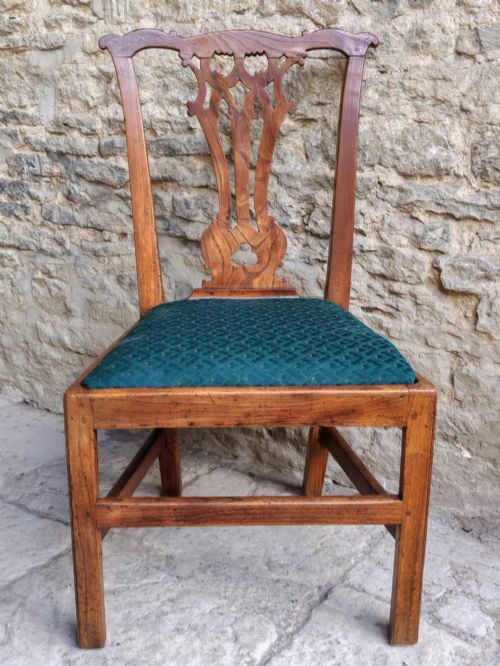
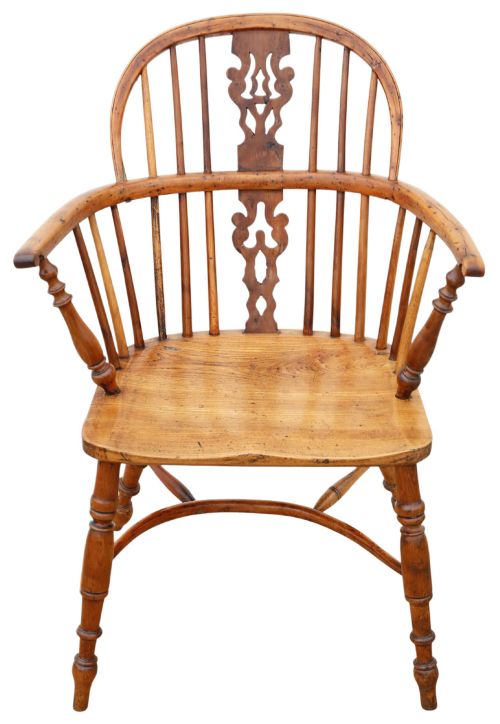
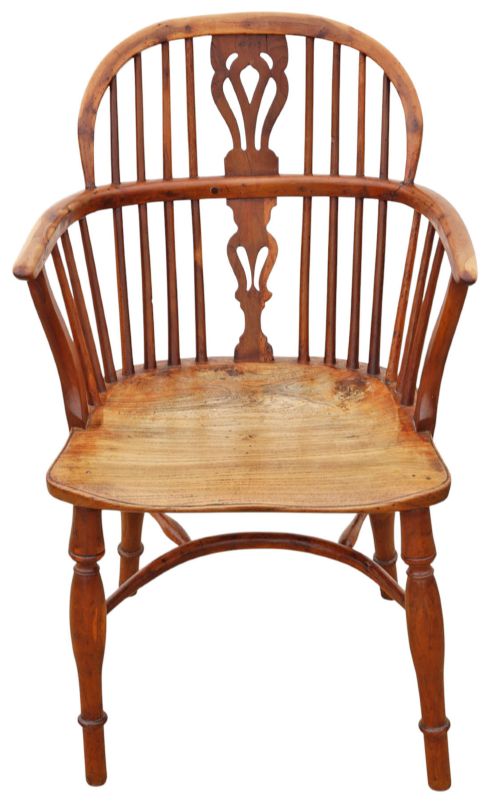
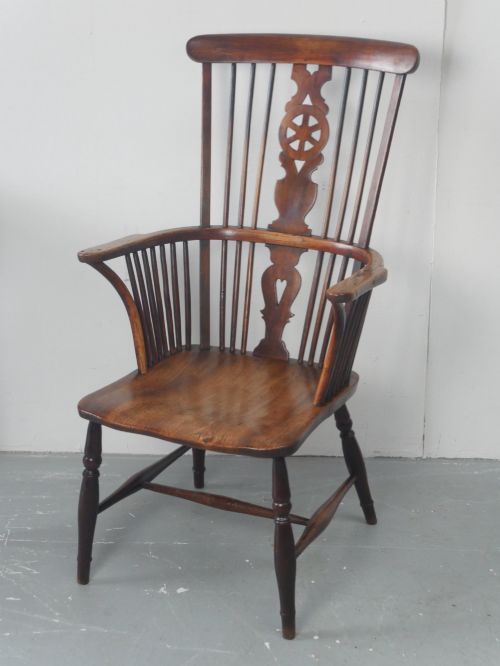
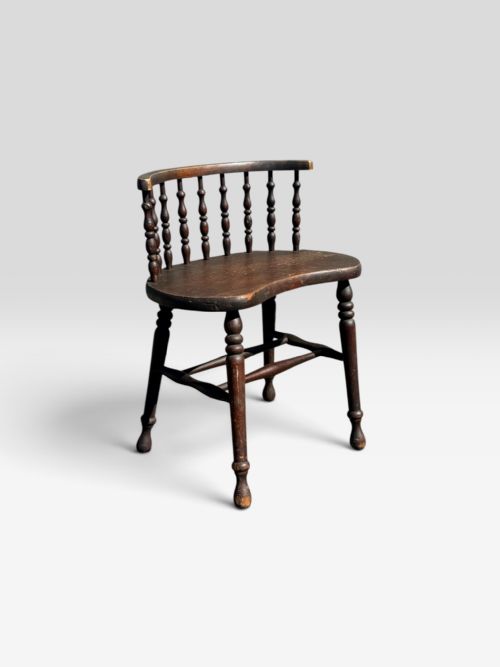
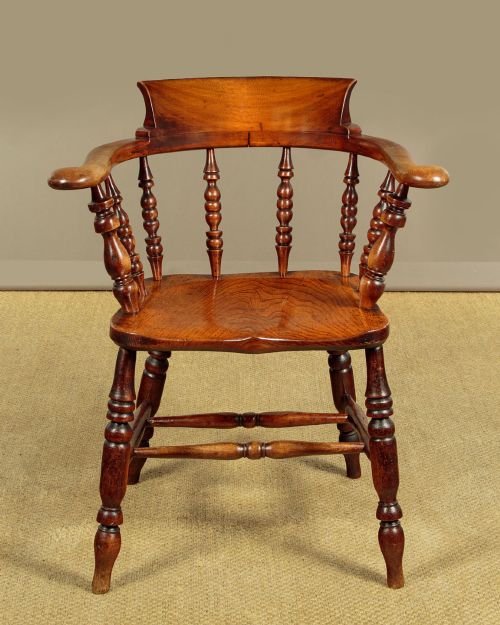
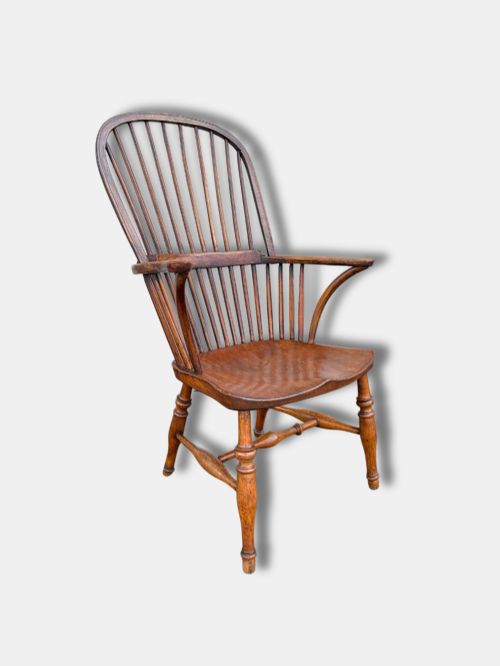
A brown elm desk chair typically takes the form of a Windsor, captain's chair, or smoker's bow designed for functional workspace use. These pieces appear across the 18th century, the Regency period, and the 19th century under Victorian manufacture.
Makers constructed these seats within vernacular traditions across English counties, producing low-back, high-back, and comb-back variants alongside wheelback and bar-back designs. Regional workshops also utilised fruitwood, ash, beech, and yew alongside the primary timber.
The versions most commonly met on this page span the Victorian era and earlier country workshops, combining sturdy wooden saddles with spindle backs and armrests suited for daily sitting.
Construction and timber selection
Cabinet makers and rural joiners built these seats using a combination of elm for the thick, sculpted seat bottom and complementary woods like ash or beech for the turned legs and spindles. Elm resisted splitting under pressure, making it ideal for solid plank seats.
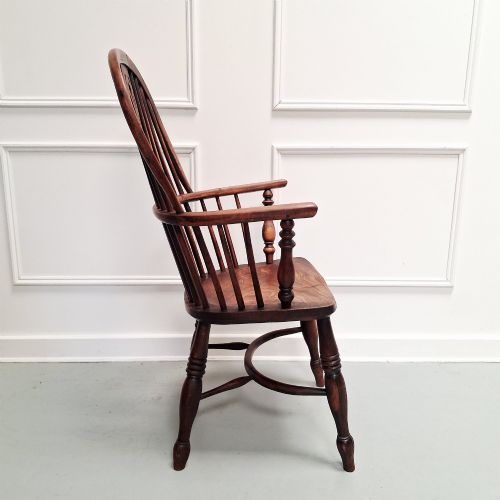
Traditional Windsor construction involved wedging turned legs and back spindles directly into bored holes within the solid elm seat slab. Steam bending shaped the continuous bows and arm rests found on many of these vernacular models.
Sturdy elm grain resists splitting so effectively that country joiners relied on it for solid saddle seats that outlast generations of sitters.
Distinctions in construction and wear
Quality separates through the integrity of the timber joints and the depth of the sculpted seat relief. Chairs featuring dense grain patterns and well-matched secondary woods maintain structural firmness over centuries of use.
The sophistication of the turning on legs and stretchers indicates workshop standard, ranging from simple plain spindles to detailed crinoline stretchers and shaped arm terminals.
J Spencer
The Brown Elm Desk Chair Glossary
- Windsor chair
- A wooden chair built with a solid thick seat into which the legs and back spindles are driven independently. These versatile seats formed a staple of country vernacular furniture.
- Smoker's bow
- A low-backed Windsor armchair featuring a rounded continuous arm rail supported by short spindles above a turned pillar. They appeared frequently in 19th-century offices and smoking rooms.
- Comb-back
- A Windsor chair variation where the top rail resembles the spine of a comb, often featuring an extended headrest tier above vertical spindles.
- Crinoline stretcher
- An arched under-stretcher linking the legs of a chair together for added stability. It takes its name from the hoop-skirt fashion of the mid-19th century.
- Carver chair
- An armchair, frequently designed with open arms to accommodate wider clothing styles or desk seating. They appear across various regional British workshop traditions.
Brown Elm Desk Chair: Frequently Asked Questions
What defines a brown elm desk chair?
These seats feature solid elm plank seats combined with supportive wooden spindles, bows, or arms designed for functional workspaces. They emerge from 18th-century and 19th-century vernacular furniture traditions.
Craftsmen built them across English and Scottish regions, utilising local hardwoods like ash, beech, and yew to create durable seating for domestic and commercial interiors.
How do I date a Windsor chair?
Dating relies on stylistic markers such as comb-backs, low backs, or wheel-backs, alongside the type of woodturning visible on the legs and stretchers. Earlier 18th-century examples often display simpler, heavier proportions.
Mid-to-late 19th-century Victorian pieces frequently incorporate beech framing timbers alongside elm seats, reflecting industrial shifts in regional furniture production.
Where were these chairs used historically?
Vernacular desk chairs served in studies, offices, farmhouses, and libraries where sturdy, practical seating took priority over formal upholstery. Their robust construction suited daily administrative tasks.
Workshop traditions varied by county, producing distinct regional variations in Nottinghamshire and broader English countryside environments.
How do I care for antique elm furniture?
Maintain elm timber by keeping pieces away from direct heat sources and sudden humidity shifts that cause wood to dry or split. Regular dusting preserves the natural finish.
Apply traditional wax sparingly when the wood appears dry, buffing gently with a soft cloth to maintain the natural surface sheen.