



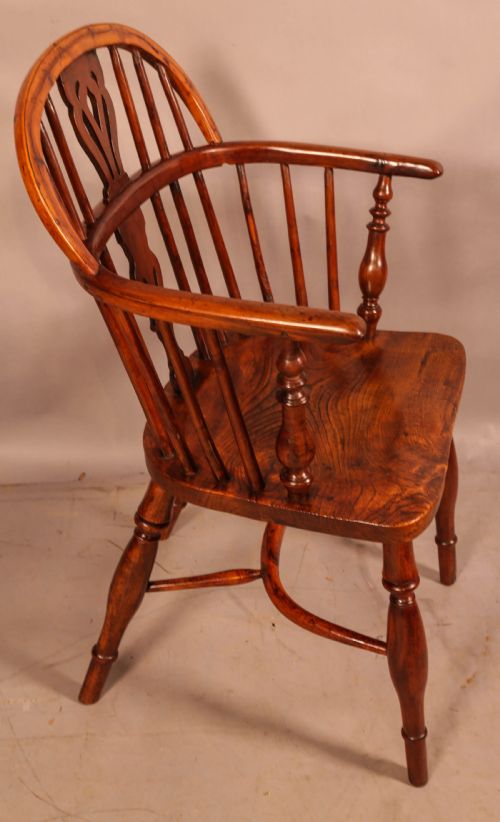


Georgian Solid Seat Armchair
A georgian solid seat armchair brings sturdy timber and honest joinery straight into a room, offering both daily utility and lasting character.
Georgian Solid Seat Armchair
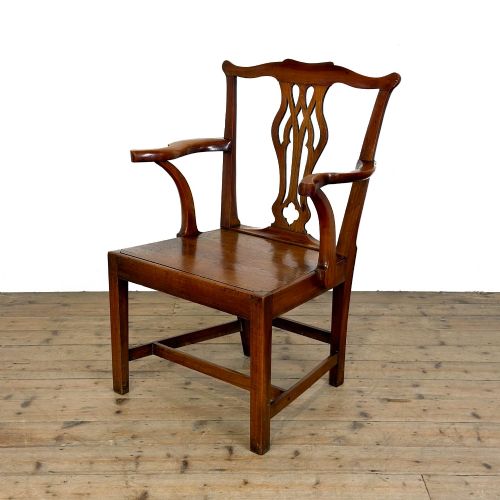
A georgian solid seat armchair combines utilitarian strength with provincial craftsmanship, forming a sturdy seating choice built for daily use. These chairs emerge primarily from 18th century and 19th century workshops, spanning periods like the Georgian era and Regency years.
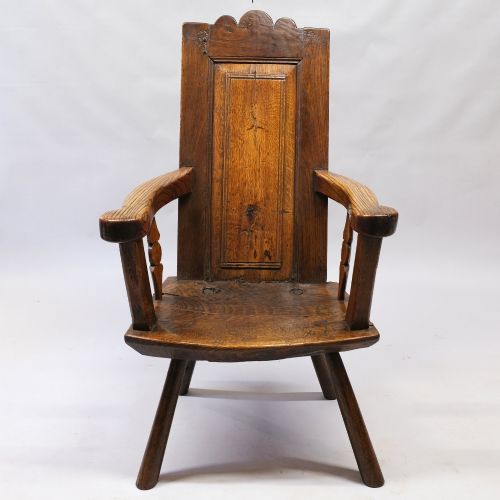
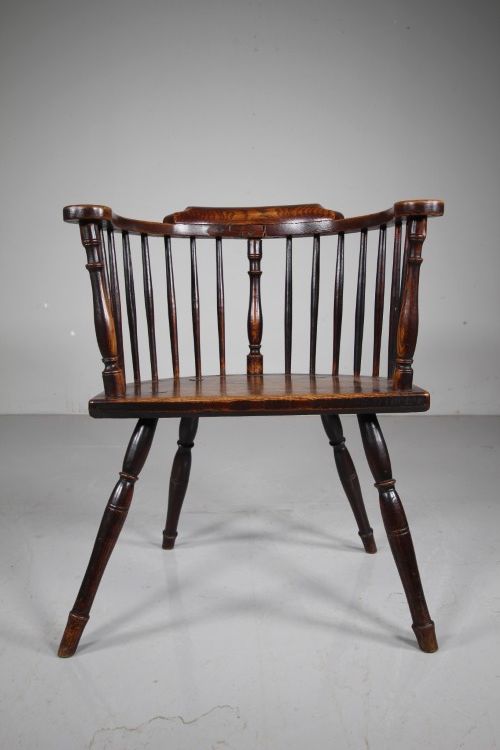
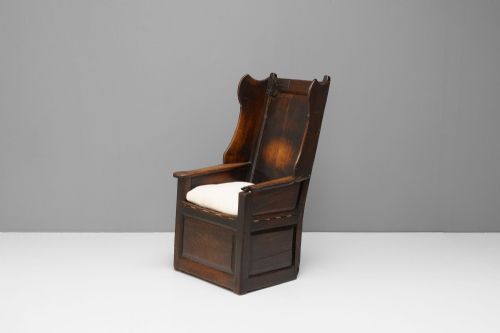
The pieces on this page lean heavily towards English country and vernacular styles, featuring timber seats rather than upholstered squabs. Forms range from low back Windsor chairs and panel backed designs to lambing chairs and stickback kitchen armchairs.
Makers utilised native hardwoods to shape these armchairs, creating rustic country seating that values structural integrity over ornate decoration. Buyers will most frequently encounter elm, oak, ash, beech, yew wood, and fruitwood examples across these listings.
How they were made
Craftsmen shaped these armchairs using traditional greenwood and seasoned timber techniques, often turning spindles on a pole lathe and bending wood with steam. Seats were typically carved from a single thick plank of elm or fruitwood to provide a heavy, stable base for the legs and spindles.
Joinery relied on wedged mortise and tenon joints to lock structural components firmly into place without relying on metal fasteners. Elements such as brass accents appear sparingly, whilst fabric sometimes supplements specific forms like the lambing chair.
Georgian Solid Seat Armchair Retail Price Guide 2026
Typical asking prices for georgian solid seat armchair among the pieces listed under this phrase on Sellingantiques today, from the lower quarter to the upper quarter. They describe what is for sale here now, not the wider market.
The listings span the 18th century, 19th century, and early 20th century, highlighting enduring vernacular traditions.
What varies in quality
The distinction between ordinary and superior pieces rests on the selection of timber and the harmony of proportions. Chairs fashioned from heavily figured yew wood or rich fruitwood command greater appreciation than standard utilitarian beech or ash variants.
Integrity of construction and the retention of original surface patination elevate certain examples above others. A well-balanced vernacular form with honest wear demonstrates a higher level of historical survival than heavily restored seating.
The Georgian Solid Seat Armchair Glossary
- Windsor chair
- A chair built with a solid wooden seat into which the legs, back sticks, and arms are fitted directly. This construction method ensures robust stability.
- Vernacular
- Objects designed by local craftsmen using traditional regional methods rather than high-style metropolitan patterns. These pieces reflect local timber supplies and practical needs.
- Panel backed
- A design featuring a solid wooden panel within the upper framework instead of open spindles. This style offers added shelter from draughts.
- Stickback
- A seating form constructed with slender turned wooden spindles forming the backrest. These members are tenoned directly into the seat and top rail.
- Fruitwood
- Timber sourced from fruit-bearing trees such as pear, apple, or cherry, prized for its dense grain and warm tone. Cabinetmakers used it for decorative country pieces.
Georgian Solid Seat Armchair: Frequently Asked Questions
Where did these armchairs originate?
Most pieces originate from provincial English workshops, country houses, and rural kitchens. Makers utilised locally available timber such as elm, ash, and oak.
Designs evolved to meet practical domestic needs, resulting in sturdy seating suited for daily farm and household life.
How do I care for a solid wooden seat?
Maintain the timber by keeping the chair away from direct heat sources and sudden temperature shifts. Regular dusting and occasional waxing help preserve the natural patination.
Avoid harsh chemical cleaners that strip the historic finish from the wood.
What is a lambing chair?
A lambing chair is a traditional enclosed seat designed to protect the occupant from household draughts. They often feature high solid wooden backs and sometimes incorporate upholstered elements.
Shepherds and farmers historically used them during cold winter months.
How can I tell the period of an armchair?
Dating relies on examining tool marks, timber shrinkage, construction methods, and stylistic cues from the Georgian or Regency eras. Regional variations in turning and joinery also provide chronological clues.
Comparing the form to documented vernacular pieces helps establish an approximate timeframe.