



Dark Wood Captain Chair
A dark wood captain chair offers sturdy support and traditional seating for a study or desk, bringing historic character into a working room.
Dark Wood Captain Chair
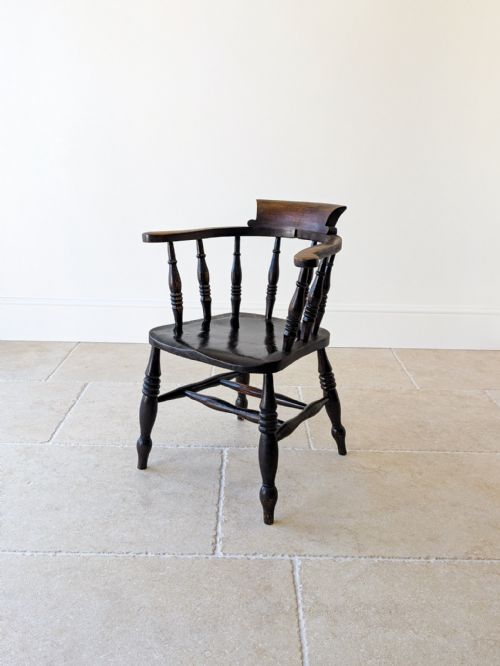
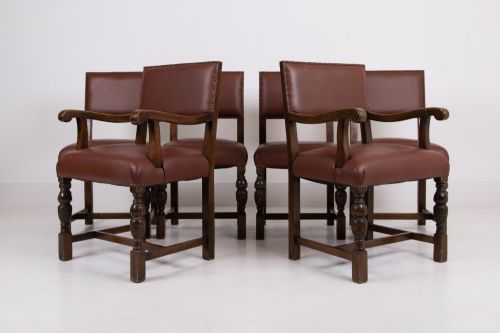
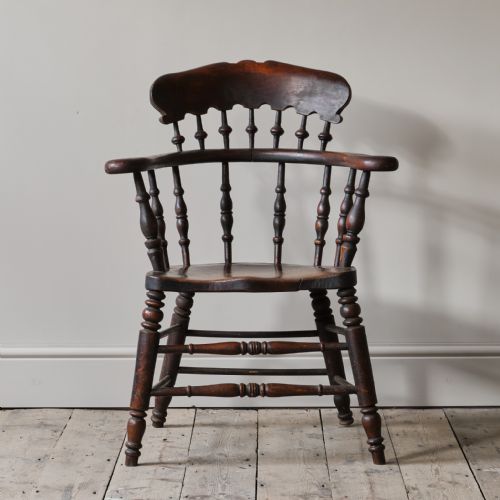
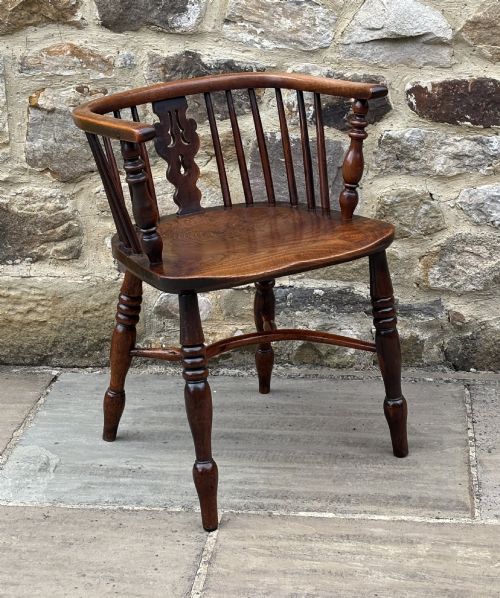
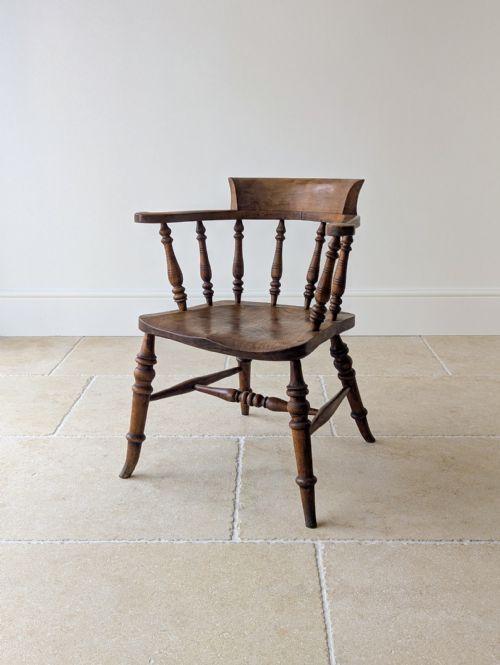
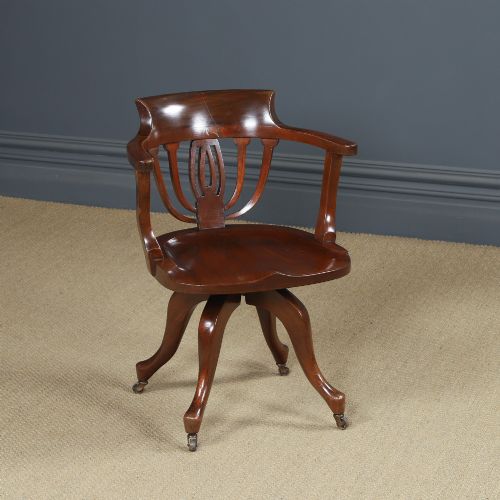
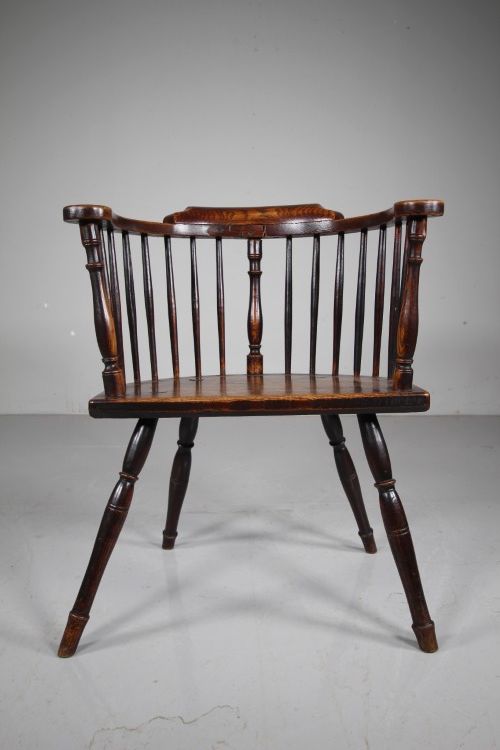
A dark wood captain chair typically combines the robust seating forms of Windsor, smokers bow or office desk designs with deep timber tones. Buyers seeking a dark wood captain chair will find pieces originating from the nineteenth century, the Edwardian era, and the Regency period, alongside English provincial and country styles.
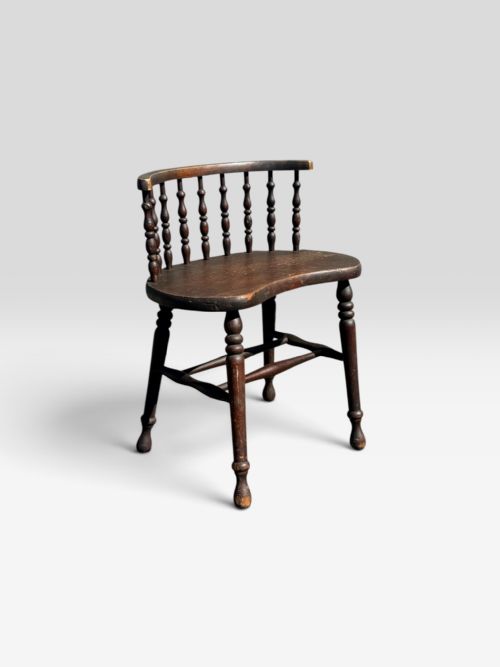
Most examples rely on traditional regional British furniture traditions, incorporating spindle backs, curved armrests, and deep timber seats. These versatile pieces function equally well as desk chairs or standalone armchairs in a traditional interior.
Materials and construction
Makers utilised native hardwoods such as elm, ash, beech, oak, and yew alongside imported mahogany to build these robust seats. Timber selection depended on the specific part of the chair, with flexible woods chosen for bent components and durable hardwoods utilised for seats.
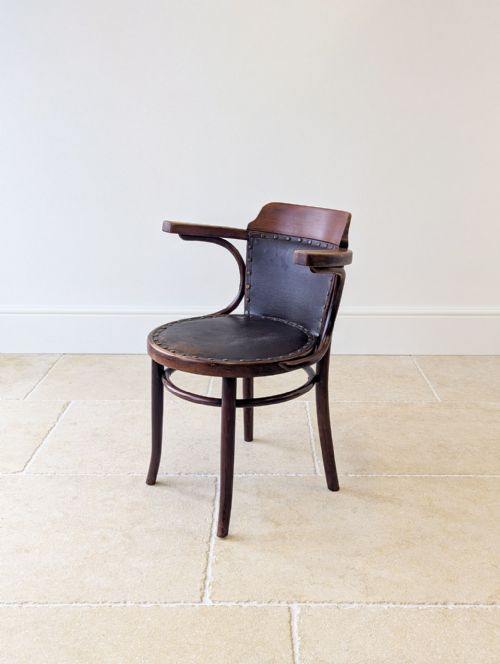
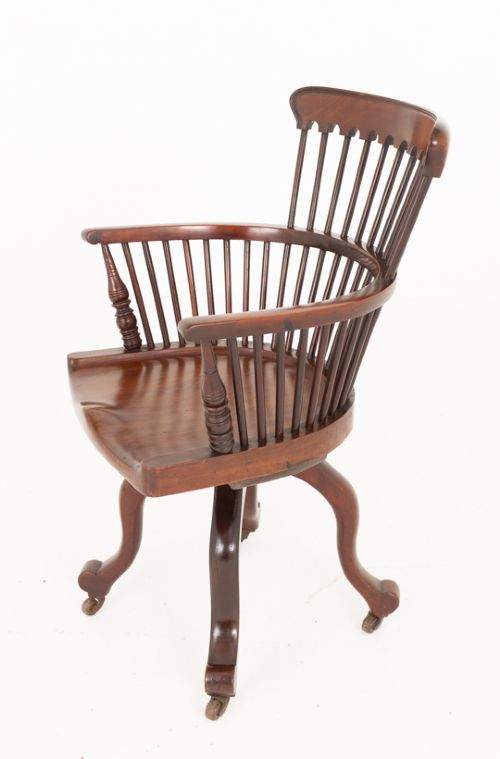
Joinery methods combined traditional Windsor techniques, including turned legs wedged into solid carved seats, with steam-bent wooden elements. Metal components like brass swivel mechanisms and iron adjustments appeared on later nineteenth and early twentieth century office models.
Listings feature robust nineteenth-century elm and ash Windsor forms alongside Edwardian mahogany revolving office desks.
Assessing quality and finish
Superior examples display balanced proportions, clean turning on the spindles, and deep, honest timber patination acquired through decades of handling. Lower grades often show clumsy timber replacements, unsympathetic modern finishes, or weak structural repairs to the arm joints.
The sophistication of the turning work and the integration of mechanical swivel systems distinguish standard utilitarian seating from finer office pieces. Original hardware, such as brass castors and turning mechanisms, elevates the desirability of surviving nineteenth-century models.
SHOOLBRED
The Dark Wood Captain Chair Glossary
- Smokers Bow
- A low-backed Windsor-style armchair featuring a continuous curved arm rail supported by turned spindles. This form is closely associated with traditional English provincial pubs and domestic smoking rooms.
- Windsor Chair
- A wooden chair constructed with a solid sculpted seat into which the legs and back spindles are separately inserted. They often employ a combination of different timbers like elm and beech.
- Bentwood
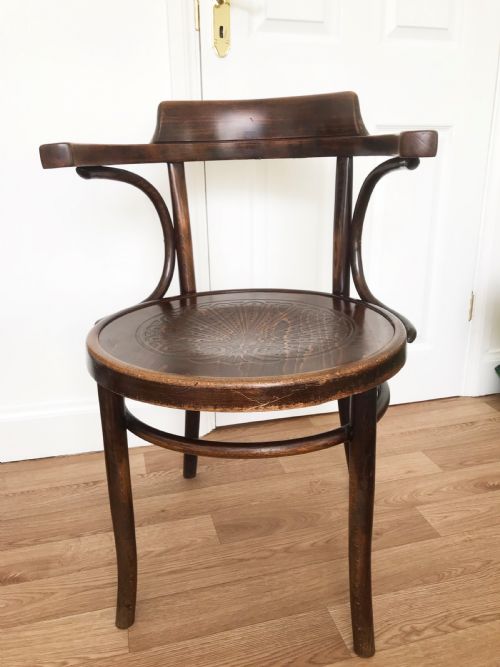
- Wood that has been rendered pliable by steam and then bent into curved structural forms. This technique created lightweight, durable chair frames popular in the late nineteenth and early twentieth centuries.
- Comb Back
- A Windsor chair design where the central vertical spindles of the back extend up through a top rail, resembling the teeth of a comb. This construction offers robust upper back support.
- Swivel Chair
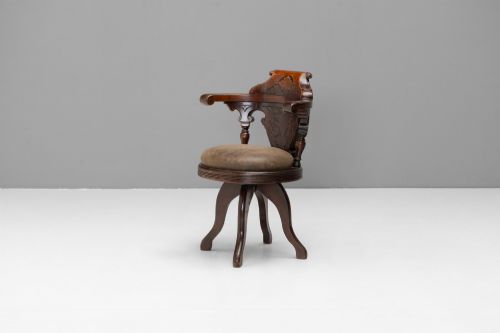
- A seat mounted on a central revolving pivot or spindle that allows the user to turn around. These mechanisms frequently incorporate adjustable height screws in nineteenth-century office designs.
Dark Wood Captain Chair: Frequently Asked Questions
What is a dark wood captain chair?
A dark wood captain chair is a sturdy wooden armchair designed for a desk or study, typically featuring a curved back rail and a comfortable solid seat.
These pieces draw on nineteenth-century Windsor, swivel office, and provincial English chair-making traditions.
How do I date a wooden desk chair?
Dating relies on observing construction methods, timber types, and the presence of mechanical hardware like iron screws or brass swivel mechanisms.
Earlier nineteenth-century models generally utilise solid turned timbers, while later Victorian and Edwardian examples may incorporate revolving mechanisms or bentwood components.
Were these chairs used on ships?
While some models carry the descriptive title of ships chairs due to their compact, robust proportions and revolving bases, most were built for domestic studies and offices.
Their heavy construction and swivel functions made them practical for both maritime use and professional land-based workspaces.
How do I care for antique timber?
Maintain antique wood by keeping it away from direct heat sources and sudden temperature shifts that can dry out the natural grain.
Apply quality beeswax periodically to nourish the surface and preserve the historic patina without using harsh chemical polishes.