
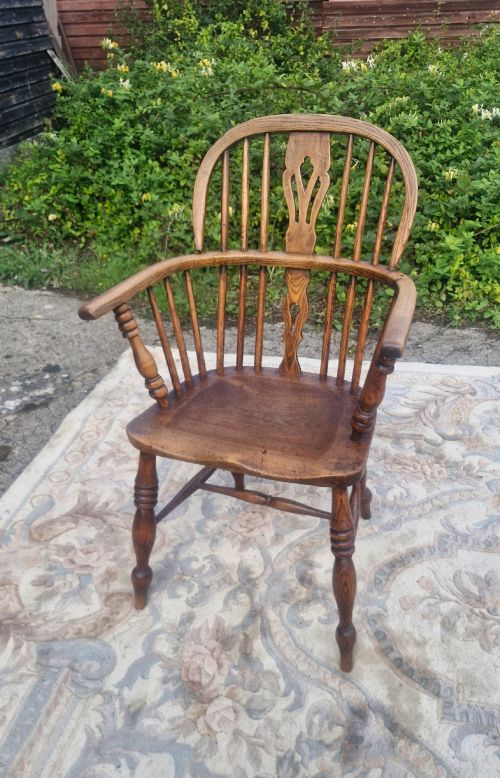
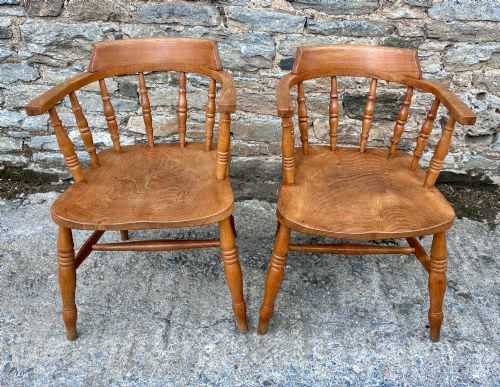
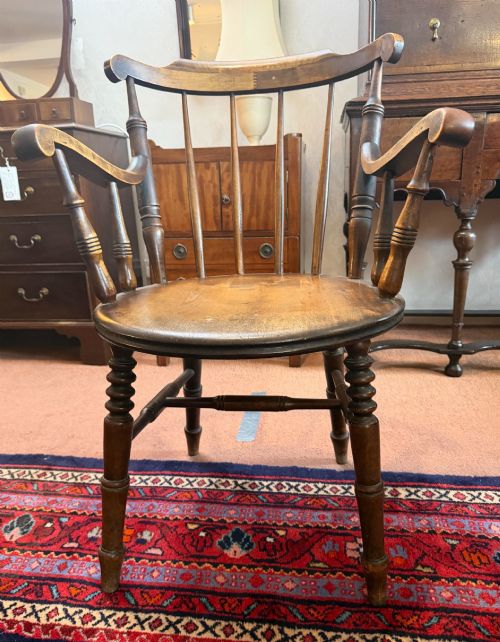
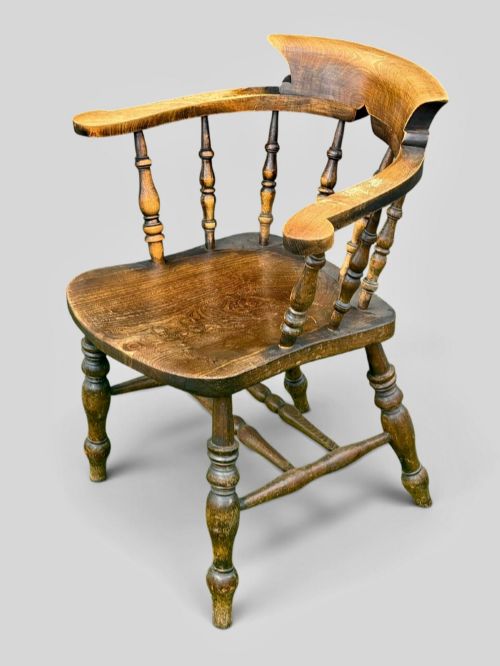
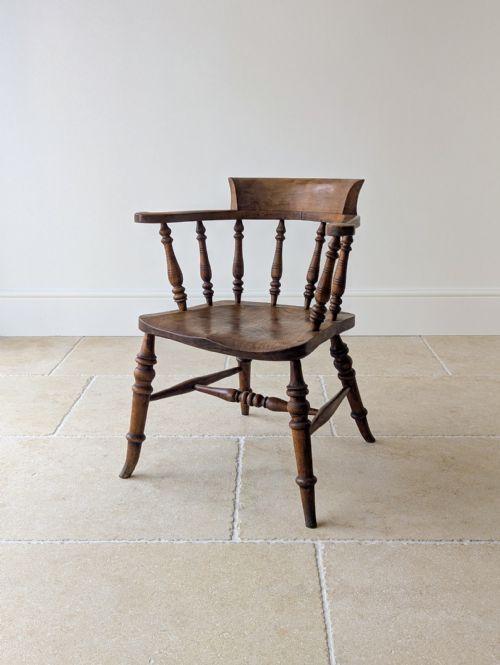
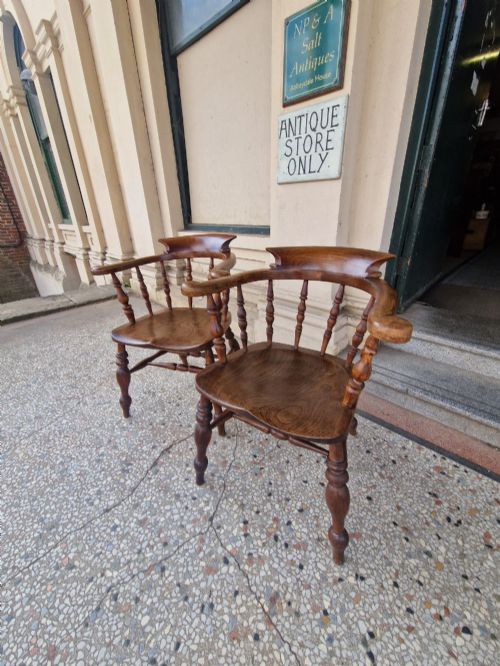
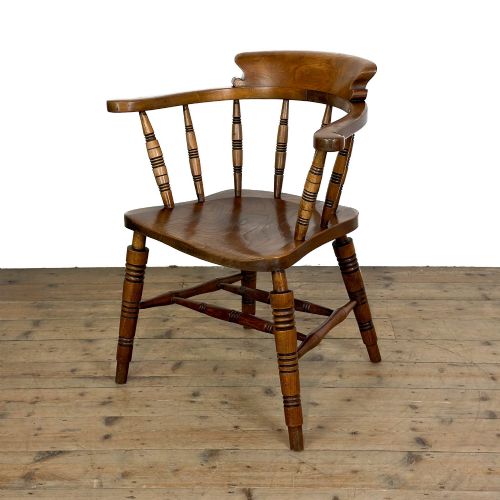
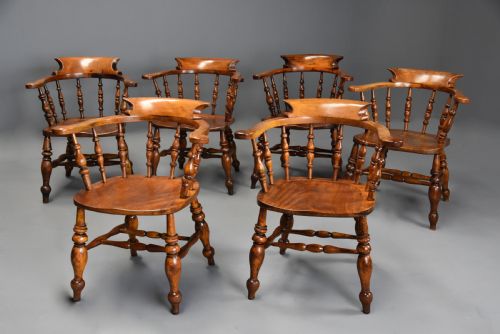
Antique Smokers Bow Chair
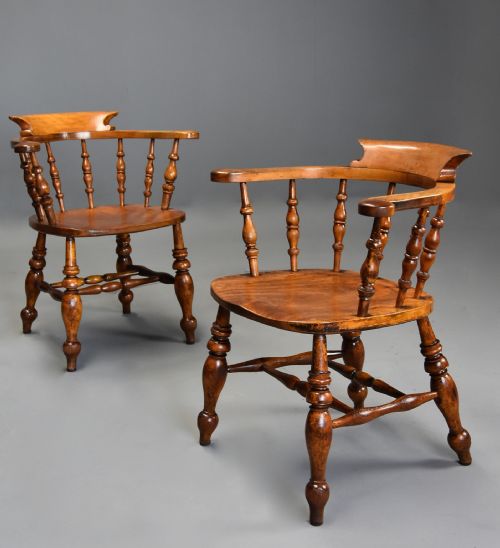
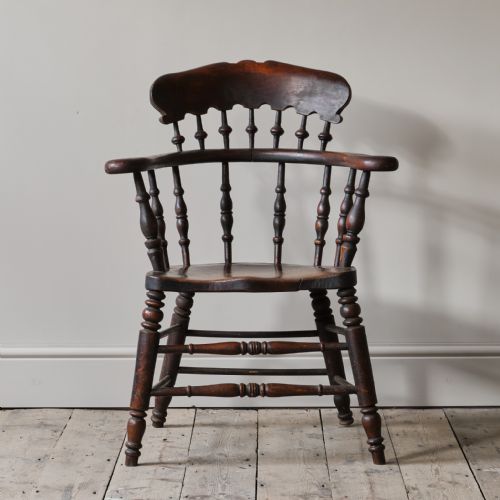
An antique smokers bow chair is a sturdy vernacular armchair built for comfort, and these timber carvers bring warmth and history to any room.
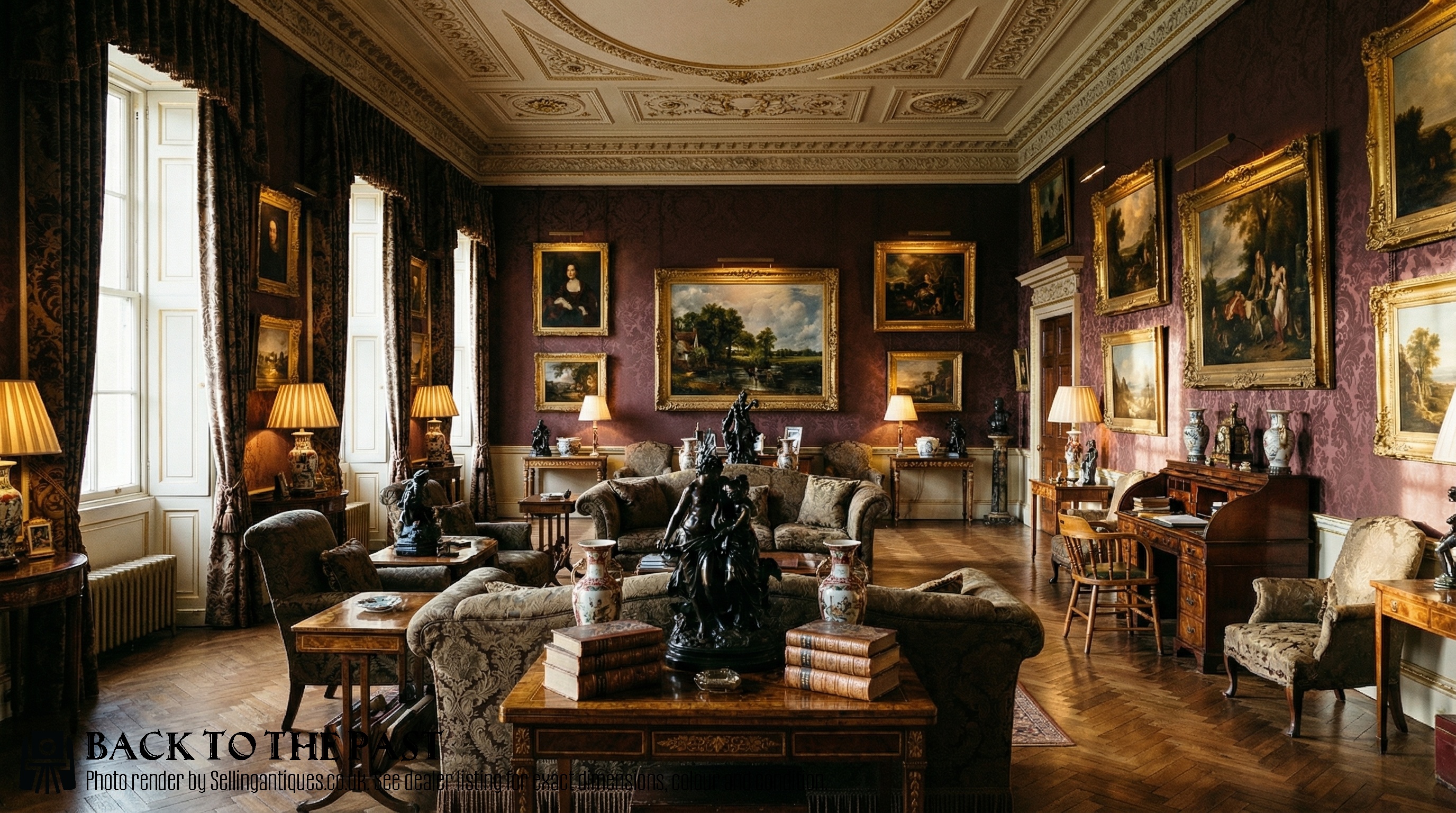
What an antique smokers bow chair is
Most examples found here date from the nineteenth century, spanning the Victorian period through to the early twentieth century. These pieces turn up both as single library and desk chairs and occasionally as matched pairs or small sets.
Makers produced these armchairs primarily in English workshops using regional hardwoods, resulting in sturdy vernacular furniture designed for daily use. While many remain straightforward country seating, larger versions with generous proportions also function comfortably as office carvers.
What varies in quality
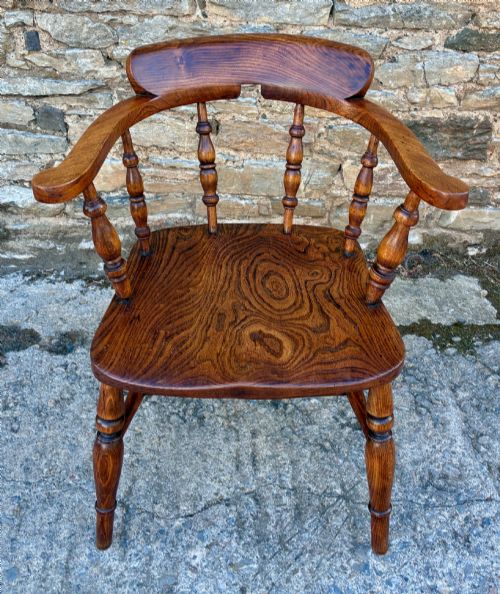
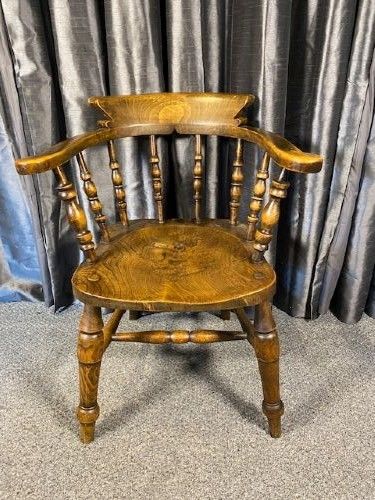
Quality rests chiefly in the choice of timber and the depth of figure in the seat plank, with highly figured elm commanding particular attention. Grain patterns that show rich movement across the saddle set apart standard utility seating from finer workshop examples.
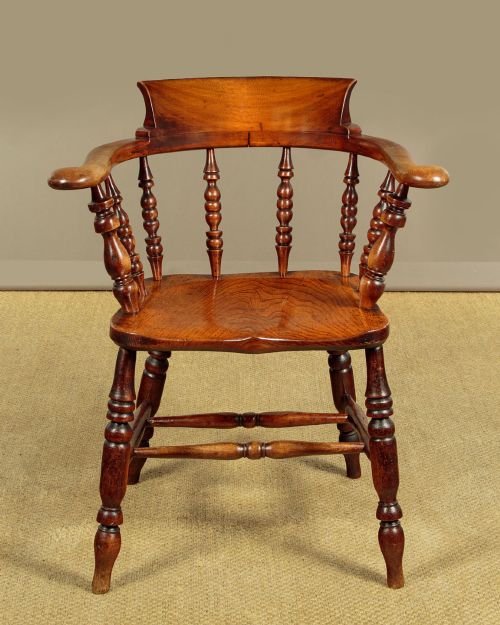
Proportion and scale also define the better pieces, as heavier timbers and oversized arms give certain armchairs a more substantial presence. The crispness of the spindle turnings and the strength of the wedged leg joints further distinguish superior construction.
Retail Price Guide 2026
Typical UK retail prices for smokers bow chair, calculated from the Sellingantiques database of over a million retail prices indexed since 2003. This retail price guide relies exclusively on Sellingantiques data; no external sources or auction records are used, so the figures do not describe the wider market.
Some generously proportioned examples boast oversized arms designed specifically for nineteenth-century gentlemen who needed extra room.
The Antique Smokers Bow Chair Glossary
- Smokers bow
- A low-backed wooden armchair related to the Windsor chair, featuring a continuous bentwood rail serving as both back and arms.
- Captain's chair
- A term often applied interchangeably to low-backed Windsor or smokers bow chairs used traditionally in offices and captains' quarters.
- Saddle seat
- A thick wooden seat base scooped out by hand to fit the contours of the body for ergonomic support.
- Spindle
- A slender turned wooden upright fitted between the seat and the back rail to support the upper curved bow.
Frequently Asked Questions
What is a smokers bow chair?
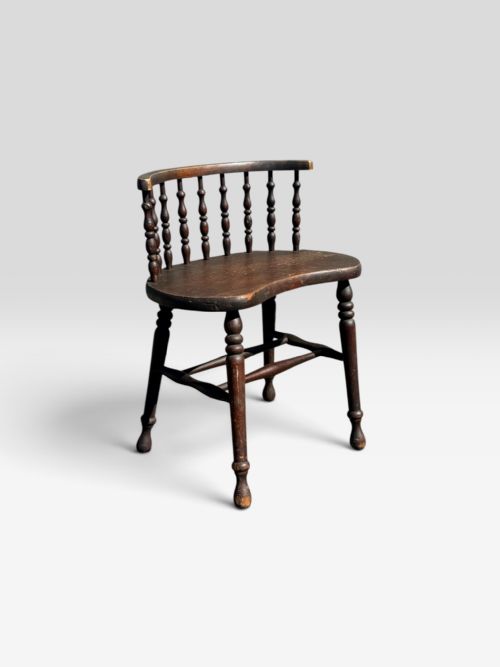
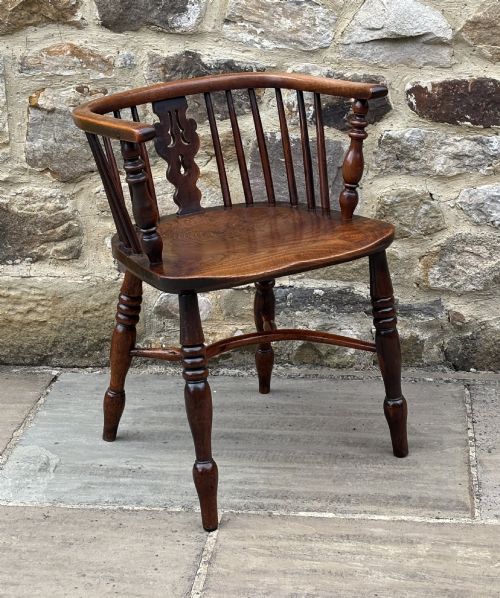
A smokers bow chair is a traditional low-backed wooden armchair featuring a curved continuous top rail and a shaped solid seat. They developed from country Windsor designs into popular seating for studies and offices.
These armchairs combine turned spindle supports with sturdy hardwood construction. Their low profile made them practical for sitting near fires or working at desks.
How old are these chairs?
The pieces available generally date from the nineteenth century during the Victorian era, with some extending into the early twentieth century. Cabinetmakers and regional turners produced them in large numbers across England.
Determining age involves examining the tool marks on the seat, the wear on the wooden feet, and the construction methods used in the undercarriage. Variations in timber selection also offer clues to the period of manufacture.
Can I use one at a desk?
Many of these armchairs serve effectively as desk or office chairs due to their supportive back rails and generous seat proportions. Their sturdy frames handle daily sitting while fitting neatly under standard desk heights.
Selecting a version with a wider seat or an oversized arm ensures comfortable working space. Their robust wooden construction makes them durable alternatives to modern office seating.
What timbers were used?
Makers constructed these seats using native British hardwoods, frequently combining different woods within a single armchair. Elm was the preferred choice for the solid saddle seat because of its resistance to splitting.
Other parts such as the legs, stretchers, and bent bows utilised beech, ash, oak, or occasionally yew. This mixed-timber construction gave each chair structural strength and varied natural grain patterns.