

Traditional Captains Armchair
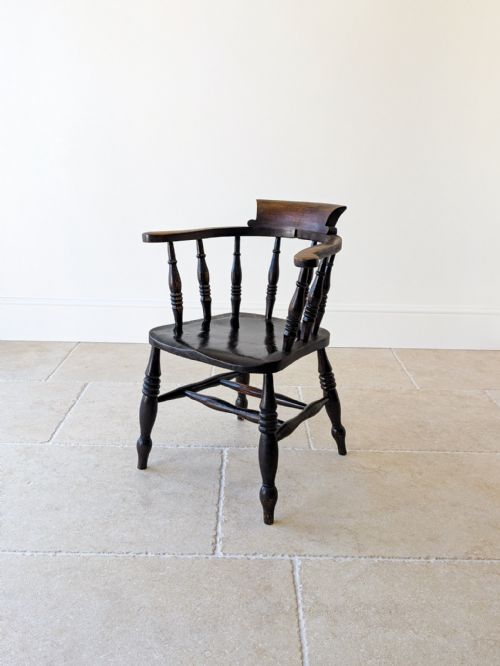
These traditional captains armchair selections combine sturdy timber construction with low backs, offering practical seating built for desks or smoking rooms.
Traditional Captains Armchair
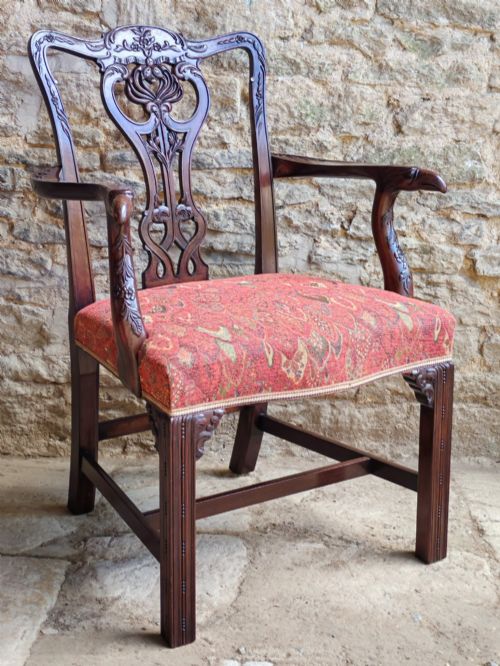
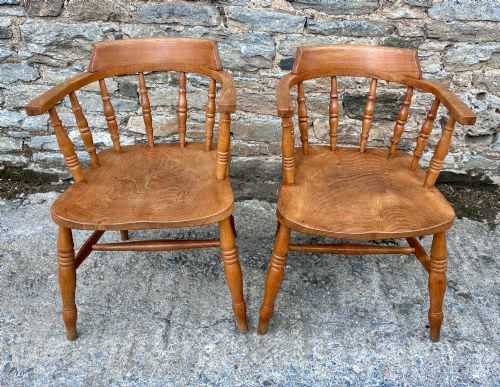
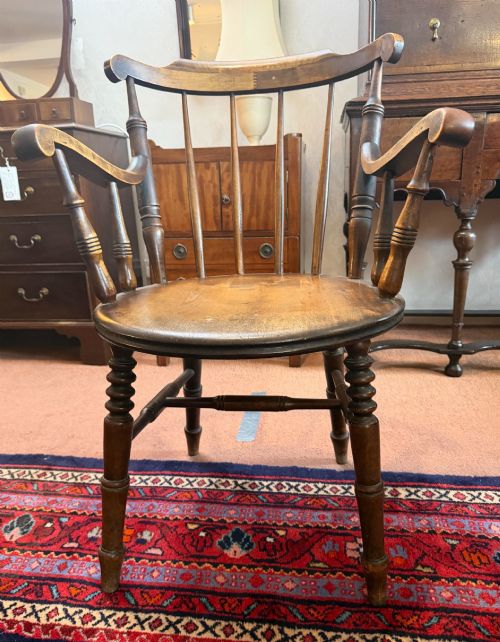
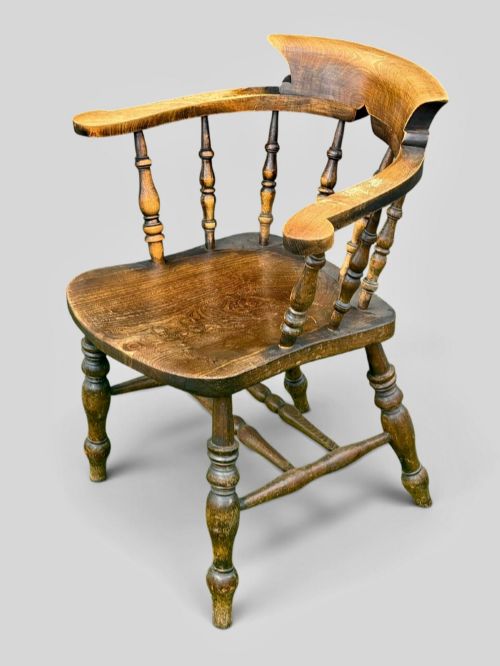
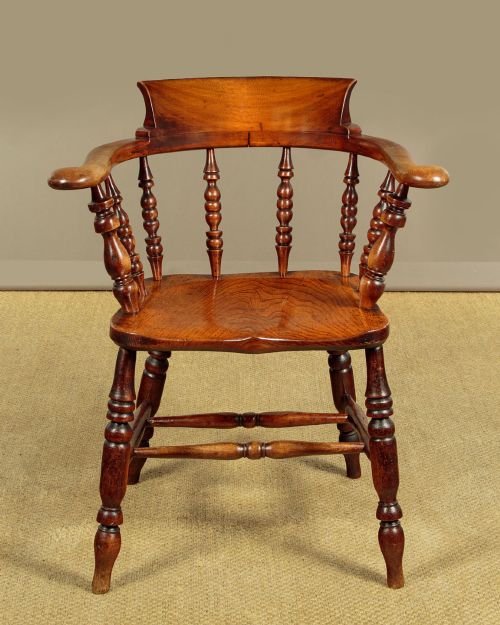
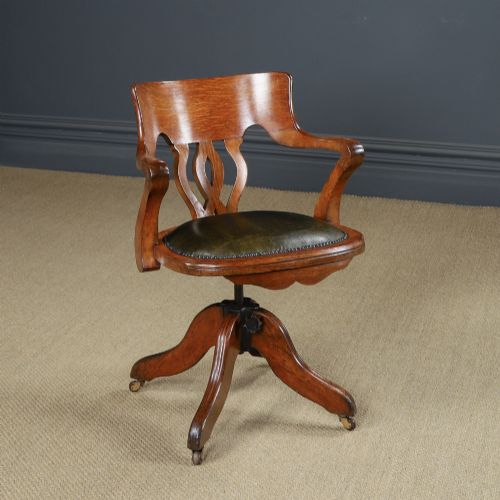
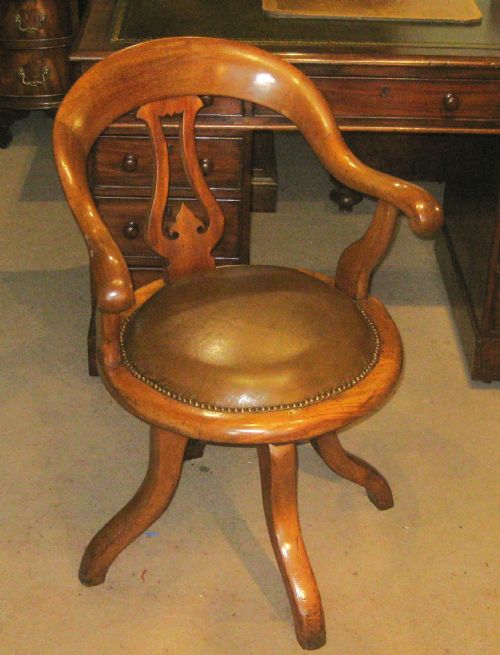
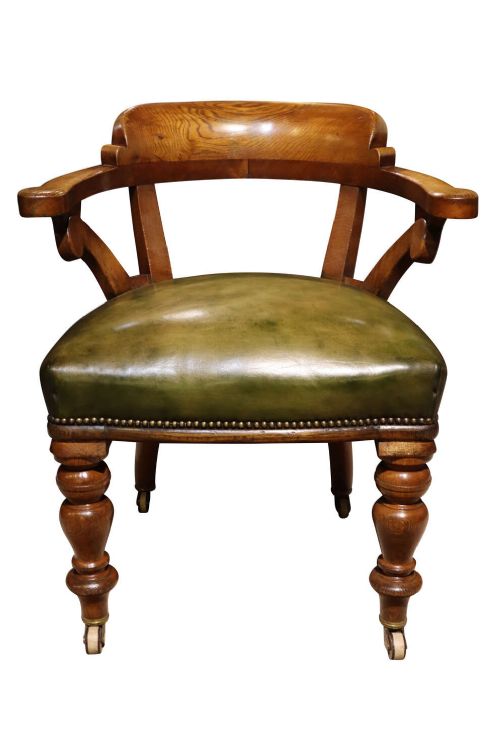
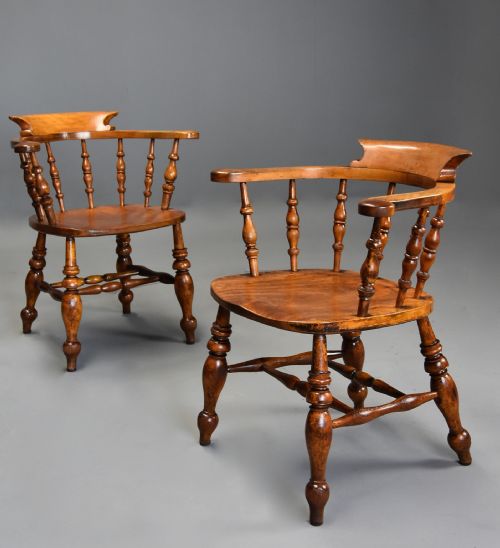
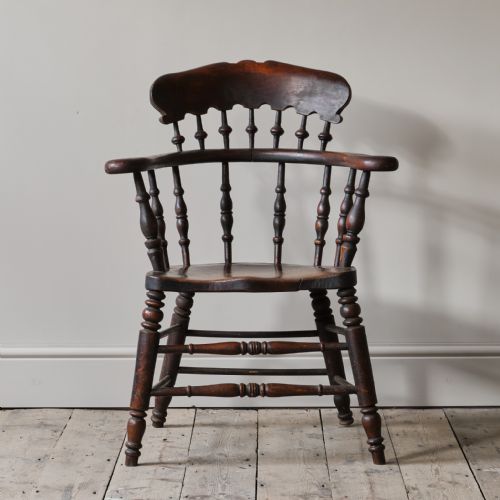
A traditional captains armchair typically presents a low, rounded spindle back supported by robust timber seats and robust arms. When searching for a traditional captains armchair, buyers encounter pieces stemming from the Victorian and Edwardian periods, alongside nineteenth century country variations.
Many examples double as desk chairs or smokers bows, featuring solid wooden seats shaped for comfort during long periods of sitting. These seating options emerge frequently in provincial English designs with straightforward spindle or solid splat arrangements.
Workshops utilised sturdy regional timbers to construct these chairs for everyday utility in libraries, offices and country houses. The low profile allows the seat to slide neatly beneath writing desks and library tables.
Materials and construction methods
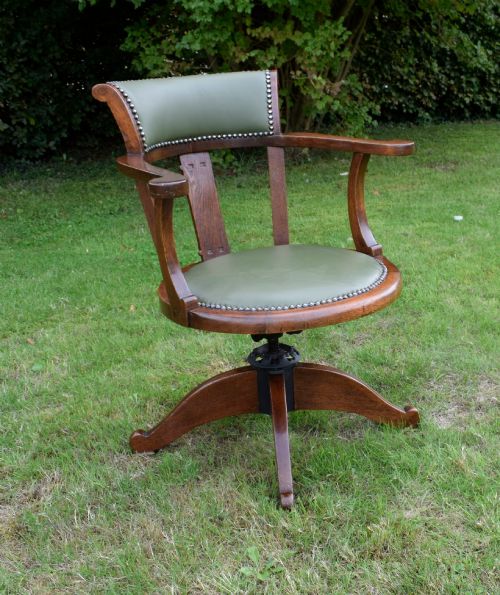
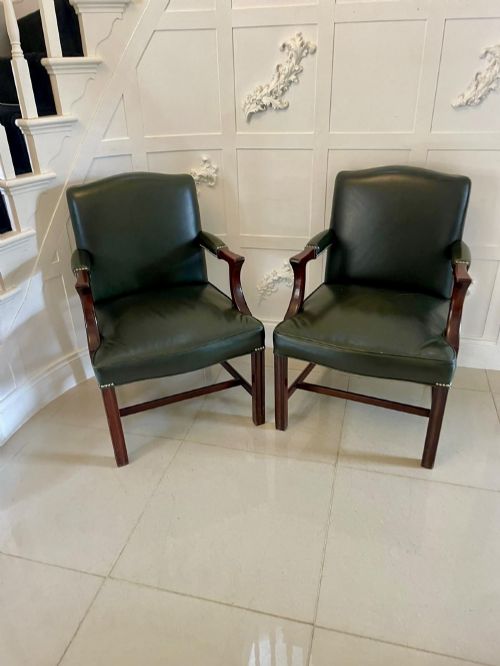
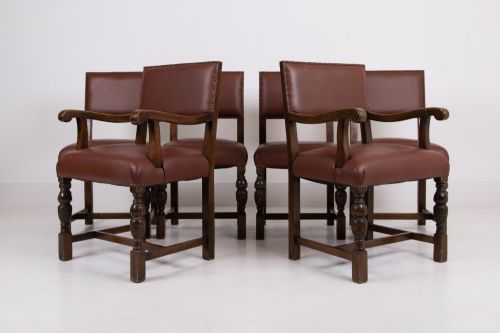
Cabinet makers built these chairs using native hardwoods such as elm, ash, beech and oak, often pairing bentwood elements with turned spindles. Leather upholstery appears on select library and desk variants, secured with brass tacks.
Joinery techniques combined traditional Windsor framing with steam-bent back rails to create strong, continuous arm rests. Pegged joints and robust undercarriages provided the structural integrity required for daily office and domestic use.
Several armchairs are recorded simply as smoker's bows, built so men could puff their pipes without knocking their chair arms.
Judging the quality of construction
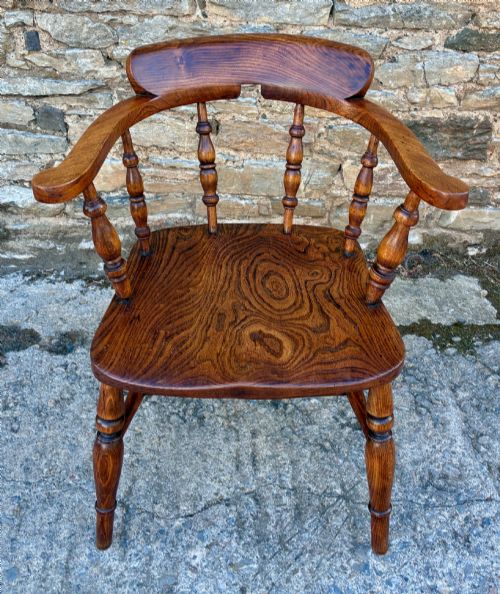
Superior examples display harmonious timber grain, particularly where elm seats show rich figuring matched with contrasting ash or beech spindles. The depth of the patina and the retention of original turning details distinguish finer workshop output.
Structural honesty separates standard utility seating from finer library chairs, where thick mahogany frames or revolving mechanisms are integrated with precision. Original surface finishes without excessive restoration preserve the integrity of the piece.
Howard and Sons
The Traditional Captains Armchair Glossary
- Smoker's bow
- A low-backed Windsor armchair featuring a continuous bentwood top rail forming the arms, popular in nineteenth century domestic settings.
- Windsor chair
- A chair built with a solid wooden seat into which the legs and back spindles are directly bored and wedged.
- Carver chair
- An armchair designed in the style of the matching dining chairs around a table.
- Spindle
- A slender, turned wooden rod used to fill the space between the seat and the arm rail or top crest.
- Patina
- The deep surface sheen and colour developed by aged wood through decades of handling and polishing.
Traditional Captains Armchair: Frequently Asked Questions
What is a traditional captains armchair?
A traditional captains armchair is a low-backed wooden seat designed for desks, offices, or smoking rooms, featuring a rounded arm rail supported by turned spindles.
These pieces originate predominantly from the nineteenth and early twentieth centuries, reflecting utilitarian English country craftsmanship.
How do I use one at a desk?
The low back and compact arm span allow these chairs to tuck underneath standard writing tables and library desks without catching on the drawers.
Revolving versions offer mobility for office work, while fixed wooden seats provide stable posture for writing.
How do I tell a Victorian chair from Edwardian examples?
Victorian models often utilise heavy elm and ash with deep patinas, heavier turnings, and robust country house proportions.
Edwardian adaptations frequently incorporate lighter oak frames, sometimes accompanied by leather upholstery or revolving office bases.
Are these chairs comfortable for daily sitting?
The solid timber seats are sculpted with a subtle saddle dip to distribute weight evenly during prolonged periods of use.
Adding a small cushion provides extra padding while maintaining the low profile of the bentwood rail.