
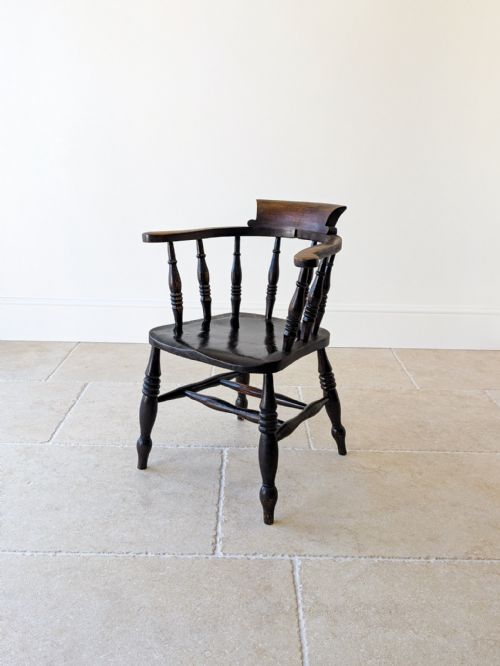
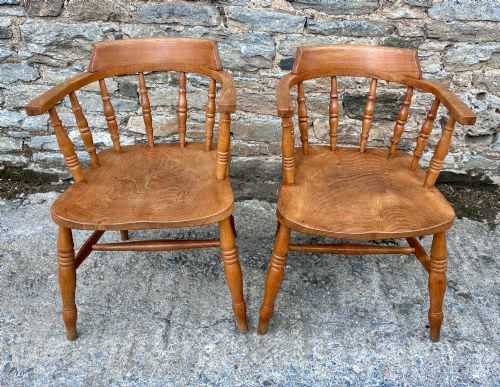
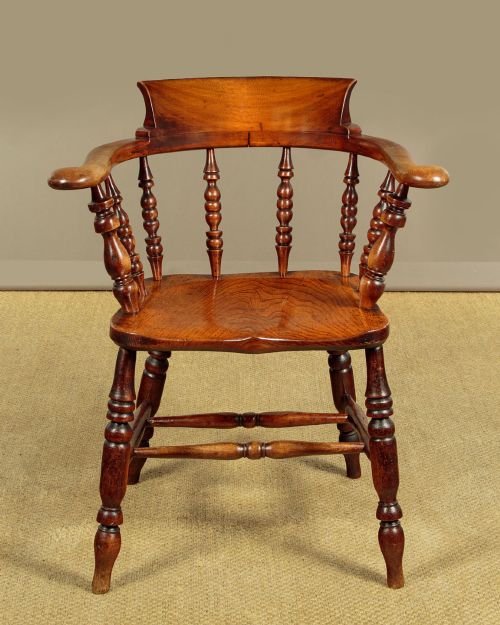
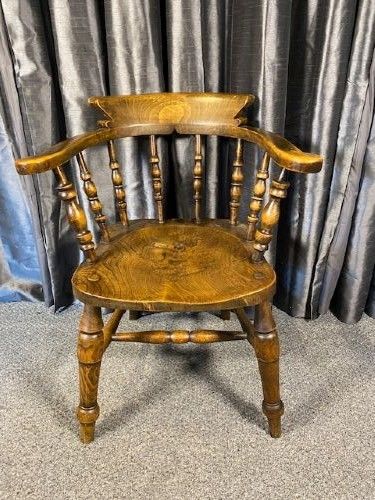
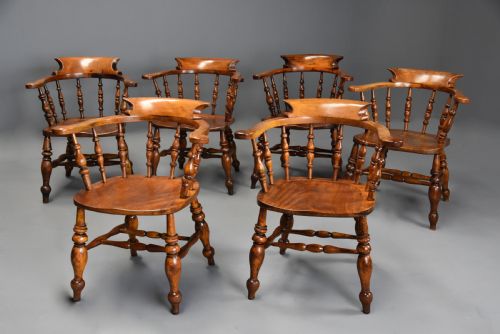


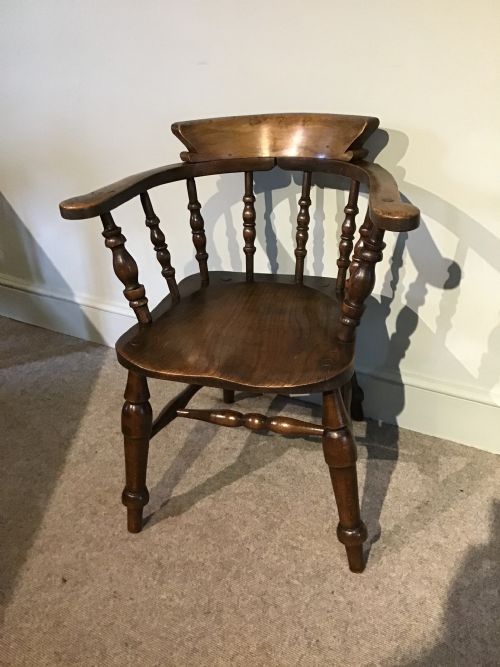


Carved Elm Tub Chair
A carved elm tub chair is a solid nineteenth-century seat built for comfort, and collectors prize these timber armchairs for their rich grain and sturdy vernacular forms.
Carved Elm Tub Chair
When buyers search for a carved elm tub chair, they find nineteenth-century seating that typically includes captain's chairs, smokers' bows, and desk chairs originating from the Victorian era. These pieces generally date from eighteen-fifty to nineteen-hundred and reflect robust regional furniture traditions.
The most common form on this page is the smokers' bow or captain's chair, featuring a continuous curved armrail supported by turned spindles above a thick saddle seat. Elm frequently forms the seat itself, paired with complementary timbers for the wider structure.
Makers designed these armchairs for heavy daily use in studies, parlours, and smoking rooms, which explains their enduring popularity in traditional and contemporary interiors alike.
How they were made
Cabinet makers and bodgers constructed these chairs using a mix of native hardwoods, turning spindle components on foot-powered lathes and steam-bending thick lengths of timber to form the distinctive bow backrests.
Solid elm provided a dense, splinter-resistant surface for the carved saddle seats, while beech, ash, yew, and oak supplied strong legs, stretchers, and arm supports.
Traditional joinery methods, including wedged tenons and through-joints, held the heavy components firmly together without relying on modern metal fasteners.
Materials recorded across the selection include solid elm, burr elm, beech, ash, oak, yew, leather, and brass.
What varies in quality
The character of the timber grain dictates much of the visual appeal, with burr elm seats offering far more striking patterns and depth than plain boards.
The grace of the turned spindles and the depth of the saddle carving separate standard utilitarian seating from finer examples produced by skilled regional workshops.
The Carved Elm Tub Chair Glossary
- Smoker's bow
- A low-backed Windsor armchair with a continuous curved armrail, popular in nineteenth-century domestic and public spaces. This form provides sturdy elbow support while remaining compact.
- Saddle seat
- A thick wooden seat base scooped out by hand to mirror the contours of the body. This shaping enhances the comfort of dense timbers like elm.
- Spindle
- A slender, turned wooden rod used vertically beneath the armrail to support the back. Turners shaped each one individually on a lathe.
- Burr elm
- A woody growth on an elm tree that produces highly figured, swirling grain patterns. Cabinet makers prized this timber for high-status seat panels.
- Windsor chair
- A chair built with a solid wooden seat into which the legs and back spindles are tenoned directly. This method creates a resilient, rigid frame.
Carved Elm Tub Chair: Frequently Asked Questions
What is a smokers bow chair?
A smokers bow is a sturdy nineteenth-century armchair featuring a low, continuous curved backrail and turned spindles. It belongs to the broader family of Windsor seating.
These chairs gained popularity in domestic parlours and gentlemen's clubs for their robust construction and supportive proportions.
How do I date a Victorian elm chair?
Dating relies on examining the turning styles of the spindles, the wear patterns on the wooden seat, and the construction methods used underneath. Nineteenth-century examples often display tool marks left by regional carpenters.
Comparing the timber species combinations, such as elm paired with ash or beech, also helps establish the approximate period of manufacture.
Are these chairs comfortable for daily use?
The deep saddle shaping carved into the solid elm seats provides natural ergonomic support for sitting over long periods. Their robust wooden frames make them practical for everyday desk or dining use.
Adding a loose cushion can further soften the seat while preserving the exposed timber character.
What wood was used for these chairs?
Elm served as the primary choice for the heavy saddle seats because its interlocking grain resisted splitting under pressure. Makers combined it with flexible woods like ash and beech for the steam-bent arms and turned spindles.
Some finer examples occasionally incorporate yew wood or burr elm for enhanced decorative warmth.